
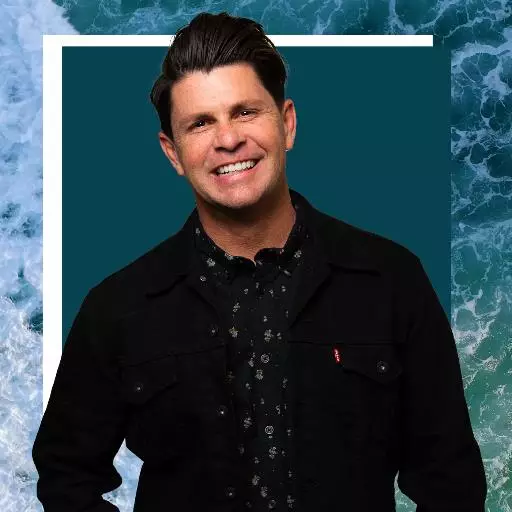
The Power and Purpose of Prayer Part 1


Did you know, according to pollsters the average Christian in our country prays about three minutes a day. That’s if they pray at mealtime and bedtime! As we continue to make our way through the book of First Timothy we’ll be encouraged to raise the bar in our prayer life. We’ll notice the priority of prayer as well as the types of prayers to be prayed.
Guest (Male): Pastor John Randall encourages us to keep this in mind as we go to the Lord in prayer.
John Randall: Sometimes we can come to prayer and we limit our prayers because we forget who it is that we're praying to. We don't pray crazy prayers, impossible prayers. Oh, that's impossible. For who? For us, but not for God. To pray in faith, to believe who we're praying to. Listen, when we talk of difficulty and difficulty is part of an equation, difficulty has to always be measured by the agent doing the work. And if God is the agent doing the work, then talk of difficulty is completely absurd because nothing is impossible for God.
Guest (Male): Hello and thanks for joining us today for a daily walk where you never have to walk alone. Did you know according to pollsters, the average Christian in our country prays about 3 minutes a day? That's if they pray at meal time and bedtime. Well, as we continue to make our way through the book of 1 Timothy, we'll be encouraged to raise that bar in our prayer life. We'll notice the priority of prayer as well as the types of prayers to be prayed. Here is our pastor and teacher once again, John Randall.
John Randall: The Apostle Paul had left Timothy in the city of Ephesus to help the churches be established and ordered that they might know how to conduct themselves within the house of God. Here was this young pastor charged with this great responsibility. He would no doubt face opposition within his ministry. Where would Timothy begin? Where was the place to start? What was the first step that he should take in order to establish order within these fellowships in the city of Ephesus? Paul instructs Timothy that he must begin with prayer. We can do more than pray after we have prayed, but we cannot do more than pray until we have prayed.
The only way that this task could ever be accomplished was for the church to learn and to practice this privilege of prayer. Now, for some prayer can tend to be a last resort. After you've exhausted every resource you have, after you've called every person you know, emailed every friend, text every person in your address book on a group text, which by the way are really difficult to get off of, but nonetheless your your entire address book just waiting to receive a response to your cries for help. And then finally the thought occurs to you. You know, perhaps I should pray about this situation.
Prayer can be an untapped source of power that's made available to the church. Why is that? Perhaps it's because we want to be active in things that we can see an immediate result. We like instant change. We want to see with our physical eyes something coming together rather than having to trust and wait and see with eyes of faith. And often in prayer, you don't always see an immediate change. You cannot observe what God is doing behind the scenes. But listen, prayer is where the power is. It was Oswald Chambers that said prayer does not fit us for the greater work.
Prayer is the greater work. And therefore Paul begins by presenting number one, the priority of prayer within the church. That is why in verse one he says, I exhort first of all. First, this is first in priority that all supplication, prayer, intercession, and giving of thanks be made for all men. Paul didn't start out with the list of qualifications for those who desire to minister. He didn't talk about how to address those causing division within the church. The very first thing, the first priority had to be prayer. When you study through the life and the ministry of Jesus, it becomes obvious that prayer was extremely important to him.
In Mark chapter 1 verse 35 it says concerning Jesus in the morning, having risen a long while before daylight, he went out to a solitary place and there he prayed. In Luke chapter 3 at his baptism, when all were there at the Jordan to be baptized, it says that it came to pass that Jesus was also baptized. And when he prayed, the heaven opened. When the needs of the ministry surrounding Jesus were increasing, it says that he prayed all night. And then he selected 12 men to assist him in the work of the ministry. When the crowds had gathered along the shores of the Sea of Galilee to listen to the teaching of Jesus, and as he taught throughout the entire day, the people grew hungry and he was given a few loaves and fish and he prayed over them, blessed them, broke them, and fed over 5,000 people.
In John chapter 11 in the town of Bethany, a man by the name of Lazarus, who was a friend of Jesus, had died. And by the time that Jesus arrived at the grave site of Lazarus, he had been in the tomb for 4 days. And when Jesus prayed, he called Lazarus forth from the grave. For Jesus, prayer was a priority. When Jesus prayed, there was power that was attached to his prayers. Miraculous things took place. Demon possessed people were delivered. Blind eyes were open. Deaf ears could hear. Those who were lame could walk. Violent storms became still in an instant when Jesus prayed.
There were times when the Father actually responded audibly saying, this is my beloved son in whom I am well pleased. That is why the disciples, having been with Jesus, having recognized the power and the practice of prayer in the life of Jesus in Luke chapter 11, it says when he had prayed in a certain place that they came to him and they said, Lord, teach us to pray as John taught his disciples. And then Jesus gave unto his disciples a model for prayer. It was a priority to Jesus. And this priority of prayer carried over into the life of the early church.
The Bible says in Acts chapter 2 verse 42 that the church kept themselves in the apostles' doctrine and in fellowship and in breaking of bread and in prayer. It was a priority to the church. In fact, it was such an important part of the ministry that as the needs, the practical needs within the church began to grow, the apostles had to select seven men to care for those practical needs. And then they said, we will give ourselves continually to the word of God and to prayer. We can leave this. This is such an integral part of what we're called to do.
We've got to give ourselves to the word and give ourselves to prayer in order to be effective in what we've been called upon to do. At the day of Pentecost, they prayed. The spirit came upon them. But when they needed provision, they prayed and and God provided. When the church was under the threat of persecution, they gathered and they prayed and God gave them boldness and courage and filled them afresh with the power of the Holy Spirit. When the church in Antioch, that place where they were first called Christians, they needed direction who they were going to send out.
It says they prayed, they fasted, they ministered unto the Lord. And then the Holy Spirit said to them in response to their prayers, send out Paul and Barnabas for the work that they've been called to. Paul within his epistles, he would write, this is what I'm praying for you. The early church was a powerful church because it was a praying church. Prayer has also been the fuel and the catalyst throughout church history for the revivals that we have observed. It was R. A. Torrey in his book How to Pray that made this comment. He said that prayer will bring in the full tide of God's reviving grace.
History abundantly proves this in the darkest hour when the state of the church has seen beyond hope. Believing men and women met together and cried out to God. And the answer has come. It was so in the days of Knox. It was so in the days of Wesley and Whitfield. It was so in the day of Edwards and Brainerd. It was so in the days of Finney. It was so in the days of the great revival of 1857 in the country and in 1859 in Ireland. And so it will be again in your day and mine if we would pray.
I wonder if we realize how important and how powerful prayer truly is and all that can be accomplished through prayer. You remember Jesus said in Matthew chapter 18, he said where two or three are gathered together in my name, there I am in the midst of them. As a Christian, I realize that if Jesus found it necessary and vital to commune with his heavenly Father through prayer, and if the early church made it a practice and an essential part of the ministry, how important should prayer be to me in my own personal life? Paul emphasizes the priority of prayer.
But then he moves to the nature of prayer or the types of prayers that were to be prayed. There are at least seven Greek words, seven Greek nouns that are used concerning prayer. And Paul gives us at least four of them here in this first verse when he says, supplication, prayers, intercessions, the giving of thanks be made for all men. Prayer is the means whereby I communicate with my heavenly Father. I can come to the Lord anytime from any place, speaking common language that he can understand. The highest purpose of prayer is to see God's will being accomplished.
It is to align my life, my will with God's will. And I come to prayer with a submitted heart before the Lord. And the first aspect of prayer Paul mentions is that of supplication. The word supplication means presenting your need to God. It's asking him for something. It's entreating the Lord for a need that you have. The Bible tells us in Matthew chapter 6 verse 8 that the Father knows the things you have need of even before you ask. The question then becomes well if he already knows the things I have need of before I ask, why ask?
Because it shows a dependence and a trust in God. Jesus would say in Matthew chapter 7, ask and it shall be given to you. Seek and you will find. Knock and the door will be opened unto you. We have been invited, given an invitation by our heavenly Father to come and to bring our supplication, our petitions before him. The Bible says to come boldly before the throne of grace that we may obtain mercy and find grace to help in time of need. That's an invitation from the Lord and he's not reluctant to hear from you.
He desires to hear from you. The Bible says in Jeremiah 33, call unto me and I will answer you and show you great and mighty things which you do not know. When we bring our supplications to the Lord, it is important to pray in accordance with his will. I don't always know what God's will is in a given situation. Therefore when I pray, I want to pray in accordance with his will. I want to pray as Jesus prayed, not my will, but yours be done. The Bible tells us in 1 John chapter 5, this is the confidence that we have that if we ask anything according to his will, we know that he hears us.
And we know that we have the petitions that we have asked of him. I want to pray in accordance with God's will. Sometimes we we don't understand that. And so I have to remind myself, Lord, if this is not what you have for me, then Lord, take it off the table. I don't want anything to If this isn't your best for me, if this isn't your will for me, then Lord, give me what's best for me. And you're the one that knows what's best for me. And so I want to pray in accordance with God's will.
Perhaps this morning you've come into the sanctuary with needs, desires, requests. What are you to do? You're to bring them to the Lord. The Bible says in Matthew chapter 6 verse 33, seek first first the kingdom of God and his righteousness, his kingdom, his righteousness first. Then all of these things, all of these other things that are a concern to you, God says he's going to take care of them if you will seek him first. So supplications offered up to God. Following supplication, Paul then mentions prayer, prayers. And the word for prayers here emphasizes personal devotion.
It involves an awareness of who God is. There is a reverential awe for God's character, for God's person, his nature, his power. It also involves worshiping God, in adoration of God. That doesn't take place only in song as we praise God, but also in prayer. We offer up this kind of worship to God. Peter tells us in 1 Peter chapter 3 for the eyes of the Lord are on the righteous and he his ears are open to their prayers. God listens when we pray. The Bible refers to the prayers of the saints as being like golden bowls of incense before the throne of God in Revelation chapter 5 and Revelation chapter 8.
There are so many examples in scripture of God's people praying and acknowledging the greatness and the power of God. Be it a prophet, a judge, a king, an apostle, an evangelist, acknowledging the greatness and the power of God. And the reason why I think this is so important is because sometimes we can come to prayer and we limit our prayers because we forget who it is that we're praying to. We don't pray crazy prayers, impossible prayers. Oh, that's impossible. For who? For us, but not for God. To pray in faith, to believe who we're praying to.
Listen, when we talk of difficulty and difficulty is part of an equation, difficulty has to always be measured by the agent doing the work. And if God is the agent doing the work, then talk of difficulty is completely absurd because nothing is impossible for God. He's all powerful. He's not limited. He's all knowing. And therefore I pray in this confidence and awe of the glory and the majesty and the power of God that he's working all things according to his will. And he loves me. Prayers being offered up to God corporately, as a church, individually, as believers, supplication, prayers and follows with intercessions.
Intercessory prayer is the act of praying on behalf of others. And listen, that's a ministry that anybody can be involved with. Well, I just want to I there's no ministry for me. You want a ministry? Be an intercessor. Pray on behalf of other people. Again, the old and New Testament is full of examples of people who prayed intercessory prayers. I think of Abraham. I think of Abraham when it was revealed to him that God was going to destroy Sodom and Gomorrah and he knew that his nephew Lot was living there. What did he do? He immediately began to intercede on behalf of Lot that he would be delivered.
Just prayed that God would spare the city. If there were 10 righteous there, intercession. I think of how many times Moses interceded on behalf of the people. They complained, they complained. God said Moses, and it was a test. I'm going to take care of these people and I'm going to start over with you. Moses immediately began to intercede and pray and said, Lord, what he what's the other nations going to say? You made all these promises. He began to intercede on behalf of the people. A great prayer of intercession is found in the book of Daniel chapter 9.
Encourage you to read it. Daniel interceding on behalf of the nation and in sackcloth. I mean just fasting, just broken before God, praying for his own sin and the sin of the nation that God would answer, intercession. When you come to the New Testament, the greatest intercessor of all is Jesus. The intercessor. You remember Peter? As he was standing before Jesus, Jesus said to him, Simon, Simon, Satan has asked for you. He desires to sift you like wheat, but I've prayed for you that your faith would not fail. And when you have been restored, strengthen your brethren.
Intercession of Jesus praying. And listen, he hasn't stopped interceding. Did you know that? The Bible tells us in Romans chapter 8 that at this very moment that Jesus is at the right hand of God and he makes intercession for us right now. He's praying for us, interceding that our faith wouldn't fail. The Bible tells us not only is Jesus interceding on our behalf, but the Holy Spirit is interceding on our behalf. And of course these three are one, but Jesus is praying. The Holy Spirit is interceding. The Bible says in Romans 8, the spirit helps in our weaknesses, for we do not know how we should pray as we ought, but the spirit himself makes intercession for us with groanings that cannot be uttered.
In the book of Acts, we find that the church was also involved in intercessory prayer. Do you remember in Acts chapter 12 when Peter had been arrested and placed in prison, sentenced to death? As he was there, the church gathered in a home and they began to intercede that Peter would be delivered. In the middle of the night, the gates of the prison were opened. Peter thought it was a vision until he made his way out to the street and he realized it was reality. He then went to the home where the church was praying and he knocked on the door.
And a young woman by the name of Rhoda came to the door, recognized Peter, did not open the door, ran in and told all of the faithful prayer warriors. Uh, Peter's outside. They said, it can't be Peter. You're you're seeing things. It's a ghost. It can't be They didn't believe it. Here this church is praying for his release, intercession, and he's outside the door. The prayers have been answered. They didn't believe it. That encourages me. Even the early church had to grow in the ministry of intercessory prayer and believing that God would answer.
Guest (Male): You're listening to Pastor John Randall on a daily walk and the message in 1 Timothy called The Power and Purpose of Prayer. John will be right back with more. You can hear it again at adailywalk.org or wherever you get your podcast or download our church app so you can listen through your mobile device. Just search for Calvary South OC. When a listener takes the time to write or call, it really blesses us more than words can tell. And yes, Pastor John reads your emails and letters. The Lord deserves all the credit for anything good that comes from and through this ministry.
And it's an opportunity to praise and thank him for what he's doing. Share a praise report or a prayer request at adailywalk @gmail.com. That's adailywalk @gmail.com. Our featured resource right now is a book from Pastor John's wife, Michelle Randall, Redeemed, A Journey Through Ruth. This newly released book is the second one of five in a series of many Bible study books. It's easy to read and highly practical, a perfect read for your summer vacation or a small Bible study. The cost is just $10. Order it right now at 877-242-0828. That's 877-242-0828. You can also order it online at adailywalk.org.
If you believe in what we're doing here at adailywalk and would like to get behind us, we'd very much appreciate your prayers and financial support. While there are substantial costs to being on the radio and internet, God is proven to be faithful to provide where he's guided us. So we continue to rely on him and look to our listeners for help. To make a donation today, drop by adailywalk.org or again call 877-242-0828. Does your prayer time consist primarily of a list of what you want the Lord to do in your life and others? Pastor John says don't forget to say thanks, too.
John Randall: Paul then adds the giving of thanks, prayer, supplications, intercession, and giving of thanks. The Bible encourages us in Psalm 100 verse 4 to enter into his gates with thanksgiving and into his courts with praise. Be thankful to him and bless his name. How important it is in our moments of prayer, in our times of prayer to include thanksgiving to God for all of the things that he has done. It's easy to forget and to actually take for granted all of the things that God has done from the breath that we breathe to the salvation that we have, to the hope of heaven that we've been given.
These are things and more living in a free country, hot water. Go on and on and on of all of the things that we we just kind of overlook and just take for granted that we ought to be thanking God for. Just sometimes we come into prayer and it's Lord, I've got 10 minutes and I've got 20 things. So I'm going to run these down and just deal with them and I'll be back tomorrow morning and just never taking the opportunity to say God, thank you for what you've already provided. Sometimes I think if we took more time to thank God for all that we already have, we might think what was I going to pray about?
I don't I have so much. Just giving of thanks, praising God. The Bible encourages us in Colossians chapter 4 verse 2 to continue earnestly in prayer and being vigilant in it with thanksgiving. Are you a thankful person? Do you express your thanks to God when you pray? Enter into his courts with thanksgiving. Praise him for what he's done, for who he is.
Guest (Male): Next time on a daily walk, our attention shifts to the focus of our prayers. We have that to look forward to and Pastor John Randall returns with more from 1 Timothy. This program is brought to you by Calvary South OC and made possible through the support of our listeners.
Featured Offer

This month we’re offering you a book from Pastor Charles Stanley titled, “How to Listen to God: His Voice Waits to be Heard.” In this helpful book, Charles Stanley shows you how to distinguish God’s voice from all the other voices around you! And how to respond in joyful obedience.
Past Episodes

Featured Offer
This month we’re offering you a book from Pastor Charles Stanley titled, “How to Listen to God: His Voice Waits to be Heard.” In this helpful book, Charles Stanley shows you how to distinguish God’s voice from all the other voices around you! And how to respond in joyful obedience.
About A Daily Walk
John Randall is the Senior Pastor of Calvary South OC located in San Clemente CA. John has been serving in pastoral ministry for over 25 years and is the featured speaker on the Bible teaching radio program "A Daily Walk." He is known for his clear and relatable presentation of the Scriptures.
About John Randall
As a child, John’s family began attending Calvary Chapel Costa Mesa in 1974. It was there that he attended the elementary school, Jr. High, and graduated from Calvary Chapel High School. Following graduation he went on staff at Calvary Chapel Costa Mesa as a janitor. It was also at this time that he met his wife Michelle who was teaching at Calvary’s elementary school.
After four years on staff having served in children’s ministry, high school ministry and worship John went on staff at Calvary Chapel in Vista CA.
In 1997 the Randall’s set out on a venture of faith to the SouthEast of Florida where they planted their first church, Calvary Chapel of Brandon. After ten years of ministry in Florida the Lord called the Randall's back to Southern California where John currently pastors at Calvary South OC. John has been serving in pastoral ministry for over 25 years and is the featured speaker on the Bible teaching radio program "A Daily Walk." He is known for his clear and relate-able presentation of the Scriptures. John and his wife Michelle have four children.
Contact A Daily Walk with John Randall
http://www.adailywalk.org/
Calvary South OC
1311 Calle Batido
San Clemente CA 92673
Instagram:
@johnprandall
Twitter:
@PJRandall7
877-242-0828