
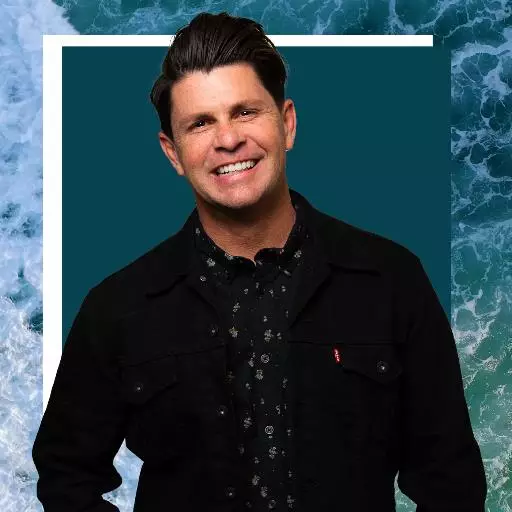
The Greatest Gift Part 1


It’s one of the most loved chapters in the bible. It’s been recited at countless weddings and on many of the greeting cards we purchase. It’s First Corinthians chapter thirteen and where we’ll camp out today on a Daily Walk. Pastor John Randall will point out what love does and doesn’t do through his message titled, “The Greatest Gift.”
Announcer: Are you a loving person? Here's Pastor John Randall.
John Randall: You could be the most theologically astute individual. You can be fluent in Greek, in Hebrew, Aramaic, Latin, and Spanish. I mean, all of the languages. You could understand the scriptures, you could comprehend, systematic theology, soteriology, numerology, eschatology, and apologetics. But if you don't have love, then it really doesn't matter how much you know. You know, I've met several people in my life who are extremely intelligent, and they say that they are Christians, but they're not loving.
Announcer: It is one of the most loved chapters in the Bible. It's been recited at countless weddings and on many of the greeting cards we purchase. It's 1 Corinthians chapter 13, and it's where we'll camp out today on A Daily Walk. Pastor John Randall will point out what love does and doesn't do through his message titled The Greatest Gift.
John Randall: First Corinthians chapter 13 this morning, beginning in verse 1, with a message entitled The Greatest Gift. Well, here it is. Though I speak with a tongue of men and of angels, but have not love, I have become as a sounding brass or a clanging cymbal. And though I have the gift of prophecy to understand all mysteries, all knowledge, though I have all faith so that I could remove mountains, but have not love, I am nothing. And though I bestow all my goods to feed the poor, and though I give my body to be burned, but if I have not love, it profits me nothing. The Bible has much to say about the subject of love.
When the Bible gives a description of who God is in his character, in his nature, it describes him in 1 John chapter 4 verse 8, it says, God is love. And God's love is connected to all of his other attributes as well, his holiness, his justice, his sovereignty, his righteousness. and God's love is not only stated in the scriptures, but it's also demonstrated in the scriptures. The Bible tells us in Romans chapter 5 and verse 8, but God demonstrates his own love toward us in that while we were yet sinners, Christ died for us. Jesus was asked by the religious leaders of his day, what is the greatest commandment?
And he responded by saying in Matthew 22, you shall love the Lord your God with all your heart, with all your soul, and with all your mind. This is the first and great commandment. And he said, the second is like unto it, you shall love your neighbor as yourself. And on these two commandments hang all of the law and the prophets. In other words, he was saying, you could sum up the entire Old Testament by saying, love God and love others. Jesus gave a command to his followers concerning love, and even a reason for the command. In John chapter 13, he said, a new commandment I give to you, that you love one another as I have loved you, that you also love one another.
And by this all will know that you are my disciples if you have love for one another. The love that was demonstrated by the Savior, the love that God is in his very essence and nature, that love which was commanded to be seen in the life of his disciples and within the church. Listen, it's a byproduct of the work of the Holy Spirit within our lives. The Bible tells us that the fruit of the Spirit is, it's love. In Romans 5, again, it says, hope does not disappoint because the love of God has been poured out in our hearts by the Holy Spirit who was given to us. The Bible tells us to pursue love, to walk in love, to put on love.
The writer of Hebrews says, stir up love. Jude tells us to keep ourselves in love. The church in Corinth, they didn't lack any spiritual gift at all, but they did lack love. You see, it doesn't matter how gifted you are or the sacrifices that you've made. In the eternal analysis, a life without the love of God really doesn't matter. And in the first three verses of this chapter, this hymn of love, as many have referred to it, the apostle presents an illustration of what a life without love looks like, and he describes what a person becomes, what a person is, and also what their achievements amount to.
He mentions here in the first three verses the more prominent gifts that were seen within the church in Corinth. He mentions tongues, prophecy, knowledge, faith, and even martyrdom. Notice what he said in verse 1, though I speak with the tongue of men and of angels, but I have not love. I become as a sounding brass and a clanging cymbal. Some suggest that when Paul speaks of the tongue of men and of angels, that he's referring to the eloquence of speech that the Corinthians were so fond of. They loved to listen to someone who had oratory skills and was a master of language. They were enamored with creative speaking.
Still others believe that Paul is referring actually to the gift of tongues, which seems in the context also possible because they were using their gifts out of order. Either way, it might sound good to man, but from heaven's perspective, it's the equivalent of a grating noise of clanging cymbals. Within the ancient culture of pagan worship, it wasn't uncommon to include the clanging of cymbals and the blowing of trumpets uncontrollably. It was very loud, it was very irritating. And what Paul is saying is, there's no difference if we're serving without love than the heathen pagan down the street who's serving his idols, clanging his cymbals.
It sounds the same if it's absent of the love of God. Paul takes it a step further, and he says in verse 2, though I have the gift of prophecy. The gift of prophecy is a gift whereby you're able to speak forth the word of God with power and authority. You can be the greatest preacher that there is, but if you don't have love, it really doesn't matter. You can boldly proclaim the truth that could change a life, but if it's not ordered by or motivated by the love of God, then what good does it do? Paul said you could understand all mysteries. You could have all knowledge. You could be the smartest person in the room today, and maybe you are.
You could be the most theologically astute individual. You can be fluent in Greek, in Hebrew, Aramaic, Latin, and Spanish. I mean, all of the languages. You could understand the scriptures, you could comprehend, systematic theology, soteriology, numerology, eschatology, and apologetics. But if you don't have love, then it really doesn't matter how much you know. You know, I've met several people in my life who are extremely intelligent, and they say that they are Christians, but they're not loving. The Bible says in 1 Corinthians chapter 8, verse 1 that knowledge puffs up, but love edifies, or it builds up.
People don't care how much you know until they know how much you care. It's important. He goes on to say you could be generous. Oh, you could have faith. You could have faith to move mountains. I believe God. Every problem, I believe God. I have faith for that. I have the gift of faith. Wonderful. But if you don't have love, then it profits you nothing. It says you are nothing. You could be generous. You could be the most benevolent humanitarian that there is today. You could, give to the cause to end hunger. You could dig wells. You could support a political campaign. You could help ongoing work within the ministry of your local church.
You could even lay down your life, it says. But if you don't have love, it profits you nothing, you are nothing. There it is. This is heaven's perspective. Life without love, we sound like nothing, we are nothing, and we accomplish nothing. But when Paul proceeds to give us now a clear definition of what love does and what love does not do, the characteristics and the quality of love. And listen carefully, this word that's used for love, it's one of the rarest words in ancient Greek literature, but it's one of the most common in the New Testament. It's the word agape. And the essence of agape love is goodwill.
It's benevolence, it's faithfulness, it's commitment. It's an act, it's a choice, actually. It's an act of the will. Agape love is always shown and demonstrated by what it does and what it does not do. Paul uses this word agape, and then he shows us what it looks like as he gives us these characteristics. The first, notice what it says. It says that love suffers long, verse 4, or in some translations, love is patient. Are you patient? The word for patient or suffers long describes prolonged restraint of emotion. It doesn't give way to agitation or anger. It means one's temper is long as opposed to short temper.
This patient love, you know what it can do? It can actually endure insult and injury. It can be inconvenienced and still love. It's a word that describes one who has been wronged and could easily retaliate, but chooses not to. That's the kind of love that Paul is describing here. Positively speaking, this patient love demonstrates persistence. It's an unshakable willingness to await events transpiring rather than trying to force them. Love is patient. Hey, anybody that's telling you to do something, let's say, for example, you're in a relationship today, and they're trying to get you to do something that's outside of the will of God, engage in something that's not found in scripture, cause you to sin, just know this, they're not walking in love because love is patient.
And if they're not patient, then I'd pump the brakes on where you're going with this relationship because love is patient. It waits. It doesn't retaliate. Not retaliating, culturally speaking, in this culture, it was seen as weakness. For many people, vengeance was actually, it was a virtue. But love is patient. Hey, let me ask you this. Is there any, don't, and don't look around. Seriously, don't. Like, is anybody in your life right now testing your patience? Don't look, I see you. Don't look, right? Testing your patience, maybe on the way to church. Testing your patience. It's always funny when you go to church, you know, the devil loves to like accompany, you know, he loves to just mess things up on the way to church.
Think of anybody you need to be long suffering toward, you're struggling with? Listen, think about this. How long suffering has the Lord been to you and me? How patient has he been with us? How long did he wait for us? How patient has he been? How many times could he have easily just, you know, drop kicked us across the cosmos for all the times, but so patient. The Bible says in 2 Peter chapter 3, verse 9, the Lord is not slack concerning his promises as some men count slackness, but he is long suffering toward us, not willing that any should perish, but that all should come to repentance. God has been patient with us, and he wants us to show that same patience to other people.
Oh, I think of how many times Jesus modeled that patient love within his ministry, seen throughout the Gospels. But love is not only patient, it says here that love is kind. And the word kind means to be useful, serving, gracious. It's active, it's intentional, it actually looks for opportunities to be kind. It doesn't just think about doing something for somebody else, it actually does it. It doesn't just think about being generous, it is generous. It's kind. It looks for ways to be a blessing to other people. I think it was Mark Twain that said, kindness is a language that the deaf can hear and that the blind can read.
Kindness. But we live in a world that isn't necessarily kind. And yet, as a Christian, walking in the love of God, putting on the love of Jesus, we are to be kind. You know that the Bible says that it's his kindness that leads us to repentance? Kindness. It's a character and quality found in Jesus. He constantly showed kindness to the lowly and the needy. The Bible says in Acts chapter 10 in verse 38, describing the ministry of Jesus, it said how God anointed Jesus of Nazareth with the Holy Spirit and with power, who went about doing good, showing kindness, healing all who were oppressed of the devil, for God was with him.
This is the example that we want to follow, to be kind. Love is patient, love is kind, but the apostle now lists for us the negative descriptions, that is what love is not, things that you will not find attached to agape love. He says, love does not envy, verse 4. It doesn't envy. The word envy is an attitude of dissatisfaction with, opposition to the prosperity, the possessions, or the position of someone else. Envy is dark. It can start out with wanting what someone else has. You're envious. It's very close to covetousness. It's a sin. And then it can take it a step further to wishing they didn't have what they had.
And then you could even go a step further, and you're hoping that they lose what it is they have that you want. It's dark. In Proverbs 14:30, it says that envy is rottenness in the bones. I mean, it just messes up your whole life if you're full of envy. You think of this example in scripture where people were envious? How about Cain with his brother Abel? He was envious of Abel's sacrifice being accepted. Or how about Joseph? His brothers were envious of that coat that he got from his dad, and they sold him into slavery. I think of Saul, who was envious of David's calling when they sang, Saul has slain his thousands, but David his ten thousands.
Oh, Saul was envious of him that from that day forward. I think of Daniel. He was envied by the king's counselors because God's hand was upon him, and so, and he would pray, and God would bless, and they sought to, well, ensnare him, have him thrown into the lion's den. I think of the envy of the Pharisees and the Sadducees. It says they delivered Jesus over to Pilate because they were envious of him. The Bible tells us where envy comes from, folks, and it's not a good place. James chapter 3, verse 14 says it this way. It says, if you have bitter envy and self-seeking in your hearts, don't boast and lie against the truth.
This wisdom, it doesn't descend from above, but it's earthly, it's sensual, it's demonic. For where envy and self-seeking exist, confusion and every evil thing are there. That pretty much wraps it up. You do not want, love doesn't look like that. So often envy is born out of the practice of comparing yourself with other people. Such a dangerous trap to fall into. But when you do that, you're really not walking in love. But love also does not parade itself, it says here, which means it doesn't brag. Love doesn't boast about oneself and its accomplishments, and within boasting, there is this attempt to make others jealous of what we have.
There is this absence of humility, trying to impress others, one up somebody else to get the attention placed upon us, to show how, well, important we are, well, at least how important we think we are. That's not walking in love. You remember that Peter fell into this trap? Do you remember? Jesus told the disciples, all of you are gonna depart from me. You're all gonna flee. And you remember what Peter said? Peter said, no, not me. All the rest of these losers, for sure, you can count on it, but not me. I will never deny you. I'm ready to die with you. Jesus said, Peter, you're going to deny that you knew me three times before the rooster crows.
Got caught up in that arrogance. The Bible tells us in Proverbs 27, verse 2, let another man praise you and not your own mouth, a stranger and not your own lips. There is a self-effacing quality attached to this love. True love will always be, in this agape love, more impressed with its own unworthiness than its own accomplishment. When you realize that you are a recipient of God's love in your own life, how can you, how can you boast about anything when you know that it's all him? That was a problem in Corinth. Paul said, why do you boast like you didn't receive what you received? I think of John the Baptist, such a great example.
Jesus said concerning John the Baptist, he was the greatest prophet that ever lived. Remember what John the Baptist said about himself? I'm not worthy to get down and untie his shoes. In fact, he said, I must decrease and he must increase. That's love. But then it says love is also not puffed up. It's not arrogant. It's very similar to the previous, but to be puffed up describes one who's actually inflated. It means to cause one to have an exaggerated self-conception. Puffed up is closely connected to parading oneself. They both have to do with pride, and whenever we walk in pride, whenever we walk in arrogance, we just need to know this: I'm not walking in love.
When pride gets the best of me, when pride wells up inside of me, and it does. It wells up in all of us. And when that happens, just know this: I'm not walking in love. What do I do? I repent and say, God, please, I humble myself before you. I don't want to walk like that. I don't want to speak like that. I don't want to act like that. It's not puffed up. The book of Proverbs tells us repeatedly that when pride comes, comes dishonor. When pride comes, comes destruction. Rather than be proud, we should clothe ourselves in humility because the Bible says that God, listen to this, this always gets me, that God resists the proud, but he gives grace to the humble.
I don't want to be resisted by God. I don't want to stand on the opposite side of God walking in pride. I want to walk in humility before him. I want to follow the example of Jesus. Jesus said, come learn of me, for I am meek and lowly in heart. He was humble. He's God in the flesh, and yet he considered himself of no reputation, humbled himself. And that's the example we want to follow. Love isn't over concerned with its own importance. It's not concerned with asserting itself, but rather giving itself away. I think of J. Hudson Taylor. If you've never read about his life, yeah, maybe check it out.
His biography, so good. He started the China Inland Mission. And J. Hudson Taylor, God used him in such a powerful way, but when he came home, he had a speaking engagement in Australia, and the story is told that he was introduced to this very large crowd as, let's welcome our illustrious guest, Hudson Taylor. And the people were applauding, and it says that he came up to the platform, and he said very humbly, dear friends, I am only a little servant of an illustrious master. That's the proper perspective of walking in love. But love also does not, notice what it says, verse 5, does not behave rudely.
To be rude is to be disgraceful, distasteful, inappropriate. It's contrary to the form and fashion of God's love. And again, this was a problem in Corinth. They would come to the feast that they had at the church, and they would eat all the food before the people got there. I mean, that's rude. There's nothing left for anybody else. They were just, there was people in that church, super gifted, but extremely rude, inconsiderate. Love doesn't elbow its way into conversations, worship services, public institutions in a disruptive, discourteous, attention-seeking way. When you behave rudely, listen, we lack tact, politeness.
It carries the idea of actually behaving gracelessly, even being offensive. When a person is rude, they reveal a lot about themselves. You know, have you ever, I don't know if you've ever had this experience before, but maybe you met somebody who was rude, just flat out like, oh, that was rude. And you know, you at first you were a little offended, but you thought, you know what, I'm gonna be a witness to this person. I'm gonna try to lead them to Christ. And so you just kind of eased into the gospel. Hey, you know, noticing how rude you are. No, I didn't say you don't start out that way. That's what you're thinking, but you start to share your faith and, yeah, I'm a Christian, I go to church, and they say, well, I'm a Christian too.
Wow, okay, I see God's still working in your life, because you're rude. It's a surprise. And I realize that when I'm rude, I'm not walking right. I'm not walking in love. Oh God, forgive me. But love also, it says here, it does not seek its own. It doesn't seek its own. It means it's not selfish. Love doesn't have to be first. It doesn't have to for, forward its own agenda. And I think one of the biggest struggles that we probably face, many of us, at least in first service, I'm pretty sure. it's just, we just get selfish. I mean, at the core, we're just selfish people, man. From the moment you're born.
Mine! Look at me! That's mine! And we start out that way. We get older, we get a little more sophisticated. Don't touch that. Everything you see here belongs to me. What's mine is mine, and what's yours, well, it's ours. I mean, just this selfish nature that we have. Alan Redpath said, the secret of every discord in the Christian home, in communities and churches, is that we seek to have our own way and our own glory. That's the problem. We just get selfish. I think that's why one of the first things that Jesus said, do you remember when he called his disciples to follow him? Remember what he said?
First thing, what do you have to do? Deny self. Deny self because self wants to reign supreme. Self wants to be on the throne. And Jesus said, if you're going to follow me, that's going to be a problem. So you need to deny yourself, take up your cross daily, die to self. And of course, Jesus not only said that, but he modeled that example for us in the way that he served.
Announcer: This is A Daily Walk with Pastor John Randall, who today continued our Through the Bible study. Would you like to hear the message again? Just go to adailywalk.org or listen wherever you get your podcasts. Another convenient way to listen to Pastor John is through our mobile app. Be among the thousands that are being encouraged in their daily walk by downloading that today. Find our app by searching for Calvary South OC. Hey ladies, looking for a great devotional to go through here at the beginning of a new year? Allow me to recommend Michelle Randall's 90-day and 100-day A Daily Walk for Women, where she reminds women of all ages that in Christ you never walk alone.
Jesus is with you every step of the way. Easy to read on your lunch break or before you begin your day. We're making both the 90-day and 100-day devotional books available to you as a bundle for the cost of 25 dollars. That's 2 devotionals for the price of 1 for you, our A Daily Walk listeners. You can order it right now at adailywalk.org or call 877-242-0828. That's 877-242-0828 and at addailywalk.org. As the Lord leads, we would also appreciate your financial support. We're consistently hearing from people that are being helped through the teaching of God's word, and your gifts help to make that possible.
So thank you for standing with us in 2025. To make a donation today, to help us continue the ministry on your station and others like it, visit adailywalk.org or call 877-242-0828. And if you're not a part of our online communities, start following us today. Pastor John shares biblical encouragement throughout the week on Instagram at John P. Randall and on X at PJ Randall 7. We're going through the Bible with John Randall here on A Daily Walk. Don't miss a moment of the journey. This program is brought to you by Calvary South OC and made possible through your generous support.
Featured Offer

We’re very excited to tell you about a newly revised book from Pastor John’s wife, Michelle Randall! It’s, “The Great Exchange: Finding Freedom in Surrender!” Michelle calls the journey of surrendering our will for God’s will, the Great Exchange! And with candor, she shares her own real-life experiences of learning to relinquish her will for God’s will. With relatable, practical, and applicable insights for today’s struggles of faith and fear, “The Great Exchange” will encourage, strengthen, and challenge you in a quest for complete surrender and a fervent pursuit after God. Be set free as you exchange your will for God’s will.
Past Episodes

Featured Offer
We’re very excited to tell you about a newly revised book from Pastor John’s wife, Michelle Randall! It’s, “The Great Exchange: Finding Freedom in Surrender!” Michelle calls the journey of surrendering our will for God’s will, the Great Exchange! And with candor, she shares her own real-life experiences of learning to relinquish her will for God’s will. With relatable, practical, and applicable insights for today’s struggles of faith and fear, “The Great Exchange” will encourage, strengthen, and challenge you in a quest for complete surrender and a fervent pursuit after God. Be set free as you exchange your will for God’s will.
About A Daily Walk
John Randall is the Senior Pastor of Calvary South OC located in San Clemente CA. John has been serving in pastoral ministry for over 25 years and is the featured speaker on the Bible teaching radio program "A Daily Walk." He is known for his clear and relatable presentation of the Scriptures.
About John Randall
As a child, John’s family began attending Calvary Chapel Costa Mesa in 1974. It was there that he attended the elementary school, Jr. High, and graduated from Calvary Chapel High School. Following graduation he went on staff at Calvary Chapel Costa Mesa as a janitor. It was also at this time that he met his wife Michelle who was teaching at Calvary’s elementary school.
After four years on staff having served in children’s ministry, high school ministry and worship John went on staff at Calvary Chapel in Vista CA.
In 1997 the Randall’s set out on a venture of faith to the SouthEast of Florida where they planted their first church, Calvary Chapel of Brandon. After ten years of ministry in Florida the Lord called the Randall's back to Southern California where John currently pastors at Calvary South OC. John has been serving in pastoral ministry for over 25 years and is the featured speaker on the Bible teaching radio program "A Daily Walk." He is known for his clear and relate-able presentation of the Scriptures. John and his wife Michelle have four children.
Contact A Daily Walk with John Randall
http://www.adailywalk.org/
Address
Calvary South OC
1311 Calle Batido
San Clemente CA 92673
@johnprandall
@PJRandall7
Phone Number
877-242-0828