
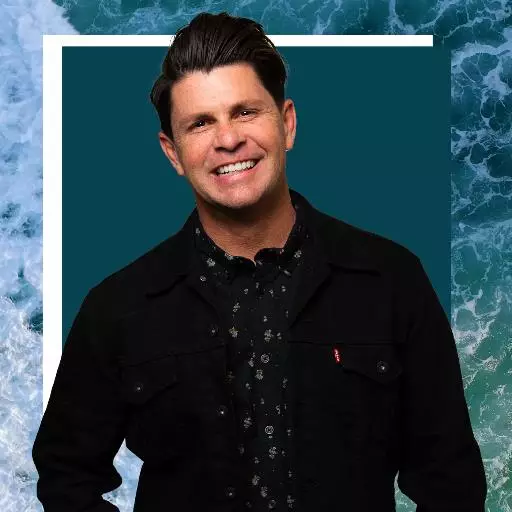
Taming the Tongue Part 1


It’s happened to us all. No sooner than something comes out of our mouths, we realize we shouldn’t have said that. And damage is done. Today on A Daily Walk we return to our study of James and are reminded of the power of words. They have the power to motivate millions of people to hang tough in a difficult situation, and they have the ability to cut a person to ribbons. Pastor John Randall is our teacher, and here today he’ll show us what James has to say on the subject of the unbridled tongue.
Guest (Male): Coming up today on A Daily Walk, Pastor John Randall points out the power of speech.
John Randall: Somebody's words can just, you can be in a place that's not in a good place, and somebody can just speak life into that situation, speak the truth into that situation, speak the promise of God's word. It's amazing how you can just be, it's like somebody just pulled you up out of a pit and got you going again.
Be that person. Speak the words of encouragement. Look for the ways that you can build someone up as opposed to tearing them down.
Guest (Male): You know it happens to us all. No sooner than something comes out of our mouths, we realize we shouldn't have said that and damage is done. Today on A Daily Walk, we return to our study of James and are reminded of the power of words. They have the power to motivate millions of people to hang tough in a difficult situation, and they have the ability to cut a person to ribbons. Pastor John Randall is our teacher, and here today he'll show us what James has to say on the subject of the unbridled tongue.
John Randall: James chapter 3, beginning in verse 1: "My brethren, let not many of you become teachers, knowing that we shall receive a stricter judgment. For we all stumble in many things. If anyone doesn't stumble in word, he is a perfect man, and able to bridle the whole body. Indeed, we put bits in horses' mouths that they may obey us, and we turn their whole body.
Look also at ships, although they are so large and are driven by fierce winds, they're turned by a very small rudder wherever the pilot desires. Even so, the tongue is a little member and boasts great things. See how great a forest a little fire kindles! And the tongue is a fire, a world of iniquity.
The tongue is so set among our members that it defiles the whole body, and sets on fire the course of nature, and is set on fire by hell. Every kind of beast and bird or reptile and creature of the sea is tamed and has been tamed by mankind, but no man can tame the tongue. It is an unruly evil, full of deadly poison."
There is a common struggle that all of us share here this evening. There is a temptation that every one of us face, a problem that anyone can find themselves in, and it has to do with what some have said is the most flexible part of your body. 85% of the population can curl this part of their body into a tube. You can try it right now if you like. One person called it the two-ounce slab of trouble, and Webster defines it simply as the movable muscular structure attached to the floor of your mouth. I'm talking about the tongue.
And it's fascinating how something so small has such a great impact, either for good or evil. How it can build someone up and inspire them, or it can tear them down and destroy them. The Bible tells us in the book of Proverbs, in the 18th chapter and the 21st verse, "Death and life are in the power of the tongue." Within his epistle, James has already mentioned in previous chapters the topic of the tongue. In fact, every chapter up to this point, he mentions it. You may recall back in chapter 1, verse 19, we are exhorted to be swift to hear and slow to speak. Sometimes we have that reversed.
And then in James 1:26, it says, "If anyone among you thinks that he is religious and does not bridle his tongue, he deceives his own heart, and this one's religion is useless." And then in chapter 2, verse 12, James said, "So speak and so do as those who will be judged by the law of liberty." Now here in the third chapter, there is a warning to those who were using their tongues as teachers. Specifically in this context, teachers of the word of God. A very sobering passage as I speak to myself at this moment. But "my brethren," he says, "let not many of you become teachers, knowing that we will receive a stricter judgment from the Lord."
Now listen, James wasn't discouraging or condemning the desire to teach the word of God or those who were teaching the word of God. Instead, he's giving a warning to those who were teaching God's word. It was important for those who were instructing others, especially in the word of God, to understand that they had a tremendous responsibility to which they would be held accountable. There is a standard that the teacher of the word of God is held to and must be considered before they teach. Again, even as I read this to you right now and expound upon it, I am aware of the responsibility and it is somewhat concerning.
I take this warning very seriously because the Bible says right here that when I stand before God, I'm going to give account for what I have said. There is a standard to which I am going to be held by, in which I am going to be judged by the Lord for what I say. And that's very sobering and it should be when it comes to teaching the word of God. I realize that this is God's word and how I handle it is very important, so that I handle it correctly, that I represent the Lord rightly. I wish that I could say I've always done that. I haven't always done that.
There have been plenty of times when I've gone back and listened to what I've said and thought, "Why did I say it like that?" or "That was foolish, why did you say that?" Many sermons I wish that I could take back, but they're all recorded. Imagine if people recorded everything you said over the last 14 years. What would you like thrown out? It's out there.
But when it comes to teaching from the word of God, it is important, and I want to mention this, that this is a calling that comes from the Lord. In Ephesians chapter 4 and verses 11 and 12, the Apostle Paul writes to the church in Ephesus and he says concerning the Lord Jesus that He Himself gave some to be apostles, some prophets, some evangelists, some pastor-teachers. Those words go together: pastor-teacher. For the equipping of the saints for the work of the ministry, for the edifying of the body of Christ.
Being a pastor-teacher, a shepherd over God's people in the flock, is not something that a man takes for himself without being called by God. In fact, it would be a horrible thing to endeavor to be a teacher of God's word if you're not called to it. It's bad for you and it's bad for the people. In John's Gospel in the 21st chapter, when Peter was being restored to the ministry by Jesus, he had denied Jesus three times. Jesus then questioned him publicly, "Peter, do you love me more than the rest of these that you said would all leave me except you? Do you love me?"
Peter responded, "Lord, I love you. I'm fond of you," and he felt condemned over what was being said. But each time Jesus told him, "Peter, I want you to feed my sheep. I want you to shepherd the flock of God. I want you to tend the lambs. I want you to take care of my people." That included the teaching of the word of God. When you open up the book of Acts and the early church begins, it says that the early church kept themselves in the apostles' doctrine. That is, they kept on teaching the word of God.
When things got busy in the church, when things were so active and the thing was growing beyond what they could handle, they said, "Listen, we've got to get some guys to handle the practical aspects of the ministry so that we can continue to give ourselves to the teaching and preaching of the word of God and prayer. If we fail at that, we've failed at our job." This was so important for them. And so Peter understood this.
That is why later on in his own epistle, his first epistle in the fifth chapter, this is what he says to pastors: "Shepherd the flock of God which is among you and serve them as overseers, not by compulsion but willingly, not for dishonest gain but eagerly, not as being lords over those who are entrusted to you, but be an example to the flock. When the chief shepherd appears, you will receive the crown of glory that does not fade away."
Peter emphasized the responsibility and the seriousness of the calling with which he had been given. Can I ask you something? Do me a favor. Would you pray for me? I would appreciate it. I know you do, and some of you are so encouraging. I'm not saying after church you all have to come up and say you're praying for me. I understand, you don't have to do that. But I'm blessed to know that this church prays for me, and I sense it and I feel it and it encourages me. I need your prayers, especially in these days, because I really don't know what I'm doing to a degree. I know what I'm supposed to be doing and so I appreciate your prayers. But this is a calling that comes from God and with this calling comes a great responsibility.
And why is there such a responsibility? Why such a serious warning? Because you're influencing the lives of other people and you're standing before God's people and you're representing Him. If a pastor-teacher is saying things to the congregation that are inaccurate, that's a problem. You're leading people astray. Or if he's saying things to people and he's not living by what he's teaching, that is also a problem and that will show up really quickly. I'm responsible before God and held accountable to God and therefore I need to live what it is that I teach.
I'm just going to share a little insight with you. The majority of what I either am going to teach or about to teach or have taught or getting ready to teach, God puts me through it or after the fact. God will remind me, "Hey, Pastor John, do you remember what you told those people? What part? The part about trusting me? Oh, that part. Yeah, I remember that." "Well, how come you're not doing it?" "I don't know. I'm sorry, Lord. I trust you."
I need to be reminded of that. And so we're all going to stand before God one day. We're all going to be rewarded for what we have done with what we've been given, but there is here an indication, a stricter judgment and standard that those who teach the word of God will be held to. The last thing that I want to do is simply go through the motions of a prayerless preparation and give you a little pep talk about whatever and really miss the mark completely and then be held accountable for it.
People sometimes think, "Pastor, what do you do? You just show up on Sunday. Wow, that's the dream job, one day a week. How cool is that?" People just don't understand. These things just don't magically appear. You've got to be diligent. You've got to read, you've got to study. I'm really not that smart. I have to study. I have to prepare myself. So much of my life is spent in constant consistent preparation, reading, praying, studying, getting ready because I have a very short window when it turns around. I've got to be back on the air, so God keeps me on a short leash and it's good.
Now one of the ways that you know if a person has the gift of teaching is when they teach people, are they learning? Are they growing? Is there a sense of anointing of the Holy Spirit upon what they teach? It's one thing to read someone's commentary and repeat it word for word and maybe add some unnatural theatrics or throw in a few planned jokes or have some developed diction and command of the English language and, "Whoa, what a great speaker." I hope that when you walk away, you walk away with what a great God, what a great savior.
Because this thing here doesn't rise and fall with me. It's all about Jesus. So I just am here to deliver the message. But I remember, again on a personal note and we will move on, I remember when I sensed the Lord calling me into the ministry and it was a very, I remember the day specifically. God had been doing some things in my heart and stirring me up in that regard, but I didn't start out thinking, "Hey, I know what I want to do. I want to pastor a church." I never would have picked it for me. That was not my plan. I had other plans and God disregarded those and I'm glad that He did. His plan is always best.
But I remember when I got to that point of sensing the calling to shepherd God's people, I asked God, "Give me the gift to teach because I don't have it." I remember the first time my wife asked me to do a devotional in her class for her fifth-grade students. I was 19. She said, "Hey, can you do a devotional for my kids?" I was like, "How long should it have to be?" "Only five minutes or so." I'm like, "Five minutes. Alright." I think it was like three minutes and I was out. I was like, "That was it. That's all I've got. It's only been three minutes. I'm done kids, let's pray."
I realized I needed the gift of teaching and by God's grace, I believe that He answered that prayer and He's continuing to grow me in that gift. Praise God for that. Thank you for that mom, I appreciate you saying that, that's very encouraging. But James makes it clear being a teacher of a congregation isn't something you take lightly. I love what this man by the name of Lehman Strauss wrote concerning this. Let me read this to you. "Let every teacher of adults or children take heed. When we teach the word of God, we handle sublime and eternal truth. Let every lesson, every message spoken or written be given much time in thought and in prayer."
And so James warns those who use the tongue to teach: you need to know the truth, you need to live the truth, and then you're able to teach the truth. Now moving from the warning given to teachers, James now addresses the general public to which the teachers would be included, but in verse 2: "Indeed we put, notice this, we all stumble in many things. If anyone doesn't stumble in word, he's a perfect man, able to bridle the whole body." Now speaking of bridling in verse 3: "Indeed we put bits in horses' mouths that they may obey us, and we turn their whole body. Look also at ships, although they are so large they're driven by fierce winds and they are turned by a very small rudder wherever the pilot desires."
I wonder if you have noticed how many times James throughout this epistle uses illustrations that are common to make a point. You may remember in James chapter 1 he mentioned waves driven by the sea. He said that was a picture of an individual who is double-minded and unstable in all of his ways. In chapter 1 he mentioned grass withering under the heat of the sun, and that was to reveal how a rich man withers under the pursuits that he's after over time. And then in James chapter 1 he used temptation. He said it's like a seed that's planted and eventually it grows and it gives birth to something.
In James chapter 1 he said the word of God's like a mirror and it reveals the condition of my heart and shows me the need to change. And then in James chapter 2 he said he looked at the body without a spirit or without life in it, and he said that's like faith without works. But here in chapter 3 James continues to use imagery granting insight into how the tongue works and what it's capable of. And he illustrates it first of all like this: a bit in a horse's mouth. I don't know how many cowboys we have here or equestrian people.
This town is full of people who ride horses. We have a parade here, it's one of the only ones that just has mainly horses. The point I'm making is this: there is a very small, relatively small piece of metal or synthetic material that goes into a horse's mouth and it rests on the interdental part of the horse where there's no teeth, and it guides and directs power. You can put this tiny little piece into this horse's mouth and you can just direct him wherever you want him to go.
He has the bit and even the bridle, and this little piece of equipment can control and guide a half-ton of raw power. James says that's a lot like the tongue. If you can control this, you can control everything. If this little part of you is under the self-control of the Holy Spirit in your life, there is so much good that can be done. And if it's out of control, if a horse is out of control, stampede! That's frightening to be run over by raw power as opposed to having it controlled.
James says, let me give you another example. How about a rudder of a boat? A large boat built to drive across the ocean's surface can be directed by a relatively small rudder getting people where they're supposed to go. It controls the boat. In the same way the tongue controls the person. It's like a little rudder, it's like a little bit. So small and yet so powerful. Little things make a huge difference. So the tongue, James says, it's a little member and it boasts great things.
And then he gives us another example of what the tongue is likened to. He says, "See how great a forest a little fire kindles!" Over the last couple of years we have seen some of the worst fires in the history of the state of California. Covering thousands upon thousands of acres, consuming forestry and neighborhoods and entire communities, bringing devastation. But those enormous fires, they started with a tiny spark. That's all it took. One spark lit the place on fire and endangered so many lives.
And James says it's like that with the tongue. It's so small, it's like a spark, but it can consume people, it can hurt people, it can devastate people. The things that we say can lead to complete wreckage. And therefore James declares we need to be careful because there is power in the tongue. And maybe we ask ourselves as we pause for a moment and reflect on what has been said thus far, what are we saying? What is coming out of our mouth? And every single person in here, if you're honest, you're convicted when you read this.
Because you know you haven't always said the things that you should say. Sometimes you've said the things that were hurtful, and once they're out, you can't get them back in. So James says here be careful of this, what you say, the words that you speak. He says in verse 6: "And the tongue is a fire, a world of iniquity. The tongue is so set among our members that it defiles the whole body and sets on fire the course of nature and is set on fire by hell."
James further develops the image of the tongue as a fire and the description becomes even more narrow and more detailed. He said it's a world of iniquity, it defiles the entire body, sets on fire the course of our life and it's set on fire by hell. The full range of iniquity finds the outlet through the tongue. There are several ways that the tongue damages. It damages people through gossip, slander. The person doesn't even have to be in the same room with you and you can say something about them and it assassinates their character.
The Bible encourages us to speak evil of no one and that's hard, especially if you don't like that person or they've hurt you. The response is I'm going to say what I think. Or gossip, that's always a dangerous thing. Bible warns repeatedly throughout the scriptures, especially in the Proverbs, about gossip, the danger of gossip. Sometimes as Christians we kind of spiritualize that. We call it prayer and share. "Did you hear about? No. Well, if you know, we need to pray about so-and-so because so-and-so." Did they ask you to pray about that? No, but I thought you should know.
Sometimes gossip has a life of its own. Have you ever played that game telephone as a kid or as an adult? I've said some things that nobody said, and then it came out at the very end that that was not what was said. It's amazing how the story can change and it gets elaborated and expands and things become, "What?" By the time it gets back to that person, where did you hear that? I don't remember where I heard it. Gossip is dangerous. Slander. Bitterness.
How about complaining? Probably nobody's complained today at all about anything that's going on. We're all just praising God. I heard some people complaining. It was me! I was complaining about some of the things that were going on in the world. It's easy to do. But there's also some encouraging things that the tongue can produce. People who are discouraged, you can encourage them. Isn't it amazing how somebody's words can just, you can be in a place that's not in a good place, and somebody can just speak life into that situation, speak the truth into that situation, speak the promise of God's word. It's amazing how you can just be, it's like somebody just pulled you up out of a pit and got you going again.
Be that person. Speak the words of encouragement. Look for the ways that you can build someone up as opposed to tearing them down.
Guest (Male): Pastor John Randall on the power of words. They can be used for good and for evil. You've been listening to a study in James on A Daily Walk. We house our recent programs at adailywalk.org and you'll find them on our mobile app as well. Do a search for Calvary South OC and download it for free today. Look for us wherever you get your podcasts and at oneplace.com.
At the beginning of the new year, it is a great time to commit to going through the Bible in a year. We'd like to get a one-year chronological Bible into your hands to help you along. It's in the New King James translation and broken down into daily readings. Take the challenge. Go through the Bible in 2026. Request the one-year chronological Bible for the cost of $10 when you call 877-242-0828 or go online to adailywalk.org. Please remember it is your generosity that helps us deliver God's good news all across the world. No gift is too small to be used by God in great ways.
Again, our number is 877-242-0828 or you can donate online at adailywalk.org. A one other thing worth mentioning here at the beginning of the year is the A Daily Walk devotional. Short enough to watch on your lunch break or as you're getting up to face another day, you'll find these encouraging video daily devos at adailywalk.org. We're reminded on a continual basis that the Lord is doing great things through the radio today, and maybe He's doing something amazing in your life.
We want to hear about it. Pastor John would be very encouraged by what you have to say. Write to us today by email at adailywalk@gmail.com. So how do we tame the tongue, you might be asking after today's message? Well, we can't, but God can, and we'll learn about that tomorrow on A Daily Walk when Pastor John Randall revisits James chapter 3. This program is brought to you by Calvary South OC and made possible through your generous support.
Featured Offer

How’s your devotional life these days? We’d like to recommend Oswald Chamber’s devotional, “My Utmost for His Highest.” Today we’d like to offer you the updated language gift edition. These rather brief scripture-based readings will both comfort and challenge you in your daily walk. Discover what it means to offer God your very best for His greatest purpose.
Past Episodes

Featured Offer
How’s your devotional life these days? We’d like to recommend Oswald Chamber’s devotional, “My Utmost for His Highest.” Today we’d like to offer you the updated language gift edition. These rather brief scripture-based readings will both comfort and challenge you in your daily walk. Discover what it means to offer God your very best for His greatest purpose.
About A Daily Walk
John Randall is the Senior Pastor of Calvary South OC located in San Clemente CA. John has been serving in pastoral ministry for over 25 years and is the featured speaker on the Bible teaching radio program "A Daily Walk." He is known for his clear and relatable presentation of the Scriptures.
About John Randall
As a child, John’s family began attending Calvary Chapel Costa Mesa in 1974. It was there that he attended the elementary school, Jr. High, and graduated from Calvary Chapel High School. Following graduation he went on staff at Calvary Chapel Costa Mesa as a janitor. It was also at this time that he met his wife Michelle who was teaching at Calvary’s elementary school.
After four years on staff having served in children’s ministry, high school ministry and worship John went on staff at Calvary Chapel in Vista CA.
In 1997 the Randall’s set out on a venture of faith to the SouthEast of Florida where they planted their first church, Calvary Chapel of Brandon. After ten years of ministry in Florida the Lord called the Randall's back to Southern California where John currently pastors at Calvary South OC. John has been serving in pastoral ministry for over 25 years and is the featured speaker on the Bible teaching radio program "A Daily Walk." He is known for his clear and relate-able presentation of the Scriptures. John and his wife Michelle have four children.
Contact A Daily Walk with John Randall
http://www.adailywalk.org/
Calvary South OC
1311 Calle Batido
San Clemente CA 92673
Instagram:
@johnprandall
Twitter:
@PJRandall7
877-242-0828