
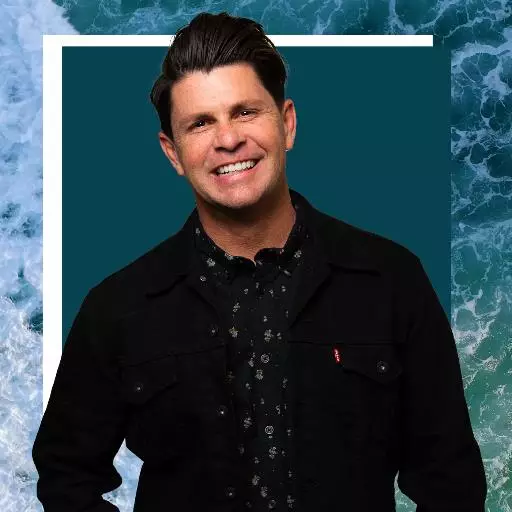
Love Like Jesus Part 2


If you want a good picture of love you’re probably not going to find it channel surfing on your tv, but you will find it as you look at the life of Jesus! Today on a Daily Walk we’ll learn how to love like Jesus, as our study in First John continues. We’ll be finishing up chapter three, where the apostle John defines love as a sacrifice, choice and action. It isn’t always easy, but it is essential.
John Randall: Sacrificial, Christlike love is not just evident in dramatic moments, but also in daily humble acts of service. Jesus in his ministry consistently put other people before himself. He came to serve. His days were interrupted by opportunities to serve others sacrificially.
And I do believe that when you anticipate the opportunity to love others, you won't be as troubled when they seem inconvenient to your plans. Self-sacrifice is never convenient.
Guest (Male): If you want a good picture of love, you're probably not going to find it channel surfing on your TV, but you will find it as you look at the life of Jesus. Today on A Daily Walk, we'll learn how to love like Jesus as our study in 1 John continues.
We'll be finishing up chapter three where the apostle John defines love as a sacrifice, choice, and action. It isn't always easy, but it is essential. Here is Pastor John.
John Randall: The Apostle Paul, when he wrote to the Philippians, he was writing about the incarnation of Christ in Philippians chapter two. And there in that section of Scripture, he talked about Christ's sacrifice. He said in Philippians 2:5, "who, being in the form of God, did not consider it robbery to be equal with God, but made himself of no reputation, taking the form of a bondservant, and coming in the likeness of men. And being found in appearance as a man, he humbled himself. He became obedient to the point of death, even death on the cross."
In other words, he set aside his divine privileges, clothed himself in humanity, and was willing to die the death that we should have died. That's what love looks like. The Apostle John observed Jesus in the upper room right before he was to lay his life down. And it was there that Jesus laid aside his garments and then tied a towel around him and he began to wash all of the disciples' feet. And when he had completed that task, he instructed them as to what this meant. And here is what he said in John 13.
He said, "If I then, your Lord and teacher, have washed your feet, you also ought to wash one another's feet. I've given you an example that you should do as I have done. Most assuredly, I say to you, a servant is not greater than his master, nor is he who is sent greater than he who sent him. If you know these things, blessed are you if you do them." A sacrifice is made. Something is set aside for a demonstration of love. The ultimate example is Jesus.
If you're a married person here today, the greatest example in the marital relationship is Jesus. When Paul instructed the husbands, he said, "Husbands, love your wives like Christ loved the church and gave himself for it." Jesus said in John chapter 15 and verse 13, "Greater love has no one than this, than he lay down his life for his friends." So here is the emphasis of love and here is the example that we are to emulate when it comes to love.
Jesus is the pattern that we follow, the example. But because he is our pattern and because he is the model, there should be an expectation of love. Because in verse 16 it says, "And we also ought to lay down our lives for the brethren." An expectation of love. If God is love and if Jesus sacrificially laid down his life for us and we are children of God, then it follows that we ought to then lay down our lives for our brethren.
It's not unrealistic. It's not a stretch. It's actually a given. Christ's sacrifice defines love and now we are called to imitate that love. When we think about laying our life down for someone, we tend to lean towards the dramatic. If there was a burning building, I'd run in there and pull you out to sacrifice myself for you. We think in those terms. We think if the car was coming and I saw it, I would push you out of the way. I'd take a bullet for you.
These are very dramatic thoughts of laying one's life down. For most of us, that's not how it's going to happen. It's far more practical. It's taking out the trash, God forbid. It's doing the dishes. It's helping with the laundry. It's making your bed. It's picking up your clothes. All of these things are so practical. For most of us, laying down our lives is not as dramatic on the day-to-day basis.
The Bible tells us in Philippians chapter two, verse three, it says, "Let nothing be done through selfish ambition or conceit, but in lowliness of mind let each esteem others better than himself. And let each of you look out not only for his own interest, but for the interests of others." Practically speaking, when we talk about demonstrating this love, the expectation, it should be putting others' needs before our own.
Giving time, energy, and resources when it costs us. Denying self for the sake of someone else's spiritual, emotional, or physical well-being. It's showing up when it isn't convenient. It's giving when it's uncomfortable. It's forgiving when it's not easy and it's serving when no one notices. Sacrificial, Christlike love is not just evident in dramatic moments, but also in daily humble acts of service.
Jesus in his ministry consistently put other people before himself. He came to serve. His days were interrupted by opportunities to serve others sacrificially. And I do believe that when you anticipate the opportunity to love others, you won't be as troubled when they seem inconvenient to your plans. Self-sacrifice is never convenient. This is the expectation of love that is to come from the child of God.
Because we are his children, we should bear the resemblance of our Father. But then there is also the expression of love. Verse 17: "Whoever has this world's goods and sees his brother in need and shuts up his heart from him, how does the love of God abide in him?" John gives us an example of a real-life test of God's love. The love of God is shown through generous acts of meeting the needs of others.
This is the expression of love. He says "whoever has this world's goods." That would refer to any person, the ordinary believer who has something to give, not just the wealthy individual, but anybody. And he said if you see your brother in need, that indicates an awareness that creates opportunity. You see the need. God makes you aware of the need.
From time to time, people will come to me and they'll say, "Pastor John, there's a need and you should do something about it." And I always feel like maybe God wants you to do something about it because he made you aware of it and you should do it. I really feel you should do it. God is speaking to you. When it comes to meeting needs, it does take wisdom. It does take discernment.
You want to genuinely help somebody, not merely enable somebody, and that's perhaps a subject for another time. But God does provide us with wisdom for every situation. And sacrificial love is practically demonstrated when you address the needs. I let me give you an example of this in the Bible. I'm sure you're familiar. You've heard of the Good Samaritan. He's in Luke's Gospel chapter 10.
The Good Samaritan. There was this guy that was making his way through a dangerous part of the area and he was robbed and beaten and left for dead. And more than one person saw the guy in the ditch. The first guy came by, saw him, and said, "That's a shame," and just kept going. The next guy came by, saw him, and said, "Wow, sad," and kept going.
The Samaritan comes by, sees him, and you know what he did. He picked him up, cared for him, took him to the place, and paid for all of his needs and helped him. The guy could do nothing to repay this man. He just saw the need and he was moved with compassion and he met the need and ministered to him. That is the example that we have to follow. We are to go and do likewise.
In Titus chapter three, Paul exhorted the believers there to meet urgent needs. If you see a brother or sister in need and God makes you aware of it and the Spirit of God places upon your heart to minister to that need and you don't, John then asks a rhetorical question here. If you shut up your heart towards that person, it means you've slammed the door shut, just like those who just passed by the man who was in the ditch.
He asks the question, "How then does the love of God abide in him?" Does it abide? The answer to that is it doesn't. It doesn't abide. If someone can witness a need, have the means to help the need, and refuse even when the Spirit of God has moved upon their heart and then claim to know God—"Hey brother, be warm and be filled"—then that claim is empty.
Real love isn't just talked about. It's actually proven in action and this verse challenges us to align our faith with our works. It's very similar to what James said. James gives us that balance between faith and action in James chapter two and verse 15. James said it this way: "If your brother or sister is poorly clothed and lacking in daily food, yet you do not give them what they need, what good is that?"
Come on is what James is saying in essence. In 1 Timothy, Paul also exhorted the church and exhorted Timothy to remind them. He said, "Command those who are rich in this present age not to be haughty, nor to trust in uncertain riches but in the living God, who gives us richly all things to enjoy. And let them do good, that they be rich in good works, ready to give, willing to share, storing up for themselves a good foundation for the time to come, that they may lay hold on eternal life."
Great exhortation for us. Love is practically demonstrated, generously, sacrificially, but also verbally by the things that we say. Now, in verse 18, John says, "My little children, let us not love in word or in tongue, but in deed and in truth." In other words, he is saying don't let your love just be what you say, but let the actions follow what you say.
The words that we speak often serve as the first indication to someone whether or not we love them or if we are actually walking in love. Have you ever met a Christian for the first time, but did not know that they were a Christian and as the conversation continued, you started to think in your mind, "I wonder if they're a Christian." Have you ever thought that?
Hopefully, somebody thought that about you and about me. Maybe they don't know and you think, "I wonder if they're a Christian." Why is it that you think that? It's the way they speak. It's the way they carry themselves. There should be a characteristic, a quality about them that you realize, "I wonder if they are." It's the words that they're speaking.
And oftentimes then you observe the way that they're living. Those two things going together gives us an indication that they're walking in love. The Bible encourages us to speak the truth in love. In Colossians chapter four and verse six, the Apostle exhorted the church with these words: "Let your speech always be with grace, seasoned with salt, that you may know how you ought to answer each one."
We ask ourselves the question this morning, are our words seasoned with grace? Are they seasoned with salt? Are they gracious words? When Jesus spoke, they marveled at his gracious words. In Ephesians chapter four, in verse 29, Paul also exhorted us along these same lines when he said, "Let no corrupt word proceed out of your mouth, but what is good for necessary edification, that it may impart grace to the hearers."
The words that we speak can build up or they can tear down. They can inspire people or destroy people. There's life and death in the tongue. And what we say so often communicates the state of our own heart. If what's coming out of your mouth is profane and critical and constantly tearing people apart or it's gossip, there's no love in that. That's just the flesh and it doesn't please God.
In fact, it grieves the Spirit of God. It quenches the work that the Spirit of God wants to do. And we need to ask God, "Lord, check my mouth. Check my lips. Check my conversation. What am I saying right now?" Sometimes we just start saying things without even realizing what's coming out. And once it's out there, it's really hard to bring it back. How many of us have regretted the fact that we've said something and then it was like, "Okay, it's out there."
You can't rewind it and bring it back and try to say, "What I meant to say was." We know what you meant to say, you said it. And we had to repent and get right. The words of our mouth, demonstrated by the things that we say, reminding each other that we love each other because the fact is you won't always have that opportunity to say those words. It's important to speak them now while you have the opportunity.
But it is one thing to say that you love someone and it is another to actually demonstrate it. They go together. This is the expression of love. It is word and it is action. It is both. And if you're the person that says, "Well, I don't need to say it, I show it," well, that's good that you show it, but you need to say it. If you're the person that says, "Well, I say it, but I don't show it," actually you need to show it because it speaks loud.
John says, "Let's love in deed." Let's show our love by what we do. It's good to express it and it's good to demonstrate it. How does this happen practically? Reaching out to people, make a call, offer a word of encouragement, provide financial support if necessary, extend love, and be there for somebody else. How many of you today have had somebody in your life who came alongside of you when you needed encouragement and they were right there?
Not only did they speak the word, but they also demonstrated their love and it made such a difference in your life. And you can look back at those people and think, "I remember that moment, that was a difficult moment, but God used them." Don't you want to be that person? I want to be that person for somebody else. The expression of love then leads us to an encouragement of love.
In verse 19, it says—John loves this phrase—"And by this we know." So there's something else we know. "That we are of the truth and shall assure our hearts before him. For if our heart condemns us, God is greater than our heart and he knows all things. Beloved, if our heart does not condemn us, then we have confidence toward God." When John uses the words "by this we know," that is a reference to the previous verses. It's a connection.
"By this"—what is the "this"? The "this" is the sacrificial love of Christ. By this, this is how we know and us walking in that, that we actually are of the truth. And this assurance guards our hearts when we feel condemned. Sometimes our hearts, our thoughts, can cause us to doubt. I have, in ministry and in my life, spoken to many people through the years who have doubted whether they were born again.
And they will come and say, "Pastor John, I don't know, am I saved? Am I saved?" because they'll have reasons why. The fact is the fact that you're asking "Are you saved?" is a good sign to me. If you weren't concerned about it, then I would be concerned. The fact that you keep asking the question and you need reassurance—listen, God says he's yours. Don't worry, he's got you.
Yeah, you messed up and yes, you need to repent, but come on now, you know. And you just have to remind them of that. But the fact is we are all prone to that temptation. If you are melancholy in some ways, the devil capitalizes on that. He loves to hammer that, just loves to beat you down with it and condemn you to the point that you can't lift your head up and you think, "I must not be saved."
But here, John says if we are walking in sacrificial love, if we are seeking to love Jesus and love other people, even though we fail and the devil would love to condemn us, we are not condemned. Our heart might condemn us, but it says this: God is greater than our heart. God is greater than those emotions that would love to just keep us down and you need to take every thought captive to the obedience of Christ.
Put on the helmet of salvation and don't believe the lies of the enemy. There's no condemnation to those who are in Christ Jesus. So if you're in Christ Jesus, it is evident by the fact that you love God and you love people and you are not condemned. And John reminds us of this. When we walk in love, there's no need to doubt. We can have confidence. God is greater than my heart.
Did you know that God already knows the worst thing that's within us? It's no secret to him. He knows the worst part about us and he loves us and he's for us. He knows. It's not like he died for us and had no idea how far he'd have to go. He knows what's in us in the deepest part of us and yet he loves us and he doesn't condemn us because God knows everything about us.
When your heart condemns you for what you've just discovered about yourself, which God has always known, John tells us you can still have confidence toward God in verse 19. You can have your heart assured. That word assurance actually is the word where we get a word that means to tranquilize, to pacify, to put at rest, and to soothe the alarm within the heart.
And so as time goes on and your heart may try to condemn you, here we are reminded that God will bring peace to the heart. He knows all things and he will reassure us. Jesus said to his disciples and to us, he said, "This is my commandment, that you love one another as I have loved you." That's how you know. Love is sacrificial. The emphasis of God's love throughout the Scriptures.
The example of God's love seen in the cross of Christ. The expectation of God's love because we are his children, because he has demonstrated his love and he calls us to love. The expectation is we should also walk in that. We should be known for love. And the expression of God's love is very practical. It meets needs.
And I would encourage you when it comes to meeting practical needs, here's one thing that I would love for our church to do and we try to do it on a regular basis. If you're in conversation with someone here in the congregation and you get to the point where they start talking about something going on in their life and you realize in that moment you need to pray for them, don't say, "I'll pray for you," while you're headed to Denny's. Stop and pray right then.
If God brings someone to your mind in your day, for some reason brings someone to your mind, can I challenge you to do something? Text them right then. "Hey, thinking about you, praying for you." Just do it. Watch what happens. The expression of God's love. And then also the encouragement that we receive from God's love.
I'm sure that all of you know this, but there is no shortage of opportunity to live this out. Our world is broken. People are looking for this in the wrong places, chasing after the wrong things, trying to find what only God can provide in his nature and through his children. So may God use us this week to love as he has loved. In Jesus' name.
Guest (Male): We're going through the New Testament here on A Daily Walk with our pastor and teacher John Randall. If you miss any part of the journey or would just like to hear a message again, visit adailywalk.org or look for A Daily Walk wherever you get your podcasts and at oneplace.com. One more option is our church app. Check out the Calvary South OC church app in your favorite App Store.
Pastor John has just come out with a new book titled The Other Side of Sunday. In it, he offers an honest look at the joys, pressures, prayers, and personal costs of pastoral ministry that often go unseen from the other side of the pulpit. Through heartfelt stories, humor, biblical wisdom, and years of shepherding experience, Pastor John invites the reader into the moments that shape a pastor long after the service ends.
We're making it available to our A Daily Walk listeners for the cost of just $15. Maybe request an extra copy to give to your pastor. Ordering is easy online at adailywalk.org or call us at 877-242-0828. Again, 877-242-0828 and adailywalk.org. Please remember when you support A Daily Walk, you're helping people all over the world have access to the truth of God's word.
Lives are being impacted and people are growing in their daily walk as a result. So thank you for helping us reach out over the radio. Again, make a donation online safely and securely at adailywalk.org or call us at 877-242-0828. In these difficult days, it is so important that we be praying for one another.
So please send in your prayer requests today. We'd love to hear from you. Our email address is adailywalk@gmail.com. That's adailywalk@gmail.com. Well, that's all the time we have for today, but we'll continue through the Bible with John Randall next time. This has been A Daily Walk, where you'll never have to walk alone.
Featured Offer

This month we’re offering you a book from Pastor Charles Stanley titled, “How to Listen to God: His Voice Waits to be Heard.” In this helpful book, Charles Stanley shows you how to distinguish God’s voice from all the other voices around you! And how to respond in joyful obedience.
Past Episodes

Featured Offer
This month we’re offering you a book from Pastor Charles Stanley titled, “How to Listen to God: His Voice Waits to be Heard.” In this helpful book, Charles Stanley shows you how to distinguish God’s voice from all the other voices around you! And how to respond in joyful obedience.
About A Daily Walk
John Randall is the Senior Pastor of Calvary South OC located in San Clemente CA. John has been serving in pastoral ministry for over 25 years and is the featured speaker on the Bible teaching radio program "A Daily Walk." He is known for his clear and relatable presentation of the Scriptures.
About John Randall
As a child, John’s family began attending Calvary Chapel Costa Mesa in 1974. It was there that he attended the elementary school, Jr. High, and graduated from Calvary Chapel High School. Following graduation he went on staff at Calvary Chapel Costa Mesa as a janitor. It was also at this time that he met his wife Michelle who was teaching at Calvary’s elementary school.
After four years on staff having served in children’s ministry, high school ministry and worship John went on staff at Calvary Chapel in Vista CA.
In 1997 the Randall’s set out on a venture of faith to the SouthEast of Florida where they planted their first church, Calvary Chapel of Brandon. After ten years of ministry in Florida the Lord called the Randall's back to Southern California where John currently pastors at Calvary South OC. John has been serving in pastoral ministry for over 25 years and is the featured speaker on the Bible teaching radio program "A Daily Walk." He is known for his clear and relate-able presentation of the Scriptures. John and his wife Michelle have four children.
Contact A Daily Walk with John Randall
http://www.adailywalk.org/
Address
Calvary South OC
1311 Calle Batido
San Clemente CA 92673
@johnprandall
@PJRandall7
Phone Number
877-242-0828