
Love Like Jesus Part 1


You don’t have to look far in today’s world to find examples of hatred! But the Christian is to stand out by their love! And today on a Daily Walk we’ll be encouraged in that direction as we consider the ultimate example of love… of course that’s Jesus.
Guest (Male): Pastor John Randall encouraging us to love like Jesus.
John Randall: It should be putting others' needs before our own. Giving time, energy, resources when it costs us. Denying self for the sake of someone else's spiritual, emotional, or physical well-being. It's showing up when it isn't convenient. It's giving when it's uncomfortable. It's forgiving when it's not easy. And it's serving when no one notices.
Guest (Male): You don't have to look far in today's world to find examples of hatred, but the Christian is to stand out by their love. And today on A Daily Walk, we'll be encouraged in that direction as we consider the ultimate example of love. Of course, that's Jesus. We're knee-deep in our study of First John. Pastor John Randall opens chapter three. Let's see how to love like Jesus.
John Randall: Chapter three, picking up in verse 16 today as we consider together: Love Like Jesus. First John, chapter three, beginning in verse 16. "By this we know love, because He laid down His life for us. And we also ought to lay down our lives for the brethren. But whoever has this world's goods, and sees his brother in need, and shuts up his heart from him, how does the love of God abide in him? My little children, let us not love in word or in tongue, but in deed and in truth."
Guest (Male): I heard the story of a little boy who was asked, "What does love look like?" And he responded by saying, "Well, love is when my dad wakes up early, even when he's tired, to make me pancakes before school. He doesn't eat them; he just smiles while I eat them." The follow-up question was, "Why do you think he does that?" And the boy said, "Because he loves me more than sleep." And it's true. Real love costs something. There's always a sacrifice involved.
Guest (Male): So often when the world talks about love, it's a feeling, something that comes or goes depending on mood, circumstances, or emotions. However, in First John chapter three, the Apostle John doesn't describe love as a feeling. He defines it as a sacrifice, a choice, an action.
John Randall: Loving one another as God has instructed us in His Word is not always easy, but it is essential. Love is the fruit of the Holy Spirit's work in our lives. It's the greatest gift that can be given. It defines and marks a true child of God. It is part of our Father's nature in heaven, and therefore it should also be part of the nature of His children.
Guest (Male): Love isn't just what we say; it is also what we do. Love isn't passive, but it's active, practical, and sacrificial. In a world that is filled with division and noise and superficial affection, First John calls believers to stand out through their depth of truth and love demonstrated, not just in word, but in action.
John Randall: Now, the Apostle John, along with the other disciples, observed what the love of God looked like in the life and the ministry of Jesus. When John experienced God's love firsthand, it transformed his life. It completely altered his disposition. We know this for John, along with his brother, whose name was James, they were known for having a rather fiery temperament.
In fact, Jesus referred to these two brothers as the Sons of Thunder. I like the sound of that. And the reason why He called them that is because in Luke chapter nine, when Jesus was preparing to pass through a village of Samaritans, the village was unwilling to receive Jesus. And feeling that Jesus had been slighted by their lack of response, John and James came to Jesus and they asked him this question, "Lord, do you want us to command fire to come down from heaven and consume them, as Elijah did?" And they were serious when they asked it.
And Jesus turned and He rebuked them and said, "You do not know what manner of spirit you are of." He said, "The Son of Man did not come to destroy men's lives but to save them." James and John were intense. However, over time, they observed and came to know the love of Jesus. And the one-time Son of Thunder actually became the Apostle of Love.
Guest (Male): The love of God became, first of all, the emphasis of John's epistles. There is an emphasis placed upon love. At least six times throughout his letters, in First and Second John, he discusses the topic of God's love.
John Randall: First of all, John pointed out in First John chapter two, verse ten, that the one who loves abides in light. He said, "He who loves his brother abides in light, and there is no cause for stumbling in him."
Guest (Male): The Bible states that God is light and in Him there is no darkness at all. We are further informed that if we walk in the light as He is in the light, then we have fellowship with one another. Jesus said, "I am the light of the world," but then He said to His disciples, "Now you are the light of the world." And the fact that you love the Lord and that you in turn love other people indicates that you are walking and dwelling in God's light. Now, the person that says "I walk in light" and yet does not love is actually walking in darkness and is blinded. On the other hand, the one who loves abides in light.
John Randall: John also pointed out in his emphasis on love, in First John chapter three, verse ten, the one who loves practices righteousness. "In this the children of God and the children of the devil are manifested: Whoever does not practice righteousness is not of God, nor is he who does not love his brother."
Guest (Male): When you love the Lord and when you love others, it clearly indicates that you are practicing or walking in righteousness. It shows that you're driven to live a life in right standing with God. On the other hand, the person who does not love shows that they are neither practicing nor walking in a right standing with God. It's not really even a concern to them. It suggests that something is obstructing their relationship with God.
John Randall: Listen, to love other people on the horizontal level requires a love for God on the vertical level. If this is out of order, then this will also be not functioning properly. When Jesus was asked, "What's the greatest commandment?" He said, "Love God with all your heart, with all your soul, with all your mind." And then He said, "Now the second commandment is like unto it: You shall love your neighbor as yourself." You can't really love your neighbor as yourself unless you're loving God. This loving of others is an overflow of God's love to you.
Guest (Male): And it may be possible to pretend to love people. Have you ever done that? But it won't be genuine because love is meant to be without hypocrisy. It's to be sincere.
John Randall: John also pointed out in his emphasis on love, that in First John 3:14, the one who loves has passed from death to life. It says, "We know that we have passed from death to life because we love the brethren."
Guest (Male): The Bible describes a life outside of Christ as being spiritually dead. You could be physically alive, breathing, you could have a pulse, you could have all of your faculties working properly, but if you are not saved, the Bible says you're actually spiritually dead. And when you're dead in trespasses and sins, love for God and a genuine love for others are not observable traits. However, when you are born again, one of the byproducts is the love of God being shed abroad in your heart by the Holy Spirit that in turn is distributed among others that you are able to love.
John Randall: With this emphasis on love, it's essential for us to pause for a moment and just reflect, ask ourselves a few questions. Am I walking in the love of God today? Am I allowing anything to stand in the way of God's love? Have I grown bitter and unforgiving toward other people? Is my heart filled with hatred and resentment toward another person? That certainly will hinder your ability to love. Do I love people to their face but slander them behind their back?
If I am, it signifies that I'm not walking in love. It suggests that I'm not as mature as I thought that I was. And those manifestations of the flesh bear no resemblance to Jesus. And therefore, we must repent, ask God to transform our heart and make it like His.
So, the emphasis being placed upon love. The second thing that we look at this morning is the example of love. The ultimate example. In verse 16, "By this we know love. Here's what it looks like: because He laid down His life for us."
Guest (Male): Many people today, probably even in this room, are familiar with John 3:16, but not everybody's familiar with First John 3:16, and they actually go together. The ultimate example of love is Jesus, and the greatest demonstration of love was His death on the cross. Therefore, the Christian life should mirror the life of Jesus by following His example.
John Randall: Someone asked the question, "What is it that gives the love of God as seen at the cross its special character?" In other words, what makes the love of God demonstrated on the cross stand out? And the answer is this: it's the element of self-sacrifice on behalf of those who are totally undeserving and undesirous of the sacrifice.
Guest (Male): In John chapter ten, Jesus described Himself as the Good Shepherd. And one of the marks of the Good Shepherd is that he was willing to lay down his life for the sheep. John chapter ten and verse 11, Jesus said this: "I am the Good Shepherd. The Good Shepherd gives his life for the sheep. Therefore my Father loves Me, because I lay down My life, and I take it up again. No one takes it from Me. I lay it down of Myself. I have power to lay it down, and I have power to take it again. This command I received from My Father." Here Jesus said, "I lay my life down." There is a sacrifice being made for the sake of those that I love. This is the ultimate demonstration and the example of love: laying down your life.
John Randall: The Apostle Paul, when he wrote to the Philippians, he was writing about the incarnation of Christ. In Philippians chapter two, and there in that section of Scripture, he talked about Christ's sacrifice. He said in Philippians 2:5, "Who, being in the form of God, did not consider it robbery to be equal with God, but made Himself of no reputation, taking the form of a bondservant, and coming in the likeness of men. And being found in the appearance of a man, He humbled Himself. He became obedient to the point of death, even death on the cross." In other words, He set aside His divine privileges, clothed himself in humanity, and was willing to die the death that we should have died. That's what love looks like.
Guest (Male): The Apostle John observed Jesus in the upper room right before He was to lay His life down. And it was there that Jesus laid aside His garments and then tied a towel around Him and He began to wash all of the disciples' feet. And when He had completed that task, He instructed them as to what this meant. And here's what He said in John 13: "If I then, your Lord and Teacher, have washed your feet, you also ought to wash one another's feet. I've given you an example that you should do as I have done. Most assuredly, I say to you, a servant is not greater than his master; nor is he who is sent greater than he who sent him. If you know these things, blessed are you if you do them."
John Randall: A sacrifice is made. Something is set aside for a demonstration of love. The ultimate example is Jesus. Listen, if you're a married person here today, the greatest example in the marital relationship is Jesus. When Paul instructed the husbands, he said, "Husbands, love your wives like Christ loved the church and gave Himself for it." Jesus said in John chapter 15 and verse 13, "Greater love has no one than this than he lay down his life for his friends." So here is the emphasis of love and here is the example that we are to emulate when it comes to love.
Jesus is the pattern that we follow, the example. But because He is our pattern and because He is the model, there should be an expectation of love. Because in verse 16, it says, "And we also ought to lay down our lives for the brethren." An expectation of love. Now, if God is love, and if Jesus sacrificially laid down His life for us, and we are children of God, then it follows that we ought to then lay down our lives for our brethren. It's not unrealistic. It's not a stretch. It's actually a given. Christ's sacrifice defines love, and now we are called to imitate that love.
Guest (Male): Now, when we think about laying our life down for someone, we tend to lean towards the dramatic. Like if there was a burning building, I'd run in there and pull you out to sacrifice myself for you. We think in those terms. We think if the car was coming and I saw it, I would push you out of the way. I'd take a bullet for you. These are very dramatic. Most of us, that's not how it's going to happen. It's far more practical. It's taking out the trash. It's doing the dishes. It's helping with the laundry. It's making your bed. It's picking up your clothes. All of these things, so practical, right? For most of us, laying down our lives is not as dramatic on the day-to-day basis.
John Randall: The Bible tells us in Philippians chapter two, verse three, "Let nothing be done through selfish ambition or conceit, but in lowliness of mind let each esteem others better than himself. And let each of you look out not only for his own interests, but for the interests of others."
Practically speaking, when we talk about demonstrating this love, the expectation, it should be putting others' needs before our own, giving time, energy, resources when it costs us, denying self for the sake of someone else's spiritual, emotional, or physical well-being. It's showing up when it isn't convenient. It's giving when it's uncomfortable. It's forgiving when it's not easy. And it's serving when no one notices.
Guest (Male): Sacrificial Christ-like love is not just evident in dramatic moments but also in daily humble acts of service. Jesus in His ministry consistently put other people before Himself. He came to serve. His days were interrupted by opportunities to serve others sacrificially. And I do believe that when you anticipate the opportunity to love others, you won't be as troubled when they seem inconvenient to your plans. Self-sacrifice is never convenient. This is the expectation of love that is to come from the child of God. Because we are His children, we should bear the resemblance of our Father.
John Randall: But then there is also the expression of love. Verse 17: "Whoever has this world's goods, and sees his brother in need, and shuts up his heart from him, how does the love of God abide in him?" John gives us an example of a real-life test of God's love. The love of God is shown through generous acts of meeting the needs of others.
This is the expression of love. He says, "Whoever has this world's goods." That would refer to any person, the ordinary believer who has something to give, not just the wealthy individual, but anybody. And he says, "If you see your brother in need." And that indicates an awareness that creates opportunity. You see the need. God makes you aware of the need.
Guest (Male): Now, from time to time, people will come to me and say, "Pastor John, there's a need and you should do something about it." And I always feel like maybe God wants you to do something about it because He made you aware of it and you should do it. I really feel you should do it. God is speaking to you.
John Randall: Now, when it comes to meeting needs, it does take wisdom. It does take discernment. You want to genuinely help somebody, not merely enable somebody, and that's perhaps a subject for another time. But God does provide us with wisdom for every situation. And sacrificial love is practically demonstrated when you address the needs.
Do you remember—let me give you an example of this in the Bible—I'm sure you're familiar, you've heard of the Good Samaritan? He's in Luke's Gospel, chapter ten. The Good Samaritan. There was this guy that was making his way through a dangerous part of the area and he was robbed and beaten and left for dead. And more than one person saw the guy in the ditch. First guy came by, saw him, said, "Man, that's a shame," and just kept going. Next guy came by, saw him, "Wow, sad," and kept going. The Samaritan comes by, sees him. You know what he did? He picked him up, cared for him, took him to the place and paid for all of his needs and helped him. The guy could do nothing to repay this man. He just saw the need and he was moved with compassion and he met the need and ministered to him. That is the example that we have to follow. We are to go and do likewise.
In Titus chapter three, Paul exhorted the believers there to meet urgent needs. If you see a brother, a sister in need, and God makes you aware of it and the Spirit of God places upon your heart to minister to that need and you don't, John then asks a rhetorical question here: if you shut up your heart towards that person. It means like you've slammed the door shut, you just like those who just passed by the man who was in the ditch.
He asks the question, "How then does the love of God abide in him?" Does it abide? The answer to that is: it doesn't. It doesn't abide in him. If someone can witness a need, have the means to help the need and refuse, even when the Spirit of God has moved upon their heart, and then claim to know God, then that claim is empty, John says. Real love isn't just talked about; it's actually proven in action. And this verse challenges us to align our faith with our works.
John Randall: It's very similar to what James said. James gives us that balance between faith and action when in James chapter two and verse 15, James said it this way: "If your brother or sister is poorly clothed and lacking in daily food, yet you do not give them what they need, what good is that?" I mean, come on, is what James is saying in essence.
In First Timothy, Paul also exhorted the church, exhorted Timothy to remind them. He said, "Command those who are rich in this present age not to be haughty, nor to trust in uncertain riches but in the living God, who gives us richly all things to enjoy. And let them do good, that they be rich in good works, ready to give, willing to share, storing up for themselves a good foundation for the time to come, that they may lay hold on eternal life." Oh, great exhortation for us.
Guest (Male): We'll pause our study right here and come back next time with more. This is A Daily Walk. Our teacher is Pastor John Randall. We're going through the entire Bible right now, start to finish. You can listen to this message online at adailywalk.org or wherever you get your podcasts. We also have a free app. Search for Calvary South OC in the App Store. And whether it's a resource or prayer request, a question related to the study or a praise report, we would love to hear from you. Maybe you're really discouraged or even depressed and would like prayer. Drop us an email at adailywalk@gmail.com or call us toll-free at 877-242-0828.
You know, pastoral ministry isn't easy, to put it mildly. Yes, there are good times, but also pressures and personal costs. Much of that goes unseen by the congregation. In his new book, The Other Side of Sunday, Pastor John shares candidly what he has learned so far in pastoral ministry with the hopes of encouraging other pastors and leaders. Whether you are a pastor or a church leader or a member of a congregation, this book will deepen your understanding of the heart of a shepherd and point you to the one who sustains us all.
The cost is just $15, and you can order it right now at adailywalk.org. Get an extra copy for your pastor as well. Again, adailywalk.org or call 877-242-0828 for all the ordering details. And we want to take this time to invite you to partner with us. Large or small, your gifts are appreciated and put to good use, making it possible to come to you over the radio and the internet.
Right now, people are looking for truth in a world full of lies, and God's Word contains that truth. With your help, we're able to bring that to them at a time when they really need to hear it. You can donate online at adailywalk.org or call 877-242-0828. Thanks for joining us today. We look forward to continuing our through-the-Bible series next time we meet for A Daily Walk with John Randall, where you'll never have to walk alone.
Featured Offer

This month we’re offering you a book from Pastor Charles Stanley titled, “How to Listen to God: His Voice Waits to be Heard.” In this helpful book, Charles Stanley shows you how to distinguish God’s voice from all the other voices around you! And how to respond in joyful obedience.
Past Episodes

Featured Offer
This month we’re offering you a book from Pastor Charles Stanley titled, “How to Listen to God: His Voice Waits to be Heard.” In this helpful book, Charles Stanley shows you how to distinguish God’s voice from all the other voices around you! And how to respond in joyful obedience.
About A Daily Walk
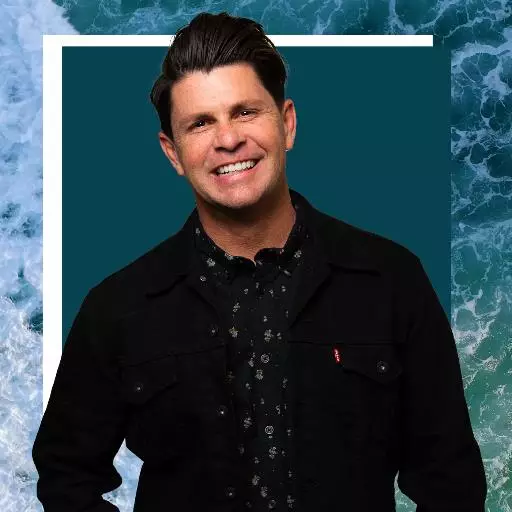
John Randall is the Senior Pastor of Calvary South OC located in San Clemente CA. John has been serving in pastoral ministry for over 25 years and is the featured speaker on the Bible teaching radio program "A Daily Walk." He is known for his clear and relatable presentation of the Scriptures.
About John Randall
As a child, John’s family began attending Calvary Chapel Costa Mesa in 1974. It was there that he attended the elementary school, Jr. High, and graduated from Calvary Chapel High School. Following graduation he went on staff at Calvary Chapel Costa Mesa as a janitor. It was also at this time that he met his wife Michelle who was teaching at Calvary’s elementary school.
After four years on staff having served in children’s ministry, high school ministry and worship John went on staff at Calvary Chapel in Vista CA.
In 1997 the Randall’s set out on a venture of faith to the SouthEast of Florida where they planted their first church, Calvary Chapel of Brandon. After ten years of ministry in Florida the Lord called the Randall's back to Southern California where John currently pastors at Calvary South OC. John has been serving in pastoral ministry for over 25 years and is the featured speaker on the Bible teaching radio program "A Daily Walk." He is known for his clear and relate-able presentation of the Scriptures. John and his wife Michelle have four children.
Contact A Daily Walk with John Randall
http://www.adailywalk.org/
Address
Calvary South OC
1311 Calle Batido
San Clemente CA 92673
@johnprandall
@PJRandall7
Phone Number
877-242-0828