
Godly Pursuits Part 2


Is it possible to be wealthy without being worldly? That’s the question of the day here on a Daily Walk as we finish up First Timothy. The answer in short is yes! Pastor John Randall has observed both a warning to the wealthy as well as wisdom for the wealthy at the end of First Timothy chapter six.
Guest (Male): Keeping focus while beating back distractions, today on a daily walk.
John Randall: First of all, Paul tells them, listen, here's some wisdom. Do what's good. It means what's noble, what's right. Look for opportunities to do those things, invest wisely, not just in temporary things, but in things that are eternal. Do good. Look for opportunity. And there's plenty of opportunities to do good within this world if we're open to God's leading. Not only do good, but he says also encourage them to be ready to give. Look for the opportunity to to give, maybe of their time, of their resources, whatever it is, just be ready to give.
Guest (Male): Is it possible to be wealthy without being worldly? That's the question of the day here on a daily walk as we finish up 1 Timothy. The answer in short is yes. Pastor John Randall has observed both a warning to the wealthy as well as wisdom for the wealthy at the end of 1 Timothy 6. Now, before you think this doesn't apply because you're not rich, consider that in comparison to much of the world today, many Americans enjoy luxuries few possess, like a pantry full of food, a cell phone, a home, a car, and of a closet stuffed with clothes.
So, I think it's safe to say many listening now would fall within that category of the most wealthy in the world. Here is Pastor John.
John Randall: In Luke chapter 12, Jesus told a parable about a rich man that was trusting in his riches. This guy had barns, big old barns full of grain. I mean, he was very well to do. He was well taken care of. But one day he was looking at his barns, and he thought, you know what? I got an idea. I'm going to expand. I'm going to build bigger barns. So, what I'm going to do, I'm going to tear all these down, and I'm going to build bigger barns, and then I'll fill those up. Now, once those are full, then I'm just going to kick back.
I'm going to eat, drink, be merry, and enjoy my life. Woo, take my ease. And then it says in the process of doing that, that right in that moment God spoke, and he said to him, you fool. Tonight, your life is going to be required of you. Your life is ending. And then he said, who will all of these things be? Who who are you going to give these to? He was trusting in that which was uncertain. And so Paul says here, a warning to the wealthy, don't get caught up in pride. Don't think it's because of you.
And remember, don't trust in it because ultimately it doesn't last. It's a foundation that you can't ultimately stand on. So, instead of trusting in uncertain riches, trust in the living God who gives us I love this part who gives us richly all things to enjoy. Isn't that wonderful that God wants you to enjoy your life? You have children. If you're a parent, if you have kids or you're a grandparent, let me ask you something. When you see your grandkids or your children enjoying themselves, does that bless you? Did they put a smile on your face?
Don't you think I love to see them? You know, they're not fighting. They're getting along. They're they're playing together. They're doing something that they really enjoy doing, and you get to be a part of it, and maybe you help them get to that point, and you get to see it. It brings joy to your face. Listen, your heavenly father feels that way too about you and me. Jesus said, you remember these things I've spoken to you that my joy may remain in you. And he said that your joy may be full, John chapter 15. That's his heart.
He loves to see you rejoicing. He loves to see you enjoying your life. This morning as I was driving to church early, I don't know if you saw it, but the sun was rising this morning, and it was absolutely beautiful. It was like the sky was on fire, and I enjoyed it driving on the way here. Didn't cost me anything. I mean, it was just beautiful to look at, and I was so in awe of what God had created. I was enjoying that. Now, listen, because of God's love for us and because he wants us to enjoy, listen, he set certain boundaries where those blessings can be enjoyed in our lives.
Now, there is the danger. There is sometimes the the thinking to think that if God sets boundaries, he's being restrictive. Why would he only allow this this can't I want to do this. And God sets these boundaries not not to be restrictive, but to be protective. I I put this around you so that you would be blessed. I put this around you so that you can experience these joys, these pleasures inside of this boundary. You go outside of it, it'll ruin you. Like what he said with Adam and Eve, you remember? Hey, listen, all this garden, go for it.
Enjoy it. Have a great time. Eat all the fruit you want. Love it. But don't eat that tree. That one's bad. Don't touch that one. Well, how come? How come we can't eat that one? I like that one. I want to be over at that one. I want to go climb that one. No, stay away from it. Sometimes we do that. We think God's trying to keep something from us, when the only thing he's trying to keep us from is destroying ourselves. And so here's the place of blessing. You go outside of that, that's when you're going to find problems.
The Bible tells us very clearly in Psalm 1, favorite passage one of mine. He says, oh, how happy is the man or the woman who walks not in the counsel of the ungodly, nor stands in the way of sinners, nor sits in the seat of the scornful, but his delight is in the law of the Lord, and in his law he does meditate day and night. Goes on to say that he'll be like a tree planted by the rivers of water, bringing forth fruit in its season, whose leaf shall not wither, and whatever he does shall prosper.
But the ungodly are not so, but they're like chaff which the wind drives away. Therefore, the ungodly shall not stand in the day of judgment. You want to bless life? You want a happy life? That's what it says here. That's what it means. Oh, blessed is the man. Oh, how happy. And stay in the place where God desires to bless you. Don't go outside of that. So, Paul said concerning the the wealthy believers, here's the warning. Stay away from pride. Stay away from trusting in uncertain riches. But now he moves from a warning to the wealthy to giving wisdom to the wealthy.
What should they be doing? Here's some wisdom. He tells them in verse 18, let them do good that they be rich in good works, ready to give, willing to share, storing up for themselves a good foundation for the time to come that they may lay hold on eternal life. First of all, Paul tells them, listen, here's some wisdom. Do what's good. It means what's noble, what's right. Look for opportunities to do those things. Invest wisely, not just in temporary things, but in things that are eternal. Do good. Look for opportunity. And there's plenty of opportunities to do good within this world if we're open to God's leading.
Not only do good, but he says also encourage them to be ready to give. Look for the opportunity to to give, maybe of their time, of their resources, whatever it is, just be ready to give. Our God is a generous God. He lavishes grace upon us, grace upon grace, the Bible says. He's so generous, and thus we ought to follow that example and be ready for the opportunity to give. Now, it is important that if we are going to give, there's a way to do it. Jesus told us in Matthew chapter 6 in the sermon on the mount, if you're going to give in some way, make sure listen to what he said, don't do your charitable deeds to be seen by men.
Otherwise, you have no reward from your father in heaven. But when you do a charitable deed, don't sound the trumpet like the hypocrites do in the synagogue and in the streets, that they may have glory from men. Assuredly I say to you, they have their reward. But when you do a charitable deed, he says this, don't let your left hand know what your right hand is doing, that your charitable deed may be done in secret, and your father who sees in secret will reward you openly. In those days, it wasn't uncommon. In fact, if you've ever been to Israel with us or you're going with us coming up, one thing that you'll see when we're in the city of Jerusalem, particularly on Thursdays, is the bar mitzvahs, the right of passage for a young man.
And they go down to the Western Wall and they recite the law. Their families are there. They're carrying the kid on their shoulders, and the interesting thing is they have a band. So, there's like five different bands going at one time, and it's drums and it's it's the shofars, it's the trumpet, it's the clarinet, and they're all just and not necessarily in sync, but just they're just happening all over. It's like a parade all at the same time converging in one spot. And you know what's about to happen. This kid's becoming a man. I mean, it's exciting for the kid, and they dance him around.
It's really something to behold. I think that's probably what these people did when they came into the synagogue. If you were going to if you wanted everybody to know what you were going to give, you just say, hey, listen, you got that number of the band? Bring them over. We're going to I'm going to bring something into the temple. So, they would bring the band, and the band would be beating the drums and playing the trumpets, and people would say, what's happening? Is this a right of passage? No, he's bringing his offering. This is me with a wheelbarrow by the way.
He's bringing his offering in. You're like, why is he doing that? He just shoveling it in, you know? And then he then he dumps it out. What are you doing? It's my contribution. Wow, you are you are committed. You are godly. And that is the only reward that that man would get. That's it. Enjoy it. If you want everybody to see it, you want to get a plaque, there's your plaque. That's that's the reward. That's it. You want to see it with your name on it? That's your reward. You want a wing dedicated, you know, your of the building to your name?
This is the John Randall, you know, wing of the that's it. That's the only reward you're going to get. Better to have your reward in heaven, Jesus was saying. When you do a charitable deed, when you give in that way, be ready, but be ready to do it the right way. And then he also tells them, be willing to share. Be ready, but also be willing. When Paul wrote to the Corinthians, he encouraged them as it related to giving, he said to them, listen, you need to be ready as a matter of generosity and not as a grudging obligation.
But this I say, he who sows sparingly, they'll reap sparingly. But he who sows bountifully will reap bountifully. So let each one give as he purposes in his heart, not grudgingly out of necessity, for God loves a cheerful giver. The word is actually hilarious giver. God loves it. When we give hilariously, if you can't give hilariously with a smile on your face, if you're grudgingly about just keep it. God doesn't want it. Better to give with the right heart, the right attitude. It's not so much about how much I give, but what is the way in which I give it?
And so it's important to consider that. Give hilariously and willing to share. Why is this such wisdom? Why is this so important? Because Paul tells us right here, those that are ready to give, willing to share, looking to do good, he said they're actually storing up for themselves a good foundation for the time to come. They're laying hold on eternal life. When you're open and you're willing and you're ready, what it does is it reveals you're not just living for that which is temporary. You're living for that which is eternal. And in a sense, you're you're sending treasure ahead preparing for eternity.
In Luke chapter 16, and you can read this on your own if you'd like, Luke chapter 16, there is an interesting parable called the parable of the unjust steward. Sometimes when you read it, you think, what is this parable about? I'll give you what it's about. Check this out. There's a guy. He's a servant. He's working for his master. And there he's laboring, and his master goes away, leaves him in charge of his goods. And it says there in Luke 16 that the servant begins to waste all of his master's possessions. I mean, he gets lazy.
He starts not doing his job. The master who's away finds out about it. And he is coming home, and he's going to fire the guy who has wasted his possessions, obviously. Now, this servant realizes that his master's coming home and he's so concerned, he realizes he's not going to have anything if he doesn't do something before his master comes home. So, you know what he does? He goes out to all of those that were indebted to his master, and he asks him the question, hey, what do you owe my master? Well, I owe such and such an amount.
Great. Write me a check for half, and we'll call it you know, your debt is settled. He went to all unbeknownst to his master, he went to all of the debtors, and he he pocketed the money, and then he went down the road. He padded his fall. He took advantage of the opportunity in light of what was about to happen. Now, this is what's really interesting because it says there in verse 8 of chapter 16, so the master, the master of the guy ripped off, the master ended up commending the unjust steward because he had dealt shrewdly.
You think he commended him? How could he commend a guy that ripped him off, that embezzled funds? How could he he wasn't commending him for that. He wasn't commending him for being lazy or dishonest or being a thief. He commended him for being shrewd. The word is he acted providentially. He acted advantageously. He took careful advantage of his opportunity. He worked the situation to his benefit. You say, what is the application? The unjust steward was so diligent in taking care of the future for something that was temporary. Jesus said, the sons of this world are more shrewd than the sons of light.
In other words, those in the world, they spend so much time planning for their future, which is temporary, which by the way, it's not a bad idea to plan for your future in this life that you have. It's not a bad idea to be a good steward of what you've been given. But sometimes the sons of the world, that's all they're concerned about. But the sons of light, the daughters of light, the children of God, in other words, ought to exercise that same kind of shrewdness in the sense of planning for eternity, looking for every opportunity to do good because we know that this isn't all that there is.
I mean, the money's going to fade. These things are going to are going to disappear at some point. These treasures, whatever they are in this world, eventually they come to nothing. You know that? They come to nothing. You may be a car person here today. I'm I'm not really a car person. I mean, I I drive a car, and I'm thankful that I don't have to walk. But maybe you're a car person. I mean, you just you know who you are. You know all the stuff that's in a car. Then most of us don't, you know?
And you just you just you're the car guy, and you got a sweet ride that you love, and you take it out on occasion. And you hug it and all you know, you just you just talk to it. Whatever you do. No, I'm exaggerating, but maybe that's you. But anyhow, listen, if you drove that here today and it's in the parking lot, it's undergoing the second law of thermodynamics right now. It's falling apart in the parking lot as we speak. Don't get up. It's just one of those things, man. It's the Lord. You keep a light touch on it.
You're a good steward of it, but ultimately it 's going to fall apart. Listen, maybe health is your thing. I mean, you eat vegan, you you eat vegetables for every meal. Is that what kind of meal is that? Is that from a you know, a cow that ate you know, that kind of grass? Because if you ate that kind of grass, I'm not eating it. Now, is that And you just know all the ins and outs of all of that. I am amazed at people like that. I just I'm astounded. I forget to ask all those questions, you know?
So, gluten-free, fat-free, gluten-free I don't say is it free gluten? I mean, is it free? If it's free, I'll take it. No, but you understand I mean, all of these things that you go through and to health and preserve you know, maybe your life verse in you know, your health program is that one in Revelation that says strengthen the things that remain. I mean, that's your life verse for your health. I just want whatever I got left, I'm just going to try to keep it going. But the fact is we're also falling apart. We keep man, we're good stewards of what God's given us.
We want to do the best we can with what we have, but we realize it's all temporary. A proper perspective. And if the sons of this world take advantage for temporal gain, shouldn't the sons of light look for opportunity to take advantage of that which will last throughout all of eternity? Yes, absolutely. Jesus said it very clearly. He said, lay not up for yourselves treasures on earth where moth and rust corrupt and where thieves break in and steal, but lay up for yourselves treasure in heaven where neither moth nor rust doth corrupt, where thieves do not break through nor steal.
For where your treasure is, there will your heart be also. Where's your heart today? Where's your heart? Wherever your treasure is, whatever you're just that's where it is. And so it gives a warning to the wealthy. Don't get caught up in pride. Don't get distracted by these things. Don't put your trust in uncertain riches. Trust in the Lord. Enjoy what he's provided. Thank him for it. Praise him for it. Make sure you're you're ready to for opportunities to help others, willing and and ready and available for whatever God might have you to do. And you're laying up for yourself treasure in heaven.
Well, finally now Paul gives an exhortation to Timothy as he brings this letter to a close. It's really something that's been a theme throughout the entire letter. He tells them in verse 20, Timothy, guard what was committed to your trust. Avoid the profane and idle babblings and contradictions of what is falsely called knowledge by professing it some have strayed concerning the faith. Grace be with you. Amen. In Paul's final exhortation to Pastor Timothy, he uses military verbiage when he says guard. It's a picture of a soldier standing guard protecting and guarding a deposit that has been made.
And Timothy had been entrusted with something. Something had been deposited into Timothy's life, not only the ministry that he was involved with, but the very word of God itself. Here was Timothy. You remember Paul said earlier that the church is the pillar and ground of truth. It upholds the truth, the truth of God's word. That's what had been entrusted to Timothy. It was a huge responsibility that he had been given. And Paul says, listen, I've said it to you already in this letter. I want to say it one more time. Guard that. Protect that. It's worth it.
It's important. He would say to him in his second letter, he would say, hold fast the pattern of sound words which you've heard from me in faith and love which are in Christ Jesus. That good thing which was committed to you, keep. It's it's a very similar word. Keep what was given to you by the Holy Spirit who dwells in us. He would write to Titus, another pastor who was left on the island of Crete, and he would say to Titus, Titus, you need to hold fast. You need to keep it. Hold fast to what?
The faithful words as you've been taught that he may be able by sound doctrine both to exhort, to convict those who contradict. Hold fast to it. Guard it. And think for Timothy. I mean, he was inundated with all kinds of false doctrine, false teaching coming from every direction, whether it was Gnosticism, heretical teaching, what whether it was philosophy, heretical teaching, what whether it was philosophy, whether it was immoral worship of the goddess Diana right there in the city of Ephesus, or whether it was Jewish legalism. I mean, he was he was bombarded by all of these things.
And Paul said, you know what you believe. You need to guard it. You need to stand fast. You need to protect it. You need to hold the line. You need to stay the course. And I believe that it's important as it was in Timothy's day to do that, it's important for us too. The truth of God's word is definitely under attack. All kinds of things floating around, things that appear Christian that that have no biblical basis whatsoever. We need to know what we believe and why we believe it, and we need to stand guard concerning it.
That why here at Calvary Chapel, if you're new or you've been here a while, you know this. We are going through the Bible chapter by chapter, verse by verse, line upon line, precept upon precept from Genesis to Revelation. Can you believe it? That's the Bible. In the word of God, it's living and powerful. It's active. It's sharper than any two-edged sword. It changes our lives. Listen, God said concerning his word, listen to this, that he holds his word above his name. How important is God's word? And that's why we teach you. That's why we give you, as Paul said, the whole counsel of God's word.
And we believe that to be from Genesis to Revelation. From the Old Testament? Absolutely important, inspired. The prophetic part of the Bible, 1/3 of its prophecy. You know we're going to be preaching prophecy. The New Testament? Absolutely. The whole counsel, all of God's word. There's a commitment that's made here to guard that, to protect that because we know that the power that's found within the word of God. How are we today as believers to guard that which has been entrusted to us? For one thing, we need to believe what God's word says. Do you believe it?
Do you believe that God's word is God's word? Not just contains God's word, but actually is the very word of God, inherent, inspired, without error in the sense of this is God's word. God breathed. The Bible says, all scripture is given by God, profitable for doctrine, for reproof that the man of God may be thoroughly equipped for every good work. How? Through all scripture. Genesis to Revelation. Important. We guard it by believing it, but I think we also guard it by reading it. Do you believe that the Bible is the word of God? Absolutely. I I totally do.
Do you read it? I know. I don't read it. Wait a second, man. If you believe it, you want to read it. That's how you guard it. You got to know what it says. And then also studying it. The blessing of studying God's word, knowing what it is in its context, knowing when it was written, knowing the words that are there. Dig deep. Become a student of the word of God. And then also I believe by proclaiming it, preaching it, heralding the word of God. That's what's going to guard it. And you know something? We need to be ready to give an answer to those that would ask concerning the the hope that's within us, with meekness and in fear.
We need to have a sound apologetic. We need to study the word of God in such a way that we might be able to rightly divide the word of truth. That's important. But I realize the Bible is powerful, and I don't ultimately need to defend it. I love what Charles Spurgeon said. He said, I don't I don't need to defend the Bible anymore than I need to defend a lion. I just let it out of its cage, and it does the work. He said, guard this. And then he also tells him finally, I want you to avoid this.
What do you want him to avoid? I want him to avoid profane idle babblings and contradictions and what is falsely called knowledge by professing it some have strayed from the faith. Don't get wrapped up in all the contradictions, all of this. Don't don't get sidetracked. Don't divert. Don't go that way and and get tossed into this whole thing. Preach what you believe and why you believe it and give the scriptures to God's people. You don't need to get sidetracked into these things that that falsely it looks like knowledge. There's no knowledge in that. Stay away from that.
Stay in the word. Present the word. And then finally he says to him, grace be with you. Amen. That concludes the book of 1 Timothy. Praise the Lord for that.
Guest (Male): You're listening to a daily walk and Pastor John Randall's final study in 1 Timothy. Would you like to hear the study again or maybe share it with someone who might benefit by hearing this? Just drop by a dailywalk.org or oneplace.com and you'll find our app when you search for Calvary South OC. Today we'd like to make special mention of a newly released book from our friend in the ministry, Jack Hibbs. It's called to take a bold stand. You can be sure that bold faith is necessary in this troubled world, and this book will urge you to be courageous, effective, and to make every moment count.
You can order it today for the cost of $11 by going to a dailywalk.org or call 877-242-0828. And please remember us in your giving to the Lord. It's not only appreciated, but will be responsibly used. We want this ministry to please God and help as many people as possible in their daily walk. And your gift, whatever the size, will help us accomplish that goal. Make a donation online at a dailywalk.org or again call 877-242-0828. If you find these studies helpful to your daily walk, Pastor John would like to know. He reads your emails and is so encouraged by what you have to say.
Write to him by email at a dailywalk at gmail.com. That's a dailywalk at gmail.com. And let us know the station you're listening to. We also want to tell you about the a daily walk devotional. Watch the video and be encouraged each day. You'll find it at a dailywalk.org. And now that we're done with 1 Timothy, we'll go on to 2 Timothy. That's tomorrow on a daily walk with Pastor John Randall. We'll look for you then. This program is brought to you by Calvary South OC and made possible through the support of our listeners.
Featured Offer

We’re very excited to tell you about a newly revised book from Pastor John’s wife, Michelle Randall! It’s, “The Great Exchange: Finding Freedom in Surrender!” Michelle calls the journey of surrendering our will for God’s will, the Great Exchange! And with candor, she shares her own real-life experiences of learning to relinquish her will for God’s will. With relatable, practical, and applicable insights for today’s struggles of faith and fear, “The Great Exchange” will encourage, strengthen, and challenge you in a quest for complete surrender and a fervent pursuit after God. Be set free as you exchange your will for God’s will.
Past Episodes

Featured Offer
We’re very excited to tell you about a newly revised book from Pastor John’s wife, Michelle Randall! It’s, “The Great Exchange: Finding Freedom in Surrender!” Michelle calls the journey of surrendering our will for God’s will, the Great Exchange! And with candor, she shares her own real-life experiences of learning to relinquish her will for God’s will. With relatable, practical, and applicable insights for today’s struggles of faith and fear, “The Great Exchange” will encourage, strengthen, and challenge you in a quest for complete surrender and a fervent pursuit after God. Be set free as you exchange your will for God’s will.
About A Daily Walk
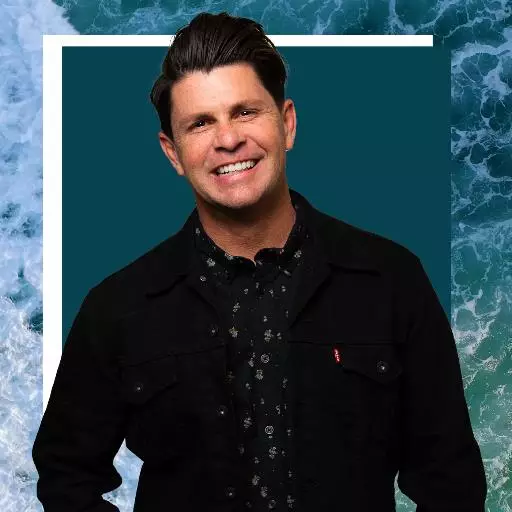
John Randall is the Senior Pastor of Calvary South OC located in San Clemente CA. John has been serving in pastoral ministry for over 25 years and is the featured speaker on the Bible teaching radio program "A Daily Walk." He is known for his clear and relatable presentation of the Scriptures.
About John Randall
As a child, John’s family began attending Calvary Chapel Costa Mesa in 1974. It was there that he attended the elementary school, Jr. High, and graduated from Calvary Chapel High School. Following graduation he went on staff at Calvary Chapel Costa Mesa as a janitor. It was also at this time that he met his wife Michelle who was teaching at Calvary’s elementary school.
After four years on staff having served in children’s ministry, high school ministry and worship John went on staff at Calvary Chapel in Vista CA.
In 1997 the Randall’s set out on a venture of faith to the SouthEast of Florida where they planted their first church, Calvary Chapel of Brandon. After ten years of ministry in Florida the Lord called the Randall's back to Southern California where John currently pastors at Calvary South OC. John has been serving in pastoral ministry for over 25 years and is the featured speaker on the Bible teaching radio program "A Daily Walk." He is known for his clear and relate-able presentation of the Scriptures. John and his wife Michelle have four children.
Contact A Daily Walk with John Randall
http://www.adailywalk.org/
Address
Calvary South OC
1311 Calle Batido
San Clemente CA 92673
@johnprandall
@PJRandall7
Phone Number
877-242-0828