
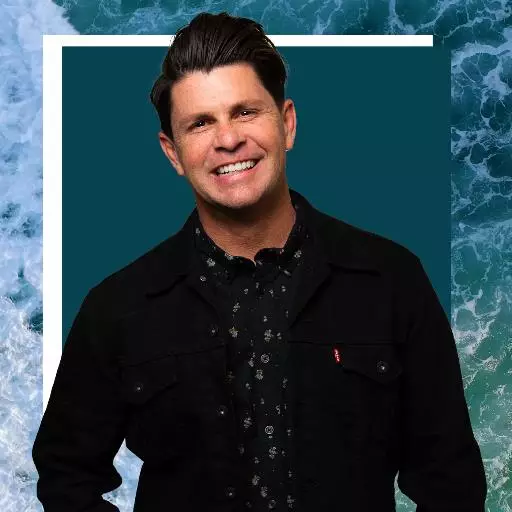
Confrontation and Forgiveness Part 2


They’re some of the hardest words to say, “I forgive you!” Especially after you’ve experienced great hurt. But when you do forgive, you’re never more like Jesus, who forgave us a debt that we could never pay. We’ll spend some time talking about the forgiveness of God and why we’re to follow in His footsteps by forgiving others.
Announcer: Next on A Daily Walk.
John Randall: You don't know what they did to me. Why should I forgive them? Simply because God has forgiven you. And forgiving others opens a door for God to forgive me. How can I, how can I not forgive? I'm just like that man in the story who goes out and finds somebody else. Listen, what someone has done to me or to you will never compare to what we have done to God and what we've been forgiven of. It's hard to imagine, but it's the truth, and heaven will reveal it when we are there.
Announcer: It's time for A Daily Walk, where you never have to walk alone. We're working our way through the Bible with Pastor John Randall leading the way, and today we plan to finish Matthew chapter 18. They're some of the hardest words to say, I forgive you, especially after you've experienced great hurt. But when you do forgive, you're never more like Jesus, who forgave us a debt that we could never pay. We'll spend some time talking about the forgiveness of God and why we're to follow in his footsteps by forgiving others. Here's Pastor John.
John Randall: Now, in the following verses, keep in mind the context here, because the next few verses are some of the most misunderstood verses that have often been taken out of context. Follow this. Notice what Jesus then goes on to say in verse 18, in the context of church discipline now. He says, Assuredly, I say to you, whatever you bind on earth will be bound in heaven. Whatever you loose on earth will be loosed in heaven. Again, I say to you that if two of you agree on earth concerning anything that they ask, it'll be done for them by my Father in heaven. Verse 20, for where two or three are gathered together in my name, I am in the midst of them.
These verses are used in the context of church discipline. First, the binding and loosing. What does that mean? You remember back in Matthew chapter 16, when Jesus said something very similar to Peter, when Peter had acknowledged that Jesus Christ was the Son of the living God. Flesh and blood hadn't revealed this to him, but the Father in heaven had revealed to him. And Jesus said that the keys of the kingdom would be given to Peter, meaning that Peter would be the first one to open up the doors to the kingdom and share the gospel. In Matthew chapter 16, verse 19, Jesus said then to Peter, whatever you bind on earth shall be bound in heaven, and whatever you loose on earth shall be loosed in heaven.
And now, for a second time, in the context of church discipline, Jesus says those exact same words. Jesus is not giving us some special authority outside of himself, but rather the authority that we are given is attached to what his word says and to who he is. This is what God's word says. I'm standing on his word. The authority that I have, the power that is represented, comes from the Lord, and it comes from his word. For example, if someone refuses to repent after the first, second, third, fourth admonition, they are just unwilling. On the authority of God's word, binding and loosing, on the authority of God's word, I can say, according to God's word, we need to break fellowship until you're ready to repent, and then we can have restored fellowship.
Is that my authority? No, it's the authority. This is what God's word says. This is the authority. In heaven and in earth, it's God's word, so that's what I stand on. On the other side of that, if someone says, I want to repent, I want to be restored, then I can say on the authority of God's word, let's move toward restoration. Praise God. You know, how can I, where do I get the authority to do that? From God's word. That is what seems to be implied in light of church discipline. And then Jesus said, if two of you agree on earth concerning anything they ask, it will be done for them by my Father in heaven.
Again, if you're taking these steps, two or three, you're coming into this situation, you agree, and you have to make this decision, the Father is involved. Furthermore, this last verse, verse 20, is one that is often, again, I think sometimes misunderstood. It says, where two or three are gathered together in my name, I am there in the midst of them. And when this verse is used primarily is when we're talking about the congregational gathering. Hey, listen, where two or three are gathered in my name, I'm there in the midst. Yes, that is true. The Lord is definitely here, but not just when two or three are gathered, right?
You gather and you meet with the Lord personally one-on-one. You're like, oh man, I need two or three more people here for the Lord to be here. No, no, the Lord says, I'll meet with you in secret. When you come to me, when you approach me, I go to Jesus one on one. There's one mediator. I don't need 2 or 3 people to approach the Lord. The context here is in light of church discipline, when there's 2 or 3 gathered and you're having to do what it says here, I'm there. I'm a part of that. This is the authority of God's word. So keep that in mind. I don't want to say that, oh man, those people, they've been misquoting that verse their whole lives.
No, I, yes, the Lord's gathered here, but the context is he's talking about church discipline, that the Lord is involved because he loves his church and he loves his people, and his heart is for people to be restored, to repent, to get right. And I just want to say, if you're one of those people today who is living in open rebellion against God, and you know what God's word says, and you're here on Sunday, you check that box, and you've already got plans in your mind, what you're going to do after this, what you're going to do tonight. You know, listen, wake up, wake up. This is a loving confrontation from the Holy Spirit through the Word of God coming right to you, right here, knows everything that you're involved with, what you're doing.
Listen, friend, it's time to repent before you end badly. Do you think that you're the exception? If you do, you're not. None of us are. The Lord warns us because he loves us. And if you're there today, I want to encourage you. Hey, repent now. Get right with God. Don't put it off. Don't be deceived. God is not mocked. Whatever a man sows, he's going to reap. If you sow to the flesh, you're going to reap of the flesh. But if you sow to the spirit, oh, you're going to reap everlasting life. What are you sowing to? If you're sowing in the wrong place, consider this a warning from God because of his love for you.
He wants restored fellowship. Well, right after this whole thing about confrontation, Peter's listening, obviously all the disciples are listening, and Peter's like, well, I want to talk about forgiveness for a second. Look at, look at what it says after this. Following this instruction on confrontation, and if somebody, by the way, I want to say if somebody repents, what ends up happening is unity is restored, healing can begin, personal growth and maturity will take place, reconciliation can occur. Now, when that happened, Peter's saying, well, what about forgiveness? Let's go to the next subject.
Notice verse 21. Then Peter came to him and said to him, Lord, how often shall my brother sin against me and I forgive him? Up to seven times? Jesus said to him, I don't say to you up to 7 times, but 70 times 7. Jesus, again, in the beginning of the passage, said, if your brother sins against you, this is what you do. Peter says, well, how many times should I forgive him if my brother sins against me? 7 times? Is that good? Why do you suppose Peter said 7 times? Was he just deep in numerology and felt that 7 was the number of completeness and that was good, 7 days of creation? I don't think so.
I don't think so. The religious leaders of Peter's day taught that a person was only required to forgive another person three times, and that was it. That's all you do, three times. Three strikes, you're out. Three times I forgive you. No more. In fact, the rabbi said this, he who begs forgiveness from his neighbor must not do so more than three times. If a man commits an offense once, they forgive him. If he commits an offense a second time, they forgive him. If he commits an offense a third time, they forgive him. The fourth, they do not forgive him. Peter's probably thinking, you know, the rabbis say three.
I'm feeling like seven is pretty generous. What do you think, Jesus said seven? Is that like... As if Peter's waiting for the Lord to say, you know what, Peter, you so get me. Seven. Yes. Yeah. Seven. Man, you're good. You're good. You are the greatest in the kingdom. No, I don't think that. Jesus says to Peter, immediately responds, 70 times 7. I mean, if you do the math, that's 490 times. The point that Jesus is making to Peter is that we're not to keep a record of wrongs. In other words, forgiveness is to be unlimited. It's not like, you know, there's this app out now, I don't know if you've seen it, that you can track how many times a person offends you.
And on the 490th time, it goes, it buzzes and you, ha, ha, 490 right here. See? Actually, it's not an app. I just made that up. But I mean, if there was an app, somebody might make one. You just, husband does something, you're like, we're good. Boop. Actually, that counts as two. Boop, boop, you know, whatever. No, you're not supposed to keep track. Listen, that is 489. I just want, I'm just putting you on notice. That's 489 and one more, and we're done. You know, that's it. No more forgiveness for you. That's not what it's talking about. The thing is, you don't keep track of it. Well, Jesus, to illustrate this a little bit more for his disciples and for Peter and for us, he tells a story, a parable, a earthly story with a heavenly meaning to help him understand.
Look at what it says. If you look there at verse 23. Therefore, the kingdom of heaven, or here's an example, it's like a certain king who wanted to settle accounts with his servants, and when he had begun to settle accounts, one was brought to him who owed him 10,000 talents. That's a lot of money. But as he was not able to pay, his master commanded that he be sold with his wife and children and all that he had, and that payment be made. The servant therefore fell down before him, saying, Master, have patience with me. I will pay you all. And the master of the servant was moved with compassion.
He released him and forgave him the debt. But that servant went out and found one of his fellow servants who owed him a hundred denarii, and he laid hands on him, took him by the throat, saying, pay me what you owe. And so his fellow servant fell down at his feet and begged him, saying, Have patience with me, I'll pay you all. And he would not, but went and threw him into prison till he should pay the debt. So when his fellow servants saw what he had done, they were very grieved, and they came and they told their master all they'd done. Then the master, after he called him, said to him, You wicked servant, I forgave you all that debt because you begged me.
Should you not also have had compassion on your fellow servant, just as I had pity on you? And his master was angry and delivered him to the torturers until he should pay all that was due to him. Verse 35, so my heavenly Father also will do to each of you if from his heart does not forgive his brother his trespasses. Wow. These words are in red, so these are the words of Jesus. I don't want to take away from them. I don't want to add to them. They say what they say. But let's talk about the example, the parable. It wasn't uncommon for rulers to seek to settle accounts. Taxes were often paid to the Romans.
This was a common thing. So this was a familiar example. But you find that in this story, a man owed an insurmountable debt. 10,000 talents. Different commentators have suggested the amount of 10,000 talents. a talent was the largest amount of currency. A talent was estimated to be 75 pounds, so 10,000 talents would be 750,000 pounds of gold, probably, and they estimated that that would be somewhere around 3,150,000,000 dollars. That basically, it's an insurmountable amount. You couldn't, this guy couldn't work enough to ever pay off this debt. He was never going to be able to pay it. He, it was astronomical.
He was a slave for the rest of his life. His family was taken from him. He would spend the rest of his life paying back the penalty for his indebtedness. This would be his fate. However, as the sentence is being passed by the king to the servant, he falls down before the king, pleads, begs, weeps to be forgiven, given time actually to pay the debt. He just asked for time to pay it back. It was impossible, but he asked for the time, pleading for forgiveness. But notice this, verse 27, after he had begged for freedom, the ruler, this king who had every right to sentence him, every right to condemn him, he was guilty, had compassion on him, and he forgave him.
Not like put him on a payment plan, okay, this much, or change the interest rate. He basically said, that debt you owed me, it's forgiven, completely wiped out, never happened, you don't need to pay me back. How would you feel in that moment if you were forgiven the indebtedness, just wiped clean? No, no, you don't have to pay anything back. It would radically change your life. This guy was so liberated, he could, he was so thankful, he was so grateful. He was a slave, he was going to lose everything, and he was forgiven everything, and he walks out the door just feeling light as a feather, and he just comes across, hey, is that what's his name?
You know, he owes me. How much does he owe you? He owes you about 10 bucks. You know what? Actually, it'd be more like 100 bucks. You owed a billion, he owes you 100. It's on. You know, you walk over to that guy and didn't even question him, you just took him by the throat. I mean, right after you're forgiven, you take him by the throat? Pay me what you owe. He's like, I want to, but I, you know, and then they, no, no time. Throws him in jail until he pays it. Now, the servants happen, who just saw this guy come out free, they're thinking, oh my goodness, I cannot believe this guy did that. So they go back and they tell the master, do you know what this guy did, the guy that you just forgave?
He just went out and choked the guy out and said, they're like, he did what? Bring him back in here. So he brings him back in here. You wicked servant. How is it even conceivable that you would, I don't even, you know what, that's it. You're going to pay this and you're going to, so he throws him in jail. And Jesus is making the story here come alive, and it's really applicable to us. Listen, you think about a parable and you think, who would do that? No one would not forgive that kind of debt. That's crazy. I can't believe he didn't forgive him. I would never do something like that. Listen, this parable has a meaning for us.
You say, how so? The man, the man who owed the debt, the person who owed the debt that they could never repay. Do you know who that is? That's you. That's me. We owed an insurmountable debt to God. Nothing we could do could ever pay that back. Nothing we could do could ever even touch what we owe. Jesus paid the debt that he did not owe. It was ours. He forgave us of everything, every everything you've ever done, everything that you're ashamed of, that you want no one to ever know about, he paid the debt. He forgave us, wiped us clean through the blood of Jesus Christ. We've been forgiven, the Bible says.
I've been forgiven a debt, so have you. But then you find another person who owes you a fraction, somebody who's wronged you. Who's the other person in the story? Somebody else who's wronged you. Somebody else who sinned against you. The emphasis here is that it's unreasonable and it is inconsistent to not forgive when we have been forgiven, but we could never pay back. We who have been permanently forgiven by God for our immeasurable sins, we now are called upon to forgive. Folks, listen, God desires to forgive. Did you know that? The Bible tells us in Psalm 86, verse 5, for the Lord, for you, Lord, are good and ready to forgive and abundant in mercy to all who call upon.
Listen, if you need forgiveness today, the Lord is ready to forgive you if you will repent. He's ready, waiting to forgive you. And God is also the source of forgiveness. The Bible says in Psalm 130, verse 4, "If you, Lord, should mark iniquities, O Lord, who could stand? But there is forgiveness with you, that you may be feared." It was Daniel that said in Daniel chapter 9, verse 9, "Lord, to us belongs shame of face to our kings, our princes, our fathers, because we've sinned against you. To you, Lord our God, belong mercy and forgiveness, though we've rebelled against him. God desires to forgive.
He is the source of forgiveness, but God has also provided a way whereby we can be forgiven. Aren't you thankful today that there is a way that you can be forgiven? I am so thankful today that I am forgiven because of the work of Jesus. In Ephesians chapter 1, verse 7, it tells us, it says, in him, that is in Jesus, we have redemption through his blood, the forgiveness of sins according to the riches of his grace. It's the blood of Christ applied to you and applied to me that has forgiven me. Peter says it best in 1 Peter chapter 1 verse 18, when he says, knowing that you were not redeemed with corruptible things like silver or gold from your aimless conduct received by the tradition of your fathers, but with the precious blood of Christ as a lamb without blemish and without spot.
We also know the extent of God's forgiveness. How far does God's forgiveness go? I mean, how, what's the extent of it? Colossians chapter 2 tells us, it says, and you being dead, doesn't get any worse than that, dead in trespasses and the uncircumcision of your flesh, he has made alive together with him, having forgiven all of your trespasses. That's the extent of it, all. He's taken our sins and cast it as far as the east is from the west, forgiven us. The Bible says if we confess our sins, he is faithful and just to forgive us and to cleanse us from all unrighteousness. First John chapter 1 verse 9.
The extent of God, God desires to forgive. He is the source of forgiveness, and the extent of his forgiveness goes far beyond what we could imagine, and the cost and what he did to provide it was through Jesus Christ and his death on the cross. Bible tells us that on the heels of forgiveness come times of refreshing. On the heels of repentance comes times of refreshing as we are forgiven by the Lord. There is freedom, there is joy, there's abundant life, there's hope. But folks, in addition to what God has provided by way of forgiveness, the application here this morning is we are called to forgive others because we have been forgiven.
And there is where it becomes a little more difficult. I'm all for receiving God's forgiveness. I recognize my need. I am thankful for it. I receive it. But sometimes we see other people who have wronged us. They don't deserve it. Did you deserve it? That's another subject. We don't need to talk about that. I'm talking about them right now. And we have struggled to forgive them. You don't know how they hurt me. You don't know what they did to me. Why should I forgive them? Simply because God has forgiven you. And forgiving others opens a door for God to forgive me. How can I, how can I not forgive?
I'm just like that man in the story who goes out and finds somebody else. Listen, what someone has done to me or to you will never compare to what we have done to God and what we've been forgiven of. It's hard to imagine, but it's the truth, and heaven will reveal it when we are there. Jesus said in Matthew 6:14, if you forgive men their trespasses, your heavenly Father will also forgive you. But if you do not forgive men their trespasses, neither will your heavenly Father forgive you. Folks, it's a command from God's word to forgive. The Bible tells us in Ephesians 4:32, be tenderhearted, forgiving one another, even as Christ has forgiven you.
There's the example, there's the command, there's the model in Jesus. Now, granted, some people say, John, you don't know what this person did to me. And I am not downplaying or degrading what has happened to you, or saying that is insignificant, or you should just overlook it. I'm not saying that. It is painful. It was painful when they crucified Jesus and he said, Father, forgive them, for they know not what they're doing. I don't fully understand it. I just realize that it's a command from the Lord, and if God commands me to do it, then he will enable me to do it. And I also realize this, and this is something sometimes I think people struggle with.
Forgiveness doesn't always mean reconciliation. I know that's hard to understand. We would hope to, well, maybe we can, it's maybe it's not safe to do that. It's not reconciliation, but from my heart, I can forgive that person. Doesn't mean that we're gonna, you know, go out to lunch and, you know, play on a pickleball team together or something like that. That's not gonna happen. That will never happen. It's just not, that's not gonna happen. But I can forgive them, and I want to be free. And here's the thing about forgiveness. unforgiveness makes you the prisoner. Makes you the prisoner. Often we assume that it'll affect the other person, but really it affects us internally, in our health, physically.
I mean, stuff happens when you live in bitterness. I was hearing a story of two men, and it's not true. I'm not even going to tell it because it's not that funny. I'm going to stick with what I was going to say, and that is forgive. That's the Holy Spirit. Just skip that, John. Forgive. Because probably what'll happen is that'll be the only thing you remember of what I say. Skip it. Don't allow the root of bitterness to grow into a tree of hatred and resentment full of rotten fruit. If we don't forgive, we remain bound to the people we can't forgive. It's like you're being held in a vice grip, and yet many persist in demanding that others act in the way we ourselves could never achieve.
Someone said this, quote, when I genuinely forgive, I set a prisoner free and then discover that the prisoner I set free was me.
Announcer: Well, Pastor John Randall is leading us through the Bible right now on A Daily Walk, and I'd imagine some of you might like to hear this message again. Maybe you joined us late. Go online to adailywalk.org and have a listen when it's most convenient, or request a CD copy for the cost of just 5 dollars. You can reach us toll free at 877-242-0828. That's 877-242-0828. Another great way to listen to Pastor John's teachings is through our mobile app. It's free and even available on Apple TV. Just do a search for Calvary South OC and look for us wherever you get your podcasts. You know, we are super excited about this month's offer.
It's a book from our friend in the ministry, Barry Stagner, titled Happily Even After: Doing Marriage Right. If your heart needs to be encouraged, refreshed, or even challenged in the area of marriage or relationships, then this practical book is a must-read. We're making it available to our A Daily Walk listeners for the cost of 7 dollars. Again, you can order online at adailywalk.org or call us at 877-242-0828. And anything given above that amount will be put to good use and help people all over the world grow in their Daily Walk as they listen to these daily studies, in some cases actually enter into a relationship with Christ.
Again, you can donate online safely and securely at adailywalk.org or call 877-242-0828. Well, we say it often around here at A Daily Walk because it's true. We want to hear from you. It lets us know where the ministry is having an impact, and we also love praying for our listeners. Write to Pastor John by email today at adailywalk@gmail.com. That's adailywalk@gmail.com. Well, our time together sure goes by quickly, doesn't it? But we'll pick up where we left off in our Through the Bible study next time. This has been A Daily Walk with Pastor John Randall, where you'll never have to walk alone.
This program is made possible through your generosity and brought to you by Calvary South OC.
Featured Offer

We’re very excited to tell you about a newly revised book from Pastor John’s wife, Michelle Randall! It’s, “The Great Exchange: Finding Freedom in Surrender!” Michelle calls the journey of surrendering our will for God’s will, the Great Exchange! And with candor, she shares her own real-life experiences of learning to relinquish her will for God’s will. With relatable, practical, and applicable insights for today’s struggles of faith and fear, “The Great Exchange” will encourage, strengthen, and challenge you in a quest for complete surrender and a fervent pursuit after God. Be set free as you exchange your will for God’s will.
Past Episodes

Featured Offer
We’re very excited to tell you about a newly revised book from Pastor John’s wife, Michelle Randall! It’s, “The Great Exchange: Finding Freedom in Surrender!” Michelle calls the journey of surrendering our will for God’s will, the Great Exchange! And with candor, she shares her own real-life experiences of learning to relinquish her will for God’s will. With relatable, practical, and applicable insights for today’s struggles of faith and fear, “The Great Exchange” will encourage, strengthen, and challenge you in a quest for complete surrender and a fervent pursuit after God. Be set free as you exchange your will for God’s will.
About A Daily Walk
John Randall is the Senior Pastor of Calvary South OC located in San Clemente CA. John has been serving in pastoral ministry for over 25 years and is the featured speaker on the Bible teaching radio program "A Daily Walk." He is known for his clear and relatable presentation of the Scriptures.
About John Randall
As a child, John’s family began attending Calvary Chapel Costa Mesa in 1974. It was there that he attended the elementary school, Jr. High, and graduated from Calvary Chapel High School. Following graduation he went on staff at Calvary Chapel Costa Mesa as a janitor. It was also at this time that he met his wife Michelle who was teaching at Calvary’s elementary school.
After four years on staff having served in children’s ministry, high school ministry and worship John went on staff at Calvary Chapel in Vista CA.
In 1997 the Randall’s set out on a venture of faith to the SouthEast of Florida where they planted their first church, Calvary Chapel of Brandon. After ten years of ministry in Florida the Lord called the Randall's back to Southern California where John currently pastors at Calvary South OC. John has been serving in pastoral ministry for over 25 years and is the featured speaker on the Bible teaching radio program "A Daily Walk." He is known for his clear and relate-able presentation of the Scriptures. John and his wife Michelle have four children.
Contact A Daily Walk with John Randall
http://www.adailywalk.org/
Address
Calvary South OC
1311 Calle Batido
San Clemente CA 92673
@johnprandall
@PJRandall7
Phone Number
877-242-0828