
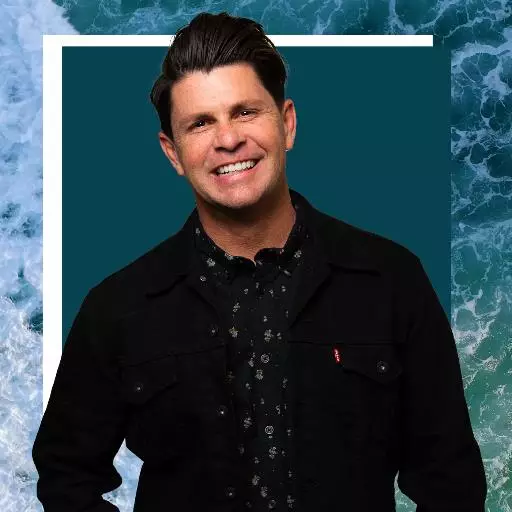
Amazing Love Part 1


We’re back in First John today, considering the Amazing Love of God. A Love that is unconditional, infinite and eternal. Pastor John Randall will present both a description and the demonstration of God’s love in the time we have together.
Guest (Male): Pastor John Randall on the amazing love of God that is more than we could ever hope for. God’s love, and I’m glad for this, is not dispensed drop by drop. Here are these little droppers, just an eye drop. Just come here. You need some love? Come here. There you go. Oh man, thank you so much.
Actually, God’s love is like a mighty endless current. It’s inexhaustible in its abundance because it comes from heaven, so the supply is endless. And when it says that it’s poured out on us, it’s used in what is called the perfect tense, which conveys that the pouring out began at some point and the effects and the results benefit in the sense that it continues. It continues to be poured out and hasn’t been withdrawn.
It is time for A Daily Walk, where you never have to walk alone. We’re back in 1 John today considering the amazing love of God. A love that is unconditional, infinite, and eternal. Pastor John Randall will present both the description and the demonstration of God’s love in the time we have together today. So let’s turn to chapter three and hear all about this amazing love.
John Randall: The book of 1 John chapter three this morning as we continue our study through this epistle with a message entitled, “Amazing Love.” 1 John chapter three, beginning in verse one this morning if you’d follow along with me as we read from the Word of God.
"Behold what manner of love the Father has bestowed on us, that we should be called the children of God! Therefore the world does not know us because it did not know Him. Beloved, now we are children of God, and it has not yet been revealed what we shall be, but we know that when He is revealed, we shall be like Him, for we shall see Him as He is. And everyone who has this hope in Him purifies himself, just as He is pure."
If you have ever watched someone react to a surprise gift, something so unexpected, so generous, so undeserved, then you know what wonder looks like. The face lights up, words fall short, and all that you can do is just behold with gratitude what is before you. That’s precisely how the apostle John begins this section of the letter. He doesn’t open with a command, he starts with a burst of wonder.
He’s in awe of the fact that we, although broken, imperfect, formerly rebellious people, are loved by God. But John doesn't stop there. He says this love does something. It transforms us, it gives us hope, it sets us on a course to become like Jesus himself.
In our text this morning, the apostle John helps us to understand who we are right now, to see the promise of who we will be in the future, and he also instructs us how to live as we wait. First of all, who we are. In verse one, behold what manner of love the Father has bestowed on us that we should be called the children of God.
When John writes the word behold, he uses it in what is called the aorist imperative tense, meaning it’s a command. A command that urges the reader to give immediate, effective, and even urgent attention. The idea is saying stop. Stop everything that you’re doing just real quick. Stop what you’re doing and just look at the love of God.
That’s really what he’s saying. Just stop everything and consider for a moment the love of God and find out who you are. If you know the love of God, then you can discover who you are meant to be. You know in our world, we often focus on defining ourselves. If someone were to say to you, "who are you?" You might start out by stating your name, maybe who you are in a family.
You might say, "well, I'm a father." Maybe you would say, "this is what I do for a living" or "this is my hobby." These are the ways in which we would define ourselves. Other people try to reinvent themselves, desiring to be seen. But folks, you’ve got to understand what the world perceives and what God sees are two completely different things.
In fact, the Bible does tell us this in 1 Samuel chapter 16 verse 7. As the Lord spoke through the prophet Samuel, and the Lord said to Samuel, "don’t judge by his appearance or height, for I have rejected him. For the Lord doesn’t see things the way you see them. People judge by outward appearance, but the Lord, He looks at the heart."
God sees what’s on the inside. That’s who you are. And the apostle John wants us to see how God sees us and therefore he gives us a description of God’s love for us when he says, "behold what manner of love." It’s like asking what country, what race, what tribe, where does this kind of love come from? It’s as if John contemplates the love of God and he realizes that it has to come from heaven because nothing like this love exists on the earth.
The love that God has for you this morning is completely foreign as compared to the love of this world. The love that God has for us, you could say it is not earthly but otherworldly in nature. The New Testament was translated from the Hebrew into the Greek language. And in the Greek language, there were several words for the word love. Of course, we have different meanings for the word love.
You may say I love coffee and I love my mother, but these are two very different types of love, I hope. They’re different in what we mean by that. So the Greeks had a word for love, it was the word storge, and that was a word that meant a love between family members. There was the word eros, which referred to a physical kind of a love. There was phileo, which was a term that referenced love between friends.
And then there was the highest form of love called agape, typically defined as a self-sacrificing love. A type of love that inspires people to take action or prioritize the well-being of others regardless of personal cost. This is the love that John refers to, and it refers to the highest form of love. Agape love is described as a love that remains constant. It is unchanging. It is self-giving, offers itself without demanding or expecting repayment in return.
It’s a love that is so profound that it can be extended to the unlovable and the unappealing. This love persists even when faced with rejection. Agape love gives and loves out of genuine desire. The Bible does describe for us God’s love. First of all, we know that God in His nature, who He is, is love. 1 John chapter four verse eight tells us, "He who does not love does not know God, for God is love."
The love that God has for you today, listen carefully, it is unconditional. God’s love for you this morning does not depend on your performance. The Bible tells us in 1 John 4:19, "we love Him because He first loved us." God is the initiator in this loving relationship. The Bible tells us in Revelation chapter one verse five, "to Him who loved us and washed us from our sins in His own blood."
God’s love is not only unconditional, but listen, it is infinite. Infinite meaning God’s love is so vast that it reaches beyond the limits of our complete understanding. It knows no boundaries. It cannot be weighed or calculated. When the apostle Paul wrote his letter to the Ephesians, he wrote of a prayer that he was praying for them. And in one of the prayers that he prayed for them, it had to do with God’s love.
And this is what he said. He was praying, he said, "that Christ may dwell in your hearts through faith." This is Ephesians chapter three verse 17. "That Christ may dwell in your hearts through faith, that you, listen to this, being rooted and grounded in love, may be able to comprehend with all of the saints what is the width, the length, the depth, and the height, to know the love of God which passes knowledge."
Paul was praying for the church there in Ephesus that they would understand the immense, infinite love of God which he said surpassed, went beyond their capacity to actually comprehend it fully. It’s like saying, "I want you to know something that is beyond your ability to comprehend right now. I want you to know something that you couldn’t know right now. That’s my prayer for you." It’s infinite. It knows no boundaries.
Folks, if you only knew today the immense, infinite love that God has for you. God’s love is also eternal. It is unconditional, it’s infinite, but it’s also eternal. God in His nature is eternal. He has no beginning, He has no end. He is the alpha, the omega. There was never a time when God did not exist. In fact, the psalmist tells us this in Psalm 90 in verse two when he declares concerning God’s eternal nature.
He said, "before the mountains were brought forth, or ever you had formed the earth and the world, even from everlasting to everlasting, You are God." God is eternal and because of His eternal nature, His love for us this morning, it is also eternal. In Jeremiah chapter 31, the prophet said it this way in verse three, speaking on behalf of the Lord, "I have loved you with an everlasting love, therefore with loving kindness I have drawn you."
The eternal nature of God’s love. I have, it’s everlasting, I have loved you, I’ve always loved you. This is a description of the love of God. But the Bible also, in addition to the description of God’s love, gives to us a clear and undeniable demonstration of God’s love. It is one thing to say, "I love you," it is another thing to demonstrate it by action. How did God demonstrate His love for you? Romans chapter five verse eight tells us clearly.
"But God demonstrated His own love toward us, in that while we were yet sinners, Christ died for us." There is the demonstration, once and for all, of God’s unfailing, unconditional, infinite love for you. The word demonstrate there in Romans chapter five means to provide evidence of a personal characteristic or claim through action. The idea is to give proof of. It’s the act by which God establishes beyond question the reality of His love.
Now the question arises this morning, when did God start loving you? When was it that God began to love you? Was it when you started attending Bible study regularly? Was it when you got that huge study Bible and he said, "man, now I love you." Was it when you started evangelizing, leading people to Christ? As wonderful as all of those things are, that’s not when God first loved you. It was long before that.
It was before the foundations of the world. It was when we were dead in trespasses and sins. It was when we were as far from God as possible, when we were nowhere near to God, no desire for God. He loved you and me at our very worst, during our darkest, most sinful moments. At the deepest pit of our sin He loved us then when we were rejecting Him, grieving the Spirit, despising the love and grace of God.
God loved and demonstrated His love for us, fully aware that some would even reject His love. God demonstrated His love toward us while we were dead, while we were yet sinners, Christ died. So listen friend, if He loves you then, guess what? He still loves you now. He loves you. That settles it. Charles Spurgeon said, quote, "He did the utmost for us when we were the least deserving of it. Oh, what a love is this."
He demonstrated His own love, how? Through the death of His Son. John 15 verse 13, Jesus said it this way, "greater love has no man than this, that he lay down his life for his friends." In 1 John chapter four verse 10, "in this is love, not that we love God, but that He loved us and sent His Son to be the propitiation for our sins." This is the demonstration of God’s love. The cross is what speaks forever of the love of God. It is undeniable. If you ever doubt that God loves you, look at the cross and be reminded.
There is nothing more that God could do to prove once and for all that He truly loves you. He not only stated it, but He demonstrated it. The description of God’s love and the demonstration are marvelous enough to contemplate, but don’t forget the distribution of God’s love. How was it that God imparted this love to us? Clearly He said it, He demonstrated it. But how does God distribute His love?
The Bible tells us in Romans chapter five and verse five, here’s what it says. It says, "now hope does not disappoint because the love of God has been poured out in our hearts by the Holy Spirit who was given to us." When it says that God poured out His love into our hearts by the Holy Spirit, it does not mean a trickle. Rather it means a lavish outpouring to the point of overflowing. In other words, God’s love, and I’m glad for this, is not dispensed drop by drop.
Here are these little droppers, just an eye drop. Just come here. You need some love? Come here. There you go. Oh man, thank you so much. Actually, God’s love is like a mighty endless current. It’s inexhaustible in its abundance because it comes from heaven, so the supply is endless. And when it says that it’s poured out on us, it’s used in what is called the perfect tense, which conveys that the pouring out began at some point and the effects and the results benefit in the sense that it continues.
It continues to be poured out and hasn’t been withdrawn. The idea is that the love of God has been poured out in our hearts and continues to flood our hearts and the Holy Spirit poured it out and continues to pour it out. It’s my prayer today that before our time has ended here today that you would sense the outpouring of the love of God through the Holy Spirit.
The Bible tells us concerning this love. Listen to what it says in Romans eight. It says, "in all these things we are more than conquerors through Him who loved us. For I am persuaded that neither death, nor life, nor angels, nor principalities, nor powers, nor things present, nor things to come, nor height, nor depth, nor any other created thing shall be able to separate us from the love of God which is in Christ Jesus our Lord."
This is the love that He has. This is the love that He doesn’t take away, that He continues to pour out. John says just behold it. Just look at it for a second. Stop what you’re doing and just consider the greatness of God’s love for you. I do believe this morning that some have a difficult time receiving the love of God and there are several reasons for this. For some, it’s because of their past pain.
People who have experienced abuse, neglect, rejection, especially from parents or authority figures. Some people have a hard time thinking about God as their Father because of the relationship they had with their father. And so even using the term, it’s difficult for them to comprehend or think about receiving love in that way. If love was conditional or you grew up and it was manipulative, then it can be challenging to trust that God’s love is truly unconditional.
But listen, God doesn’t love like mankind. It’s different. It’s different. For some, it’s pain. They just have a hard time receiving it. For others, it’s the feeling of unworthiness and shame. Some struggle with guilt over past sins or ongoing weakness. And even though Christianity teaches that God is gracious and that God is forgiving and that God restores, they have this sense of feeling I need to earn this. Somehow I’ve got to be worthy of it.
Friend, do you know that God doesn’t love us because we are worthy of it? He loves us because He’s good. God doesn’t love you because of all that you have to offer Him. What could I give to somebody who needs nothing? That is what makes the love of God so amazing and beyond comprehension. And then there are others who suffer great spiritual attack and believe because of doubt and discouragement and fear. These are the tools that sometimes the enemy will use to separate people from the presence of God.
One of these things or a combination of these things can prevent people from receiving this love of God. The love of God, so powerful and beyond comprehension that we’re amazed. You know what reminds me this morning? I was reflecting on this as I was preparing and the Lord reminded me of that hymn by Charles Wesley. He wrote hundreds of hymns, but probably one of my personal favorites was the one, “Amazing Love.” Let me just recount to you for a moment the lyrics as he writes in the form of a question.
"And can it be that I should gain an interest in the Savior’s blood? Died He for me, who caused His pain? For me, who Him to death pursued? Amazing love! How can it be that Thou, my God, shouldst die for me? Long my imprisoned spirit lay, fast bound in sin and nature’s night; Thine eye diffused a quickening ray, I woke, the dungeon flamed with light; my chains fell off, my heart was free, I rose, went forth, and followed Thee.
Amazing love! How can it be that Thou, my God, wouldst die for me? No condemnation now I dread; Jesus, and all in Him is mine! Alive in Him, my living Head, and clothed in righteousness divine, bold I approach the eternal throne, and claim the crown, through Christ my own. Amazing love! How can it be that Thou, my God, shouldst die for me?" Don’t you just find yourself asking that question? Lord, how can it be that You would love someone like me knowing what You know? It’s amazing love. That is all that you can say.
Guest (Male): Amazing love indeed. Such love is hard to put into words, but that hymn does a pretty good job, doesn't it? This is A Daily Walk with Pastor John Randall. Today's message, “Amazing Love,” can be heard again at adailywalk.org. As we leave you today, we'd like to say how much it means to us each and every time we hear how God is at work in our listeners' lives. It would be so encouraging to hear from you, so please write today while it's fresh on your mind.
Our email address is adailywalk@gmail.com. You can also call us toll-free at 877-242-0828. Again, reach us at 877-242-0828. Our featured resource this month at A Daily Walk is “The Other Side of Sunday” by Pastor John Randall. Hot off the press, this book explores the weight of leadership, the beauty of serving God's people, and the sustaining grace that carries pastors through seasons of doubt, fatigue, and quiet faithfulness.
Think of it as a testimony to God's faithfulness in the everyday realities of ministry. Pastor John shares what he has learned so far in “The Other Side of Sunday.” The cost is just $15. Call 877-242-0828 or go to adailywalk.org for easy online ordering. That's 877-242-0828 and adailywalk.org. Here at A Daily Walk, we look to the Lord to provide for and sustain us.
Now we know these are difficult and challenging financial times for many of you, but if God has blessed you with a little extra this month, we'd very much appreciate your support. It would be wonderful to hear from you right now. We've made it easy to make a donation online at adailywalk.org or call 877-242-0828. There are some other ways we can stay connected. Check out Pastor John on X and Instagram for biblical encouragement throughout the week.
Follow him on X @PJRandall7 and on Instagram @JohnPRandall and look for the A Daily Walk devotion at adailywalk.org. Join us each day on A Daily Walk as we go through the New Testament with Pastor John Randall. See you next time. This program is brought to you by Calvary South OC and made possible through your generous support.
Featured Offer

This month we’re offering you a book from Pastor Charles Stanley titled, “How to Listen to God: His Voice Waits to be Heard.” In this helpful book, Charles Stanley shows you how to distinguish God’s voice from all the other voices around you! And how to respond in joyful obedience.
Past Episodes

Featured Offer
This month we’re offering you a book from Pastor Charles Stanley titled, “How to Listen to God: His Voice Waits to be Heard.” In this helpful book, Charles Stanley shows you how to distinguish God’s voice from all the other voices around you! And how to respond in joyful obedience.
About A Daily Walk
John Randall is the Senior Pastor of Calvary South OC located in San Clemente CA. John has been serving in pastoral ministry for over 25 years and is the featured speaker on the Bible teaching radio program "A Daily Walk." He is known for his clear and relatable presentation of the Scriptures.
About John Randall
As a child, John’s family began attending Calvary Chapel Costa Mesa in 1974. It was there that he attended the elementary school, Jr. High, and graduated from Calvary Chapel High School. Following graduation he went on staff at Calvary Chapel Costa Mesa as a janitor. It was also at this time that he met his wife Michelle who was teaching at Calvary’s elementary school.
After four years on staff having served in children’s ministry, high school ministry and worship John went on staff at Calvary Chapel in Vista CA.
In 1997 the Randall’s set out on a venture of faith to the SouthEast of Florida where they planted their first church, Calvary Chapel of Brandon. After ten years of ministry in Florida the Lord called the Randall's back to Southern California where John currently pastors at Calvary South OC. John has been serving in pastoral ministry for over 25 years and is the featured speaker on the Bible teaching radio program "A Daily Walk." He is known for his clear and relate-able presentation of the Scriptures. John and his wife Michelle have four children.
Contact A Daily Walk with John Randall
http://www.adailywalk.org/
Address
Calvary South OC
1311 Calle Batido
San Clemente CA 92673
@johnprandall
@PJRandall7
Phone Number
877-242-0828