

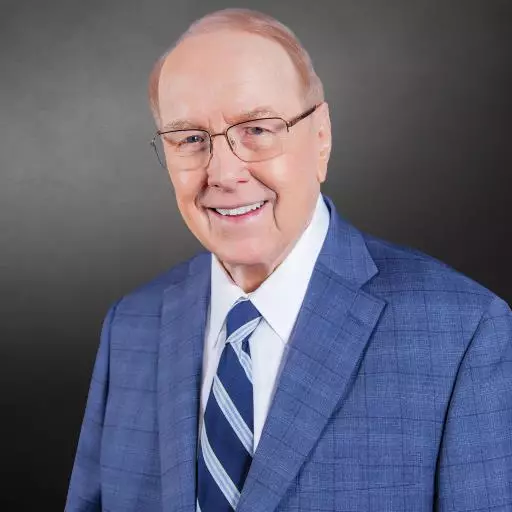
God's Help in My Life: The Story of Dale Evans


A loss can shatter us, but faith sustains us through life’s darkest valleys. On today’s edition of Family Talk, Dr. James Dobson shares a powerful testimony from the late Dale Evans Rogers about walking through unimaginable grief. She reflects on losing three of her children, and discovering that God’s presence carries us when we cannot stand on our own.
Dr. James Dobson: Welcome everyone to Family Talk. It's a ministry of the James Dobson Family Institute, supported by listeners just like you. I'm Dr. James Dobson and I'm thrilled that you've joined us.
Roger Marsh: Well, welcome to Family Talk. I'm Roger Marsh. Hope that you and your family had a wonderful Resurrection Day celebration yesterday. On today's Family Talk broadcast, we're bringing you a deeply moving testimony, one that speaks to the heart of what it means to trust God through life's darkest valleys.
Our guest is Dale Evans Rogers, beloved wife of cowboy legend Roy Rogers, and a woman whose faith was tested in ways most of us can hardly imagine. Dale wasn't just a Hollywood star and an accomplished author, she was a mother who experienced the unthinkable, losing three of her children.
In just a moment, you're going to hear Dr. Dobson provide some context for today's program, sharing a bit about his personal connection to Dale Evans. Then we'll hear Dale herself speaking to an audience as she opens her heart about grief, loss, and the sustaining power of Jesus Christ. Her testimony is both heartbreaking and hope-filled, a reminder that even in our deepest pain, God's presence never leaves us. Here now is Dr. James Dobson to begin today's edition of Family Talk.
Dr. James Dobson: When I was a boy, I loved playing cowboys and Indians. I remember pretending to be Gene Autry or Hopalong Cassidy or Tom Mix or the Red Rider. And when I'd finish school, I would rush home and go to my radio and turn on the Long Ranger. It's actually Lone Ranger, but that's not what I called it. The music for that program was the William Tell Overture and I would bounce to the music on a chair and pretend I was riding a white horse like the Long Ranger did. Life was very simple and predictable in those days.
Well, the reason I bring that up is because in the early 1980s, my staff and I went out to Apple Valley, California and met with Dale Evans, the wife of Roy Rogers. I was so excited to see her and remembered how the two of them could wipe out all the bad guys by the end of a 30-minute program. I loved it. But many years later, I did have the opportunity to meet Dale face to face. We're going to let you hear just a little bit of my interview with Dale. We're not going to spend the whole program on that, but here's what Dale said in answer to one of my questions from Apple Valley, California, about 1982.
Dale Evans Rogers: People are beginning to realize we are in jeopardy as far as our freedom is concerned.
Dr. James Dobson: That's right.
Dale Evans Rogers: And that's why I was prompted to write this book because I believe that if women abdicate the throne of motherhood and being the keeper of the home corral, and I mean this with all my heart, and if they neglect their little children from one to five in those formative years where they say that a child, what they learn goes very deeply into that subconscious.
Dr. James Dobson: That's the foundation, everything sits on that.
Dale Evans Rogers: That's right. And from then on they learn very quickly, very fast, but they forget too very rapidly. But those first things are solid down there and that's why it's so important that the little child from one to five for the next generation, these young mothers today, that they know why they love this country, they know why they believe in God, in Christ, in the Holy Spirit, and in the Bible and in our laws that were taken right from there, that they implant those things into those little children's minds. Listen, it can be a babe in arms, you can sing to them about it.
Dr. James Dobson: Well, that was Dale Evans and I still believe she was right about what she had to say. Rather than letting you hear the rest of that interview, though, we have something else we want to do with the program. Dale spoke to an audience, I don't know to whom she was speaking, and this was 40 years ago, so it was even a year or so back before I went out and met Dale.
She shares some of her personal heartbreak. She opens up about her relationship with her husband, Roy, and the devastating events that happened to their family. I don't want to give any more of it away, I just want you to listen to this testimony from Dale Evans Rogers. We call it a classic edition of Family Talk.
Dale Evans Rogers: My name is Dale Evans Rogers, and I'm here to share my faith and experience with God in hard times, the hard times of my life and the hard times in some other lives that I've known people that are very, very close to me. First of all, you know Jesus didn't promise us a rose garden with no thorns, did He? What Jesus really said was "in the world you shall have tribulation, but you be of good cheer for I have overcome the world." And Jesus in me and Jesus in you overcomes the hard times in our lives.
There is so much that I would like to tell you about how God has been with me in the hard times and I've had some hard times in my life. I've been married to Roy Rogers, that's not the hard time, okay? I've been married to Roy Rogers for 34 years as of this date. In 1947 New Year's Eve, Roy and I married. At this time he was a widower with three little children, an adopted girl seven, his own daughter five, and his little boy 16-and-a-half months old, whose mother had died at his birth with a blood clot.
We were married on this ranch in Oklahoma and I remember I was dressing and I got terrified of what I was going to do. I thought "What have you done? You know you have been divorced." I rebelled in my early teens and eloped with my first sweetheart and it was an absolute disaster. We had a little boy and when our Tom was six-and-a-half months old, he abandoned me. His father abandoned me. He just walked out and he said it was a mistake, we're too young, I don't want to be tied down and you shouldn't either. I couldn't trust anyone. I thought "What are you doing and you've got three little stepchildren, how can you do this?"
And I went into the closet, you know like the Bible says to go into your closet and pray in secret and the Lord will reward you openly? And I just closed the door and I said, "Lord, I'm sorry. I haven't followed You and You know what all is in my life, the things I've done. Lord, please help me in this. You know we can't make it without You." And I said, "Lord, give me courage to establish a Christian home for these children like I had. Please God, because we won't have a chance."
And I went out and Roy and I were married. We went back to Hollywood and they took me out of Roy's pictures and all of a sudden I had lost my identity. I wasn't a good mother, I wasn't a good housekeeper. I'd worked since I was 17, made my own money, and all of a sudden I'm a nothing. And I was miserable. And the harder I tried, the more they would push me away.
One day my blessed Tom came in. By now he was at USC majoring in music and he had been a devout Christian, a sold-out, born-again Christian since he was 10. And Tom said, "I want you to go to church with me tonight. You owe it to these children to give them a Christian home here whether Roy or you, you've got to do that." So I went with him. He was an assistant choir director at Fountain Avenue Baptist Church right in the heart of Hollywood. I went and I heard a sermon about the home, that home that was founded on the rock of faith in Christ would stand.
My son asked me to commit my life totally to Jesus. He said, "You don't know Him personally. You know about Him, but He's not in here with you." He said, "I've watched you take pills to go to sleep and pills to get with it in the morning." He said, "I have seen you read books on peace of mind, all kinds of books on psychology and psychiatry to find peace. If you really knew Jesus and He was in here and you had the Bible and knew it," he said, "you could throw it all away and you'd find peace." And he had me. He had me.
The following Sunday I went back to that church and I gave the Lord my life. And I asked Him to wash me clean with the blood He had shed on the cross of Calvary. I asked Him to come into my heart by the Holy Spirit, lead me the rest of my life, make my life count. And I said, "Lord, if You have to break me, You know my frame, if You have to break me, You do it. I want to belong to You and I want my life to be what You intended it to be." And you know something? I went out of there a new person. And I felt free. I felt as light as a feather. It was fabulous.
I went home and Roy saw it in my face. He said, "Something's happened to you." I said, "Yes, I've given my life to Jesus Christ." He said, "You leave me alone." I said, "Okay." He did. He said, "Don't you start pressuring me about that." I said, "Okay, okay." But I taught the children little prayers and we had roundtable grace. And later Roy said he was scared to death we'd call on him. But because of what he saw Jesus doing in me and through me—nothing I did, I never could do it myself, never—because of what he saw, he accepted Jesus Christ as his savior just six weeks later in that same church.
The Lord gave us such joy for a year and a half. We met in people's homes, we had different ministries that would give us devotions. It was wonderful. And then He ushered in a hard time for us, a crucial test. Doctor said I couldn't have a baby without a big operation, but God has the last word. And here came little Robin Elizabeth. And I knew when she was four days old. I was so happy about this child and Roy was riding around the Coliseum to 90,000 people and people were cheering when he talked about his new daughter.
Right after that, I found that Robin had Down Syndrome and a hole in one of the ventricles of her heart and that she wouldn't live very long. I want to tell you, I know what heartache is. I felt like there was a stone right here that ached. I felt like my heart had just congealed like that and shriveled. I ate too much to cry. I was just stunned. And our minister came and ministered to me. If I hadn't been a committed Christian, it would have destroyed me. I might have gotten on dope, I might have been an alcoholic, Roy and I might have split up.
The first thing I thought about, I remembered my promise to God back in Lubbock, Kentucky. That's the first thing that came to my mind and I said, "Lord, this time if You want a healer, I'll spend the rest of my life telling people You healed her" because there was no medical help for her whatsoever. But He had another purpose. And I thought, "This is going to destroy my husband's faith. This is the thing that kept him from God all along."
But God bless him, we sat there and the doctor said, "Put her in an institution because she's not going to live long and you're going to take away the time from the other children." Roy said, "We will not." He said, "God has sent this child and allowed this for a purpose. If we put her away, we'll never know what it is. We'll take her home and we'll love her and we'll trust Him." And He gave us two years. I learned more scripture in the two years of Robin Elizabeth's life than I've learned all the rest of my life together. I hid those promises of God in my heart so that I would not sin against Him when He took her back. And He took her back two days before her second birthday. And He gave us that peace that passes all understanding.
Then the Lord let us adopt this little Indian girl from Hope Cottage at Dallas, seven months old. Roy's part Indian, you know, that's how we got her. And we took a little abused, afflicted boy in Kentucky, five, who had been left to starve in a motel, whose parents had beaten him so he had no bridge for his nose, who had an astigmatism in one eye. But we were conditioned to take a child like this because of Robin. We took him home with us and with love and with care and with training and a little medical help, he just blossomed like a rose. It was terrific.
Then we went to England with Dr. Billy Graham on his first crusade over there at Harringay Arena and we saw a cute little girl, a little Scottish girl who was an orphan of divorce and we asked to bring her over on a goodwill tour the next summer. And she fell in love with America and asked if we would be her foster parents, so we acquired her.
Then Dr. Bob Pierce with World Vision came and we loved him. What a heart for the world, for Christ. And he showed us pictures of the little GI babies in Korea. And here we had this little girl and we're all bunches of such pale faces. And so we decided that she should have a little sister her age to grow up with her. And we asked Dr. Bob Pierce if he would find a little girl that looked like Dode, our little girl. He and Dr. Graham were over there and they took this picture of Dode, who was three, and they matched her up with a darling little girl named Inai Lee. And Dr. Bob Pierce brought her over to us the following summer.
Now we had this great international family and the Lord blessed us and He freed me to write to express my faith in something I'd wanted to do when I was in high school. And I felt His presence so often. I used to go out and take a walk in the morning on our big ranch in Chatsworth and I'd go up on this rock and I would pray and I would commune with the Lord and I would feel His presence in the breeze. It was wonderful, He just blessed and blessed and blessed.
In 1964 and 1965 ushered in the two hardest years of my life to date. That little girl, we renamed her Debbie Lee, had just passed 12 and Roy had just nearly died with that spinal fusion that he had in his neck that had to be fused together, the discs. The day that he was off, he caught staph infection and they didn't think they could save him. He was on the critical list for days.
The day they took him off, the apple of his eye, Debbie Lee, our little Korean flower—she was a beautiful child. She was Korean, her mother was Korean, the father was from San Juan, Puerto Rico. And she would come and she would get off those horses riding on that dust and everything on that series we used to make, she would come in and she'd say, "Hi Daddy" when we came home at dark. And she said, "Daddy you look so tired, come sit down." She'd go get him a cup of coffee, she'd get a wash rag, she'd wash his face, then she would massage his hurting neck. And then she'd comb his hair, she'd take his boots off. He adored her and it was mutual.
The day he went off of the critical list and was moved to Bel Air Convalescent Hospital, Debbie was killed in a terrible accident coming from Tijuana. She'd gone on a mission that our church had. I was choir director of the church, the little girl was ill and that's why I wasn't with them. But the bus, the tire blew on it and it veered into the oncoming lane and a woman coming about 70 miles an hour in a station wagon, her mother and four little children, and Debbie and her little girlfriend didn't even belong to our church were had just walked to the front for the little things they'd bought in Tijuana. And this station wagon when this thing happened, the station wagon came right in onto where Debbie was standing and her little girlfriend was thrown under the steering column and they were killed instantly.
It was so hard. And I'd had a beautiful experience in the Holy Spirit two months prior. I know now, I believe with all my heart, that the Lord knew this was going to happen. He knew I needed some special spiritual undergirding to take this because Roy couldn't do anything. And He took me through that, a double funeral. And He did, He was so present. It's like He said "do this and do this and do this" and I was numb. I was numb with shock. It was hard. Humanly, I could not handle that, but God was there and He handled it for me, through me. It's just like He was propelling me all the time, all the time.
And you know, I had not had the courage to look upon Robin when she died. But I had to look upon Debbie because I wasn't with her on that bus. And they said I couldn't and I said, "I just want to check to see if everything's all right." And the mortician asked our manager said, "Ask Mrs. Rogers to come in here and look at Debbie." God has helped us do the impossible.
I went in and I was afraid to look almost. And when I did, I looked at her and all of a sudden, I didn't see Debbie, I saw a coat Debbie wore. Just a coat of flesh that the spirit of my child no longer needed. The only thing I asked God when I gave Him my life was to let me live to see each one of my children accept Jesus Christ as savior. That's all. And He had, every one of them to that date.
All of a sudden when I saw that, I started to praise God. I started to praise Him. And my heart lifted and for a few minutes it was as if I was in paradise or wherever with Debbie in the spirit. And I was so happy for her. I realized that she would never experience any more heartache, any tragedy in her life anymore. She was prayed up. I had just seen her kneel at our church altar the day before and recommit her life to Jesus Christ. See how faithful He is? And so I was at peace. One year later, then He gave me the book "Dearest Debbie" to give to World Vision to help feed other children like Debbie.
One year later that little boy who was abused, who had worked so hard to become normal, who had gone into the Army—we didn't think he'd pass boot camp, Fort Polk, but he got out and they sent him—bless his heart, he called himself the Rebel, he was from Kentucky. He'd write and he always signed Sandy the Rebel. His name was John David. And Roy Junior's name was nicknamed as Dusty and Roy said if he ever got another boy he'd call him Filthy, so we had the three boys.
But the day that kid made it private first class in Germany, Gelhausen, Germany, near Frankfurt, he was talked into doing a ridiculous thing, a dare, to chug-a-lug—many of you that have been in the service know what that is—to wet down his stripe to prove he was a man and he choked to death. Killed him. He was engaged to be married in June when he came home on leave and he was going to make the Army his career.
Sandy was a Christian. I praise God that my salvation doesn't depend upon my merits but on the merits of Jesus Christ. Who could stand otherwise? It hurt me so bad because he wanted so to prove himself, but he had proven himself a private first class. And to a lot of boys, that's like graduating from Yale because he was handicapped. And he made it with prayer and determination.
Two weeks later we got the most beautiful letter. He thanked us for adopting him into a Christian home. He said he considered it a privilege to serve the United States of America in the armed forces. And he said this land believed in God and they believed in Jesus and believed in the Bible and in the Holy Spirit and he wanted to be a part in helping other lands to keep free so they could worship like they wanted to. That letter came two weeks after he died and it's in our museum with his flag that they presented me at his military funeral.
I don't know what people do without faith in God when these things happen. Because when I was a child, I used to say, "Oh God, please don't You ever take my mother away before You take me. Don't You ever take one of my children before You take me. I can't stand it and I'll die. Don't ever do that, Lord." But He has proven to me that I can do all things through Christ who strengthens me.
Roger Marsh: Dale Evans Rogers' testimony reminds us that faith isn't the absence of pain, it's the presence of God in the midst of it. Even when life brings unimaginable loss, Jesus Christ walks with us through those every valley. You are listening to Dr. James Dobson's Family Talk and today we featured a powerful testimony from the late Dale Evans Rogers about trusting God through heartbreak. If you missed any portion of today's broadcast, or if you'd like to share it with someone who might be walking through their own season of grief, go to drjamesdobson.org or jdfi.net.
As the United States approaches its 250th anniversary, the Dr. James Dobson Family Institute has an invitation for students all across the country to reflect on this powerful question: "How has faith shaped our nation and how is God calling you to help shape what comes next?" High schoolers and middle school students alike are encouraged to reflect on how faith has influenced the founding and development of our nation and how they believe God is calling them to live with purpose, responsibility, and hope in the years ahead in our special America's 250th anniversary essay contest.
Through this initiative, the Dr. James Dobson Family Institute aims to engage and equip young people to better understand and appreciate the role of biblical truth, prayer, and faith in America's founding and to carry those principles forward into the future. For more contest information, go to drjamesdobson.org/USA250. Essay submission deadline is April 30th, winners will be announced by the end of May, and students will be competing for cash prizes up to $2,500.
Here at the Dr. James Dobson Family Institute, we are committed to sharing testimonies like the one you heard today, stories of faith that continue to inspire new generations of listeners. There's a good possibility that today was the first time you ever heard the testimony from Dale Evans Rogers, and your support makes programs like today's possible. These broadcasts are made possible through the generous partnership of friends like you who believe in bringing timeless truth to today's families.
If you benefit from the daily encouragement you've received from Family Talk, you're invited to join in this work of sharing these remarkable stories of God's faithfulness with families who need hope. Your gift of any amount truly makes a difference. To make a secure donation online, go to jdfi.net. You can also call a member of our constituent care team. That number is 877-732-6825.
Well, I'm Roger Marsh, and from all of us here at Family Talk and the Dr. James Dobson Family Institute, thanks so much for listening today. Be sure to join us again next time right here for another edition of Dr. James Dobson's Family Talk, the voice you trust for the family you love.
This has been a presentation of the Dr. James Dobson Family Institute.
Featured Offer

Every marriage faces pressure. Busy schedules, financial stress, unmet expectations, poor communication, and unresolved conflicts can slowly create distance in a relationship. Many couples love each other deeply, yet feel stuck and are unsure how to reconnect and move forward in a healthy way.
Dr. James Dobson’s newly revised digital download, 10 Tips for a Long-Lasting Marriage, offers:
- Clear, trusted guidance for navigating common marital challenges
- Encouragement for couples who feel stuck or disconnected
- A practical strategy for building a marriage that doesn’t just survive—but truly thrives
This free resource is designed to help you strengthen your relationship with clarity, hope, and confidence.
Past Episodes
- A Biblical Look at the Family
- A Challenge to Pastors
- A Family in Crisis
- A Father to the Fatherless: The Story of Two Friends
- A Father's Commitment to His Daughter
- A Heart for Romanian Orphans
- A Journey of Widowhood and Grief
- A Marriage Made in Heaven
- A Mom's Heart of Prayer
- A Nation Abandoned by God
- A Picture of Life
- A Sober Update on Military Culture
- A Traditional Family
- A Tragic Account of Mistaken Identity
- A Visit to the Shores of Normandy
- A Visit With the Legendary Pat Boone
- Abraham Lincoln: The Faith of a President
- Adrenaline & Stress
- Adult Children of Alcoholics
- Albert & DeeDee Pujols: Giving Honor to God
- Alone Yet Not Alone
- America: A Call to Humility
- American Heritage Girls
- American Marxism
- An Abusive Childhood: Climbing Out of the Pit
- An Attitude of Gratitude
- Autism
- Avoiding Infidelity
- Back From the Brink of Divorce
- Beauty In Brokenness
- Becoming a Culture Warrior
- Being a Conservative Crusader
- Being a Father at Work and Home
- Being a Smart Stepmom
- Being Jesus to Your Neighbors
- Being There for Your Son
- Between a Rock and a Grace Place
- Bonhoeffer: A Hero Then and Now
- Boys and Puberty
- Breaking the Bonds of Welfare
- BUG-Puberty
- Building a Christian Home
- Building a Safe Haven In Marriage
- Building hedges Around Your Marriage
- Bullying
- Buyer Beware
- Charlie & Lucy Wedemeyer: A Message of Hope
- Children and Stress
- Choosing to See
- Christian Men & Sexuality
- Christianity and Wokeness
- Christ's Influence on History
- Cleaning House: Raising Responsible Kids
- Coach John Wooden
- College
- Confronting Guilt in Motherhood
- Congressman Frank Wolf: A Modern-Day Wilberforce
- Courageous Choices
- Courageous Manhood
- Creative Ideas for Child Discipline
- Crystal Peaks Youth Ranch
- Culture Watch
- Current Economic Tsunami
- Defend Life
- Defending Religious Liberty in the Courts
- Defunding Planned Parenthood
- Delicate Mother-In-Law Relationships
- Depression: Encouragement for the Journey
- Developing a Firsthand Faith
- Digital Invasion
- Divorce
- Dr. Ken Hutcherson: A Defender of Truth
- Dr. Ravi Zacharias: Finding My Destiny in Delhi
- Faith and Family: Raising Kids Right
- Family Finances
- Fierce Beauty
- Fighting to Preserve DOMA
- Finance
- Finding Healing After Sexual Abuse
- Finding Hope for Your Heart
- Finding Joy Amidst Cancer and Loss
- Finding New Intimaacy in Prayer
- Finding Success in a Failing Economy
- Finding True Forgiveness
- Forgiving God
- Forgiving My Father
- Foundation For Successful Families
- Free At Last
- Freeing the Family From Pornography
- From Santa to Sexting: Protecting Your Middle-Schooler
- Fueling the Passion
- Girl's Uncovered
- God Bless America
- God Is At At Work
- God Made Us a Family
- God Makes Lemonade
- God Restored Me
- God Restored Me For a Purpose
- God’s Grace Is Sufficient
- God's Tender Heart for Single Moms
- God's Way or My Way
- God's Wisdom for Raising Children
- Going All Out For Your Wife
- Greg Laurie
- Greg Laurie: A Changed Life
- Guarding Your Grandchild’s Heart
- Healing the Past and Moving On
- Healing the Wounded Spirit
- Healthy Habits
- Help for Angry Moms
- Help for Employed Moms
- Help for Hurting Teens
- Help for Parents of Prodigal Children
- Help, I'm a Spouse AND a Parent Now!
- Helping Teens Find Their Purpose
- Her Role in the Home
- Homeschooling & Beyond
- Homeschooling Today
- Honoring Our Average Joes
- Hooking Up
- Hope for Hurting Hearts
- Hope in the Midst of Unexpected Pregnancies
- Horses and Healing: New Hope for Kids
- Hutch: A Man Filled With Hope
- I Will Never Leave Thee
- I, Isaac, Take You, Rebekah
- In God We Still Trust
- Infertility and Miscarriage
- Insights on Radical Islam
- Integrity in Business
- Is America Imploding?
- James Dobson v Kathleen Sebelius: How will you get involved?
- Jealousy
- Jesus Vs. Muhammad
- Jim & Jill Kelly
- Landscape of America
- Laying Up Treasure in Heaven
- Lean Body, Fat Wallet
- Learning Disorders
- Life & Laughter with Ken Davis
- Life Without Limbs
- Live to Forgive: A Family Story of Pain and Redemption
- Living Through Loss of Spouse
- Living With Less So Your Family Has More
- Living with Less: Heading into the Holidays
- Living With the Strong Willed Child
- Loneliness in Marriage
- Longing for Marriage
- Love For a Lifetime
- Loving Those Left at Home
- Macaroni At Midnight
- Managing Your Home and Time
- Marriage in a Facebook World
- Marriage Survival Skills
- Marriage That Can Go the Distance
- Marriage: The State of Our Union
- Mary Crowley
- Memories of the Holocaust
- Mentoring Boys and Men
- Merging Premarital Expectations
- Ministering to the Elderly
- Ministry of Hymns
- Miscarriage: Grieving the Loss
- Mojave Desert Cross
- My Adoption Story
- My Autistic Son
- My Mission: Capturing a Dictator
- One Woman’s Journey of Grief & Hope
- One-on-One with Bill Gaither
- Online Dangers: Protecting Kids from Pornography
- Online Dangers: Protecting Marriages from Pornography
- Overcoming Childhood Traumas
- Overcoming the Heartaches of Life
- Overcoming the Shame of the Past
- Parenting 101: From Discipline to Sexuality
- Parenting Basics: The First Years
- Parenting Newborns and Those Early Years
- Phill Kline: Challenging an Abortion Giant
- Plugged In: Teaching Your Children to Be Media Savvy
- Politics and the Bible
- Prodigal Child
- Protecting Life and Liberty
- Protecting Your Child in a Dark Culture
- Putting an Arm Around the Post-Abortive Woman
- Raising a Handicapped Child
- Raising Boys: Routine Panic
- Raising Boys: Wounded Spirits
- Raising Kids Who Love the Lord
- Raising Men of Honor
- Raising the Standard of Excellence
- Reaching Out to Youth in Need
- Reaching the Taliban For Christ
- Real Moms, Real Jesus
- Reignite: How to Bring Joy Back into Your Life for Enduring Faith
- Religious Persecution in America
- Republican Majority
- Rescued From a Life of Ruin
- Resolving Money Conflicts in Marriage
- Revival Rising
- Scripture and the Family
- Sexuality & Singles
- She Calls Me Daddy
- Single Adults
- Singleness: Waiting for God's Best
- Singles and Sexuality
- Spiritual Mismatch
- Spiritual Training of Children
- Stand For Life In Your Community
- Staying Christian in a Pagan Culture
- Staying Strong in College
- Stepping Away from the Common Life
- Straight Talk to Young Couples
- Strengthening Military Families
- Strong Fathers, Strong Daughters
- Suicide
- Teaching Your Kids About Sex
- Ten Habits of Happy Mothers
- The Bachmanns: Their Story of Faith and Family
- The Barretts: An Amazing Adoption Story
- The Battle for Civilization
- The Battle for Marriage Continues
- The Cross: The Center of the Family
- The First Year of Marriage
- The Flipside of Feminism
- The Future of the Family: Fact and Fiction
- The God-Wild Marriage
- The Healing Power of Forgiveness
- The Heart of a Cowboy
- The Heart of the Santorum Family
- The High Cost of Low Living
- The Hope of Heaven
- The Hormone Swing
- The Immunization Debate
- The Impact of Truth on My Life
- The Insidious Nature of Infidelity
- The Joy of Good News
- The Joys and Challenges of Adoption
- The Joys and Challenges of Pregnancy
- The Key to Your Child's Heart
- The Kids Are Gone...Now What?
- The Miracle That Saved a Marriage
- The Powerful Influence of a Wife
- The Pro-Life Movement Reaches a New Generation
- The Threat of Islamic Terrorism
- The Unbelieving Spouse
- The Use and Abuse of Power
- The Value of Manhood
- The Value of One Life
- The Vital Role of Fathering
- The Way of the Wise
- To Dads & Daughters … with Love
- Tolerating the Intolerable
- Tony Dungy: A Man of Quiet Strength
- Tough Love For Kids
- Truth: Can We Both Be Right?
- Turning Hearts 180-Degrees Toward Life
- We Help; Jesus Heals
- Welcome To Our Table
- What Does Freedom of Religion Mean?
- What Has Feminism Done for You Lately?
- What Parents Should Know About Teens
- What's It Like Being Married to Me?
- What's Wrong with Being a Nice Guy?
- When Life Brings You Thorns
- When Unemployment Hits Your Home
- When You're in Love
- Why Men Leave the Church and How to Get Them Back
- Why Purity Matters
- Why We Fight For Life
- Women and Emotional Infidelity
- Women and Friendships
- Women and Intimacy
- Women in Combat: Understanding the Consequences
- Wounded Spirit

Video from Dr. James Dobson
Featured Offer
Every marriage faces pressure. Busy schedules, financial stress, unmet expectations, poor communication, and unresolved conflicts can slowly create distance in a relationship. Many couples love each other deeply, yet feel stuck and are unsure how to reconnect and move forward in a healthy way.
Dr. James Dobson’s newly revised digital download, 10 Tips for a Long-Lasting Marriage, offers:
- Clear, trusted guidance for navigating common marital challenges
- Encouragement for couples who feel stuck or disconnected
- A practical strategy for building a marriage that doesn’t just survive—but truly thrives
This free resource is designed to help you strengthen your relationship with clarity, hope, and confidence.
About Family Talk
Family Talk is a Christian non-profit organization located in Colorado Springs, Colorado. Founded in 2010 by Dr. James Dobson, the ministry promotes and teaches biblical principles that support marriage, family, and child-development. Since its inception, Family Talk has served millions of families with broadcasts, monthly newsletters, feature articles, videos, blogs, books and other resources available on demand via its website, mobile apps, and social media platforms.
The Dr. James Dobson Family Institute (JDFI) is a Christian non-profit ministry located in Colorado Springs, Colorado. Founded initially as Family Talk in 2010 by Dr. James Dobson, the organization promotes and teaches biblical principles that support marriage, family, and child development. Since its inception, Family Talk has served families with broadcasts, monthly newsletters, feature articles, videos, blogs, books, and other resources available on demand via their website, mobile apps, and social media platforms. In 2017, the ministry rebranded under JDFI to expand its four core ministry divisions consisting of the Family Talk radio broadcast, the Dobson Policy and Education Centers, and the Dobson Digital Library.
Dr. Dobson's flagship broadcast called, “Dr. James Dobson’s Family Talk," is aired on more than 1,500 terrestrial radio outlets and numerous digital channels that reach millions each month.
About Dr. James Dobson
Dr. James Dobson is the Founder Chairman of the James Dobson Family Institute, a nonprofit organization that produces his radio program, “Dr. James Dobson's Family Talk.” He has an earned Ph.D. from the University of Southern California and holds 18 honorary doctoral degrees. He is the author of more than 70 books dedicated to the preservation of the family including, The New Dare to Discipline, Love for a Lifetime, Life on the Edge, Love Must Be Tough, The New Strong-Willed Child, When God Doesn't Make Sense, Bringing Up Boys, Bringing Up Girls, and, most recently, Your Legacy: The Greatest Gift. Dr. Dobson served as an associate clinical professor of pediatrics at the University of Southern California School of Medicine for 14 years and on the attending staff of Children’s Hospital of Los Angeles for 17 years in the divisions of Child Development and Medical Genetics. He has advised five U.S. presidents and served on eight national commissions. Dr. Dobson has been married to Shirley for 64 years, and they have two grown children, Danae and Ryan, and two grandchildren.
Contact Family Talk with Dr. James Dobson
540 Elkton Drive
Suite 201
Colorado Springs, CO 80907
877.732.6825