

You Must Be Born Again - Part 2


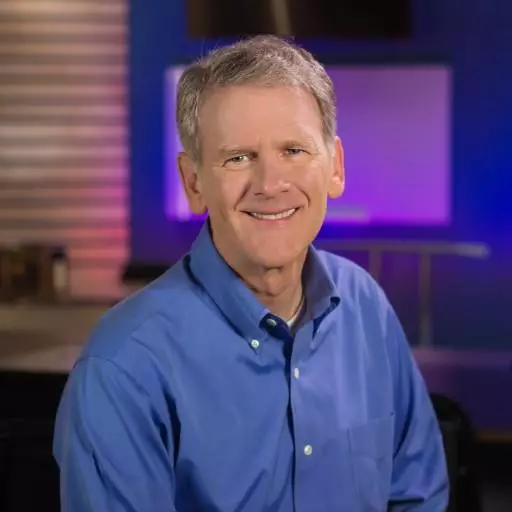
Pastor Bryan shares the second half of a lesson from John 3. Dr. Chapell highlights the conversation that Jesus had with Nicodemus, and what Jesus meant when He said, “you must be born again.”
Bryan Chapell: If you're not trying to make it right by depending on your words and your beliefs and your actions, but you're actually kind of collapsing before the Lord and saying, "Lord, you have to make it right. I can't fix this," that He's saying, "That's what I'm waiting for. That's when new life comes, when you've put away your life, pushed away from it, and you're actually saying, 'God, you have to fix what I cannot fix.'"
I'm not looking for my correctness; I'm looking for Your action in my behalf.
Guest (Male): So glad you joined us for today's Unlimited Grace, the audio broadcast ministry of pastor and author Bryan Chapell. In today's episode, Pastor Bryan shares the second half of a lesson from John 3. Dr. Chapell highlights the conversation that Jesus had with Nicodemus and what Jesus meant when He said, "You must be born again."
You can find this lesson and many others when you visit unlimitedgrace.com. And while you're there, look for Pastor Bryan's book, *The Multi-Generational Church Crisis*. This compelling book asks the question of the church: what could be accomplished in the name of Christ if we could better understand each other? Let's hear now from Dr. Bryan Chapell as he shares the second half of the lesson, "You Must Be Born Again."
Bryan Chapell: One who will try to make his own way and one who will make a way for others. Let's see how the story unfolds as we learn more about this deliverer. John 3, verses 1 to 8. Let me ask that you stand as we would read from God's Word and learn what He is teaching us about His Son.
"Now there was a man of the Pharisees named Nicodemus, a ruler of the Jews. This man came to Jesus by night and said to him, 'Rabbi, we know that you are a teacher come from God, for no one can do these signs that you do unless God is with him.' Jesus answered him, 'Truly, truly, I say to you, unless one is born again he cannot see the kingdom of God.'
Nicodemus said to him, 'How can a man be born when he is old? How can he enter a second time into his mother's womb and be born?' Jesus answered, 'Truly, truly, I say to you, unless one is born of water and the Spirit, he cannot enter the kingdom of God. That which is born of the flesh is flesh, and that which is born of the Spirit is spirit. Do not marvel that I said to you, 'You must be born again.' The wind blows where it wishes, and you hear it sound, but you do not know where it comes from or where it goes. So it is with everyone who is born of the Spirit.'"
If I were to say to you, everything you banked on—good background, been of this church or another good church all my life and my family before me—and I believe the right things, believe the Bible's true and I believe that God is real and I believe that Jesus died for... I believe that. And I were to say to you that money's no good with God.
If you're depending on what you do and think and believe, that's got no currency with God because you're depending on human coinage to satisfy a heavenly spirit. You'd be troubled. You say, "Now wait a second. If my good is not good, what good is it? If I don't get credit for this, why am I bothering?"
And surely Nicodemus is feeling some of that. And so he's asking to kind of say, "Now, are you really saying that everything I've lived for is not what makes the difference?" But even as he is kind of fending off the sense of loss, you must recognize he is answering his own sense of longing. He has done it all correctly.
I've lived a good life, I'm a leader among the Jews, I'm a leader among the pure people of the Jews. I've said the right things, I've tried to do my best. And still he's with Jesus saying, "Will you please tell me why my life isn't what I want it to be yet? How could I have done all of these things correctly? How could I be the person that I am, believe the things... and still have this hole in me? You have to help me."
He comes to Jesus at night. Some say it's because he doesn't want to kind of be embarrassed by being seen with Jesus. Some say it's actually out of respect that Jesus is now out of the busy part of the day, so he knows he's going to have a really private conversation with him now. It really doesn't matter why he's there at night. What you recognize is he's got to talk to Jesus. All the things that were supposed to make it right don't make it right yet, and he's got this hole in him. There is this longing in him.
We use that phrase in different ways: "Your money's no good here." Sometimes when we say the coin isn't right. But there's another time that we use that phrase. A few years ago I went out to a friend's place in Montana. He had invited me to go fly fishing. He had a shop, he had a guide service.
And so early one morning we do what you do when you're in fly fishing territory. You go to the guide shop and you ask people, "What are they hitting on?" Right? You don't want to buy last week's flies. You want to buy this week's flies. You want to get those things that'll catch fish now.
And so I learned what was working, I accumulated those flies, went to the counter to buy it, and my friend who owned the store said, "Your money's no good here." What did he mean? He meant he would provide what was needed. Not my money. He would provide what was needed.
And when Jesus says to Nicodemus, "Listen, you may be good, do good, say good, but your money's no good here," he's not just saying what Nicodemus is offering is no good. He is saying what he will offer is what is needed. What is Jesus willing to offer? We recognize it as we begin to go through the text and see what Jesus says.
He says in verse 8, "The wind blows where it wishes, and you hear it sound, but you do not know where it comes from or where it goes. So it is with everyone who is born of the Spirit." Nicodemus, what I'm offering is not under your control. It's something you can't provide. God alone can provide it.
Now as that may sound harsh, I want you to recognize that's actually the deep longing of the human heart. All of us at times recognize that God must supply something that we cannot. I mean, I recognize we may have said the right things and believed the right things and done the right things, and then we look at our lives—some of us—and we say, "Then why is my marriage hollow and hurtful?
And why are my kids angry and empty? And why is everything I'm pursuing—whether it's success or pleasure—just a distraction? I want to live in a fog because I do not want to face the hurt." Some of us recognize that everything we are pursuing is just a way of not having to deal with the sense of deep longing that we have to be made right with God, and know everything we have pursued has not yet fixed it.
Jesus says, "You need to know that if you can't fix it, somebody else will." It's what all of us face at some point. I remember a pastor writing—John Walton is his name—and he talked about believing so many of the right things and the reality not yet coming to him. Not that he didn't know by fact what was going on, but that supernatural act of God had not yet occurred.
And so he talked about there was a man who came to him one day and said, "You know, I worked for the church about ten years ago. And when I worked for the church, I was struggling with some demons in my own heart. Vietnam veteran, things I was trying to get away from. I was drinking too much. And so I stole some things. Stole some tools, stole some books, sometimes I stole some money."
And the pastor said, "That was easy." I said, "Hey, that was ten years ago. It's forgiven. No problem. You're forgiven." And the man said he felt better about that because in his 12-step recovery program, he was supposed to go to people and ask forgiveness for what he'd done, and the pastor forgave him. That was great. But the man said, "But there's something else. I kept drinking after I left here. And two years ago, my drinking led to a car accident, and I killed my wife."
And the pastor said, "I can't forgive that because that's not in my power to forgive. Only God can forgive that." We long for that, don't we? We long for the things in our lives that we can't make right. Not because we say the right things or believe the right things, but because we know unless God forgives it, we can't be made right with Him.
Anne Lamott, in that book *Tender Mercies* where she's so struggling to find what it means to be a Christian, she writes at one point, "I couldn't figure out what it meant to be born again until I came to the reality that there was no way that I could have a different past. That I wasn't going to be able to fix it, straighten it out, get right before God because I had come on a better path. I somehow had to give up making the past better and simply say, 'God, you have to make everything new.'"
It's what God is saying here. "I must make everything new. You must be born again." It's what we long for so deep in our hearts, but we don't know how to get there. It's what we really want. Not just somebody to straighten it out, but to start all over again. "Can't Lord, can't You do something? Just to give me a new start. Just a clean slate. Just to begin in a different place. I mean, if You're God, that's what I'm really asking for."
And it's actually what Jesus is promising. If you're not trying to make it right by depending on your words and your beliefs and your actions, but you're actually kind of collapsing before the Lord and saying, "Lord, you have to make it right. I can't fix this," that He's saying, "That's what I'm waiting for. That's when new life comes, when you've put away your life, pushed away from it, and you're actually saying, 'God, you have to fix what I cannot fix.' I'm not looking for my correctness; I'm looking for Your action in my behalf."
Guest (Male): You're listening to Unlimited Grace, the audio broadcast ministry of pastor and author Bryan Chapell. It may seem hard for younger Christians to believe, but people over 50 were raised during an era when 90% of Americans identified as Christian. These older believers were once part of a majority group that understood the mission of the church was to take control of our culture, to halt its evils.
At the same time, Christians under 50 have lived their entire lives perceiving themselves as a minority that needs to make credible their faith to a secular pluralistic culture. These distinct experiences and perceptions have a profound impact on the priorities different generations have for church ministry. It's no wonder that younger and older believers don't always see eye to eye.
In his new book, *The Multi-Generational Church Crisis*, Dr. Bryan Chapell asks the question, what could be accomplished in the name of Christ if we could better understand each other? This practical and hopeful book is backed by thorough research, revealing how to open the lines of communication, appreciate the experiences that shaped each generation in your church, and unite in one mission to impact your community and the world.
You can request your copy of *The Multi-Generational Church Crisis* when you donate online at unlimitedgrace.com or by calling 844-4-GRACE-S. That's 844-414-7223. And now, more from Bryan Chapell on today's Unlimited Grace.
Bryan Chapell: Kathy and I have friends, long-term missionaries to Africa. And some years ago, when their older kids had all become adults and moved away, they adopted a young child out of the slums of Africa. In his early years raised by a drug-addicted mother, gone through abuse and horrible things. They took him into their home, and though it was a gracious and merciful thing, I must tell you it was so hard. Him unlearning the streets, trying to learn what it meant to be a child in a Christian home. It was so hard.
One day the father of the home discovered that on his bureau, just the comb that he used to comb his hair every day was missing. He said to the boy, "Did you take the comb?" The boy said "no," which did not explain why it was in his pocket. Discovered the boy did what he always had done before: he ran. He ran now to his bedroom and he crawled under the bed and he just went in the fetal position waiting for the beating that he knew was going to come, like it had always come in the past.
Instead, the wife of the missionary got down on her knees, lifted the quilt, and crawled under the bed with the boy. Took his face in her hands and put her face right next to his and said, "Listen to me. What you have done did not get you into this family, and what you do will not get you out of this family."
He had lived everything in this conditionality. "What do I have to do? What do I have to maintain?" And now she was saying, "It's not dependent on what you do. Your relationship with us is not at all dependent on you." She got out ultimately from under the bed. And if you could put yourself in the position of that young man, to come out of the darkness, ultimately to walk out into the world, into the light, virtually into a whole new world.
As though now I'm not all right with these people because of what I do, but because of what's in them. It's their hearts, it's their doing that makes me right with them. And that's almost like a new existence. I mean, that's practically like being born again. Which is exactly what Jesus is saying to Nicodemus. "I'm not trying to make you make the way. It's not dependent on right actions and right beliefs and right words." All those are good things, ultimately they're all necessary things, but they are not the things that supernaturally change us. What supernaturally changes us is God's work in us.
It's what Jesus says. Did you catch verse 5? As he is speaking, he says to Nicodemus, "Truly, truly, I say to you, unless one is born of water and the Spirit, he cannot enter the kingdom of God." Now I must tell you, that little phrase "born of water and the Spirit," theologians have wrestled with for centuries. What exactly does that mean?
Well, one of the best theologians I know, my mom, says she knows exactly what that phrase means. You have to be born of water and the Spirit, right? She who gave birth to six kids says she knows exactly what the birth by water... you know, it's the amniotic fluid, it's the natural birth and the birth of the Spirit. And I want to say, "Mom, that's just great, but it's wrong."
Now you might say, "Well, why is it wrong?" Well, Jesus here is not talking about you have to be born both naturally and spiritually, as though there's equal contribution here. Well, maybe he means what John the Baptist meant. Now remember we got introduced to John the Baptist before, and John the Baptist distinguished himself from Jesus in a very particular way.
John said, "I baptize with water, but one comes after me who is greater than me, and he will baptize with what? The Spirit." As if John is saying, "Listen, I'm baptizing what Luke will later call John's 'the baptism of repentance,' an external confession of your sin. Necessary and good."
But John says, "One who's going to come is going to baptize you with the Spirit." He's going to do something internally that actually gives you new life, not just cleansing you, but actually giving you something new entirely. And surely that's part of the meaning of this "water and spirit." But you really understand what Jesus is meaning when you understand that he is speaking to Nicodemus.
Nicodemus is a Jew of the Jews. He knows the holy books just as Jesus does. They are both scholars in the faith. And when Jesus says, "You must be born of water and the Spirit," they both know the phrase. It's that phrase which was promised long ago of what the Messiah would do when he would come. And if you look at it, it's in Ezekiel 36—Ezekiel 36:25 in your Bibles there.
In Ezekiel 36 and verse 25 are the words with which I began the service. Ezekiel speaks of what God will do for a rebellious people. He says, "I will sprinkle clean water on you, and you shall be clean from all your uncleanness, and from all your idols I will cleanse you." Hear the water? God says, "I'm going to cleanse you."
26: "And I will give you a new heart, and a new spirit I will put within you." God is not only saying, "I'm going to give you a new cleansing," He says, "I'm going to give you a new being. I'm going to put a new heart in you. I'm going to put something there that wasn't there before. That heart which was stony and hard against God, I'm going to make it a heart of flesh and soft and warm to the things of the Spirit."
But I have to ask you a question. Who does these things? Who says, "I will cleanse you"? God does. Who says, "I by my Spirit will give you a new heart"? God does. The water of cleansing is of God and the Spirit of new life is of God. This is not we doing a little something and God doing a little something. This is depending upon God for everything.
"To as many as received Him," said John, "and believe on His name, to them has He given power to become the children of God," to be born again. Not by what we do, not by what we say, but if you will, not by doing, but by depending. Not by saying, "What are You going to make me do?"
I actually am asking you to push away from yourself and say, "God, I can't make this right. I'm not going to depend upon my belief, I'm not going to depend upon my words, I'm not going to depend upon my background. God, I simply depend upon You. I recognize my money's no good with You. But if I will confess that, then You will make the way for me."
It's ultimately the path of everyone who is born again. I think of the wonderful words of Kay Arthur—some of you may actually study her writings—she wrote this: "When my life was a total mess and I knew I couldn't do anything about it, that I could not change myself no matter how hard I tried. I cried, 'God, if I could just start over. If I could just begin again, somehow. If I could just be born again, that's what I need from You, God. Just let me begin again.' And that's when it all began to happen," she said. "That's when I was really transformed."
I don't know to whom I'm talking today. I recognize it's a little scary to say just because you have a good background and right beliefs and even right words to say, that ultimately that's not what God is asking of you. He's going to ask you all those things ultimately, but the beginning is to say, "God, nothing I can do will make it right with You."
I'm going to collapse to myself, I'm just going to push away from it, because I know that I got no currency with You. And then He says, "Okay, then I'll provide what you need." And that's the new life, not based on conditions. It's coming to the God of no because. "Because you did this, because you said that..." It's coming to the God just to say, "God, I just receive You. I just trust You."
And at that beginning is the new life of people who have discovered a God who puts new life in them, not because they measured up, but because He made a way and gave you new life from His heart alone.
Guest (Male): That's Pastor Bryan Chapell, and you've been listening to Unlimited Grace. If you would like to hear more from Dr. Chapell, you can find a collection of valuable resources at unlimitedgrace.com. When you visit, you will find today's message and many others from Pastor Bryan.
Once again, go to unlimitedgrace.com, or you can give by calling 844-4-GRACE-S. That's 844-414-7223. Please be sure to join us next time as once again we endeavor to put Christ at the center of our efforts so that lives might be transformed by His unlimited grace. This ministry is brought to you by Unlimited Grace Media and continues to be made possible with your generous financial support.
Featured Offer

In Bryan Chapell's book, you will learn how God's unlimited grace leads us to heartfelt obedience and transforming joy. Explaining why grace is important and giving us tools to discover it in all of Scripture, Unlimited Grace helps us to see how gospel joy transforms our hearts and makes us passionate for Christ's purposes.
Past Episodes

Featured Offer
In Bryan Chapell's book, you will learn how God's unlimited grace leads us to heartfelt obedience and transforming joy. Explaining why grace is important and giving us tools to discover it in all of Scripture, Unlimited Grace helps us to see how gospel joy transforms our hearts and makes us passionate for Christ's purposes.
About Unlimited Grace
About Bryan Chapell
Bryan Chapell, Ph.D. is the Stated Clerk Pro Tempore of the Presbyterian Church in America (PCA), based in Lawrenceville, GA.
Dr. Chapell is an internationally renowned preacher, teacher, and speaker, and the author of many books, including Each for the Other, Holiness by Grace, Praying Backwards, The Gospel According to Daniel, The Hardest Sermons You’ll Ever Have to Preach, and Christ-Centered Preaching, a preaching textbook now in multiple editions and many languages that has established him as one of this generation’s foremost teachers of homiletics.
Dr. Chapell is passionate about sharing the truth of God's grace with others, because it provides the freedom and fuel for transformed lives of joy and peace.
He and his wife, Kathy, have four adult children, a growing number of grandchildren, and lives rich with friends, fishing and faith.
Contact Unlimited Grace with Bryan Chapell
info@unlimitedgrace.com