

You Must Be Born Again - Part 1


Pastor Bryan shares a lesson from John 3, as Jesus speaks with Nicodemus. He is confronted with the truth that we all must face, our good works and mere belief in Christ are not enough, we must be “born again.”
Bryan Chapell: I mean, these are the things we require of people to say that they are right in the church, right with Christ, right with heaven. That they have to say, "I believe in God, I believe Jesus is His son." Why isn't it enough? The reason that's not enough is that those things can be said, even thought, purely in human strength.
Guest (Male): So glad you joined us for today's Unlimited Grace, the audio broadcast ministry of pastor and author Bryan Chapell. In today's episode, Pastor Bryan shares a lesson from John chapter three as Jesus speaks to Nicodemus. He's confronted with the truth that we all must face. Our good works and mere belief in Christ are not enough. We must be born again.
You can find this lesson and many others when you visit UnlimitedGrace.com. And while you're there, look for Pastor Bryan's book, *The Multi-Generational Church Crisis*. This compelling book asks the question of the church, "What could be accomplished in the name of Christ if we could better understand each other?" Let's hear now from Dr. Bryan Chapell as he shares the lesson, "You Must Be Born Again."
Bryan Chapell: I wonder if you can imagine being with me a few months ago on a trip to a pastor's conference that was happening in Geneva, Switzerland. Flew into Geneva at the airport, exchanged some dollars for some Swiss francs, went and spoke at the conference in that morning, drove to my hotel, had a meal there, took out my Swiss francs to pay and the cashier said, "Your money's no good here."
"Wait, I just gave you francs." "Yes, you gave me Swiss francs. You're in France." Well, I didn't know that. You see, I was right on the border and that little police station I passed at one point on the way to my hotel wasn't just a police station, it was a border station. I didn't read French, so I didn't see that I had actually passed into another realm and the currency that I thought was good wasn't going to work at all.
You get the analogy, I think. Here is Nicodemus. He is a religious ruler in his realm. In ancient Judaism, he should be just fine. And yet he approaches Jesus, a man that he himself declares is from God and with God, and Jesus says, "Your money's no good here. The currency that you think will make you all right with God in heaven won't work because you're depending on earthly things to make you right with a heavenly God."
Now, the way that Jesus says that, while it may be familiar to many of you, has to be shocking to Nicodemus. And perhaps shocking to people who begin to examine his status, his beliefs, his profession. After all, if you would begin to examine what we know about Nicodemus even from the very first verse of John chapter three, you recognize that there is lots of good in his life.
You can see, now there was a man of the Pharisees named Nicodemus. For a lot of us in this culture, if you identify anybody as a Pharisee, that's not a very nice title. Nobody wants to be identified as a Pharisee because we have all the notions of being Pharisaical, being legalistic and being harsh with people. But that's not necessarily the connotation in Jesus' time.
The Pharisees would be the guys in the white hats, the good guys, the ones who were striving to be religiously good before the world. After all, these Pharisees were actually a part of a larger religious group known as the Hasidic Jews. At a time, and now just think how much history comes around, at a time that Syria invaded Israel and occupied it, there were those people who refused to bow to the Syrian gods or to maintain anything that would be contrary to historic Jewish religion. They were known as the holy ones, the godly people, the Hasidic Jews. They maintained faithfulness to God under great persecution and oppression from the Syrians.
At some point in history, there was a group of Jews that rose up to oppose the Syrians. They were known as the Maccabees. The Maccabees were a rebel cause that won the war. But once they won the war, they became corrupt and they began turning away from Jewish traditions. And there were a few people out of the Hasidic Jews who maintained pure faith. They were the pure ones, the separated people known as the *Perushim* or to our ears, the Pharisees.
These were the ones who were willing at great oppression and cost to separate out for purity's sake, to be a people separated under God for His callings and goodness. And that is who Nicodemus is. He is a Pharisee. But more than that, in verse one it says, he is a ruler of the Jews. Not just an ordinary Pharisee. A number of you will know now in Jewish culture at that time, there was a Senate as it were, a ruling council that was known as the Sanhedrin.
And this ruling council had two parties, not Republican and Democrat, but Pharisee and Sadducee. Now, for those of you who are in this church, you may not realize it, but you're on the side of the Pharisees. After all, you may remember in Acts 23 when Paul is arrested for what he is teaching and he is brought before the Sanhedrin. Paul actually begins to defend himself by saying, "You rulers of Israel, you have to recognize that the reason that I have been arrested and here in trouble is because I believe in the resurrection. I believe in the resurrection of the dead."
And suddenly the Pharisees are on his side because the Pharisees believed in resurrection. The Sadducees, the liberals of their day, did not believe in resurrection. The Sadducees did not believe in the continuing validity of the Old Testament. The Sadducees did not believe that the miracles described in the Old Testament were correct, that they were no more than just mythology.
It was the Pharisees who said, "The Bible is true, the miracles are true, the Bible says there will be a resurrection of the dead and we believe it." The Pharisees were saying, "What the Bible says is true and we hold to it." Not they didn't just hold to the beliefs of the Bible, they held to the practices of the Bible. It was the Pharisees who continued to give tithes and offerings for the care of the poor.
It was the Pharisees who said, "Whether we're in the synagogue or out of the synagogue, we should live consistently for the Lord in every phase of life." The Pharisees were even those who said, "But we're not going to approach life as though it's somehow some separated order that we can live apart from ordinary interactions with people." They weren't like the Essenes who would go in extremism and live out in the desert and try to live their faith apart from people.
The Pharisees said, "We're going to live our faith among people." And when the Zealots, another party of Jews said, "What we really need to do is bring out the weapons and fight the Romans, the new oppressors," the Pharisees said not that either. Fighting the Romans is God's job, not our job. Now, I want you to think about these Pharisees. They believe the Bible, they believe the miracles of the Bible, they believe the great miracle of the Bible that there will be a resurrection of the dead.
They live balanced lives, not going out into the desert, not trying to overthrow the government, saying, "We simply need to live for the Lord in every phase of life." I kind of like these guys. I kind of recognize them because a lot of us do our shopping at "Pharisees R Us." We believe the Bible's true, we believe the miracles are true, we believe in the resurrection of the dead, we believe we ought to live our life faithfully among other people.
And yet Jesus hears all of that and then He says to Nicodemus, this man who has all this rich religious currency, "Your money's no good here. This is not what's going to make you right with God." What troubles us is not so much the background, but what Nicodemus actually says that Jesus says is still not good enough currency. Verse two, this man came to Jesus by night and said to him, "Rabbi, we know that you are a teacher come from God. For no one can do these signs that you do unless God is with him."
Now, a lot of very significant things being said. Nicodemus first addresses Jesus as Rabbi, which is the language that a student would give to a respected teacher. Nicodemus is a ruler in Israel. He's in the high church council. And he is speaking to this itinerant Jewish preacher who lives in the dust of the fields and walks the roads just teaching people who will gather on the sidewalks of the day and he is saying to Jesus, "Rabbi."
This is a little bit like Einstein talking to a math whiz in junior high and saying, "Hey, Professor, explain a few things to me." This is not right for him to be addressing Jesus with such respect. And the respect is genuine. He says to Jesus, "You couldn't be doing the miracles if you weren't from God. And if God were not with you. You're from God and God is with you." And Jesus says to him, "You must be born again."
Guest (Male): You're listening to Unlimited Grace, the audio broadcast ministry of pastor and author Bryan Chapell. It may seem hard for younger Christians to believe, but people over 50 were raised during an era when 90% of Americans identified as Christian. These older believers were once part of a majority group that understood the mission of the church was to take control of our culture to halt its evils.
At the same time, Christians under 50 have lived their entire lives perceiving themselves as a minority that needs to make credible their faith to a secular pluralistic culture. These distinct experiences and perceptions have a profound impact on the priorities different generations have for church ministry. It's no wonder that younger and older believers don't always see eye to eye.
In his new book, *The Multi-Generational Church Crisis*, Dr. Bryan Chapell asks the question, "What could be accomplished in the name of Christ if we could better understand each other?" This practical and hopeful book is backed by thorough research, revealing how to open the lines of communication, appreciate the experiences that shaped each generation in your church, and unite in one mission to impact your community and the world.
You can request your copy of *The Multi-Generational Church Crisis* when you donate online at UnlimitedGrace.com or by calling 844-41-GRACE. That's 844-414-7223. And now, more from Bryan Chapell on today's Unlimited Grace.
Bryan Chapell: "You must be born again." Now, you should be taken aback if you are Nicodemus. I have good background, good belief, and now good profession. I'm actually declaring I believe in God and I believe this God is with you and I believe you are doing miracles because you're with God.
There will be another time in which some of Nicodemus' friends, the Pharisees, will say to Jesus, "You cast out demons because you're from Satan." Nicodemus doesn't say that. He says, "Jesus, you're performing miracles because you're from God and God is with you." This has to be troubling to each one of us today. If Jesus is not saying this is what makes you right with God, what does?
I mean, after all, we just expect people to just say, "Listen, the reason I know I'm right with God is I believe in God." Have you heard that? People say, "I believe in God." And Nicodemus says, "I believe in God." Now, there's a problem in the Bible with that though, right? Brother of Jesus, James says to people who say you believe in God, he says, "Great. You believe in God and you do well. But even the devils believe."
The fact that you believe in an objective Creator, the fact that you believe in a God doesn't mean that your money's good with God. That thing in itself is not the coinage that's going to get you into the realm of God. "Well, but surely he believes more than that." He says of Jesus, "You are from God and God is with you." This is more than just saying I believe in some objective concept of a God. I believe that Jesus is from God and Jesus is with God.
Surely that's enough? Well, unfortunately, other people have claimed that that are not of God at all. I mentioned this to you last week. Do you remember when Jesus speaking to His mother and she asks for some fix of the wine problem at the wedding, Jesus says, "What does that have to do with me?" And I mentioned to you that that phrase "What does that have to do with me?" is a phrase most often in the Gospels out of the mouths of demons as they say, "Jesus, what do we have to do with you? We're from different places. We're from different realms."
And one very good place to see that is in Mark the first chapter, Mark the first chapter and verse 24. Jesus is teaching in the synagogue and there is a man who is demon-possessed and in verse 24 of Mark chapter one, it says this: "What have you to do with us, Jesus of Nazareth? Have you come to destroy us? I know who you are, the Holy One of God." The demon does not just say he believes in God. He believes that Jesus is the Christ, that Jesus is the one sent from God to deliver the world.
And what Jesus is saying to Nicodemus is, "Listen, you may believe in God. You may even believe that I am from God. And that's not enough." Why isn't it enough? These are the things we require of people to say that they are right in the church, right with Christ, right with heaven. That they have to say, "I believe in God, I believe Jesus is His son." The reason that's not enough is that those things can be said, even thought, purely in human strength and human ability.
You can objectively just believe it's true and that's ultimately not what Jesus is talking about. Let me give you an example. When I was in my first year of seminary, we were playing football, flag football, out one day just letting off a little steam and we knew we were going to win because we had a guy who'd been a college quarterback on our team. So we're getting ready to play and he's not there. We wait around, he doesn't show.
It's halftime, he's still not there. We're late in the ball game, he finally shows up. And instead of looking guilty and downcast, he's got this big smile on his face. We said, "What are you so happy about? We're losing here." And he said, "Listen, I'm sorry I'm late. But the reason I am late is that I shared the Gospel today with one of our classmates and he accepted Jesus as his Savior and he's now born again."
Now, we wanted to rejoice, but immediately there's some questions in our mind. What do you mean he's born again? Listen, when all of us came to seminary, when we applied, we had to write down on the application our testimony, what we believed. Did we really believe the Bible was true? Did we believe that God was the Creator of the universe? Did we believe that Jesus was His son? We all said that.
And we began to say, "Well, if somebody who's among our classmates is now saying he's born again, when he filled out his application, he must have been lying." I don't think he was lying. I think he was leaning on the wrong thing. What he was actually leaning on was the fact that he had it all right. He believed the right things, he said the right things, he was doing the right things, and he was right with God because of what he had done.
And being born again means you have to rely on God alone and what He does. Not even on your correct behavior, background, or even your correct profession. Your reliance is upon God. You want to see it? It's kind of tough, I know, because it's not what we expect even coming from Jesus. Verse three, Jesus says to Nicodemus, "Truly, truly I say to you, unless one is born again, he cannot see the kingdom of God."
Now, it doesn't mean you can't say the right things. Nicodemus is about to say the right things. But what it's saying is this: to see the kingdom of God is an expression for seeing the true power of God. That when the kingdom of God comes, not only is the presence of Christ there, but the power of God is present. And it's not just to be seen. If you look at verse five toward the end, you will see that unless one is born of water and the spirit, he cannot enter the kingdom of God.
There's got to be something that happens whereby you are supernaturally changed. Being born again is not just something of nature, of flesh, of human decision. I'm not saying it doesn't involve those things, just as I want to commend Nicodemus for good background and good belief and good profession. All those things are good. But if you think that just what you do and what you say and what you believe is going to make you right with a heavenly God, you have a problem.
And the problem is what's expressed in verse six, if you look at it. "That which is born of the flesh is flesh and that which is born of the spirit is spirit." If you're expecting to have a right spiritual relationship with God, you can't just be depending on human mechanisms. Human words, human thoughts, human actions. The human is not going to get you to heaven. I mean, listen, if you plant soybeans, you're not going to get corn. Right?
You expect to plant and produce the same thing. You can't plant in the flesh and expect something of the spirit to return. Now, as easy as that is to say, you must recognize it must be hard for Nicodemus. I've lived a good life. I've said the right things, I've believed the right things, I taught the right things. And if it's really true what Jesus is saying, that there has to be a supernatural act of God by which I would be born of the spirit, I can't make that happen.
I've got to depend upon something else. And that's exactly what Jesus says. Verse seven: "Do not marvel that I said to you, 'You must be born again.'" Okay. I can't depend on the human to get to heaven. I can't depend on the things of the flesh to accomplish the things of the spirit. I must be born again. Any questions?
"How do I do that?" I mean, what are you really saying is required here? Well, we don't have to ask the question only because Nicodemus is going to ask it for us. Verse four, Nicodemus said to Jesus, who has just said a man can't see the kingdom of God unless he's born again, "How can a man be born when he is old? Can he enter a second time into his mother's womb and be born?"
Now, you have to recognize a couple of things. First, if it's hard for a 10-pound baby to come out, think how hard it is for 180-pound man to get in. Actually, don't think about that. Think about this instead: Nicodemus is no dummy. When Jesus is saying you must be born again, not of the flesh but of the spirit, not of human means but of heavenly means, Nicodemus is no dummy.
He recognizes this is a metaphor. He's not expecting physically to enter again into his mother's womb. So why does he fend off this statement of Jesus with this obvious silly question? "Are you saying I have to enter again into my mother's womb?" Because he is having to shield both his sense of loss and longing. What would be the loss? If I were to say to you everything you banked on—good background, been in this church or another good church all my life and my family before me—and I believe the right things, believe the Bible's true and I believe that God is real, believe that Jesus died for sins, I believe that.
And I were to say to you that money's no good with God. If you're depending on what you do and think and believe, that's got no currency with God because you're depending on human coinage to satisfy a heavenly spirit.
Guest (Male): That's Pastor Bryan Chapell and you've been listening to Unlimited Grace. If you'd like to hear more from Dr. Chapell, you can find a collection of valuable resources at UnlimitedGrace.com. Please be sure to join us next time as once again, we endeavor to put Christ at the center of our efforts so that lives might be transformed by His unlimited grace.
This ministry is brought to you by Unlimited Grace Media and continues to be made possible with your generous financial support.
Featured Offer

In Bryan Chapell's book, you will learn how God's unlimited grace leads us to heartfelt obedience and transforming joy. Explaining why grace is important and giving us tools to discover it in all of Scripture, Unlimited Grace helps us to see how gospel joy transforms our hearts and makes us passionate for Christ's purposes.
Past Episodes

Featured Offer
In Bryan Chapell's book, you will learn how God's unlimited grace leads us to heartfelt obedience and transforming joy. Explaining why grace is important and giving us tools to discover it in all of Scripture, Unlimited Grace helps us to see how gospel joy transforms our hearts and makes us passionate for Christ's purposes.
About Unlimited Grace
About Bryan Chapell
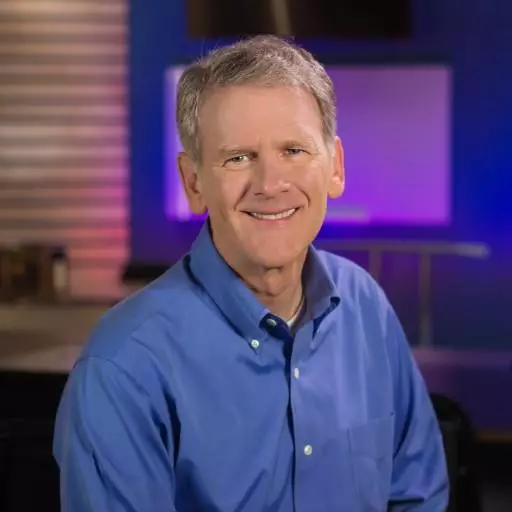
Bryan Chapell, Ph.D. is the Stated Clerk Pro Tempore of the Presbyterian Church in America (PCA), based in Lawrenceville, GA.
Dr. Chapell is an internationally renowned preacher, teacher, and speaker, and the author of many books, including Each for the Other, Holiness by Grace, Praying Backwards, The Gospel According to Daniel, The Hardest Sermons You’ll Ever Have to Preach, and Christ-Centered Preaching, a preaching textbook now in multiple editions and many languages that has established him as one of this generation’s foremost teachers of homiletics.
Dr. Chapell is passionate about sharing the truth of God's grace with others, because it provides the freedom and fuel for transformed lives of joy and peace.
He and his wife, Kathy, have four adult children, a growing number of grandchildren, and lives rich with friends, fishing and faith.
Contact Unlimited Grace with Bryan Chapell
info@unlimitedgrace.com