

Witness of Grace - Part 2


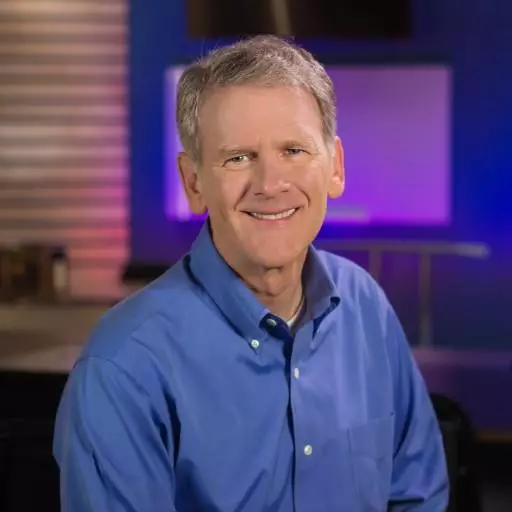
Pastor Bryan shares the second half of a lesson from Ephesians 4. Dr. Chapell highlights the words of the apostle Paul as he shares what it means to represent Jesus to our community, neighbors, and family.
Bryan Chapell: The apostle is saying here with such tenderness what hard things have to be said so that he can ultimately get to verse 32. Be kind to one another, tender-hearted, forgiving one another as God in Christ forgave you. This renewed witness to which we are called is just not reacting to difficulties differently. It is acting differently for the sake of other people.
Guest (Male): So glad you joined us for today's Unlimited Grace, the audio broadcast ministry of pastor and author Bryan Chapell. In today's episode, Pastor Brian shares the second half of a lesson from Ephesians chapter 4.
Doctor Chapell highlights the words of the Apostle Paul as he shares what it means to represent Jesus to our community, neighbors, and family. You can find this lesson and many others when you visit unlimitedgrace.com. And while you're there, look for Pastor Bryan's commentary on the book of Ephesians, which he wrote for the Reformed Expository Commentary series. Doctor Chapell reveals how when we lift our eyes beyond ourselves to share Paul's expansive vision, then we too will join his doxology for God's amazing grace that transforms the world.
Let's hear now from Doctor Bryan Chapell as he shares the second half of the lesson Witness of Grace.
Bryan Chapell: We know his love because he showed it to us on a cross but called us to share it as well. And we'll learn how today in Ephesians chapter 4. Ephesians 4 verses 25 to the end of the chapter. As you're turning there, I want you to listen to an email I received from a friend this past week, a pastor, who lives in Baltimore.
This is what he wrote. As to the rioting and where it happened. Sandtown, the home of New Song Community Church pastored by a PCA pastor, Lewis Wilson, is ground zero for the conflict. The young man at the center of the controversy lived in Sandtown and many of the people at New Song Community Church know him. The CVS pharmacy that was looted and burned was the pharmacy that lots of people in the Sandtown Church walked to for their medications.
However, in spite of the horrible damage to the community, Sandtown is a deeply proud neighborhood of people who love their community and their cleanup after the rioting has been spectacular, given the circumstances. Much of the damage was done by people imported and not local.
It was actually a sheer delight, writes my friend, to along with Pastor Lewis, walk throughout the neighborhood to greet folks, to clean up things with them, to hear their stories and hearts, even as police and TV helicopters were circling above us. I can tell you that amid the media, the rubble, the threats and the pain, there are clear signs of hope and peace. And it is obvious that Jesus is here.
What does it look like for Jesus to be here? Amid the media and the rubble and the threats and the pain, what does it look like for Jesus to be in our community, in our city, in our neighborhood? What does it look like? The Apostle Paul tells us when he speaks of the renewed life that represents Jesus to community and neighbor and family in Ephesians 4.
Let me ask that you would stand as we honor God's word, Ephesians 4 and verse 25 in your grace Bibles. That's page 978. This is the Apostle Paul telling us what that renewed life in Christ looks like. Verse 25, Therefore, having put away falsehood, let each one of you speak the truth with his neighbor, for we are members one of another. Be angry and do not sin. Do not let the sun go down on your anger and give no opportunity to the devil. Let the thief no longer steal, but rather let him labor doing honest work with his own hands so that he may have something to share with anyone in need.
Let no corrupting talk come out of your mouths, but only such as is good for building up as fits the occasion, that it may give grace to those who hear. And do not grieve the Holy Spirit of God by whom you were sealed for the day of redemption. Let all bitterness and wrath and anger and clamor and slander be put away from you along with all malice. Be kind to one another. Tender-hearted. Forgiving one another as God in Christ forgave you.
Let's pray together. Father, as God in Christ forgave us, we cherish it, but you are calling us to fountain it. To somehow be so filled up with the reality of the goodness of Christ that we become his instruments in a broken and sometimes quite angry world. So teach our hearts we pray this day what it means to be the presence of Jesus in a place of rubble and pain and brokenness that we might be his peace to others who need it. And that we might experience his peace, we who do need it. This we ask in Jesus' name. Amen.
Now, I confess to you when I was a teenager and I was taught this passage of Scripture, I can remember how the definition rightly given was, what is no corrupting speech? The Greek word there for corrupting, it's even going to say in some of your footnotes, is a word for putrid or spoiled, and it's the typical word for obscene speech. You should not have obscene speech coming out of your mouth. But is that all that God is being here and saying is, something according to your grandmother or like your grandmother, you know, if you haven't got anything good to say, don't say anything at all.
That's actually not what God is doing here, right? He's not saying don't say anything at all. He's saying, don't have that speech which corrupts, but rather have that speech that constructs, that builds up. Remember the words? Verse 29 again. Let no corrupting talk come out of your mouths, but only such as is good for building up. As though there's a constructing aspect that our speech has in the purposes of God. I never saw it more clearly than at a time in graduate school when I was asked to study a particular experiment that those involved in speech theory had been involved in, and here's what they did. They took people from different language parts of the world, and they had constructed an experiment with a certain spinning disc that had an image on it. And people were to describe the image on that spinning disc. And depending on what language they spoke, they actually saw different things in the image.
And the hypothesis of those who were now studying this was that our language patterns, our speech patterns, are actually forming neural pathways in our brain. So that we see the world, we're actually constructing the world that we see by the language that we use. I mean, the Bible is remarkably understanding. Use the speech that builds up, that constructs. We actually do see what we say. And by saying things a certain way, we begin to perceive our world in a way that shows us grace to start with. I mean, we know those people, right? Who, you know, their constant expression is complaint or caustic criticism of other people. They're, they're just constantly seeing the error in others or the wrong in others or the fault in others. And sometimes we just back away and say, why do they talk that way? Do you recognize they're just describing the world that they see? Their words have formed the world that they see. They've constructed the world by their words. And the more they speak those kinds of words, they more they harden the pathways in their brain of the world that they see.
And the great grace of God is saying, speak that which, which constructs that builds up the reality of grace for you, but of course it's not just for us, so that you may share grace with others. Speak, speak that into verse 29, remember, that it may give grace to those who hear. That's an amazing thought. That around us are our spouses, our families, our co-workers, our children. And we're actually forming the world that they see by the way that we speak. So that if we speak with suspicion and anger and caustic perceptions, we're actually depriving them of the grace that God intends for them to see, that a world where there is beauty and there is forgiveness and there's the reality, the goodness and grace of God, that we're actually creating a barrier to our own loved ones being able to see it by the world that we're creating by our speech.
And so the apostle is simply saying, recognize that what I'm enabling you to do is not just, you know, some third-grade teacher saying, I'm going to wash out your mouth with soap if you do they do that anymore? You know. It's God far more concerned, not just for some legalistic standard, but for the goodness of our life experience. I want you to know my grace by framing the world that you see by the words that you say and helping those about you to see the beauty of that world. It's the gift we give to family and friend and neighbor and co-worker by being able to speak in ways that they begin to see a world they never had access to by, by the speech that we are using. The words actually do create a world of grace and it's God's very intention that it be that way.
Guest (Male): You're listening to Unlimited Grace, the audio broadcast ministry of pastor and author Bryan Chapell.
Bryan Chapell: The Apostle Paul wrote this letter to the Ephesians to declare God's plan that the Gospel of Jesus Christ would reach the world through weak and sinful people like you and me. He writes that God has redeemed us to unite all things in him, things in heaven and things on Earth. When we lift our eyes beyond ourselves to share Paul's expansive vision, then we too will join his doxology for God's amazing grace that saves individuals, empowers the church and transforms the world. Yes, such grace really is possible and Pastor Brian's commentary on the book of Ephesians clearly teaches the details of this amazing truth. As a thank you for your support of our ministry here at Unlimited Grace, we would like to send you a copy of Doctor Chapell's commentary, which he wrote for the Reformed Expository Commentary series. You can request your copy of the commentary on Ephesians when you donate online at unlimitedgrace.com or by calling 844-41-GRACE. That's 844-414-7223. And now, more from Bryan Chapell on today's Unlimited Grace.
Verse 30 takes that notion of sharing and pushes it even further. And do not grieve the Holy Spirit of God, by whom you were sealed for the day of redemption. The renewed witness that God is calling us to is somebody who's actually reacting differently to the world so that we are not grieving the Holy Spirit. What was the purpose of the Holy Spirit? Jesus told us the purpose of the Holy Spirit is to testify of me. We grieve the Holy Spirit when what is in us does not testify of Christ. When others are not seeing him clearly by how we are acting and reacting. And so the apostle just says to us, you should not grieve the Holy Spirit and then describes what that means, verse 31, Let all bitterness and wrath and anger and clamor and slander be put away from you along with all malice.
I just feel awful now. To recognize how easy it is to grieve the Holy Spirit. By slander, by malice, by speaking ill of other people, by not trying to build up others so that others see them in a better light, rather than a worse light. And what God is doing is he is doing this, he's actually saying, this is the Gospel spreading. This is part of the means by which world transformation is occurring, that God is actually working in us and he does that as we do not grieve the Holy Spirit by not griping about one another.
Now I'll just tell you straight out, you know, what is one of the things that hinders the Gospel in the church? I mean, Pastor Kerry was so honest with us earlier today to say, one of the hardest weeks of his pastoral experience has been this past week because there have been some hard things happen in our church. And, and what keeps us at times from, from talking about things that make the grace of God flow? Because we know each other. And and we know that if in the church you say, man, I'm really struggling with my kids. Or I'm really struggling with my boss, or I'm really struggling with lust, I'm really struggling with anger, I'm really struggling with unforgiveness. That in the church of Jesus Christ, a third to a half of the people, I just made that figure up. But a third to a half of the people, if you tell them their problems, they're going to say, it's your fault. And, and so we just clam up, right? And the grace can't flow, the reception of one another, the forgiveness to say, you know, I'm like you, I struggle with those things too. We won't talk about it and so the grace of the Gospel can't flow. And so the apostle saying, listen, without malice and without slander, talk to one another, be kind to one another. You're going to need one another in those moments of difficulty. Now, listen, because, because there are so many twisted and mean people in the church, you know, like you and me.
Because there are so many twisted and mean people in the church, I have some advice for you next time you face some tension or difficulty. Because there are so many twisted and mean people in the church the next time that you face some tension or difficulty, don't be one of those people. Because our reaction is just to grieve the Holy Spirit. Our reaction is malice and slander to speak in hard ways about people. And what we're doing is then we're just, we're just shutting down, not just other people's ability to talk to us, our ability to talk to other people, when we actually need one another. And so the apostle is saying here with such tenderness, what hard things have to be said so that he can ultimately get to verse 32, Be kind to one another, tender-hearted, forgiving one another as God in Christ forgave you. This renewed witness to which we are called is just not reacting to difficulties differently. It's, it's acting differently for the sake of other people, to actually reflect the reality of Christ in us. What, what's the ministry of the Holy Spirit? It's to reveal the glory of Christ.
What is Christ's greatest glory? It's the revelation of the mercy of his Father. So if what we are being called to do is to reflect the mercy of the Father to bring the greatest glory to God, you must recognize that what Jesus has done, what the Apostle Paul has done is say, you want to be this transforming agent in the world. Don't just think about the world. Would you think about your family? Would you think about your friends? Would you think about your neighbor? Would you think about your co-worker? There are people who desperately need a pathway to the Gospel. They need to know the grace of God. And it's by our speech and our reactions and our actions that that becomes clear. Honest talk, honest talk to one another.
Some of our children may not come back to the Lord until after we are gone. Some of our children may be converted at our own funerals. Some of our friends may not come to know Christ until after we have long moved from the neighborhood. Some of our workers may not know the Gospel until they've gone to the other company. But if we have the opportunity to sow the seeds of the Gospel in their hearts and lives, to make the path a bit easier for them to actually see the Gospel is real. How's that's going to happen? We'll give them some forgiveness now. Some kindness now. Not, by the way, not because they deserve it. Not because they deserve it. Because you did not deserve it when you were forgiven. And that's why the apostle says it with such power at the end, forgive one another as God in Christ forgave you. You didn't have it straightened up, you couldn't make it right, you hadn't fixed it, and he forgave you. When you came to him, he forgave you. What is going to make others understand that, our children, our loved ones?
We'll give them some grace. Forgive them and watch the power of it or even if you can't see it, in faith believe God will use it in his time. Gladys Staines, missionary in India with her husband, Graham, for 34 years. In 1999, lost her husband, Graham, along with their two pre-teen sons, were in a car in a town in India, which was attacked by Hindu militants, doused in gasoline and set on fire. The incident of course, even at that time when terrorism was not so much talked about, made world headlines. But what made the headlines even more was her response to the murder of her husband and to her sons. She wrote, when I learned that my family was dead, I told my daughter, we will forgive them. She said to the newspaper reporters, how was I able to forgive? The truth is that I myself am a sinner. I needed Jesus to forgive me. Because I have Jesus in my life, it is possible for me to forgive others.
Now, you must know something, that when she talked about the forgiveness of Christ enabling her to forgive those who had been so cruel to her own family, that made the headlines too and it actually created greater rage in India against her and her family. But with the rage, the message spread. So that another missionary reported this, A man came to me when I asked him, do you understand who Jesus is? And his response was, is that the same Jesus that Gladys Staines believes in? Yes, said the missionary. Said the man, I want to know that Jesus. And then years later, when the daughter of Gladys Staines was at university and fellow students began to press her, why should you forgive? Why would you forgive? She wrote her mother these words, Mummy, I can't understand that they can't understand why we would forgive. Because receiving and giving are of the same cloth. As I forgive, I understand how great is my forgiveness. As I forgive debts, I understand no matter how great is my debt, my God's grace was greater. God is calling us today to recognize the reality of our calling. We have received much so that we would give much.
What will change the people around us and in us and make us the instrument of God's calling? Forgive as God in Christ has forgiven you. And the Gospel will roll.
Guest (Male): Friends, I'm so glad you decided to tune in today and listen and I would consider it a privilege to pray for you right now. Let's go together before the throne of heaven and pray for the Lord's blessing. Father, thank you for being merciful to us. Help our hearts to grasp the greatness of that mercy that you provide so that we can offer our lives to Jesus as a sacrifice of praise that you have made holy and acceptable despite our many weaknesses and flaws. We thank you for this great grace and pray in Jesus' name. Amen. That's Pastor Brian Chapell and you've been listening to Unlimited Grace. If this message has been an encouragement to you, you can find a collection of more valuable resources at unlimitedgrace.com. When you visit, you will find today's message and many others from Pastor Bryan. Also, be sure to request a copy of Doctor Chapell's commentary on Ephesians. Please be sure to join us next time as once again, we endeavor to put Christ at the center of our efforts so that lives might be transformed by his Unlimited Grace. This ministry is brought to you by Unlimited Grace Media and continues to be made possible with your generous financial support.
Featured Offer

In Bryan Chapell's book, you will learn how God's unlimited grace leads us to heartfelt obedience and transforming joy. Explaining why grace is important and giving us tools to discover it in all of Scripture, Unlimited Grace helps us to see how gospel joy transforms our hearts and makes us passionate for Christ's purposes.
Past Episodes

Featured Offer
In Bryan Chapell's book, you will learn how God's unlimited grace leads us to heartfelt obedience and transforming joy. Explaining why grace is important and giving us tools to discover it in all of Scripture, Unlimited Grace helps us to see how gospel joy transforms our hearts and makes us passionate for Christ's purposes.
About Unlimited Grace
About Bryan Chapell
Bryan Chapell, Ph.D. is the Stated Clerk Pro Tempore of the Presbyterian Church in America (PCA), based in Lawrenceville, GA.
Dr. Chapell is an internationally renowned preacher, teacher, and speaker, and the author of many books, including Each for the Other, Holiness by Grace, Praying Backwards, The Gospel According to Daniel, The Hardest Sermons You’ll Ever Have to Preach, and Christ-Centered Preaching, a preaching textbook now in multiple editions and many languages that has established him as one of this generation’s foremost teachers of homiletics.
Dr. Chapell is passionate about sharing the truth of God's grace with others, because it provides the freedom and fuel for transformed lives of joy and peace.
He and his wife, Kathy, have four adult children, a growing number of grandchildren, and lives rich with friends, fishing and faith.
Contact Unlimited Grace with Bryan Chapell
info@unlimitedgrace.com