

Why Do They Get The Window Seat? - Part 1


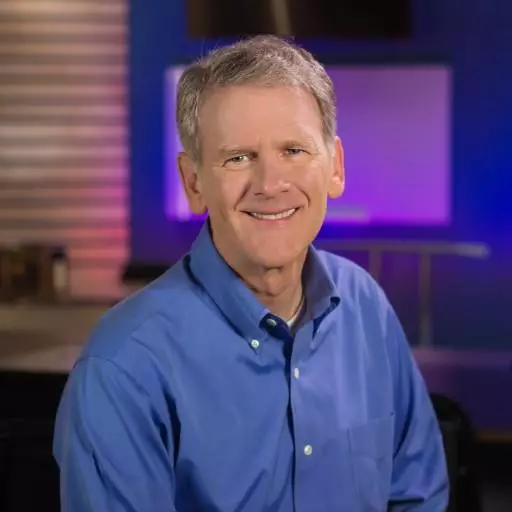
Pastor Bryan shares a message from Psalm 73. Dr. Chapell faces the challenging question of why sin and evil seem to prosper. When we bring such hard questions to God, he provides sanctuary and reminds us that He will have the final say.
Bryan Chapell: God is not done yet. Yes, it is certainly true that the evil may prosper, that evil may have its day, but God will have the final say. And God is not done yet.
Guest (Male): So glad you joined us for today's Unlimited Grace, the audio broadcast ministry of pastor and author Bryan Chapell. In today's episode, Pastor Brian shares a message from Psalm 73. Dr. Chapell faces the challenging question of why sin and evil seem to prosper.
When we bring such hard questions to God, he provides sanctuary to us and reminds us that he will have the final say. You can find this lesson and many others when you visit unlimitedgrace.com. And while you're there, look for Pastor Brian's book, The Promises of Grace.
Dr. Chapell offers a careful look at the beauty of grace and all it brings to believers. These blessings come with the understanding that because we cannot hang on to God, he hangs on to us. Let's hear now from Dr. Bryan Chapell as he shares the lesson titled, Why Do They Get The Window Seat?
Bryan Chapell: One day in the life of a Christian in Peoria, Illinois. One day's newspaper headlines beginning: same-sex marriage law turns one. And the subtext: about one in 10 certificates for marriage issued in Peoria County in this past year has been for same-gender couples.
Same headline, first page: Vanity Fair magazine features Bruce Jenner's new look on its cover. Conservative columnist David French writes: a man is damaged in surgery, put on the front page of a fashion magazine, and the rest of us are required to applaud.
Same front page, same day, our town: erotic dancer sues her club owner over lack of minimum wage being provided to her. Our town, front page, one day. One week of being a Christian in our world, this past week. It was the anniversary of China's Tiananmen Square massacre, marking 26 years of state-sanctioned oppression of Christians as religious expression is suppressed and fellow believers, our brothers and sisters, are not allowed to gather in numbers or worship freely.
Same week, world headlines, the story of Ji Jong Ho is published. A North Korean refugee who expressed how in his classroom, he slowly watched as desk after desk after desk was emptied because his classmates had starved to death.
And then he was imprisoned and tortured for the crime of losing his leg in a train accident. The real crime: he had embarrassed his country's leader by becoming an invalid. Escaped through the work of friends, but others have not escaped. In Syria this last week, ISIS terrorists are allowed by the Syrian government to take Aleppo, the country's largest city, assuring that churches and Christians that have been there for millennia will no longer be protected. Most are already in refugee camps, the few remaining in great danger.
In the Sudan, this same week, two Christian pastors are put on trial with death sentences hanging in the balance. Their crime: one preached the gospel, the other complained that his friend was put in prison. And for that reason, both are on trial, the official charge: undermining the government.
And this same week, the job application if you wish to join Al-Qaeda has been published on the internet worldwide. It includes not only blanks to fill in your name, age, and marital status, but questions such as these: Do you have military training? Do you wish to execute a suicide operation? Do you have family members or friends who work with the government? Whom shall we contact if you become a martyr for Muhammad?
One week of being a Christian in this world. One month of being a Christian in our nation just a year ago. In that same month, California enacted the so-called Transgender Rights Law, allowing both genders access to single-gender bathrooms in public schools if your preference does not agree with your anatomy.
That same month, New Jersey Governor Chris Christie signed a law banning therapy for anyone under 18 struggling with unwanted same-sex attraction. It does not matter what you want, nor what your parents want, nor even what the therapist wants. You are now banned from offering therapy to anyone under age 18 for same-sex attraction.
The New Jersey Supreme Court in that same month ruled that evangelical photographer Elaine Hue could neither claim religious freedom nor freedom of speech in refusing to photograph a same-sex wedding ceremony. Same month, Oregon's Bureau of Labor investigated a bakery for declining to prepare a cake for a same-sex wedding.
And the Oregon Bureau of Labor said that those who owned the bakery not only had to be investigated, but the conclusion was that they had to be rehabilitated in order to continue in their business. Same month, the California legislature prepared to strip the Boy Scouts of their tax-exempt status. You may know that the Boy Scouts won that case in court, but just this last month, Robert Gates, the current president of the Boy Scouts and the former head of the Department of Defense of the United States, said that the Boy Scouts should change their standards and allow same-sex oriented persons to be leaders.
Same month, Phil Robertson of Duck Dynasty was threatened with loss of his job for comments about same-sex marriage. Same month, Brendan Eich, CEO of Mozilla, also made comments. And though Phil Robertson kept his job, Brandon Eich was purged from his job as the CEO of Mozilla. Now we all wait, don't we, this summer for a ruling from our nation's Supreme Court, which may constitutionalize same-sex weddings. One month, just one month, in our country.
What about one generation in our country? In this last generation, as a consequence of experiments with marriage and sexual expression and no-fault divorce, 40% of the young people born in this country will be born outside of wedlock. 40% in this country now born outside of wedlock, even though we know that a child born outside of wedlock will be five times more likely to be raised in poverty or go to prison.
And in that same generation, 57 million children have not been born because of the ravages of abortion in this country since Roe v. Wade in 1973. One day, one week, one month, one generation in our country.
Well, aren't you glad you came? Can you identify with a psalmist who said, when I considered the prosperity of evil in my nation, my feet had almost slipped. I didn't understand what good faith was. I look around me and it seems that those who prosper are those who have very little to be concerned with with regard to the word of God.
They don't follow God, they don't seem to be concerned about his ways, and yet they are the very ones who seem to get the most prosperity, that seem to have the least of cares. What good is it to be a Christian? My feet had almost slipped. First lesson of the day: when we ever begin to think that we're the only ones who have had to stand the challenges of evil, we do not recognize that every Christian in every age, in all places, at all times faces the same challenge. This is par for the course. Part of not slipping is just recognizing we are not unique.
But we're also not unique in what threatens to trip us up. What threatened to trip the psalmist? He's pretty plain about it. Verse four: there are no pangs for the wicked. They are fat and sleek, happy as clams, fat as ticks, sleek as mink. Verse five: they are untroubled. Verse 11: they are unnoticed by God. He doesn't seem to notice them. And verse 12: yet they are always at ease and always prospering. Yes, one problem is looking at the others and saying it doesn't seem like it's any good to be good.
But of course, the psalmist is far more honest than that. The problem for his heart, for his faith, for his soul is not simply that the evil prosper. It's that he wants what they got. I envy the wicked. It's so plain in verse three: for I was envious of the arrogant when I saw the prosperity of the wicked. Verse 13 even more plain: all in vain have I kept my heart clean and washed my hands in innocence. Verse 14: for all day long I've been stricken and rebuked every morning. Not only do I want their stuff, I want God to stop being mean to me.
It's just kind of the big boy grown-up way of saying, why do I have to sit in the middle? I want the window seat. Why do they always get the window seat and I have to suffer over here? And if that sounds silly, you have to recognize that we don't make sense of this psalm until we make it just that personal. Why do they get what I don't get? I'm trying to be good, I'm trying to follow God. Why do I suffer? We don't just have to think about national, global, and generational issues. We just have to come right into our own lives and ask the questions that we really have.
Why if I am faithful do my children get sick, or does my spouse get sick, or worse, why do they turn away from me or turn away from my faith? Why do really good Christians struggle with job security and infertility and bad neighbors and tornadoes?
We long for solid relationships and an end to loneliness and feeling like God is really close and going to help us, but at the very same time, we see other people without solid faith, without Christian expression, who get good jobs and fast promotions and attractive spouses and fancy homes and carefree lives and healthy families.
The real question of course, as we go through it, is not just why do the evil prosper, but why don't I? The real problem is not evil, but envy. I want what they have. I want their life as I perceive it from this outside place. All of that the psalmist says in poetic and powerful terms. They get it better, though they do not follow God. And real honesty comes in verse 15 when he says, if I had said I will speak this, I would have betrayed the generation of your children. I'm thinking it, I feel it, but I better not say it. The kids might hear.
After all, we got vacation Bible school coming. We can't talk real questions. We can't put real critiques of God in front of people because it will hurt the children. Now, there is some truth in that, of course. I mean, do we really want to teach our children that selfishness is the path to satisfaction, that money will bring you love?
I mean, something in us knows that really isn't the message. So even though we struggle with the gain that those who do not follow God have, we're just taken back a little bit. But what do I want to teach my kids? Do I want to say if you just pursue greed, you'll be content? We know that's not the answer. And it's just that little blink of sober reflection, what do I actually want to teach the children, that sends the psalmist down an entirely different path. Not the path that causes his feet to slip, but the path that settles his heart.
What does he say next? Verse 16: when I thought how to understand this, that is, the good that comes to the evil and not to me, it seemed to be to me a wearisome task until I went into the sanctuary of God. Then I discerned their end. Now, I know this can just sound like churchy stuff, the Sunday school lesson that we're supposed to teach.
So I went to church and that fixed it. No, what does the word sanctuary mean? A safe place. I went to a safe place with my hard questions. I mean, it's kind of an amazing statement, a learning lesson for all of us. How we have been blessed and benefited by people in recent months who have come and stood before you and with testimonies that are real from a real world, have talked about here were the struggles of my life, here's the difficulties I faced, and here's how God helped, here's what the gospel made a difference in. I'm going to tell you the real stuff.
I'm not just going to sugarcoat it. I'm not going to look past the bad stuff. I am going to tell you that I struggled, but I came to a safe place. And in sanctuary, I was able to deal with the difficulties.
And that is actually what is happening in this place. As the psalmist comes into the sanctuary, he begins to say, then I begin to discern true reality. I mean, not the reality that says just evil people prosper and I don't get their stuff. I begin to see things as they really are. First truth: God is not done yet.
Yes, it is certainly true that the evil may prosper, that evil may have its day, but God will have the final say. And God is not done yet. Those who seem so secure, what is their true situation? Verse 18, speaking to God: truly, Lord, you have set them in slippery places. You make them fall to ruin. How they are destroyed in a moment, swept away utterly in terror.
Evil, far more than we are willing to admit at times, is actually what is on the slippery slope. We have firm foundation in our Lord, and yet evil has no foundation but human endeavor, human wiles, and human achievement. That's all you got. And if all you got is yourself to depend upon, that is a slippery place to stand.
We know that. We know there is insecurity now. I mean, if we will not put on the rose-colored glasses of the secular perspective, of a perspective without God, if we will put on real glasses, what gives us the impression that if you get enough wealth, fame, and power, that kings and dictators and house speakers have no fears? What world is that that we live in that we'd actually believe that sort of thing?
What makes us think that you become a movie star, you become a Hollywood idol, and you're suddenly a balanced person with no more issues in life? Really, people make millions of dollars talking about the issues of the people who are most famous about us. Every reality, if we will actually face us, is telling us that apart from God, that is really the slippery slope. That is where you're most endangered. And if you do not accept it about the present insecurity, the psalmist actually is willing to point forward and say, even if things go okay now, what is ahead? Remember, that is addressed as well.
Verse 27: for behold, those who are far from you shall perish. You put an end to everyone who is unfaithful to you. Plain talk. Everything good the faithless will receive, they will get now and no more. That the span of life that they have right now is the only time at which they will experience good in all of eternity.
That, yes, there may be good now, but there is judgment coming. And you cannot spend your money in hell and the achievements here will mean nothing then, and judgment will come. And so the psalmist speaks with clarity and says, you face the real reality.
You know enough even in the earthly moment to know those who pursue life without God do not know satisfaction and contentment, and you should know that there are consequences far beyond this life. But what is your reality? If you are a person who is seeking God, what reality do you actually have?
Number one, you have grace now. You have security now. Verses 21 and 23, do you recognize how honest these verses are? When my soul was embittered, when I was pricked in heart, I was brutish and ignorant. I was like a beast toward you, God.
Nevertheless, I am continually with you. You hold my right hand. All right, I asked hard, disrespectful, mean, beastly questions. And how does God deal with me? He holds me by my hand and will not let me fall. I said the worst about you, and what do you do? I hold on to you. When you cannot hold on to me, I hold on to you.
Featured Offer

In Bryan Chapell's book, you will learn how God's unlimited grace leads us to heartfelt obedience and transforming joy. Explaining why grace is important and giving us tools to discover it in all of Scripture, Unlimited Grace helps us to see how gospel joy transforms our hearts and makes us passionate for Christ's purposes.
Past Episodes

Featured Offer
In Bryan Chapell's book, you will learn how God's unlimited grace leads us to heartfelt obedience and transforming joy. Explaining why grace is important and giving us tools to discover it in all of Scripture, Unlimited Grace helps us to see how gospel joy transforms our hearts and makes us passionate for Christ's purposes.
About Unlimited Grace
About Bryan Chapell
Bryan Chapell, Ph.D. is the Stated Clerk Pro Tempore of the Presbyterian Church in America (PCA), based in Lawrenceville, GA.
Dr. Chapell is an internationally renowned preacher, teacher, and speaker, and the author of many books, including Each for the Other, Holiness by Grace, Praying Backwards, The Gospel According to Daniel, The Hardest Sermons You’ll Ever Have to Preach, and Christ-Centered Preaching, a preaching textbook now in multiple editions and many languages that has established him as one of this generation’s foremost teachers of homiletics.
Dr. Chapell is passionate about sharing the truth of God's grace with others, because it provides the freedom and fuel for transformed lives of joy and peace.
He and his wife, Kathy, have four adult children, a growing number of grandchildren, and lives rich with friends, fishing and faith.
Contact Unlimited Grace with Bryan Chapell
info@unlimitedgrace.com