

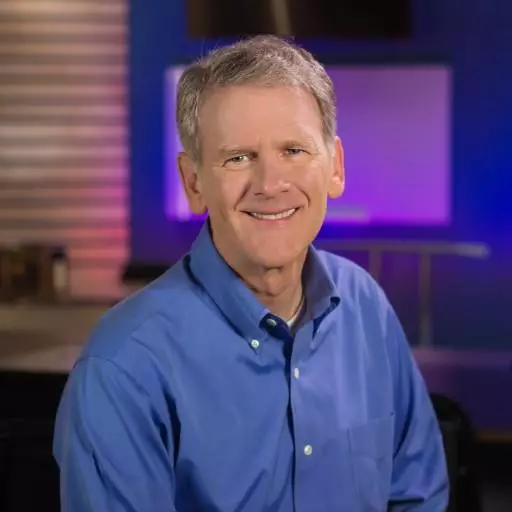
When God Laughs - Part 2


Pastor Bryan continues his lesson from Psalm 2, inviting us to rejoice in the grace found in God’s warning and the blessing found in His refuge.
Guest (Male): What I want to say to young people as they are beginning their marriages and somebody says to them, "What do you do to keep the passion going? What do you do to keep love's fire lit?" I want to say, "Listen, the devotion of you to another person so that your heart becomes one and beats together through the good times and the bad times. I want to tell you something, it only gets better, better and better as God makes two people one. That is His blessing. You've got a better plan? Don't make me laugh."
Guest (Male): So glad you joined us for today's Unlimited Grace, the audio broadcast ministry of pastor and author, Bryan Chapell. In today's episode, Pastor Bryan continues his lesson from Psalm 2, inviting us to rejoice in the grace found in God's warning and the blessing found in His refuge.
You can find this lesson and many others when you visit UnlimitedGrace.com. And while you're there, look for Pastor Bryan's book, *The Multi-Generational Church Crisis*. This compelling book asks the question of the church, "What could be accomplished in the name of Christ if we could better understand each other?" Let's hear now from Dr. Bryan Chapell as he shares the second half of the lesson, "When God Laughs."
Bryan Chapell: Let me ask that you would look in your Bibles this morning at Psalm 2. Psalm 2 is the most frequently quoted Psalm in the New Testament. So, if you say, "What Psalms are frequently there?" you would say "2," and most important to the apostles and prophets in the New Testament, Psalm 2.
One of the reasons I think perhaps is a verse that you're going to recognize as I get there, which reminds us that we are called to kiss the son. Isn't that a great summer Psalm to begin with? You've heard of Sunkist oranges; this is a Sunkist Psalm. And I think you'll find it even more sweet as the Lord is telling us here of His great passion for His people as He sends a Savior to save.
Let's stand as we honor God's word. Psalm 2 in your Grace Bibles; that's page 448. Psalm 2. The Psalmist writes, "Why do the nations rage and the peoples plot in vain? The kings of the earth set themselves, and the rulers take counsel together, against the Lord and against his anointed, saying, 'Let us burst their bonds apart and cast away their cords from us.'"
"He who sits in the heavens laughs; the Lord holds them in derision. Then he will speak to them in his wrath and terrify them in his fury, saying, 'As for me, I have set my King on Zion, my holy hill.' I will tell of the decree: The Lord said to me, 'You are my Son; today I have begotten you. Ask of me, and I will make the nations your heritage and the ends of the earth your possession. You shall break them with a rod of iron and dash them in pieces like a potter's vessel.'"
"Now therefore, O kings, be wise; be warned, O rulers of the earth. Serve the Lord with fear, and rejoice with trembling. Kiss the Son, lest he be angry, and you perish in the way, for his wrath is quickly kindled. Blessed are all who take refuge in him." Let's pray together.
Heavenly Father, would You bless us by teaching us how we might take refuge in Your Son this day? This Psalm, for all its magnificence, is a call to intimacy, to closeness to the Son, to a relationship so dear it's being called "kissing the Son," an embrace of grace that shows how great is Your love for us and, as we respond, the blessing of Your care now and forever. So bless us by understanding that our lives might reflect this goodness, we pray in Jesus' name, amen. Please be seated.
Is it true that humor is never in the Bible? Does God ever laugh? And, of course, the Psalm in front of you answers the question, doesn't it? It specifically says in verse 4, "He who sits in the heavens laughs." Why? If you get nothing else from today, what I want you to hear is this: When the Bible tells us that God is laughing, He is not laughing at you. Not your foolishness, not your weakness, not your sin. The intention of God is not to laugh at you; it is to rejoice over you.
Because Kathy and I wrote a book on marriage, we still get radio interviews with some frequency, and we've just learned to anticipate a standard question that will come in those radio interviews and we say we've been married something like 38 years. And the standard question is, "How do you keep love's fires lit after the initial passion dies?" Now, first of all, I'm not about to confess that the initial passion dies with my wife right beside me.
I actually do want to say, "What are you talking about?" When a marriage has weathered storms and crises, trials and tears, excitement and escapades, built a family, built trust, built memories together. When you cannot remember life without your other. When your lover is your friend and your confidant and your heart and your spouse. When you hate being apart and you love getting back together. When that happens, you want to tell me you've got a better plan? I will tell you this is the blessing of God upon His people. And yes, it is my anniversary week, so I get to say all this.
But if you're going to tell me there's a better plan than this, because what I want to say to young people as they are beginning their marriages and somebody says to them, "What do you do to keep the passion going? What do you do to keep love's fire lit?" I want to say, "Listen, the devotion of you to another person so that your heart becomes one and beats together through the good times and the bad times. I want to tell you something, it only gets better, better and better as God makes two people one. That is His blessing. You've got a better plan? Don't make me laugh."
Which is actually what God says in verse 5, loosely translated. After God says He laughs at those who say they have a better provision, then He will speak to them in His wrath and terrify them in His fury, saying, "As for me, I have set my King on Zion, my holy hill." I don't really like verse 5: "He will speak to them in his wrath, he will terrify them in his fury." We've been talking about a God who laughs. I'm not too intimidated by that.
But then God says, "No, listen. I laugh at the understanding that you look at My blessing and you say you've got a better plan. I have intention to have My people know the beauty of walking with Me, the significance of their lives, the wonder of their love shared. And you're going to take that away because you say you've got a better plan? Don't make me laugh. In fact, I will tell you something that will bring My fury."
You and I know that laughter can sometimes be accompanied by an edge of anger. I have a sister-in-law who wears a t-shirt that says, "Don't start with me." Now, I laugh, but I'm also a little bit cautious. And God is saying He laughs, but He's saying, "You need to listen to Me. I told you that you are warring against the Lord and His anointed, the one who is meant to bring the blessing of God into the world, into your families, into your daily life. And you say you have a better plan?" That anger should accompany laughter if God is laughing at the wrong, but also angry at the damage.
I mean, you and I know that laughter and anger can sometimes go very close together. I can remember when our first daughter was born, and I took a couple of preschool boys to visit mom and new baby in the hospital. And the little boys were not nearly as interested in baby sister as they were in the bouncy hospital beds, right? Because they could get on the hospital beds and they could bounce all the way to the ceiling with shrieks of laughter. And I very quickly said, "That's enough." Which, of course, led to one more super-bounce, which sent Jordan rocketing off the bed to crack his head open on the floor.
Now, two things are happening right at once. I care a lot, and I'm really mad. Right? I'm so concerned, but at the very same moment, I'm upset, I'm angry that he would hurt himself in that way. And when God has said here, "Listen, you're actually plotting against my anointed, my plan, the rule of love, the rule of righteousness that I intend for my people, and you want to undo that?" God has a righteous anger at such things, and it's meant to caution us.
At the same time, it's meant to comfort us. What does God do with His anger? Verse 6 again, "As for me, I have set my King on Zion, my holy hill." Who is He talking about? David initially, and then David's line, but Christ Jesus, who will come to be King, who will rule in righteousness and love and redemption. God says, "You want to undo my plans, but I have set my King on Zion. I have a bigger, better plan, and I will rule."
Guest (Male): You're listening to Unlimited Grace, the audio broadcast ministry of pastor and author, Bryan Chapell. It may seem hard for younger Christians to believe, but people over 50 were raised during an era when 90% of Americans identified as Christian. These older believers were once part of a majority group that understood the mission of the church was to take control of our culture to halt its evils. At the same time, Christians under 50 have lived their entire lives perceiving themselves as a minority that needs to make credible their faith to a secular, pluralistic culture.
These distinct experiences and perceptions have a profound impact on the priorities different generations have for church ministry. It's no wonder that younger and older believers don't always see eye to eye. In his new book, *The Multi-Generational Church Crisis*, Dr. Bryan Chapell asks the question, "What could be accomplished in the name of Christ if we could better understand each other?"
This practical and hopeful book is backed by thorough research, revealing how to open the lines of communication, appreciate the experiences that shaped each generation in your church, and unite in one mission to impact your community and the world. You can request your copy of *The Multi-Generational Church Crisis* when you donate online at UnlimitedGrace.com or by calling 844-41-GRACE. That's 844-414-7223. And now, more from Bryan Chapell on today's Unlimited Grace.
Bryan Chapell: It's the reason that this Psalm was so frequently quoted in the New Testament. As New Testament Christians were going through heartache and persecution, as they were facing the bitterness of trying to stand for the Lord, they believed that this Psalm was the evidence that God will fulfill a purpose beyond them through the power of the Holy Spirit. And that this Psalm's promise that God would establish His King with a forever kingdom was their hope in the hardest of times.
The laughter of God is the power of the Spirit poured into the activities of the church. Do you recognize what happens when God laughs? His Spirit arises. "I will set my King in Zion. I will send my holy servant." I'm not saying that it will happen in a moment. The New Testament church did not believe that there would not be persecution ahead. But they believed the promise of God was He would accomplish His purposes, that ultimately the name of Christ would fill the earth as waters cover the sea, that there would be opportunity by the church, through the church, through God's people to accomplish the great and mighty work because the Holy Spirit would fill them.
When we recognize that what is happening in our world is people trying to burst the bonds of Christ, to cast away the cords that they view as restraint, we recognize that God does not merely laugh. He says, "Don't make me laugh, because I will send my Spirit to help my people." It's what you and I profoundly believe: that we do not worship in this place, nor serve God in the workplace kind of hope against hope, "I wish this will happen now for some good." We believe that Psalm 2 and everything leading up to it and following it is saying God will fulfill His purposes.
The Spirit is alive in this place. That when God breathed upon His church at Pentecost, what He was doing was He was promising that that Holy Spirit would work through us and beyond us to do the work of God that He has called us to do. It is actually the promise that is here. Once God says, "Don't make me laugh," He tells us why when that laughter comes, it is actually the best medicine for this world and the people of God.
After God truly does express that we are to take note, He tells us why we should take note of what He will do through His Son. Look at verse 6 again, "As for me, I have set my King on Zion, my holy hill." Here comes rescue. You kings and rulers, you counselors, you think you're going to—I have set my King up. He will do what I intend. I will establish my King. Verse 7: What will He do? David now speaking said, "I will tell of the decree that the Lord said to me." Here is David himself now looking back at 2 Samuel 7. What did God promise to me, King David?
The Lord said, "You are my Son. Today I have begotten you. Ask me, and I will make the nations your heritage and the ends of the earth your possession. You shall break them with a rod of iron and dash them in pieces like a potter's vessel." I know the words go by so fast, every phrase a promise, every phrase a commitment of the power of God to do what is necessary for His people. Verse 7: The Lord said to me, "You are my Son. Today I have begotten you."
The words in Romans chapter 1 and verse 4, as God says Jesus has been declared to be the Son of God by His resurrection through the Holy Spirit. The Holy Spirit in raising Christ is saying, "I have sent the King. He is my begotten Son. He is of the line of David." Verse 8: "Ask of me," says God to David, "and I will make the nations your heritage." What was the promise to Abraham, the forefather of David? "I will make you a father of many nations."
Here the Abrahamic covenant comes to fruition. "And the ends of the earth will be your possession." Again, the covenant with David: that there would be an eternal and universal kingdom out of which would come the ruler over all things for the good of God's people. Verse 9: "You," that is this line of David, "you shall break them." Don't think of breaking like breaking a stick; think of like breaking a horse, taming it.
You shall tame the unruly nations. You shall tame evil. Some of your Bibles actually use the word "shepherd" there. You will shepherd the nations with a rod of iron. Oh, say "scepter"; it's the same word. Do you remember way back in Genesis 49? God said through Jacob, "The scepter of Judah shall not depart from his people." That God is saying He had a plan that would go from Abraham, through Judah, through David, to Jesus.
And God is working the plan, which is ultimately giving His people confidence that regardless of what they face, God is at work. And there is a consequence of that. Verse 10: "Now therefore, O kings, be wise. Be warned, O rulers of the earth." Listen, if God did not love, He would not warn. He has said, "I will send my Son. He will conquer evil and forgive your sins." Come under His rule, come under His understanding. Be wise; be warned.
And that kind of warning is actually a great grace. We sing it so consistently we don't even recognize what we're saying, right? In "Amazing Grace," "'Twas grace that taught my heart to fear." Well, why is that gracious? Because that same grace my fears relieved. If I don't recognize the consequences of sin, I will not turn from them. But if I see the consequences—fear that—then I will turn to the one who says He will rescue me. And that is actually what God is saying He will do.
"Serve the Lord with fear," verse 11, "and rejoice with trembling." Such strange words: fear, warning, trembling, and rejoice. One of these words is not like the others. One of these words doesn't belong. Fear, warning, trembling, and rejoice. Which word doesn't fit? Rejoice. As though what the Psalmist is doing is saying: Recognize in what God is providing, warning not to turn from His blessing, is actually giving you cause to rejoice.
There is a path of salvation, there is a path of goodness. And who's being called to it? Look at verse 12, "Kiss the Son, lest he be angry, and you perish in the way." The Psalmist is addressing the very enemies of God, the ones who said they had a better plan, who turned away, who counseled against the work of the Messiah. And to the very enemies of God is offered this intimate invitation: "Come on, kiss the Son, lest he be angry. You don't want that."
You want the blessing and the goodness that He intends as you're not following your way, but His. So that ultimately you see what is promised. The very last line: "Blessed are all who take refuge in him." What God is doing is providing a plan of refuge. A friend of mine tells the account of a decade or so ago on the M25, the highway that's outside of London. Dense fog came upon a particular night.
And because of that, a truck could not navigate a turn well enough, couldn't see the curve and steer rightly. And so the truck overturned with its load. Because it was on the blind side of the curve, cars were coming around in the fog to hit the truck. Police soon arrived, put cones on the road to try to stop the oncoming traffic, but the fog was too thick.
And cars either did not see the cones or ran right over them, only to have the police who were there for the rescue to hear the screeching of brakes and the crunching of metal and the screams of those who went into the wreck. Because the police were desperate to stop the cars, they actually began to pick up the cones and throw them at the windshields of the cars as they passed, to do anything to get their attention, putting themselves in peril to rescue the people in need.
It's what God has done through His Son. Do you recognize it? As God says, "I will establish my King on a holy hill." What He would ultimately do was take the body of His Son and dash Him against a cross to say to you and to me, "Take heed. Be warned. The consequences of sin, of walking away from Him, will serve you no good."
But it is the voice of compassion, it is the voice of rescue who says, "You may take refuge in Him." And He has shown you how great is His care by giving Himself for you. I don't know the path you're on. If it's one that's away from God, God laughs—not at you—to turn you. That will not help; that will not do what you intend. There is a different and better way. Trust Him, and the power of the Holy Spirit will work in you and for you. Your refuge is not in your path; it's in Him. Find your refuge in Him. Kiss the Son, and He will hold you forever.
Guest (Male): That's Pastor Bryan Chapell, and you've been listening to Unlimited Grace. Please be sure to join us next time as once again we endeavor to put Christ at the center of our efforts so that lives might be transformed by His unlimited grace. This ministry is brought to you by Unlimited Grace Media and continues to be made possible with your generous financial support.
Featured Offer

In Bryan Chapell's book, you will learn how God's unlimited grace leads us to heartfelt obedience and transforming joy. Explaining why grace is important and giving us tools to discover it in all of Scripture, Unlimited Grace helps us to see how gospel joy transforms our hearts and makes us passionate for Christ's purposes.
Past Episodes

Featured Offer
In Bryan Chapell's book, you will learn how God's unlimited grace leads us to heartfelt obedience and transforming joy. Explaining why grace is important and giving us tools to discover it in all of Scripture, Unlimited Grace helps us to see how gospel joy transforms our hearts and makes us passionate for Christ's purposes.
About Unlimited Grace
About Bryan Chapell
Bryan Chapell, Ph.D. is the Stated Clerk Pro Tempore of the Presbyterian Church in America (PCA), based in Lawrenceville, GA.
Dr. Chapell is an internationally renowned preacher, teacher, and speaker, and the author of many books, including Each for the Other, Holiness by Grace, Praying Backwards, The Gospel According to Daniel, The Hardest Sermons You’ll Ever Have to Preach, and Christ-Centered Preaching, a preaching textbook now in multiple editions and many languages that has established him as one of this generation’s foremost teachers of homiletics.
Dr. Chapell is passionate about sharing the truth of God's grace with others, because it provides the freedom and fuel for transformed lives of joy and peace.
He and his wife, Kathy, have four adult children, a growing number of grandchildren, and lives rich with friends, fishing and faith.
Contact Unlimited Grace with Bryan Chapell
info@unlimitedgrace.com