

U-Turn Letters - Part 1


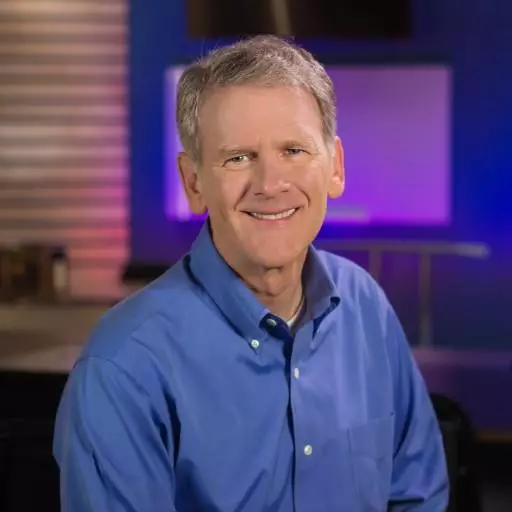
Bryan Chapell: It’s what we would hope for ourselves—that we would not be blind to the obstacles, that we would not be unaware of the challenges to the gospel, but something in us deep down would so take hope and courage from the provision of God that we too could take heart and hope. The gospel is real and powerful, and we depend upon it. We still give thanks to God.
Guest (Chris Sobak): So glad you joined us for today's Unlimited Grace, the audio broadcast ministry of pastor and author Bryan Chapell. In today's episode, Pastor Bryan begins a new series from the book of Ephesians. Dr. Chapell turns our attention to Ephesians 1 as we begin our study of Paul's letter to the church at Ephesus.
You can find this lesson and many others when you visit unlimitedgrace.com. And while you're there, check out the new daily devotional podcast called Daily Grace. Pastor Bryan will guide you through a devotional each day to help focus your attention on God's grace as you study his word. Watch and listen to each episode when you visit unlimitedgrace.com today. And now, let's hear from Dr. Bryan Chapell as he shares the first lesson in the series on Ephesians, U-Turn Letters.
Bryan Chapell: There’s an old story that says that when Jesus ascended, he gathered the heavenly host around him. And he explained what was next. He said, "I am going to use those weak, sinful, frail, and filthy people that I have saved, and I am going to use them as living stones to build a foundation for the church that is going to transform the world."
And after he said that, there was an overwhelming silence in heaven, not broken until the angel Gabriel spoke. And in response to that claim that the Lord was going to use the weak and sinful, frail and filthy people as a foundation for a church that would transform the world, Gabriel finally said, "What's plan B?"
Well, there is no plan B. The plan is that God would use people like us to build a foundation of grace upon which the church would establish the hope of the world. That’s us. We’re a little part of that church of Jesus Christ on which he is building the hope of the world.
How does he do that? This day, we're going to begin looking at the book of Ephesians, which is one of those early churches where God was explaining to his people through the Apostle Paul how he would use the weak and sinful, frail and filthy, to build hope for the world.
A friend of Kathy's and mine who ministers in the Philippines, particularly in the southern regions that are largely dominated by Muslims, recently wrote us a letter about his efforts. He wrote this: "Our plan was to proceed to Zamboanga City to repair the ministry center that had been damaged by a typhoon. Our efforts were stressed by the shortage of construction materials caused by the burning of many villages by Muslim rebels.
Second, shortages caused by the destruction of bridges and roads by the sea waters driven by the typhoon. And finally, our efforts were stressed by a Muslim leader telling workers on our project that they would be driven from the mosque if they helped Christians rebuild."
The Sunday after that threat had been issued, the Christians in our town, he said, gathered for worship, only to have the wife of a key leader in our church announce that she was planning to leave her husband because of his hard spirit and harsh treatment of his family.
If you just catalog in those two short paragraphs all that were being faced by the church in the Philippines, it’s just overwhelming. I mean, you think of the external challenges: typhoon, transportation difficulties, material shortages, rebel attacks, religious opposition. That’s just the outside.
What’s happening inside the church? Troubled leadership, fractured families, intentional disruption, personal discouragement. It’s awful. And yet, despite the course of all of those difficulties, the letter ends with this amazing U-turn. Renee writes at the end, "We give glory to God and thank you for praying with us. God has not only added numbers to our fellowship but spiritual growth as well."
It’s just incredible. It should be all discouragement and darkness and wrong, and yet he ends on this wonderful ray of hope. It’s not unlike this letter to the Ephesians. I mean, we will talk more about the church of Ephesus as we go forward, but let me tell you, this is an awful place for Christians where both government and religion and secular forces and commerce and culture all combined to make it very hard to be a believer in Ephesus.
And yet Paul starts with this amazing U-turn: "Grace and peace to you from God the Father and the Lord Jesus Christ." It’s what we would hope for ourselves—that we would not be blind to the obstacles, that we would not be unaware of the challenges to the gospel, but something in us deep down would so take hope and courage from the provision of God that we too could send the letters to people around us by our lives, by our words, maybe by letters themselves to say, and yet, take heart and hope.
The gospel is real and powerful, and we depend upon it. We still give thanks to God regardless of the obstacles we face. How do we do that? How do we send those letters from our lives and lips that truly give people hope? Well, if you’re going to send a letter that gets through, you better have the right return address to start with.
I mean, some of you, if you send to family or friends who are in prison or in military settings or sensitive government positions, you know that if you do not have a return address, that letter is not going to be delivered. And Paul begins by establishing, as it were, who the sender is of this letter right at the beginning. He identifies himself: "Paul, an apostle of Christ Jesus by the will of God."
Now, the first thing is there is simply a name of humility. Now, Paul is not the name that this person went through through much of his earlier life. What was the name he went through in his earlier life? What was it? Saul. Okay, Saul was a Jewish name, remembering an early king of Israel. A man who was chosen because of his stature and strength and good looks. I mean, this is the name of pride.
But now he identifies himself as Paul. Paul is not a Hebrew name. It’s a Latin Roman name. Do you know what it means? Paul means small. He goes from being King Saul by remembrance to just being small Paul. And it’s not just a statement of humility; it’s a statement of hope. Because by taking the name of a Gentile as the one that he’s now going to be using, he’s actually identifying with those to whom he’s writing.
Not just Jews anymore, but in the wonderful progress of the gospel, he’s now the minister to the Gentiles. And he begins to identify with those who need hope from someone like that. But he’s not like them only in name. He is like them in need. After all, what does it mean that one is now Paul, who was formerly Saul?
It means there’s been a new beginning. It means there’s been a new start. It means there’s a new identity. If he can change names, if he can have a new identity and a new purpose and a new start, it means other people can have the same. I think of that sweet song by Michael Card called The Beginnings, in which he says simply this: "New life belongs to God. He hands us each new moment saying, 'My child, start again.'"
Aren’t you glad God speaks to us that way? After the fall, after the trial, after the sin, he knowing it all says, "My child, begin again." And to know that there can be a new identity and a new start simply by having a reality of the Apostle Paul himself had to have a new name is telling us where there is hope being provided.
And the hope is identified not just in his name but in his title. Again, in your return address, you might say Mr. or Mrs. or doctor or attorney something. But Paul says, "Paul, an apostle of Christ Jesus." Apostle may not sound like a title, but it actually means appointed messenger. And when you see that, you're ready for your first U-turn in this gospel letter that the apostle is writing.
Paul, an apostle of Christ Jesus. Whoa, what? I mean, if we were just kind of driving down the road, minding our own business, not thinking about it very much, and suddenly we pass that garage sale where they had the china cabinet we've been looking for for the last 10 years or the Johnny Cash album we thought we'd never see, we could be driving along—what's going to happen? Make a U-turn.
Yeah, when it's safe, make a U-turn, and we're going back there. And suddenly, if we're reading with sensitivity what Paul’s: "Paul, an apostle of Christ Jesus." What are you talking about? He has been a persecutor of Christians. Do you remember what happened? Paul tells us in Acts 9—remember about going along on his road, and suddenly there is thunder and lightning, he is struck blind, and he wonders why.
And the Lord Jesus speaks to him and says, "You, Paul, are persecuting me." Paul is left blind until he meets a prophet of the Lord Jesus who explains that he is now to be an apostle to the Gentiles. He’s to take the message to the—you know why it’s so appropriate that he would become an apostle to the Gentiles and not to the Jews that is his background? Because of what he tells us in Acts 22 was actually his testimony.
Guest (Chris Sobak): This is Chris Sobak, executive director of Unlimited Grace Media. I hope you have been enjoying this encouraging message from Pastor Bryan. If this program has been a blessing to you, I want to share with you a new way in which you can receive daily encouragement from Dr. Chapell.
We’ve recently launched a daily devotional podcast entitled Daily Grace. If you've already signed up to receive daily devotions by email, this podcast is a great companion piece. You can watch and listen to Pastor Bryan share these devotions daily when you visit unlimitedgrace.com. You can also find this podcast on all major podcast platforms, or watch it on YouTube.
This is just another way that we want to serve you with Christ-centered content and help focus your attention on the grace of God that pervades all of scripture. Let us know what you think of this new podcast. We're always encouraged to hear from you. And now, more from Bryan Chapell on today's Unlimited Grace.
Bryan Chapell: What does it mean to be a persecutor of Christians? You know, we can kind of put that in Sunday school terms that are so sanitized that we do not recognize what it really means. He says in Acts 22 that he persecuted the way of Jesus to the death, taking both men and women, putting them in bonds, and delivering them to prison where they would be killed.
Or else, he says, he actually went from synagogue to synagogue, beating those who were within who would worship Christ. And finally, we learn the apex of that is holding the cloaks of those who would stone Stephen. We have certainly the news accounts our own day to make sense of this. Because if you would say, is it Al-Qaeda, is it ISIS, is it Boko Haram that you would recognize there are those who go into churches and take men and women for slaughter.
And we can think about Apostle Paul being so sweet and mild later on in life and recognize, if you were a Jew, his name would bring absolute terror to your heart. And now he is saying that he becomes an apostle of Jesus Christ is saying something has amazingly happened in his heart. There has been this huge U-turn as the one who breathed murder and suffering and hurt for men and women alike—this one now is an apostle, a proclaimer of the good news of the very one whose disciples he once hated and hunted. Something remarkable has happened.
And he explains how it happened. Remember, an apostle of Christ Jesus "by the will of God." This is both his defense and his offense. It’s his defense as people would be saying, "Why should I listen to you?" He would say, "Well, not for anything in me, but I have been changed by the will of God. I don't stand on my authority. It’s not just my defense of why I can talk to you. It’s actually my defense of why I go to the Gentiles. Because I know you Jews aren't going to listen to me."
It’s the way God was preparing the Apostle Paul to be that apostle to the Gentiles by, in essence, getting the door closed in the synagogues so that his hearing would be actually among those that the Jews didn't want to talk to. Now he's prepared. He's ready to go. But as he is ready to go, at the same time, he knows people don't want to listen to him.
So his offense is, you have to listen to me because it's the will of God that you do. It’s the letter itself's authority. This is by the will of God. Remember what Paul would later write to those at Thessalonica? He praised them that those in Thessalonica listened to his letters, not as the word of man, but as it was in truth the word of God.
The reason that this church so insist—and I so treasure you—that you want me to preach from the scriptures is fundamentally you're not interested in my opinion or the opinion of the age or some poll or some politics. You want to know, what is the will of God? What does the word say?
And the Apostle Paul is saying that not only to give some offense, as it were—this is why I can speak to you, why you must listen to me—but also to express his expectation. If I am speaking to you from the word and will of God, then I'm thinking that what has happened to me—this amazing life U-turn—can also happen in other people as well.
Perhaps the greatest example of that is what actually happened to Paul at Ephesus when he began to minister there. Do you remember? People began to believe. And as a consequence, they began to get rid of their idols, including those idols to Artemis—that's Diana, right?—which the silversmiths of Ephesus made their living with, selling those idols of Artemis.
Artemis was the goddess who was supposed to bring babies to women, to bring food from the fields, or for those who hunted to bring it from the woods and forests. This Artemis was supposedly the provider of all good things of life in the world. And when the silversmiths recognized that their business was going to be hurt because people were turning to Christ by the ministry of Paul, they began to incite the people and saying, "Not only if they believe will people not buy our statues, they will defile the temple of Artemis. They will not worship her any longer."
And the crowd got so incensed that 20,000 of them went to the Coliseum and began to chant for hours, "Great is Artemis of the Ephesians! Great is Artemis of the Ephesians!" And what did the Apostle Paul do, believing he was called by the will of God? He said, "We’ve got them all in one place, let me go preach to them."
Now, a little more pragmatic disciple said, "No, Paul, they'll tear you apart." And so ultimately you know it was their own town counselor who settled them down. But Paul was showing what he believed: that what had happened in him could happen in others too. It’s our great hope too—that we would believe that past does not determine future. That what God has done in the life of Paul, what he believed could happen in the others, can happen in our lives too.
We look at pasts that we are ashamed of, at families that are fractured, of difficulties that we’ve gone through, and then we believe that will mark us forever. And what the apostle does with the change of name and the new title and the new mission and the expectation that the will of God, not just the opinion of man, not just what was in us, but that the will of God could change people eternally, is willing to speak the truth of the gospel. And he says so, as we must say so as well.
I know what it means, we must say to others, to be standing before God on my own goodness, and I realize that was not going to work. But God changed me. He put a U-turn in my life. He made me dependent upon him. I'm now humble; I'm small Paul too. Humbled before God, not made right by my merit or my goodness. He loved me. He changed me. He put the U-turn in my life.
And the fact that Paul believes that that can happen for others is plain not only in the return address—who he is—but in his understanding of those to whom he is writing. Who, after all, are the readers of this letter? He says, still verse one, that he is writing "to the saints." Now when we hear that language, well it doesn't apply to me. To saint? Well that’s not me.
But we have to keep reading. "To the saints who are in Ephesus." Now this is the next U-turn. We should be saying, "What? Say what? To the saints who are in Ephesus?" I mean, that’s kind of like saying, "To all the violinists in the heavy metal band." Now, Joshua tells me that Metallica has violinists, but that’s not the norm.
"To all the polar bears in the Sahara. To all the Cubs fans in St. Louis." Okay, all the Cardinal fans in Chicago. No, you’re just saying, this doesn't fit. This doesn't go together. "To all the saints in Ephesus?" What are you talking about? I mean, the people who were reading these letters knew what went on in Ephesus.
Even now, as you go through the gates of Ephesus in its reconstructed state, you will find this remnant of a great statue to the Roman Emperor Trajan. It’s a large globe on a pedestal with just the foot of Trajan remaining, saying, "My foot is over all the world."
Two things from that example: one, even the ancients knew that the world was round—don't believe the myths that they didn't know. Second, they believed that the way to God was by the power and might of the Roman emperor, and actually many believed and taught that he was a god too.
To be a saint in Ephesus had to be terribly hard. And to recognize that the Christians who gathered, gathered in little not churches like this, but little house churches in different places of the world. It must have been so discouraging and so hard. And yet the Apostle Paul goes on and he says, "To the saints who are in Ephesus and are faithful in Christ Jesus."
Now, if it says faithful for Christ Jesus, I'd be worried. He's writing to saints whose faithfulness is extraordinary. But he says to the faithful in Christ Jesus. Some of you will recognize that "in Christ Jesus" is one of the Apostle Paul’s favorite expressions, used over 200 times in his epistles in the Bible. As he is reminding us what makes us faithful. It’s not what you do. It’s being faithful in Christ Jesus.
Guest (Chris Sobak): That's Pastor Bryan Chapell, and you've been listening to Unlimited Grace. If this message has been an encouragement to you, you can find a collection of more valuable resources at unlimitedgrace.com.
When you visit, you will find today's message and many others from Pastor Bryan. Once again, go to unlimitedgrace.com where you can give by calling 844-41-GRACE. That's 844-414-7223.
Please be sure to join us next time as once again we endeavor to put Christ at the center of our efforts so that lives might be transformed by his unlimited grace. This ministry is brought to you by Unlimited Grace Media and continues to be made possible with your generous financial support.
Featured Offer
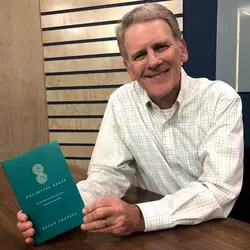
In Bryan Chapell's book, you will learn how God's unlimited grace leads us to heartfelt obedience and transforming joy. Explaining why grace is important and giving us tools to discover it in all of Scripture, Unlimited Grace helps us to see how gospel joy transforms our hearts and makes us passionate for Christ's purposes.
Past Episodes

Featured Offer
In Bryan Chapell's book, you will learn how God's unlimited grace leads us to heartfelt obedience and transforming joy. Explaining why grace is important and giving us tools to discover it in all of Scripture, Unlimited Grace helps us to see how gospel joy transforms our hearts and makes us passionate for Christ's purposes.
About Unlimited Grace
About Bryan Chapell
Bryan Chapell, Ph.D. is the Stated Clerk Pro Tempore of the Presbyterian Church in America (PCA), based in Lawrenceville, GA.
Dr. Chapell is an internationally renowned preacher, teacher, and speaker, and the author of many books, including Each for the Other, Holiness by Grace, Praying Backwards, The Gospel According to Daniel, The Hardest Sermons You’ll Ever Have to Preach, and Christ-Centered Preaching, a preaching textbook now in multiple editions and many languages that has established him as one of this generation’s foremost teachers of homiletics.
Dr. Chapell is passionate about sharing the truth of God's grace with others, because it provides the freedom and fuel for transformed lives of joy and peace.
He and his wife, Kathy, have four adult children, a growing number of grandchildren, and lives rich with friends, fishing and faith.
Contact Unlimited Grace with Bryan Chapell
info@unlimitedgrace.com