


The Son's Love


Pastor Bryan continues the series in Ephesians. Dr. Chapell addresses the many ways in which we find ourselves morally enslaved. But, the great message of this text is that through Christ, we have been set free.
Bryan Chapell: Satan says to you you have no power, you cannot be helped, you cannot be fixed. But the reality of the message of the resurrection is, we're united to the King of the universe. The resurrected God is ours, we are united to him. And while Satan comes to us and says, you cannot change, you cannot help it, you cannot be fixed, the gospel has us echoing the reality of our redemption to say, I can be helped, I have power, Christ is mine, I am his, I'm united to Christ.
Guest (Male): So glad you joined us for today's Unlimited Grace, the audio broadcast ministry of pastor and author Bryan Chapell. In today's episode, Pastor Bryan continues the series in Ephesians. Dr. Chapell addresses the many ways in which we find ourselves morally enslaved. But the great message of this text is that through Christ, we have been set free.
You can find this lesson and many others when you visit UnlimitedGrace.com. And while you're there, check out the new daily devotional podcast called Daily Grace. Pastor Bryan will guide you through a devotion each day to help focus your attention on God's grace as you study his word. Watch and listen to each episode when you visit UnlimitedGrace.com today. Let's hear now from Dr. Bryan Chapell as he shares the lesson, The Son's Love.
Bryan Chapell: I love a mystery. Particularly the mysteries where they give you the solution before you get to the end. I mean, it's really not fair, the mysteries where they save key facts until the final paragraph. Like, the butler was actually married to the victim. Or there's an axe murderer living in the basement. Come on, I should have known that ahead of time.
The mysteries that are actually the most fun are where the facts are in plain sight and we're allowed to put them together so that when we finally put it together we say, oh, it was there all along. In this portion of scripture, the Apostle Paul is talking about a mystery. But it's a mystery whose facts have been hidden in plain sight. A mystery about rescue.
A mystery you might think about a little bit in the context of one of the great mysteries of the Cold War, when our nation feared that huge portions of our population might be wiped out by a nuclear bomb. And plans were made, but kept secret, for rescuing all of this nation's highest elected officials. There was a bomb shelter, secured away, supposedly where no one could see it, where all US senators and congressmen were to be taken in light of a nuclear attack.
It was in West Virginia, at the Greenbrier Resort and Golf Course. Now, very few people knew that it was actually a bomb shelter intended for the nation's highest elected officials. In fact, no one knew until the 1990s when a newspaper leaked the story. But you should have been able to figure it out. I mean, the clues were in plain view, like the multi-inch thick steel doors that were at every entrance. Or the TV repairmen that were around all the time with microphones in their ears.
The answer was in plain view, but it was still a mystery. Maybe like spiritual things are to a lot of us. I mean, we know that here in plain view people go to church and they seem to have some sense of a spiritual reality. But the question we have, which was just sung to us, is, can my life really be different? What would change me? What can make difference?
What do these people in this church that seem to know spiritual things know that I can't quite get my hands around? It's there to see, but I don't see it yet. And what Paul wants to tell us is the mystery of our rescue and how it has been made known through the work of Jesus Christ. In order to discern the mystery, maybe you have to see the steel doors, the ones hidden behind the potted plants that are nonetheless revelatory of the mystery that we are supposed to know.
The first set of steel doors is revealed in verse seven, just by the language of the Apostle Paul. There in verse seven, the apostle says, "In him, that is in Christ the beloved, in him, we have redemption through his blood." Now, the word redemption for any Jew would mean a payment to get someone out of slavery.
And when the Jews think about slavery, their minds automatically go back to Egypt where they were at one point slaves before the great exodus whereby God rescued them. And when Paul says that we have been redeemed by the blood of Christ, he means not only that our guilt has been put away, but that we have been taken out of slavery to sin. It's why when we sang earlier this day Rock of Ages, we reminded in the song that we have been saved from the guilt and the power of sin.
And the notion that we are enslaved by sin is actually a very key aspect of the scriptures because in this day and age, the evil of sin is not what we sometimes in the church want to talk about, that people do bad things or immoral things or things they ought to be ashamed of. New York pastor Tim Keller says that just doesn't make much sense in the culture that we're in today. That where our culture, like the Old Testament culture that the prophets described, has forgotten how to blush, that trying to turn people to Christ by saying you need to be forgiven of being bad, people say, "What are you talking about? So what if there are things that you call immoral in my life? That's just your opinion."
The great evil of our day is not what is immoral; the great evil of our day is what enslaves. That is where everybody says, "That's not where I want to go." So that people gathered in this church as they did yesterday to hear about human trafficking, not so much because they object to the immorality of it, because we recognize the great evil of controlling other people to enslaving them according to the desires of another.
It's actually the enslavement that the apostle is talking about here when he says we have been redeemed by the blood of Christ. From that which, as Jacob was sweetly and wonderfully talking about earlier, that which my heart goes after for a while, and yet I find that whatever was the pleasure or the addiction ultimately begins to enslave me. I thought it was for fun, I thought it was for entertainment, but over time I begin to recognize it has captured me.
And so in our culture even the icons like Amy Winehouse, the great English rocker who for so long was worshipped because she was willing to live outside social convention—she had escaped the slavery of the conventions of the age, and she was so admired by her followers until she became an alcoholic and enslaved to the bottle. And then her fans began to abandon her as she would forget the words to the lyrics at the concerts, or even forget the concerts. Until at the end her father said that the reason that she died was she tried to detoxify too fast, as though the alcohol was reaching up and pulling her down into the grave to enslave her.
We don't so much hate the lifestyle as we do the sense that we could be controlled by anything. And so much of our lives in this culture now are seeking to escape control of others. And so we have young women who are enslaved by a sense of body image who then become enslaved to bulimia or anorexia and really it's all frowned upon by our society because it's the evidence of a sort of enslavement in itself.
Or the young people, so pained by the control of peers or parents that they begin to cut themselves just to have some control even over the pain in my life because I am so enslaved by the expectations of others. Even the drive in our culture now toward informality so that we are not controlled by the obligations and the expectations of a company or an institution or a church. That I will demonstrate I am not being controlled by you because that is the great evil, to be enslaved.
And yet what we find, the more we try to find an escape from the slavery of convention in our culture, the more we are enslaved by every escape and medication and practice that we try. So that as Jacob was saying so much earlier, I pursued these things believing in them there would be entertainment and ultimately you say, "What is this giving me?" It's but another trap, it's but another net. I'm enslaved even by the things I thought would release me.
And that's not a mystery to many of us in this congregation as we have family or friends or own habits that cause us to recognize how the things that we thought were escapes are actually another form of slavery. Never stated more well than in the words of U2's song, "Numb," where the one who is singing simply proclaims the need for release: "Don't connect, don't conform."
But in the video release of that song, the one who is singing "Don't connect and don't conform" is sitting in a chair barely able to say the words as the flicker of a TV screen is reflected in his face and the band is singing behind, "I feel numb, I feel numb, I feel numb," as we are enslaved by the very things we try to use for escape. And here Paul the apostle is saying we have been set free by the work of Jesus Christ.
The entertainments, the things that we sought in life that we thought were going to give us release became steel doors instead to close us in, to entrap us, to enslave us. But the apostle says we have been redeemed by the blood of the beloved. When you talk about blood redeeming, for a Jew obviously what's being thought about is the Passover, where the blood of innocent was put on the doorpost of the Jews' homes so that they would have the passing over of the consequence of the guilt of the land in which they lived.
The innocent blood would be shed in order to save many. And now the apostle is saying we too have been redeemed by blood. And he is reminding us that by the blood of Christ the penalty for our sin was put on him and so the wrath of God has been put by us and we are actually able to come close to him. The beauty of what it means to be redeemed is just in the first two words of verse seven: "In him" we have been redeemed.
We are united to him, no longer does the guilt of our sin separate us. And what that means if we are united to him, it means the one who raised Christ from the dead is now working in our behalf, in our hearts, helping us. That when we are enslaved to the habits or the addictions of this world, we are not helpless to the question: Can my life really be any different?
The apostle is responding by saying you've not only been saved from the guilt of sin, you have been rescued from its power. You are united to Christ. Satan says to you you have no power, you cannot be helped, you cannot be fixed. But the reality of the message of the resurrection is, we're united to the King of the universe.
The resurrected God is ours, we are united to him. And while Satan comes to us and says, you cannot change, you cannot help it, you cannot be fixed, the gospel has us echoing the reality of our redemption to say, I can be helped, I have power, Christ is mine, I am his, I'm united to Christ. And that reality of our redemption is the reality of the power that is ours that should not be denied by conscience or by habit or Satan himself. We have been redeemed and sin no longer is a slave master to me or to you. Those steel doors have been opened.
Chris Obak: This is Chris Obak, executive director of Unlimited Grace Media. I hope you have been enjoying this encouraging message from Pastor Bryan. If this program has been a blessing to you, I want to share with you a new way in which you can receive daily encouragement from Dr. Chapell. We've recently launched a daily devotional podcast entitled Daily Grace.
If you've already signed up to receive daily devotions by email, this podcast is a great companion piece. You can watch and listen to Pastor Bryan share these devotions daily when you visit UnlimitedGrace.com. You can also find this podcast on all major podcast platforms or watch it on YouTube. This is just another way that we want to serve you with Christ-centered content and help focus your attention on the grace of God that pervades all of scripture. Let us know what you think of this new podcast. We're always encouraged to hear from you. And now, more from Bryan Chapell on today's Unlimited Grace.
Bryan Chapell: We have been redeemed and sin no longer is a slave master to me or to you. Those steel doors have been opened. But they are not the only steel doors implied in this passage. For while the steel doors of slavery have been opened, there are other steel doors that have been closed about us to protect us. The apostle begins to describe this redemption in this way.
He says it is, middle of verse seven, "the forgiveness of our trespasses according to the riches of his grace which he lavished upon us in all wisdom and power." Forgiveness of trespasses. For many of us, we begin to think of the way we were taught to say the Lord's Prayer: "Forgive us our trespasses." Now, those of you who say that prayer probably were raised in a Roman Catholic tradition.
Protestants, we typically say, "Forgive us our what? Forgive us our debts." Now, the other isn't wrong, but Protestants typically say the words of Jesus in the Sermon on the Mount and that is forgive us our debts. Roman Catholics around the world also say forgive us our debts except in the English-speaking tradition. And there the worship tradition in the Roman Catholic Church is to say forgive us our trespasses.
Now, that's not wrong. Actually, that's the language right here, that by redemption we have been forgiven, we have forgiveness of our trespasses and it's actually a very precious truth. In Western culture, when we think about trespassing, we typically think about going into another's property, into another's place. But the language that's being used here is actually the opposite direction.
Forgive us our trespass is the notion of actually going outside a boundary. As though we have been inside a place of safekeeping, near to the heart of God, united to Christ, and we also have forgiveness of our wandering, of our going away from God, of our trespass in the outward direction. That we are told is more than just forgiveness of our sin; do you recognize it is actually forgiveness of betrayal?
Once close to God and now trespassing, going the other direction. He redeemed me, and this redemption is even from the closeness to him that I have abandoned. How much forgiveness is actually there? The apostle uses these words: "The forgiveness of our trespass according to the riches of his grace." Grace is free. It's not earned, it's not deserved.
This grace that covers our betrayal, that covers our sin and guilt, it's not something that we arrange. Instead, it's something that God is dispensing to his people. Well, how much is there? I mean, what if your sin is really, really big? Well, the apostle says the forgiveness is according to the riches of his grace. Others have said this does not mean that when God is dispensing grace, he's taking pennies out of his penny purse.
This is the riches of his grace. This is wheelbarrows of gold. This is caterpillar tractor houseful shovels of the riches of heaven that are being dispensed out upon God's people. So much so that we are now told this grace is, verse eight, "lavished upon us." It's the language of grace of heaven that is so big and so wide that those who were once far away, who've moved away from the presence of God, are now given the blessing of a child of a King, lavished with this grace of God.
You know the words from First John: "Behold what manner of love he has lavished upon us that we should be called the children of God." This grace is that big and it is according to the riches of his grace which he lavished upon us in all wisdom and insight. Meaning, and he knows what he's doing. He's giving it even when he knows what we've done.
Each dimension of this grace is meant to say: What if I can't make it up to him? Well, it was free in the first place; it's grace. What if it's something really big? Well, his riches are meant to cover it. What if it's totally awful? He's lavished in his giving of it. What if he really finds out? He already knows. He is dispensing the grace with wisdom and insight to those who desperately need it as they have left nearness to him and gone to the far country.
When I was working at an institution training pastors, there was a young man who at one point went to the far country and as his immorality began to enslave him, he could not stop. And when he was found out, we went through a process with him of discipline, of accountability to try to help him. But at that point his heart was so far away from his Savior, he would not be helped and in fact got angry at every attempt to help him. He ended up leaving the institution.
I did not hear from him for years. And one day got a phone call and said, "What do I have to do to come back? Whatever you require, I will do." And I couldn't help but ask, "What is different now? I mean, there was a time when we tried to help and you would not hear it, but now you are saying whatever it takes."
And he simply confessed at that time, "I continued on the path that I was on until I was so totally enslaved, it was destroying me and my family and I had no choice but to repent of my sin before God and I now want to claim and proclaim the grace that is mine." What is the grace that is yours? He said, "When I was at my absolute low, when I had no one and nothing in life that would support me," he said, "I discovered the words of an old song which is simply this: This shall all my glory be, that Jesus is not ashamed of me."
Maybe my parents are ashamed, maybe my family, my school, my company, my church is ashamed. Maybe I'm ashamed of me. But the reality of the gospel is by grace that is rich and free and lavished and given in full knowledge of God, that God is willing to say, "This shall all your glory be: Jesus is not ashamed of you or me." That's the glory of the gospel that is ours.
It means that what God is saying is the steel doors of his heart are hooked around us in such a way that he will not let us go. You are mine. My grace is sufficient. You are trying to trespass; I forgive you. My love holds you. My heart is big enough for you. And this is so hard for not only us but others to understand that the apostle goes on to describe it as a mystery.
So hard for us to comprehend. Verse nine, as God is lavishing this grace upon us with all wisdom and insight, we're also told: "He is making known to us the mystery of his will according to his purpose which he set forth in Christ." Friends, before you continue with your day, I'd love the opportunity to pray for you. Let's do that together now.
Lord, thank you for delivering us from slavery to sin. Help us really to believe in that deliverance so that we continue through this day presenting ourselves to you as ones who have been brought from death to life in Christ. May the privileges of grace grant us the power of love to live for you. We pray in Jesus' name. Amen.
Guest (Male): You're listening to Unlimited Grace, the audio broadcast ministry of pastor and author Bryan Chapell. If this message has been an encouragement to you, you can find a collection of more valuable resources at UnlimitedGrace.com. Please be sure to join us next time as once again we endeavor to put Christ at the center of our efforts so that lives might be transformed by his unlimited grace. This ministry is brought to you by Unlimited Grace Media and continues to be made possible with your generous financial support.
Featured Offer
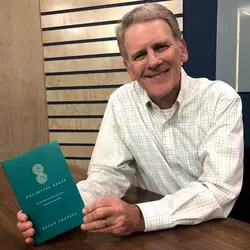
In Bryan Chapell's book, you will learn how God's unlimited grace leads us to heartfelt obedience and transforming joy. Explaining why grace is important and giving us tools to discover it in all of Scripture, Unlimited Grace helps us to see how gospel joy transforms our hearts and makes us passionate for Christ's purposes.
Past Episodes

Featured Offer
In Bryan Chapell's book, you will learn how God's unlimited grace leads us to heartfelt obedience and transforming joy. Explaining why grace is important and giving us tools to discover it in all of Scripture, Unlimited Grace helps us to see how gospel joy transforms our hearts and makes us passionate for Christ's purposes.
About Unlimited Grace
About Bryan Chapell
Bryan Chapell, Ph.D. is the Stated Clerk Pro Tempore of the Presbyterian Church in America (PCA), based in Lawrenceville, GA.
Dr. Chapell is an internationally renowned preacher, teacher, and speaker, and the author of many books, including Each for the Other, Holiness by Grace, Praying Backwards, The Gospel According to Daniel, The Hardest Sermons You’ll Ever Have to Preach, and Christ-Centered Preaching, a preaching textbook now in multiple editions and many languages that has established him as one of this generation’s foremost teachers of homiletics.
Dr. Chapell is passionate about sharing the truth of God's grace with others, because it provides the freedom and fuel for transformed lives of joy and peace.
He and his wife, Kathy, have four adult children, a growing number of grandchildren, and lives rich with friends, fishing and faith.
Contact Unlimited Grace with Bryan Chapell
info@unlimitedgrace.com