

The People of No Name - Part 2


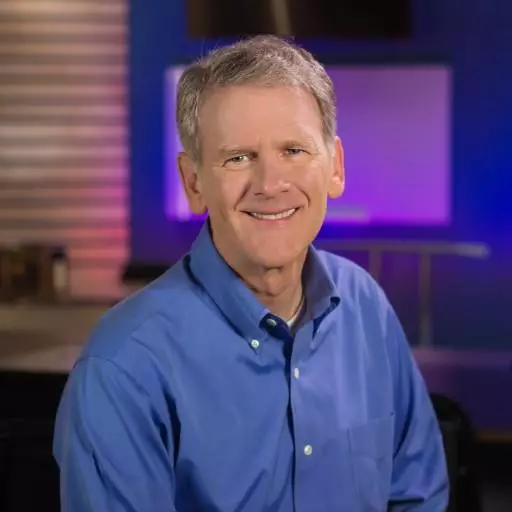
Pastor Bryan shares the second half of the message from Luke 19. In this passage that we celebrate on Palm Sunday, we are reminded of the value that Jesus placed us, as He gave up the glory of Heaven to came to earth in humble obscurity,
Bryan Chapell: He would give up glory to bring us peace. He would give up heaven to connect it to earth. And the peace that he brings would ultimately connect earth and heaven, our souls to his. His obscurity actually says, "I am the pearl of great price to him."
Guest (Male): So glad you joined us for today's Unlimited Grace, the audio broadcast ministry of pastor and author Bryan Chapell. In today's lesson, Pastor Bryan shares the second half of the message from Luke 19.
In this passage that we celebrate on Palm Sunday, we are reminded of the value that Jesus places on us as he gave up the glory of heaven to come to earth in humble obscurity. You can find this lesson and many others when you visit unlimitedgrace.com. And while you're there, look for this wonderful resource from Dr. Chapell, Holiness by Grace. Let's hear now from Dr. Bryan Chapell as he shares the second half of the lesson, The People of No Name.
Bryan Chapell: Let me ask that you would look in your Bibles at Luke 19. Luke 19 is where we'll look at verses 28 through 44 that are reminding us of the event that we celebrate that was preparation for the offering of our Lord in our behalf.
Let's stand as we honor God's word. Luke 19, verses 28 through 44. Jesus had just spoken of the coming of the kingdom and of the suffering that would have to occur before it. Verse 28: "And when he had said these things, he went on ahead, going up to Jerusalem. When he drew near to Bethphage and Bethany, at the mount that is called Olivet, he sent two of the disciples, saying, 'Go into the village in front of you, where on entering you will find a colt tied, on which no one has ever yet sat. Untie it and bring it here. If anyone asks you, "Why are you untying it?" you shall say this: "The Lord has need of it."'"
You know what happens. He rides the colt into Jerusalem. Verse 37: "As he was drawing near—already on the way down the Mount of Olives—the whole multitude of his disciples began to rejoice and praise God with a loud voice for all the mighty works they had seen, saying, 'Blessed is the King who comes in the name of the Lord! Peace in heaven and glory in the highest!' And some of the Pharisees in the crowd said to him, 'Teacher, rebuke your disciples.' He answered, 'I tell you, if these were silent, the very stones would cry out.'"
"And when he drew near and saw the city, he wept over it, saying, 'Would that you, even you, had known on this day the things that make for peace! But now they are hidden from your eyes. For the days will come upon you, when your enemies will set up a barricade around you and surround you and hem you in on every side and tear you down to the ground, you and your children within you. And they will not leave one stone upon another in you, because you did not know the time of your visitation.'"
What are the marks of Christ's obscurity? You know, he rides an unbroken donkey into Jerusalem at the time of his greatest earth's glory. Now, I know there is something about it being a pristine ride. Nobody's ridden the donkey before. And that means there's no ashes in the ashtray, and there's no candy wrappers between the seats. But even Zechariah, 500 years before when he predicted this is what would happen, said this is because he would come humbly into his kingdom.
It's a mark of shame. He's not riding on a great Roman steed as a general would. He's not riding on an elephant like Hannibal would. He's not riding on a camel like a sheikh would. It's just a donkey. And he rides into a forgotten prophecy. Zechariah 9:9. We'll quote it on Palm Sunday. And yet, even the religious leaders of his time had forgotten it. He comes humbly riding on a donkey. Not only have they forgotten, but they rebuke Jesus for being hailed by the crowds as he rides his donkey.
The humility is not just because he rides a donkey and he rides into a forgotten prophecy, but he rides into a condemned city. Verse 41: "He drew near the city, he wept over it, saying, 'Would that you, even you, had known on this day the things that make for peace! But now they are hidden from your eyes. For the days will come upon you when your enemies will set up a barricade around you, surround you, and hem you in on every side, and tear you down to the ground, you and your children within you. And they will not leave one stone upon another in you, because you did not know the time of your visitation.'"
It is a remarkable statement. Jesus, looking now not 500 years, just 70 years forward, recognizes that the Romans will ultimately come and they will squash a Jewish rebellion. And in punishment, they will so destroy Jerusalem that it will be leveled to the ground. And Jesus, foreseeing it, weeps over the city. But it is not just for their physical destruction. He has already prophesied what he is saying here: they did not know the day of their visitation. Their King has come. Here is the Messiah, and they turn away.
So that previously, he would have wept over the city. Do you remember the words? "O Jerusalem, Jerusalem, you who kill the prophets. How I would have gathered your children under my wing like a hen gathers her chicks, but you would not." It is spiritual rejection as well as physical condemnation of the city. It is the mark of his great humility. Here he comes in glory, and the leaders do not recognize him. The people hail him for the wrong reasons. And ultimately, the very people who should be welcoming him reject him and crucify him.
But right with all those marks of obscurity are amazing marks of glory. He knows the future. I mean, there's just little thing like, "Go into the town and you'll find a donkey. And it will be tied, and its owners will ask you a question." And everything that he predicted happens. He knows the future. He knows the devastation ahead. He knows that, and still he keeps on coming despite what he knows will happen to the city.
But he also knows what will happen to him. That has been predicted as well. Already in chapter 18, as he is getting ready for the third time, he tells his disciples what is waiting for him in Jerusalem. "See, we are going up to Jerusalem," he tells them, "and everything that is written about the Son of Man by the prophets will be accomplished. He will be delivered to the Gentiles. He will be mocked, shamefully treated, spit upon, and after flogging him, they will kill him. And on the third day, he will rise."
He knows it all. It's the great mark that he is the Lord. He knows the end from the beginning. He is the Alpha and the Omega. He is the one who has been there, seen it. It's time spread out as a map before him. He can see it all. He knows what's going to happen. It's the mark of his divinity. And in the greater mark of that divinity is that he's actually accepting the little bit of glory that should and does come his way on this day.
He accepts the words of praise. Remember the crowd says, verse 39, "Blessed is the King who comes in the name of the Lord! Peace in heaven and glory in the highest!" And when the Pharisees tell him, "Make them stop," he instead lets the praise happen. Why? Because he accepts not only the mantle of glory and the words of praise, but he accepts the work of peace that is meant to come his way. Verse 42 right there: "Would that you, even you, Jerusalem, had known on this day the things that make for peace."
What's going to make for peace? The King of Glory will ride into Jerusalem, and the Gentiles will mock him and flog him and spit upon him and kill him. And the King of Glory will take the sins of the world upon himself, that those who believe in him will have their sin taken away and will be at peace with God.
Guest (Male): You're listening to Unlimited Grace, the audio broadcast ministry of pastor and author Bryan Chapell. God instructs us in his word to be holy as he is holy. How can God expect us to be as holy as he is? Such a standard seems either to ignore our frailty or to impose certain failure. That is, until we understand how God views us.
In this challenging yet heartwarming book, Holiness by Grace, Dr. Bryan Chapell illustrates the principles of grace, the practices of faith, and the motives of love in living a life of holiness. Pastor Bryan will guide you through reassuring scripture passages to discover how works and obedience are not a means of establishing or maintaining salvation, but a grateful response to God's mercy.
Holiness by Grace draws straight from the heart of God, as Pastor Bryan's encouraging words will help you understand that your holiness is not so much a matter of what you achieve as it is the grace that God provides. A grace so rich as to make the pursuit of his holiness your soul's deepest delight. You can request your copy of Holiness by Grace when you go online to unlimitedgrace.com or by calling 844-41-GRACE. That's 844-414-7223. And now, more from Bryan Chapell on today's Unlimited Grace.
Bryan Chapell: The King of Glory will ride into Jerusalem, and the Gentiles will mock him and flog him and spit upon him and kill him. And the King of Glory will take the sins of the world upon himself, that those who believe in him will have their sin taken away and will be at peace with God. Do you notice how Luke, who is such a wise writer—the very one whose nativity account we read most at Christmastime—is echoing the words of the angels in verse 38?
"Blessed is the King who comes in the name of the Lord! Peace in heaven and glory in the highest!" The angels at the nativity said, "Peace on earth and glory to God in the highest." That's what the angels said. Now the people say, "Peace in heaven and glory to God in the highest." As though the glory to God that is evident in this one is connecting heaven and earth and bringing peace to heaven and earth. As though it is this one, the glory that's in the highest, is when the peace of heaven is connected to the peace of earth by this one.
What are the things that will bring about that peace? It is what makes us right with God. And the great message is that as we begin to recognize the obscurity of Jesus, the one who's actually the King of Glory who's giving up all of that glory so that he would be obscure for us, is ultimately showing the great value of you and me. He would give up glory to bring us peace. He would give up heaven to connect it to earth. And the peace that he brings would ultimately connect earth and heaven, our souls to his.
His obscurity actually says, "I am the pearl of great price to him," as you. He would give up everything for me and for you, for our souls. A younger generation sings of it, Casting Crowns in the song "Who Am I?" Who am I, that the Lord of all the earth would care to know my name, would care to feel my hurt? Who am I, that the bright and morning star would choose to light the way for my wandering heart?
I am a flower quickly fading, here today, gone tomorrow. A wave tossed in the ocean, a vapor in the wind. Still, Lord, you hear me when I'm calling. You catch me when I'm falling. And you've told me who I am. I am yours. Who am I, that the eyes that see my sin would look on me with love and watch me rise again? Who am I, that the voice that calmed the sea would call out through the rain and calm the storm in me?
Who am I, that the King of all glory would give himself to bring me peace? I'm his precious child, and so are you. He would give up the glory that was his to become obscure and humbled and crucified for us, who ought to be the obscure ones but are made valuable by what he provides for us. How do we respond? How do we respond to this hidden glory, the glory that he puts aside, that he hides in order to make his glory available to us?
It is, of course, necessary that we claim his peace, that we recognize that's what he intends for us to do. When he claims peace on earth, goodwill toward men, what he is wanting is for us to claim that peace. To say, "God, it's the turmoil of my heart. It's the storm within me. It's the difficulty that I know caused by my own sin that means you should never love me or look to me or long for me. And still, you want me to have peace. Then I will come to you and confess I have need of you. Forgive my sin, my Lord, and bring me the peace that you meant to bring."
Let me not fail to recognize this is the day of your visitation. Even on this Palm Sunday, you come riding into my heart in humility to say, "I would give up heavenly glory to claim you." So we acknowledge that we need him and we need his peace that he so freely offers. Not only do we claim his peace, we are called to echo his praise. Why do we gather here on Palm Sunday? Why did you wade through the snow to be here? Because you know he deserves our praise.
In deserving our praise, calls our lives into his service. So that what we are doing, as we praise him in school or work or family or home, what we're doing is we are again putting down our garments, our offerings, whatever we have that he needs. We are putting it down because we know he deserves it. And in that, we echo his praise with the gratitude of our hearts. How important is that?
A few months ago, I told you about a friend of mine. He's an architect in Australia. And soon after committing his life to Christ, he won the World Architecture Award. Well, that seems to make nice, pretty little sense. You commit your life to Christ, you get fame and recognition. The World Architecture Award. Not so fast. It's not nearly that simple. My friend wrote afterward the turmoil that entered into his heart as he, a new Christian, was getting such recognition.
He wrote, "What was my calling now? Architecture? In an industry so broken? Or ordained ministry, even though I'm not academically gifted? I felt that if my unbelieving parents and unbelieving colleagues wanted me to use my architecture gifts and their motives are not God's motives, then I needed to stop architecture. Surely God was calling me to pursue ministry."
Then I came to understand that my work and my life experience were like God loading up an artist's brush with paint to create the beauty of his purpose. God is using all, not only the easy moments but the hard ones of my life, so that I can contribute to the redeeming of this glorious ruin of a fallen creation. God is redeeming people and places for his eternal glory through people like me. We have purpose. We have hope. My work is contributing to the aligning of creation for his intended purpose and praise.
Do you believe that? That you are God's paintbrush, that he is loading up knowledge and background and experience and gifts—the good things, the bad—loading it into the brush as paint, so that he could paint through your life what is needed for his glory in the lives of others. Whether you're a preacher or an architect or an engineer, policeman or a politician who would bring healing to a city as God intends, a doctor who would bring not just healing to a body but hope to a community that wonders where the doctors will come from next.
Or the family that needs you as a doctor to counsel them even though that's not really your job, but you do it because you know you're the paintbrush that God is using to bring knowledge of himself to their lives. Why do we give ourselves beyond our convenience? Easy just to stay obscure. Because Jesus said if we would not praise him, the very stones would cry out to his honor. And that, my friends, is not something just past. That is the future as well.
How do I know? Because the very same prophet who said that Jesus would come riding into Jerusalem on a donkey, that very same prophet said he will make another visitation. That visitation will occur when Jesus, the King of Glory, comes upon the clouds. And it will not be children's voices that praise him. Rather, it will be the shout of the archangel and the trumpet call of God. And when Jesus' feet touch this same Mount of Olives, they will divide east to west, and the north part of the mountain will move away from the south part, and there will be a valley between, whereupon God says, "I will save my people from their sin."
As though God is saying, "There will come a day in which I will not save my people by parting the waters, but I will part the stone because I come, the King of Glory." And we who know that, know that our lives are now being given as cloaks and branches and paintbrushes, painting the glory of Christ for all who need to know of him because he comes again. And he comes to rule, and he comes to reign, and he comes to save those who need salvation from their sin like you and me, and those that we love who need the same salvation.
Because we are being called to praise his name. Hosanna! Hosanna in the highest! Blessed is he who comes in the name of the Lord! Hosanna, Hosanna! Heaven and earth shall praise his name because he brings us peace and salvation, and we must sing his name. If we don't, the very rocks shall do it. They shall proclaim, "Blessed is he who comes in the name of the Lord," for he has come to bring us peace. Praise God. Hosanna, Hosanna in the highest.
Guest (Male): That's Pastor Bryan Chapell, and you've been listening to Unlimited Grace. We'll continue our journey through the Bible next time. If you've missed anything that you'd like to hear once again anytime, just visit unlimitedgrace.com. Please be sure to join us next time as once again we endeavor to put Christ at the center of our efforts so that lives might be transformed by his unlimited grace. This ministry is brought to you by Unlimited Grace Media and continues to be made possible with your generous financial support.
Featured Offer
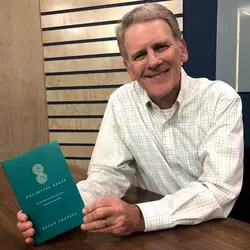
In Bryan Chapell's book, you will learn how God's unlimited grace leads us to heartfelt obedience and transforming joy. Explaining why grace is important and giving us tools to discover it in all of Scripture, Unlimited Grace helps us to see how gospel joy transforms our hearts and makes us passionate for Christ's purposes.
Past Episodes

Featured Offer
In Bryan Chapell's book, you will learn how God's unlimited grace leads us to heartfelt obedience and transforming joy. Explaining why grace is important and giving us tools to discover it in all of Scripture, Unlimited Grace helps us to see how gospel joy transforms our hearts and makes us passionate for Christ's purposes.
About Unlimited Grace
About Bryan Chapell
Bryan Chapell, Ph.D. is the Stated Clerk Pro Tempore of the Presbyterian Church in America (PCA), based in Lawrenceville, GA.
Dr. Chapell is an internationally renowned preacher, teacher, and speaker, and the author of many books, including Each for the Other, Holiness by Grace, Praying Backwards, The Gospel According to Daniel, The Hardest Sermons You’ll Ever Have to Preach, and Christ-Centered Preaching, a preaching textbook now in multiple editions and many languages that has established him as one of this generation’s foremost teachers of homiletics.
Dr. Chapell is passionate about sharing the truth of God's grace with others, because it provides the freedom and fuel for transformed lives of joy and peace.
He and his wife, Kathy, have four adult children, a growing number of grandchildren, and lives rich with friends, fishing and faith.
Contact Unlimited Grace with Bryan Chapell
info@unlimitedgrace.com