

The Parables of The King - Part 1


Guest (Male): This world doesn't have all my answers. The satisfaction of whether it's my lust or my job or the riches that are being promised, if that's not really satisfying, if I'm seeing all the awful things that there's this deep sense of need not only that I'm feeling, but that the people around me are feeling. Until the harvest, not only is need growing, but opportunity is remaining.
Guest (Male): So glad you joined us for today's Unlimited Grace, the audio broadcast ministry of pastor and author Bryan Chapell. In today's lesson, Pastor Bryan explores Matthew 13. As Jesus shares the parable of the sower, he addresses an age-old question of why a good and all-powerful God would allow the weeds of this world to grow. Through this parable, we begin to see a better picture of how God in his wisdom prepares a great harvest as he works to redeem his people.
You can find this lesson and many others when you visit unlimitedgrace.com. While you're there, look for Pastor Bryan's book, Unlimited Grace. Dr. Chapell reminds us of the power and mercy of God's grace that motivates and inspires us to serve our heavenly Father. Let's hear now from Dr. Bryan Chapell as he shares the lesson, The Parables of the Kingdom.
Bryan Chapell: What does it mean, this parable of the kingdom? Maybe we get a glimpse in some recent headlines. The first, not unfamiliar to you, our national newspapers and news reports declare: Iran's top general says wiping Israel off the map is achievable. Iran, the nation with which we currently have no nuclear treaty, that is raising havoc in the Middle East among many nations, that is wanting to eclipse all American influence, that nation has the commander of its Revolutionary Guard recently say of Israel, "This sinister regime must be wiped off the map, and this is no longer a dream, but it is an achievable goal." As the rockets are tested by Iran and show that they have adequate range, you know it is an achievable goal.
But that's not the last of the headlines. One more recently comes in the form of a question. What nation has the most rapidly growing church in the world? What nation has the most rapidly growing church in the world? What nation do you imagine it is? It is Iran. Recently reported by the Frontier Alliance International, the underground church of Iran is the most rapidly growing church in the world. If God had answered our prayers, our wisdom, our schedule, he would have just wiped it off the map in our wisdom. But what was God doing by preserving the nation of Iran? He was preserving a great harvest of souls.
What is the nation that is the greatest long-term threat to the United States in economic as well as military competition? What is our nation's greatest long-term threat and competition? It's not Iran; it is China. What nation in the world has more Christian believers than any other nation in the world? What nation has numerically the most Christians of any nation in the world? What nation is that? That is China.
We, if we were following our wisdom, would say, "God, you just need to fix this. You just need to take care of this. You just need to get this trouble away from us. Just fix it." We don't just ask the question like when we point to a nation of Iran saying, "Why doesn't the US fix this? Why doesn't Israel fix this? Why, just for the sake of world stability, don't Iran's allies, China or Russia, fix this?" This begs the question that Christians ask: Why doesn't God fix this? He can do it. He's the King over all. It's achievable. Why doesn't he just fix it?
We're not just talking about Iran. We're talking about our hurts and our fears, and difficult bosses, and economic conditions, and the diseases of our children. Why doesn't God, if he's God, if Jesus is the King, if his kingdom rules over all, why doesn't he just fix it on my schedule? Jesus, speaking past all the fears and the tears that make us want him to fix things immediately, says, "Because I am preparing a harvest of souls."
One of the things that we are being taught in this parable is that the kingdom of God is ripening. It's like the harvest that we see about us right now. Everything is not ready all at once, but there is a harvest that God is ripening and it takes time for that to be accomplished. It may not be on our schedule. There are parables that we like to tell, and there are parables that we have to hear.
The parable that we probably like the most and tell the most is the parable of the prodigal son because it's Jesus describing the nature of a heavenly Father. While the prodigal son was still a long way off, his father saw him and was filled with compassion for him, and ran to him, and threw his arms around him, and kissed him. The son said, "Father, I am no longer worthy to be called your son." But the father said, "Put the robe on his shoulders, the ring on his finger, sandals on his feet, kill the fattened calf, and let's have a feast. This son of mine was lost and now he's found. He was dead and now he's alive again." They began to celebrate. We love the parable that describes the nature of the heavenly Father.
In this parable, Jesus is not describing the nature of the heavenly Father; he is defending the nature of the heavenly Father. Our hearts look at our world and our lives, and we say, "God, don't you know about Iran? Don't you see what's happening in Syria? Don't you know about my cruel boss or my aching back or my abusive spouse or my rebellious child? Why don't you just fix this now?"
Jesus, by explaining his kingdom as a field that is ripening, says we have to live for the time in this tension between the already and the not yet. In the fields all around us in this part of the country, we look at the fields that are ready for harvest, but the experienced eye looks and says it looks ready, but it's not all quite ready yet. Some is ready, some is ripe, and some is still ripening.
Because some is ready but others not yet, things need to mature till the full harvest. We sing it: "First the blade, then the ear, then the full corn shall appear." There's a nubbin, then there's a tassel, then there's the harvest. Things have to mature. When you're dealing with earthy realities of what that means, it means God is saying, "What I've done in this world in my harvest field is I have planted my seed of the gospel truth that will take sin away as people trust in Christ, as they believe that there's one who is providing more for them than they could provide for themselves, who will forgive sin, who will cover over shame, who will provide eternal hope." He's planted seeds of the gospel in men and women and boys and girls in this nation and nations across the world, and it's growing wonderfully. The harvest is springing up.
But not without challenge, because there are weeds among the wheat that are growing at the same time. An evil one in this world has planted seeds of unbelief. It's sin, it's evil, it's hatred, it's prejudice, it's cruelty, it's disease, it's disaster that make people say, "If this is the kingdom of God, I don't want anything to do with this." Even believers at times struggle. We look at the words of the master's servants in verse 28, where they are saying to the master, "Do you want us to pull up the weeds that are ruining everything?"
We know that what they're thinking is what we're thinking. Why'd you let the weeds get there? You should pull up the weeds, God. You're in charge, pull up the weeds. The answer of the master in verse 29 is, "No, don't pull the weeds up yet, lest in gathering the weeds you root up the wheat. Let them both grow together until the harvest."
Guest (Male): You're listening to Unlimited Grace, the audio broadcast ministry of pastor and author Bryan Chapell. Change, real change, is hard. In fact, some people would claim that no change is really possible. But the truth is, it is possible. You can be different. You can overcome your struggle with sin or that addiction, but it won't be happening simply by turning over a new leaf or trying a little harder. The real power of change is ignited when we take hold of God's amazing grace. In the book Unlimited Grace by Pastor Bryan Chapell, he shows you how.
Unlimited Grace takes you on a journey to discover how grace not only frees you from the guilt and shame of a sinful life, but also provides the daily fuel needed for joy and strength in your Christian life. Take hold of God's grace, and it is the key to finding true life change. Request your copy of Unlimited Grace—that's the title of the book—when you go online to unlimitedgrace.com. The web address again is unlimitedgrace.com. And now, more from Bryan Chapell on today's Unlimited Grace.
Bryan Chapell: God lets things ripen because he knows in this broken and this fallen world the roots of the wheat and the roots of the weeds are intertwined. To pull up the weeds too soon is actually to destroy the harvest that God intends to grow, that he intends to mature. So there are the Irans and there are the Chinas and there's the Indias and there's the Indonesias, and we say, "Why not just get rid of them?" God is saying, "Because there's wheat there. Because my harvest is growing as I intend in my time and my place, and it's already but it's not yet mature." What is happening on the cosmic level with nations is also happening at the personal level in our lives that we're supposed to understand in this parable of the wheat and the weeds. After all, our hearts cry out, "God, if you can take care of it..."
"My grandmother is struggling so much. Just take her home. You can do it, it's achievable. Just take her home. It's better, it's beyond the suffering, just take her home." That can be a truly good and right prayer of faith. But God may know if her roots are intertwined with the roots of a grandchild who is needing to see a saint die well, and in faith, and in suffering trusting a greater Savior. If it's not the grandchild, it may be a relative, it may be the way in which the family is ministering to her in a way that medical personnel are witnessing and seeing because their roots by God's design are being intertwined with the roots of belief. They don't even know how they're being put in the harvest as God is maturing the wheat that is even those who are currently weeds.
It's not just older people. We have younger people—I would count myself among them at one point—who would say, "God, why do I have to struggle with these people at school who pick on me, who give me such a hard time? I have done nothing to them." I hear that sermon about being blessed when others revile you and persecute you, but God, I'm really hurting right now. It's hard for me even at this time to look back to my adolescence. As the Lord has brought some of those of my persecutors to faith in their adult years, to still say, "God, why did you allow that?" And to as a matter of faith believe that their roots were intertwined with mine and other believers.
We look at the inequities of racism and oppression and ethnic cleansing and refugees, and we say, "God, just fix this." He says, "You know, I actually need some churches in this world who will unite with other believers across ethnicity and economic boundaries and civic fences and worship Christ together so that the world sees that's not who I am. Those people who are worshipping together, who are praising God for the way that he has worked in lives beyond all their differences, they're the wheat that I'm growing up to mature so many more. The weeds can't be pulled up yet because they need the witness of the wheat."
I think of it just coming down to such a personal level when some years ago we as a church were praying for my former student, Kenneth Bae, who was the longest-held American in North Korea because he wanted people to pray in North Korea. He was arrested and held in a deprivation camp to change his mind. He tells in his book about that experience. At one time there was a guard who's watching over him in this terrible deprivation where his health is deteriorating, he is doing so badly, and the guard says to him, "If your God loves you so much, why are you in this camp?" Kenneth Bae said, "What if my God put me here so that you would know my God, and he loves you that much?"
The roots of the wheat and the weeds are intertwined for the purposes of God who is establishing a harvest. Is that all proper interpretation? Is that really what the parable means? We don't really have to guess. Jesus himself provides the interpretation, making it clear that our troubles, our difficulties are doing something. They're creating need in us. This world doesn't have all my answers, the satisfaction of whether it's my lust or my job or the riches that are being promised. If that's not really satisfying, if I'm seeing all the awful things that there's this deep sense of need not only that I'm feeling, but that the people around me are feeling. Until the harvest, not only is need growing, but opportunity is remaining. As need and opportunity work together, God is ripening the harvest.
Jesus explains in verse 36. He left the crowds and went into the house. His disciples came to him saying, "Explain to us the parable of the weeds of the field." He answered, "The one who sows the good seed is the Son of Man. The field is the world, and the good seed is the sons of the kingdom. The weeds are the sons of the evil one, and the enemy who sowed them is the devil. The harvest is the end of the age, and the reapers are the angels. Just as the weeds are gathered and burned with fire, so it will be at the end of the age. The Son of Man will send his angels, and they will gather out of his kingdom all causes of sin and all lawbreakers, and throw them into the fiery furnace. In that place there will be weeping and gnashing of teeth. But then the righteous will shine like the sun in the kingdom of their Father. He who has ears, let him hear."
There is need and there is opportunity. I'm telling you that God is saying there is provision and it is eternal, and he's convincing us by the difficulties of this world that this world doesn't have all the answers. There's opportunity for something better, longer, eternal. Jesus is better than this and he's teaching us.
What do you take away from the parable of the wheat and the weeds? One easy takeaway is the weeds will not last forever. They are here, that's real, but the weeds will not last forever. Evil may have its day; God will have the final say. He will reap his harvest. Until then, the weeds may threaten to choke, but they will not overcome. The farmer has his harvest and he will ultimately bring in the sheaves that are the great expression of his own heart.
How will that happen? We don't have to guess again. John the Apostle in the book of Revelation talks about the harvest. "I heard a loud voice from heaven saying, 'Behold, the dwelling place of God is with man. He will dwell with them, and they will be his people, and God himself will be with them as their God. He will wipe away every tear from their eyes, and death shall be no more, neither shall there be mourning, nor crying, nor pain anymore, for the former things have passed away.' There will be no night there, or pain, or fears, or crying again." That's the harvest.
It's not the full story. We rejoice in what it says, that there is that future for those who have counted on the King. We need that at times. I think of a friend, a pastor whose job for a lot of years has been like mine, on the road a lot. That means when his children were little, his wife often had the responsibility of taking care of the little ones. He talks about being on a trip one time and his wife taking two daughters and a son to a restaurant. The son has Tourette syndrome, the syndrome that causes a child to have involuntary twitches and noises and yells. As they were waiting for their food, the mom and the kids, Jason, the son, had an episode. His body out of control, his noises out of control. Mom gathered up the kids, took them to the car before the meal. As they were going out of the restaurant, one of the girls asked her mom, "Mommy, will Jason always be this way?"
When my friend Ben got home from his trip and his wife told him that story, he said, "What did you say when she said will Jason always be this way? What did you say?" She said, "I didn't have anything to say." Then I hope with sensitivity and faith, he said to her, "Oh yes, we have something to say. Jason will not always be this way." No more pain, no more tears, no fears, no night there, because we live in the light of the Lamb. He says what that means. He who was seated on the throne said, "Behold, I am making all things new. The one who conquers will have this heritage. I will be his God and he will be my son."
It's not true of everybody. For the cowardly, the faithless, the detestable, the murderers, the adulterers, sorcerers, idolaters, liars, their portion will be in the lake that burns with fire and sulfur, which is the second death. The weeds don't last forever. Neither does the Alzheimer's, nor the hatred, nor the oppression, nor the wheelchairs, nor the leukemia, nor the family tensions, the struggles we have with one another or with ourselves. The weeds don't last forever. That is the promise.
Guest (Male): That's Pastor Bryan Chapell, and you've been listening to Unlimited Grace. If you've missed anything that you'd like to hear once again, just visit unlimitedgrace.com. When you do so, you can sign up for Pastor Bryan's daily devotion sent right to your inbox. While you're there, also be sure to request a copy of the book from Dr. Bryan Chapell called Unlimited Grace. We'll send you a copy right away as our way of saying thank you for your most generous financial support. Please be sure to join us next time as once again we endeavor to put Christ at the center of our efforts so that lives might be transformed by his unlimited grace. This ministry is brought to you by Unlimited Grace Media and continues to be made possible with your generous financial support.
Featured Offer

In Bryan Chapell's book, you will learn how God's unlimited grace leads us to heartfelt obedience and transforming joy. Explaining why grace is important and giving us tools to discover it in all of Scripture, Unlimited Grace helps us to see how gospel joy transforms our hearts and makes us passionate for Christ's purposes.
Past Episodes

Featured Offer
In Bryan Chapell's book, you will learn how God's unlimited grace leads us to heartfelt obedience and transforming joy. Explaining why grace is important and giving us tools to discover it in all of Scripture, Unlimited Grace helps us to see how gospel joy transforms our hearts and makes us passionate for Christ's purposes.
About Unlimited Grace
About Bryan Chapell
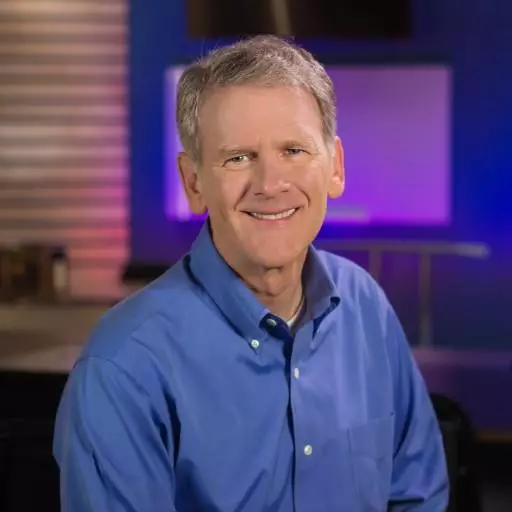
Bryan Chapell, Ph.D. is the Stated Clerk Pro Tempore of the Presbyterian Church in America (PCA), based in Lawrenceville, GA.
Dr. Chapell is an internationally renowned preacher, teacher, and speaker, and the author of many books, including Each for the Other, Holiness by Grace, Praying Backwards, The Gospel According to Daniel, The Hardest Sermons You’ll Ever Have to Preach, and Christ-Centered Preaching, a preaching textbook now in multiple editions and many languages that has established him as one of this generation’s foremost teachers of homiletics.
Dr. Chapell is passionate about sharing the truth of God's grace with others, because it provides the freedom and fuel for transformed lives of joy and peace.
He and his wife, Kathy, have four adult children, a growing number of grandchildren, and lives rich with friends, fishing and faith.
Contact Unlimited Grace with Bryan Chapell
info@unlimitedgrace.com