

The God Who Shepherds


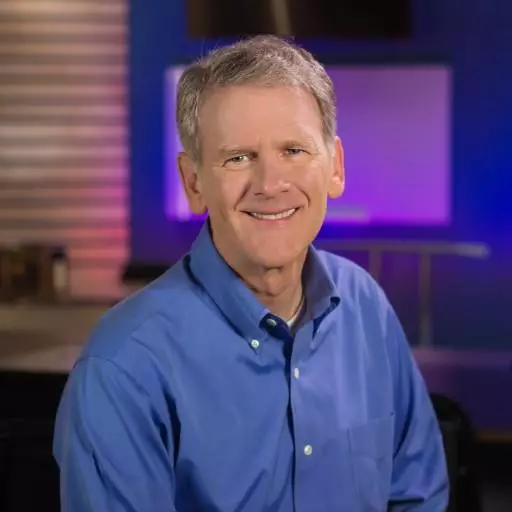
Pastor Bryan shares a lesson from Psalm 23. Dr. Chapell turns our attention to the text as we investigate the profound significance of God as our shepherd, and we His sheep.
Bryan Chapell: God's purposes are being fulfilled not just by the moment, but by where He is leading, the destination that will restore our souls, that will ultimately clothe us in the righteousness that is going to be ours, and we need it for eternity.
Guest (Male): So glad you joined us for today's Unlimited Grace, the audio broadcast ministry of pastor and author Bryan Chapell. In today's episode, Pastor Bryan shares a lesson from Psalm 23. Dr. Chapell turns our attention to the text as we investigate the profound significance of God as our Shepherd and we, His sheep.
You can find this lesson and many others when you visit UnlimitedGrace.com. And while you're there, look for Pastor Bryan's book, *The Promises of Grace*. Dr. Chapell offers a careful look at the beauty of grace and all it brings to believers. Let's hear now from Dr. Bryan Chapell as he shares the lesson, "The God Who Shepherds."
Bryan Chapell: We begin with what is perhaps the favorite of the Psalms for many people in Christ's Church. I wonder if you've ever asked yourself why is this the favorite of so many? The words are so simple, and yet we treasure them. The words are so plain, and yet they touch us deeply.
Why do we treasure this Psalm? One answer is from Philip Keller, the scientist who was also a shepherd, who wrote the book *A Shepherd Looks at Psalm 23*. He begins the book with these words: "So if the Lord is my Shepherd, I should know something of His character and understand something of His ability. To meditate on this, I frequently go out at night and remind myself of His majesty and might."
"Looking up at the star-studded sky, I remember that at least 250 million times 250 million such bodies exist, most of them larger than our own sun, and yet they have been scattered across the vast expanse of the universe by the hand of God. If it were possible to visit our nearest neighbor star, Alpha Centauri, and were to look back to find the earth, we could not see it even with our strongest optical telescope."
"Yet the staggering fact remains that the Christ, the Creator of such an enormous universe, deigns to call Himself my Shepherd, and I am His sheep, the special object of His attention and affection." What is the evidence of God's attention and affection if He is so enormous and His magnitude of might so great?
First, simply, "I shall not want." It's not a statement of not having desires, but of having needs fulfilled. Even as we studied in Philippians recently, my God is able to meet all of your needs according to His riches in glory. And that means He is providing for our earthly care as well as our eternal care. When we read the words, "He makes me lie down in green pastures. He leads me beside still waters," the words are initially idyllic. We can just picture the pastoral scene of the green fields and the still waters.
And then life catches up with us, and we say, "I love the scene, but is it realistic at all? How is God actually providing us green pastures and living waters? Is this provision of earthly care anything that we can actually count on?" I think of it something like the promise of daily bread that God offers. We smile and we say, "Isn't that wonderful? God provides daily bread."
And 99% of the time, we are well-fed and our needs are provided for. We have the houses, we have the home, we have the jobs. But what about the other 1%? Or is it 2%? Or is it 20% in your life that you wonder why this, and is God really providing for my earthly needs? For me, at least, part of the answer is remembering Jesus' own words about that daily bread.
As Jesus said, "My bread, my food, is to do the will of Him who sent me." As though God Himself is leading to His own purposes. He's leading for His own cause. That ultimately, what God is providing for our needs is what provides not just an earthly existence of ease, but ultimately what is eternally best for all of us. And the evidence of that is verse three. The psalmist doesn't just promise green pastures. He promises a good Shepherd who will restore our soul.
If a soul is being restored, it means it must have been damaged in some way. If there are still waters in which we lie down, it means we must have been wearied in some way. The psalmist is not failing to face the real life that we have and the real difficulties that we face. But the key words for me that occur both in the third as well as the second verse are, "He leads me beside still waters. He leads me in paths of righteousness for His name's sake."
That God's purposes are being fulfilled not just by the moment, but by where He is leading, the destination that will restore our souls, that will ultimately clothe us in the righteousness that is going to be ours, and we need it for eternity. He leads to the destination that He knows is absolutely best for us and for His own glory.
You know, in our part of town, there is a road that is called Mossville. And if you get on that road, you're not in Mossville, but you are being led there. We are led to still waters. He restores our souls, and we are being led in the righteousness that ultimately glorifies His name and fulfills His purposes in our lives. And it is that leading that God is being honest about here.
Not that it is a life without challenge or difficulty, but that God is working all things together for good, that there is a leading that is occurring. Even though we know sometimes it is hard for us to hear about or even face apart from the message of the good Shepherd. I think of the words recently written by Kelly Kapic in his new book, *Embodied Hope*, as he discusses so much of the pain of a family with a wife with cancer and chronic illness.
He includes in the book a poem written by a friend that speaks of how hard it is and yet how beautiful it is to believe in a Shepherd who leads. He has the neighbor in conversation with God this way. The friend writes, speaking to God: "Why did my daughter's husband break her heart?" God replies, "I know, little child." "Won't you tell me, Father?" "I won't, my son." "Why does my wife have to live in pain?" "I know, little child."
"Won't you tell me, Father? It would make it easier." "I won't, my son. It would not make it easier." "Why do parents have to bury a child? It isn't right." "It isn't, little child." "Then get rid of death, Father." "I am, my son. Why are your people abused, persecuted, and killed? Can't you protect them?" "I can, little child." "Then do something!" "I did, my son."
"Why are the lives of so many unrelenting in misery? How is that merciful?" "It is, little child." "Then I don't understand mercy." "No, you don't, my son." "But it all hurts so much." "I know it does, little child." "How do you know, Father?" "I have felt the pain of sin, my son. Can't you make it all stop?" "I can, little child." "Then do it, Father." "I started 2,000 years ago, and I will finish soon, my son. I believe, Father. Help my unbelief." "I do. I love you, my son."
It is the love from the Creator of the universe and the guardian of all time that enables us still to call Him good Shepherd. And whereby we affirm not only "I shall not want," but "I shall not fear." Clearly, there are things to fear. Even within this Psalm that we love, there is the shadow of death, and there are enemies about us.
But at the same time, we are told that death is made a shadow by God's presence. Verse four, "Even though I walk through the valley of the shadow of death, I will fear no evil, for you are with me." To believe that even when we go through the hardest and greatest challenges, even death itself, that God is with us, is treasure.
So that our God would say to us and for us, "Though I make my bed in Sheol, the place of the dead, yet even there God is with me." Never abandoned, never let go. He is promising always to be with us, which allows us not to have fear even in the valley of death because it is made only a shadow by the God whose presence never falters even at the end of this earthly existence.
Guest (Male): You're listening to Unlimited Grace, the audio broadcast ministry of pastor and author Bryan Chapell. Have you thought about the fullness of God's grace and the role that it plays in your life? You can hear and understand that you are saved by grace. But what other spiritual benefits can an understanding of grace reveal? And what has God promised to believers that His grace will provide?
In the book, *The Promises of Grace*, Pastor Bryan offers a careful look at the beauty of grace and all it brings to you as a believer. God's Word does not promise more money and fewer headaches, but His grace provides a confidence in our relationship with Him.
Pastor Bryan wants to help you focus on the promises that you can expect God to fulfill: promises of assurance of God's love, peace of conscience, joy in the Holy Spirit, and perseverance in trial. You can request your copy of *The Promises of Grace* when you go online at UnlimitedGrace.com or by calling 844-41-GRACE. That's 844-414-7223. And now, more from Bryan Chapell on today's Unlimited Grace.
Bryan Chapell: The great 20th-century preacher Donald Grey Barnhouse once had to explain the shadow of death to his children on the way to their mother's funeral. As the small children were in the car on the way to the funeral, a large truck rumbled past them and the little children retreated in fear across the car seat.
Donald Grey Barnhouse said to his children, "Why are you afraid?" They said, "The truck!" He said, "The truck did not touch you, only its shadow. And it's that way with your mother. Death has not touched her. She's with Jesus. Only the shadow of death has touched you."
He is present. Death is made only a shadow, and evil itself is made feeble by the God who offers us protection. It is protection from present dangers. You know that. The end of verse four: "Your rod and your staff, they comfort me." Verse five: "You prepare a table before me in the presence of my enemies. You anoint my head with oil; my cup overflows."
The rod and the staff, I'm not a shepherd, but as I read Philip Keller's book, he says the rod is the offensive weapon, the club for warding off beasts and wolves. And the staff, on one end, long to guide the sheep who might wander off the path, and the other crooked to retrieve the sheep that wander or are already caught in the briars.
As though God is saying to us, "I'm always assessing, always as the good Shepherd. Is it the wolves that need to be fended off, or is the wandering that needs to be corrected?" Because here is God saying that He, as the good Shepherd, will provide whatever is needed. Not just with present danger, but even for the persistent dangers of our lives.
Preparing a table before us in the presence of our enemies. So many people have said it seems like it's the wrong theme for the Psalm. Everything's been about sheep and shepherds, and now suddenly we're talking about preparing a table in the presence of enemies. Philip Keller at least offers one example.
He says he thinks this may be a reference to the table mesas in Palestine. Where in the valleys of Palestine, the heat builds up so much that a shepherd will take a sheep up to the mesa where there is green grass and breezes and safety from the animals of the valley. God prepares a table before us in the presence of our enemies, and when He does so, we are told He anoints our head with oil so that our cup overflows.
The oil that's the healing balm, so that sheep who are being attacked by the insects and by the bugs are covered with the balm to protect them. And if they've been scraped and hurt, perhaps by their own wandering, the oil is put on them to soothe. It's shielding and healing at the same time.
And Keller responds how sheep, after a while learning the goodness of the balm, begin to lift their heads in order to have the balm put on, to ask for it and to receive it. And I think how the psalmist tells us in other places that our God is the lifter of our heads. That we who are bowed down with hurt and shame and guilt, He is saying, "I have provided the healing balm. It is my hand that has rescued you from enemies, even the enemies that may be in your own heart and of your own making."
What would it truly mean to believe that we could depend upon God despite the wolves or the wandering or the weariness or the woundedness? It would mean that in our worst moments of life, we would still depend upon Him and, in depending upon the ever-present Shepherd, would not fear.
Kelly Kapic again in his book, *Embodied Hope*, talks about one who had to learn of the embodied hope of the good Shepherd through hard, hard things that would teach her dependence. He writes: "Tanya is only in her 30s and yet has been through a lifetime of pain beyond the imagining of most of us."
"She writes, 'God has taught me to have dependence on Him not only for salvation, but for the pain of this present life. During my freshman year of college, my dad was diagnosed with cancer. He died during my senior year. Several years later, my husband and I welcomed our third child, and three days after he was born, I was diagnosed with cancer. Two years later, after more treatments and surgeries, I became pregnant with our fourth child and miscarried.'"
"'Feelings of pain and loss spiraled out of control. I fell into deep depression. To cope, I began to abuse prescription medication as well as alcohol. I spent the next 14 months in a residential treatment clinic. Amid some of my greatest times of pain and being alone, I was reminded and comforted as God brought to mind His own word. His name is Immanuel, which means God with us.'"
"'When I would lie in bed after surgeries or when I would be alone in the treatment program, I would be reminded: My God gets it. He's been with us all along. He knowingly came to earth and suffered not only physical pain, but emotional pain. How awesome that I can worship a God who understands pain and will hear me and comfort me, especially in my rawest emotions. When I am dependent on Him, He protects me from my worst enemies, even the ones that are inside of me. He is that good Shepherd.'"
Not just a little balm for the soul, but a cup that overflows with goodness. And the psalmist speaks of that: "Surely goodness and mercy shall follow me all the days of my life, and I shall dwell in the house of the Lord forever." Not only shall I not want and not fear, but I shall not fall from His heart's affection.
I love the words, "Surely goodness shall follow me." It is the reminder that as a sheep may wander, so may I wander. And as far as I think I may have gone from my God, as much as I think my sin, my weariness, my weakness has taken me from His presence, I turn around and there is my God, my good Shepherd, right in my tracks.
Goodness shall follow me. And not only goodness, but mercy. As though the God who is good is also cleaning up the mess that I make. He's not just cleaning up the mess; He's cleaning up me. That's what mercy is. He picks up the mess after me and He picks up me. "Surely goodness and mercy shall follow me all the days of my life."
It's the wonderful end of the Psalm that began with the Shepherd leading. Because you recognize if the Shepherd leads, goodness and mercy follow. It's as though I am hemmed in before and behind with the grace of the Lord, as though He is protecting what comes before and He's protecting what follows after.
And because I am hemmed in by the goodness and the grace of my God, I ultimately understand I cannot fall from His heart's affection. And it is actually His promise: I shall dwell in the house of the Lord forever. Not on the basis of what I have done, but His goodness and His mercy that follow after me to secure me to His own heart and in His own home.
Guest (Male): That's Pastor Bryan Chapell, and you've been listening to Unlimited Grace. If you've been blessed by this message and would like to hear more from Dr. Chapell, I would encourage you to visit UnlimitedGrace.com. In addition to messages from Pastor Bryan, you can explore the many sermons, podcasts, seminars, and more available to you.
Also, be sure to request a copy of the book from Dr. Bryan Chapell called *The Promises of Grace*. We'll send you a copy right away as our way of saying thank you for your most generous financial support. Please be sure to join us next time as once again we endeavor to put Christ at the center of our efforts so that lives might be transformed by His unlimited grace. This ministry is brought to you by Unlimited Grace Media and continues to be made possible with your generous financial support.
Featured Offer

In Bryan Chapell's book, you will learn how God's unlimited grace leads us to heartfelt obedience and transforming joy. Explaining why grace is important and giving us tools to discover it in all of Scripture, Unlimited Grace helps us to see how gospel joy transforms our hearts and makes us passionate for Christ's purposes.
Past Episodes

Featured Offer
In Bryan Chapell's book, you will learn how God's unlimited grace leads us to heartfelt obedience and transforming joy. Explaining why grace is important and giving us tools to discover it in all of Scripture, Unlimited Grace helps us to see how gospel joy transforms our hearts and makes us passionate for Christ's purposes.
About Unlimited Grace
About Bryan Chapell
Bryan Chapell, Ph.D. is the Stated Clerk Pro Tempore of the Presbyterian Church in America (PCA), based in Lawrenceville, GA.
Dr. Chapell is an internationally renowned preacher, teacher, and speaker, and the author of many books, including Each for the Other, Holiness by Grace, Praying Backwards, The Gospel According to Daniel, The Hardest Sermons You’ll Ever Have to Preach, and Christ-Centered Preaching, a preaching textbook now in multiple editions and many languages that has established him as one of this generation’s foremost teachers of homiletics.
Dr. Chapell is passionate about sharing the truth of God's grace with others, because it provides the freedom and fuel for transformed lives of joy and peace.
He and his wife, Kathy, have four adult children, a growing number of grandchildren, and lives rich with friends, fishing and faith.
Contact Unlimited Grace with Bryan Chapell
info@unlimitedgrace.com