

The God Who Crowns


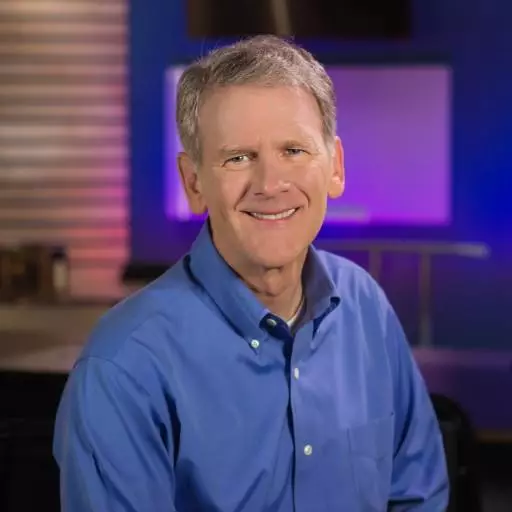
Pastor Bryan shares a lesson from Psalm 8. Dr. Chapell turns our attention to a beloved Psalm, as we reflect on the great power of a God who created not only a vast universe, but also you and me.
Bryan Chapell: God, hear my prayer. God, work in my life. And God is simply giving us permission to make that prayer that we can approach him, that he's willing to listen. And as we do so, we recognize what the psalmist is saying is that we begin to claim the reality of who God is, even in the distress, even in the mess.
Guest (Male): So glad you joined us for today's Unlimited Grace, the audio broadcast ministry of pastor and author Brian Chapel. In today's episode, pastor Brian shares a lesson from Psalm 4. Dr. Chapel points to our need for God's help and the Lord's faithfulness to answer us in our distress. You can find this lesson and many others when you visit unlimitedgrace.com. And while you're there, look for pastor Brian's book, The Multi-Generational Church Crisis. This compelling book asks the question of the church, what could be accomplished in the name of Christ if we could better understand each other? Let's hear now from Dr.
Brian Chapel as he shares the lesson, the God who answers.
Bryan Chapell: Wise man once said there are two ways to live. One, to live as though nothing is a miracle. And the other way to live is as if everything is a miracle. Now, in an age of science and technology where there are materialistic explanations for everything, certainly a lot of people can live as though nothing is a miracle. And many people perceive that if you think there's a miracle, you're just misperceiving natural processes and are just naive about science. That's why it's so important to me that the man who said you actually can live as though everything is a miracle was that naive scientist known as Albert Einstein.
And of course, seeing wonder around you in the world is not just reserved for scientists and mathematicians. Songwriters can see it, too. Think of Louis Armstrong, I see skies of blue, red roses, too. I see them bloom for me and for you. And I think to myself, it's a wonderful world. I like that. Even science and sentiment come together to say there are wonders all around us. But how far does that get you? Okay, you know, in the mess, in the muck, maybe I can occasionally see some wonderful things. So what? Well, the so what is explained by the world's most famous former atheist Andrew Flew, who wrote these words before his death.
I think that the most impressive arguments for God's existence are those now supported by recent scientific discoveries. Isn't that interesting? Of course, he was excoriated and scorned by many of his peers for giving up on an atheistic perspective of the world by saying, no, there's there's too much irreducible complexity, too much that couldn't have happened by chance. There must have been a designer of some sort. But if you believe that, how far does that get you? I mean, okay, what if there was that ancient clockmaker who long ago set things in motion? What if there really is a divine hand somewhere out there?
What does that really get you to believe that there are wonders that are being orchestrated by somebody, something far away? Doesn't really get you what you need to make it through life. We don't really understand what it means that this psalmist is saying the God who made the stars made you is saying there is a framework for existence that God has made and you fit in it so that he is not something distant and remote, but present and real and powerful in your life. And the reality of that and the importance of it is explained not by scientists or mathematicians or former atheists, intellectuals, but by a mom.
The mom's name is Nicole Cliff. And she recently wrote an article called How God messed up my happy atheistic life. She writes, as an atheist since college, the idea of a benign deity who created and loves us was obvious nonsense. She ran a popular feminist blog and wasn't always against religion. She sometimes actually ran religious commentary because she said she thought about Christians, they were simply charming in their sweet delusion. She wrote of herself, I did not wish to believe. I had no untapped, unanswered yearning. All was well. And then it wasn't. It's a simple story she wrote.
I was going through a hard time. I was worried about my child. One time, I said out loud, be with me to an empty room. It was embarrassing. I don't know why I said it or or to whom. I brushed it off. I moved on and the situation resolved itself. But the door to belief had cracked open. Not not just the door of consideration of a divine maker, but of a divine presence that the one who had made all things, that huge framework of the universal creation was the same God who not only had a framework for her life, but had placed her in that framework so that that God could actually be approached and spoken to and you would believe that that God was still working beyond the natural processes for the good of those that he loved.
That God is the God that Psalm 8 is talking about. Not not just the God of great creation which causes us to love this Psalm. I'm just guessing for a lot of you, Psalm 8 may be your favorite Psalm in all the Bible because it's what we think about when we're on camping trips. We're out under the stars and we just kind of go, wow, the heavens declare the glory of God. Oh Lord, our Lord, how majestic is your name in all the earth. And we just we just love that. But the psalmist isn't stopping there.
He's saying ultimately the reason you know the God did not make no junk, including you, is because the God who made those stars made you. And he's right here now with you. And that that reality is what's causing the psalmist here to praise God with such wonderful and glorifying words. He just begins by looking at the creation itself. You see that in verse one, right? Oh Lord, our Lord, how majestic is your name in all the earth. You have set your glory above the heavens. He looks at the glory of the stars and said, whoever made those must be greater than they.
So the glory of God is on display is even greater than the stars, greater than the heavens and their display. And when you recognize he's saying everything that God has created is part of that display of the glory of God. It's just just wonderful to think about. Oh Lord, our Lord, how majestic is your name in all the earth. I can remember when that praise song was popular in our culture and lots of us loved singing, you know, oh Lord, our Lord, how majestic is your name and now my favorite time of singing that song was on top of the highest dune in the Great Sand Dunes National Park in Colorado.
I had for hours walked through rock and river and sand to get to that very highest dune. And as you got to that very highest dune, you could look over miles and miles and miles of sand dunes rimmed by mountains beyond them, framed against a blue sky, painted with white clouds, and then far away millions of miles but bright and intense the glorious sun. And as I was there sweating, I just wanted to sing with my friends, oh Lord, our Lord, how majestic is your name in all the earth. And as I led my friends in singing, in my mind I wanted to have the voice right at that moment of Caruso or Placido Domingo.
You know, I just wanted to but you know, it's it's windy there and the sands blow in your face and it's kind of thin oxygen. So I wanted to sound like Caruso, but it sounded more like Alvin the Chipmunk. And and I recognized that in the face of the greatness of God's creation, I can just feel incredibly small and insignificant. And maybe that's the same path of David's thought here as having observed in verse one how great is the creation that brings glory to God's name. He begins to think then of the little ones, of babies.
Verse two, out of the mouth of babies and infants you have established strength because of your foes to still the enemy and the avenger. It's almost as though the psalmist having felt small in the face of creation thinks of the smallest expression of humanity, even babies. And then his mind goes one step further to think God is so secure in the the majesty and the glory and the wonder of his power that he's not ordaining praise just from the great things, but even from babies. I mean, the intricacy and the intimacy of a baby's care is itself an expression of the majesty of God.
Now, because I'm again a a grandparent as about 14 hours ago and was preparing this message, some of the words about the miracle of birth caught me from the science writer Jeffrey Simmons. What does a baby's cry actually say to you? What does it declaring about the majesty of God? Simmons writes, how can you hear a baby's first cry and not believe in the miracle that God has produced? At nine months after conception, the baby's brain sends a hormone through the placenta into the mother's pituitary gland. Although it's a complicated chemical, its message is simple.
I'm ready. It's time. All the baby's complex systems, lungs, heart, gastrointestinal, nerves, brain, they are ready to make it on their own. But the baby's skull is not yet fused, so it can be pliable enough to fit through the birth canal. As the process starts, the baby's adrenal glands add a shot of stress hormones to the baby so that it can bear the stress of the delivery. The child will not breathe until it's cleared the birth canal. If it breathed too soon, it would suffocate. If it waited too long, it would suffer brain damage. And just before the mother and child separate, the newborn gets a last minute blood transfusion through the placenta and the umbilical cord that the placenta has stored till this very moment that has just exactly the right chemicals and nutrients for the baby to survive the first moments.
Oh Lord, our Lord, how majestic is your name in all the earth. The stars and babies declare your praise. I mean, even the secular songwriter knows it. Louis Armstrong sings also what? I hear babies cry. I watch them grow. They'll learn more than I'll ever know. And I think to myself, it's a wonderful world. Oh Lord, our Lord, how majestic is your name in all the earth. You create the stars. You create the mountains. And the babies are your miracle, too. Oh wonder, how amazing.
Guest (Male): You're listening to Unlimited Grace, the audio broadcast ministry of pastor and author Brian Chapel.
Guest (Male): It may seem hard for younger Christians to believe, but people over 50 were raised during an era when 90% of Americans identified as Christian. These older believers were once part of a majority group that understood the mission of the church was to take control of our culture, to halt its evils. At the same time, Christians under 50 have lived their entire lives perceiving themselves as a minority that needs to make credible their faith to a secular pluralistic culture. These distinct experiences and perceptions have a profound impact on the priorities different generations have for church ministry.
It's no wonder that younger and older believers don't always see eye to eye. In his new book, The Multi-Generational Church Crisis, Dr. Brian Chapel asks the question, what could be accomplished in the name of Christ if we could better understand each other? This practical and hopeful book is backed by thorough research revealing how to open the lines of communication, appreciate the experiences that shaped each generation in your church, and unite in one mission to impact your community and the world. You can request your copy of the Multi-Generational Church Crisis when you donate online at unlimitedgrace.com or by calling 844-41-Grace.
That's 844-414-7223. And now, more from Brian Chapel on today's Unlimited Grace.
Bryan Chapell: As the psalmist begins to think of just the created things and now has moved to thinking about the children, he begins to think even of the glory of those children compared to the created things. And the Psalm moves from just talking about creation's glory to the creature's glory that God has made. The psalmist begins to talk verse three about two amazing wonders. When I look at your heavens, the work of your fingers, the moon and the stars which you have set in place, what is man that you are mindful him? The son of man that you care for him.
All right, the first wonder is I think I can actually see the amazing aspect of what you have made. That's that's a wonder when I consider the heavens. I'm just amazed at who you are, God. But right with that amazement comes and that you are mindful of me. In light of the expanse of what you have made, how could you possibly care about me and yet you do? And that's a glory, too. When I consider the heavens, what what would it actually mean if you with what technology provides you now could actually think of the heavens from the perspective and the proportion of God?
Because of the Hubble telescope, we can see an expanse of heaven like generations before us would never have dreamed being possible. We estimate now that there's something on the order of 10 billion, that's with the B, 10 billion galaxies. Each with on average 100 million stars, which according to whatever math I couldn't figure, but was in the article I read, says that means there are a billion trillion stars. I don't know if that's counting the quasars, the pulsars, the white dwarfs and all that. But a billion trillion Now, I hear the big number and it's impressive, but I don't know what it means.
Some researchers at the University of Hawaii tried to make it plainer to us. They said that number is so large, the number of stars, a billion trillion, that if you were to count the grains of sand in every beach and desert and dune in the world. Hear that? Every grain of sand in every desert and beach and dune in the world, there would be more stars than that. Now, you think of that this summer when you're on the beach, right? Look at all the sand. There are more stars than that. And and our God created all of that.
And and you may get just some sense of why there is wonder in the psalmist when he says, when I consider the heavens, what is man? Who am I that you could think about me, that you would be concerned for me? And and that's supposed to happen in some some measure to to humble us before the greatness of God and yet to create the wonder that he still cares for us. I mean, there's a commonly told story about William Beebe who was an explorer who fascinated United States president Teddy Roosevelt. And so Roosevelt invited Beebe to the vacation home that the Roosevelts had and and they sat out under the under the sky and looked at the stars and got in a habit of repeating a a litany of what they were experiencing.
They would look up to a familiar portion of the sky where there was this little smudge of light. And in looking at it, one of them would say these words. That is the spiral galaxy Andromeda. It is as large as our Milky Way galaxy. According to the science of their time, it is one of a hundred million galaxies. It is 750,000 light years away. It consists of a hundred billion stars, each larger than our sun. And then they will silent for a little bit. And then Teddy Roosevelt, the president of the United States, would grin and he would say, okay, I think we feel small enough.
Let's go into sleep. Yeah, it does make you feel small and make you wonder if there is so much, if it's so big, how can he care for me? And the psalmist doesn't say it lightly or easily. He makes it clear how deep and careful and intimate is that love of God for us. Verse four, what is man that you are mindful of him? The word mindful there is a word that means consistent in consciousness as though there is a constant consciousness of God for those of us that he has made. And that constant consciousness is even reflected in the next phrase.
What is man that you are mindful him? And the son of man There the words for talking about the generations of people that God has made and the son of man that you care for him. Some of you were raised on the King James Bible or you may still have King James translations in front of you. And it doesn't say care for. There it says visit. Or the son of man that you visit him or care for him because it's a Hebrew word that means to come close, not not just to care for in the abstract, but but to come as a presence into the life of another.
What is man? God, you've got so much to do. What is man? This this this little person, this billions of people world that that you would know me and care for me and visit your presence into my life as a caring regarding God for all that I need, for all that is eternal. How could you possibly do those things? And the wonder begins to be not simply that God is so big, but that he can come so close, that he's not saying, listen, don't bother me. I got to keep Andromeda spinning over here. I'm always conscious of you.
And I come into your reality. I come into your existence because I care for you.
Guest (Male): Heavenly Father, the Holy Spirit inspire those who wrote these scriptures so that we would know your divine nature and your heart of compassion. You wanted people like us in every situation and generation to know your heart and your power to help us. So we pray for that power and that love right now. Assure us of grace that is greater than all our sin and of Christ's power to rescue us from circumstances we can't figure out or control. We ask you to forgive us so that we can live for you. And we ask you to change our hearts so that fear and anger, anxiety and resentment fade into the distance because we are so close to you.
Assure us that whatever is troubling us is no surprise to you. We know you now and we know you've got this and you've got us in the palm of your hand. We are loved and secure forever. So now we rest our hearts in your heart in Jesus' name. Amen.
Guest (Male): That's pastor Brian Chapel and you've been listening to Unlimited Grace. If you've been blessed by this message and would like to hear more from Dr. Chapel, I would encourage you to visit unlimitedgrace.com. In addition to messages from pastor Brian, you can explore the mini sermons, podcasts, seminars and more available to you. Once again, go to unlimitedgrace.com or you can give by calling 844-41-Grace. Please be sure to join us next time as once again we endeavor to put Christ at the center of our efforts so that lives might be transformed by his unlimited grace. This ministry is brought to you by Unlimited Grace Media and continues to be made possible with your generous financial support.
Featured Offer

In Bryan Chapell's book, you will learn how God's unlimited grace leads us to heartfelt obedience and transforming joy. Explaining why grace is important and giving us tools to discover it in all of Scripture, Unlimited Grace helps us to see how gospel joy transforms our hearts and makes us passionate for Christ's purposes.
Past Episodes

Featured Offer
In Bryan Chapell's book, you will learn how God's unlimited grace leads us to heartfelt obedience and transforming joy. Explaining why grace is important and giving us tools to discover it in all of Scripture, Unlimited Grace helps us to see how gospel joy transforms our hearts and makes us passionate for Christ's purposes.
About Unlimited Grace
About Bryan Chapell
Bryan Chapell, Ph.D. is the Stated Clerk Pro Tempore of the Presbyterian Church in America (PCA), based in Lawrenceville, GA.
Dr. Chapell is an internationally renowned preacher, teacher, and speaker, and the author of many books, including Each for the Other, Holiness by Grace, Praying Backwards, The Gospel According to Daniel, The Hardest Sermons You’ll Ever Have to Preach, and Christ-Centered Preaching, a preaching textbook now in multiple editions and many languages that has established him as one of this generation’s foremost teachers of homiletics.
Dr. Chapell is passionate about sharing the truth of God's grace with others, because it provides the freedom and fuel for transformed lives of joy and peace.
He and his wife, Kathy, have four adult children, a growing number of grandchildren, and lives rich with friends, fishing and faith.
Contact Unlimited Grace with Bryan Chapell
info@unlimitedgrace.com