

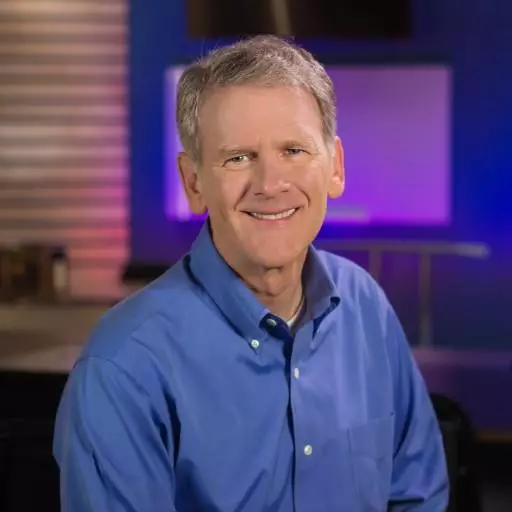
The Gift That Lasts and Lasts - Part 1


Guest (Male): So glad you joined us for today's Unlimited Grace, the audio broadcast ministry of pastor and author Bryan Chapell. In today's episode, Pastor Bryan shares a lesson from John 3:16. Dr. Chapell turns our attention to a familiar passage to highlight the love that God has for us. It is a love so great that he would send his only Son to pay the penalty for sin on our behalf.
You can find this lesson and many others when you visit unlimitedgrace.com. And while you're there, look for Pastor Bryan's book, *The Multi-Generational Church Crisis*. This compelling book asks the question of the church: what could be accomplished in the name of Christ if we could better understand each other? Let's hear now from Dr. Bryan Chapell as he shares the lesson "The Gift That Lasts and Lasts."
Bryan Chapell: In the theatrical version of *The Miracle Worker*, that account of Helen Keller born, you may remember, without the ability to see or hear, at one point shortly after the diagnosis, her mother is leaning over into the darkness of this child's cradle—a child who cannot see, who cannot vocalize anything but the crying of one who does not understand the world which cannot be heard or seen.
And the mother, in almost desperation, speaks in a way that only supernaturally could be heard by the child but says much about the heart of the mother. Looking into the cradle's darkness, the mother says, "Don't you know that we would do anything on earth to help you? Don't you know that we love you that much?"
It is an earthly parent to a child in earthly pain. But the message of John 3:16 is the message of a heavenly parent to earthly children as God is saying to us in the darkness of fault and shame and weakness and disappointment, "Don't you know that I would move heaven and earth to help you? Don't you know that I love you that much?"
The reason the words are so dear to us in such short form is because at times we do not know. Because we've been hurt so bad or we have fallen so hard or we have wandered so far away that we wonder, could it really be so that God's heart would be so big that he could still grasp and hold and receive us? And John 3:16 says with clarity, the answer to those questions is yes. For what is shown to us here is a great heart. You know it just in the opening words, "For God so loved the world."
You know those words, so many of you, that you may not recognize that they are put in contrast to something that is already been said in this book. Earlier, you may remember in John chapter one, we have been described who this Jesus is who is coming into the world's darkness. In the first chapter and verse nine, we are told this, "The true light which enlightens everyone was coming into the world. He was in the world and the world was made through him, yet the world did not know him." And if you read a little bit further, it would say, "and his own did not even receive him."
Do you get the contrast? He was in the world and the world was made by him, but the world did not know him and rejected him, but he so loved the world that he still came to be a gift of the Father to us. And the idea of the world itself being his love is saying how great is his heart, how expansive is this love. It is not just some people in the world. It is not just good people in the world. The world was made by him: mountains and rivers and oceans, the vast expanse of all that is around us, all the peoples, all the nations. The world was made by him and though the world did not receive him, he so loved the world that he would come.
I know and you recognize, too, that the Bible is not saying that everyone in the world is going to receive this message. For there in John 3, you remember just two verses after the one that we read, John 3:16 is John 3:18: "Whoever believes in him is not condemned, but whoever does not believe is condemned already because he has not believed in the name of the Son of God." Here is the love, vast, expansive, being offered, but the fact that arms are outstretched does not mean that other arms will reach back.
And here the apostle is saying to us, though the love is so expansive, it must be received. And we begin to fight back: "But what if I do not deserve it? What if there are things in my life that make it inappropriate that I would receive this love?" No, that is the very point. His heart is so big, so vast, so expansive, that the very world that would reject him, he is still loving, he is still offering the message of the good news of his life to them.
Some of us when we were little sang songs that we did not know would have meaning to us later in life. I think of one for me: "It's wide, wide as the ocean, high as the heavens above, deep, deep as the deepest sea is my Savior's love. I, though so unworthy, still am a child of his care, for his word teaches me that his love reaches me everywhere."
Well, how could that be if I have wandered, if I have failed, if I have fallen, if I have rebelled, if the very things I know to be true about God, I have turned my back on? The reason that his love could still be there is because even when the world rejected him, he so loved the world. And his heart is that very big. And I say that today because I recognize we cannot gather in these numbers without having some of us wonder if I have wandered too far and my sin is too great or my shame too difficult to face that God's love could really reach me.
When Kathy and I were first married and before we had children, we still were accepting the job of being camp counselors during summer camp. And I can remember one particular summer camp. I had one of the boys' cabins, Kathy had one of the girls' cabins. She had the harder job. Because in her cabin was a young woman who was every camp counselor's nightmare: profane in language, crude in behavior, rebellious at every turn.
At every moment, it seemed at the camp when she could get away, could go off into the woods, could do whatever she could, she was trying to grab a smoke, even at the Friday night campfire. Now, those of you who are camp experts, you recognize what the campfire is about, right? It's the time in which camp counselors recognize this is the greatest camp in the world and I'm the greatest counselor in the world. It is very gratifying if you're a camp counselor on that night when people are talking about what God has done in their lives, and you can take all the credit and not really remember it's the Lord who's doing the wonderful work.
But even at the Friday night campfire, Kathy watched as this young woman—I am not going to give you her real name, I am going to call her Sandra—watched as Sandra kind of edged her way to the edge of the firelight and then scooted off into the darkness to get another smoke. Kathy followed her this time. And in the darkness went to her and said, "Sandra, why have you made it so hard all week long? And now, even here at the campfire where we're rejoicing in what God is doing in people's lives, even now you go off into the darkness."
And it was then that Sandra talked about the real darkness that was her life: an absent mother being raised by a disinterested father who worked long hours and then to get relief and release on the weekend, invited his buddies for drinking and drugs. And when that got old, he would give them Sandra, too. She was so hard and calloused and bitter as could possibly be a young woman in her middle teens. What would you say?
"For God so loved the world that he gave his only Son that whoever believes in him should not perish but have everlasting life." Shame and guilt can be behind you. He can take it upon the cross. He can know the worst and still say, "I love you," because his heart is that big: "Wide, wide as the ocean, high as the heavens above, deep, deep as the deepest sea is my Savior's love. I, though so unworthy, still am a child of his care, for his word teaches me that his love reaches me everywhere." And Sandra that night said the simple words, "Well, no one else loves me, so if he loves me that much, I want him in my heart."
It was the beginning, the beginning of a new life, of new hope. It is the thing that God is wanting you to hear me say as again, even this day into the darkness that is some of your life, God is leaning over and he is speaking into the cradle of your existence and says, "Don't you know that I would move heaven to earth to help you? That is how much I love you." And the great evidence of that is not just the claim of a great heart, but the evidence of a great gift: "God so loved the world that he gave his only Son."
Guest (Male): You're listening to Unlimited Grace, the audio broadcast ministry of pastor and author Bryan Chapell. It may seem hard for younger Christians to believe, but people over 50 were raised during an era when 90% of Americans identified as Christian. These older believers were once part of a majority group that understood the mission of the church was to take control of our culture, to halt its evils.
At the same time, Christians under 50 have lived their entire lives perceiving themselves as a minority that needs to make credible their faith to a secular, pluralistic culture. These distinct experiences and perceptions have a profound impact on the priorities different generations have for church ministry. It's no wonder that younger and older believers don't always see eye to eye.
In his new book, *The Multi-Generational Church Crisis*, Dr. Bryan Chapell asks the question: what could be accomplished in the name of Christ if we could better understand each other? This practical and hopeful book is backed by thorough research, revealing how to open the lines of communication, appreciate the experiences that shaped each generation in your church, and unite in one mission to impact your community and the world.
You can request your copy of *The Multi-Generational Church Crisis* when you donate online at unlimitedgrace.com or by calling 844-41-GRACE. That's 844-414-7223. And now, more from Bryan Chapell on today's Unlimited Grace.
Bryan Chapell: If you look at those words that we've just read—"For God so loved the world that he gave his only Son"—those words are very special in the way that they're being translated there because they connect to so many other verses when they are translated that way. This is not the first time in the Gospel of John that phrase about God's only Son has been given.
If you just turn to the first chapter and look at the 14th verse, John chapter one and verse 14, here's this message: "And the Word"—remember, that's the statement about who Jesus is—"and the Word became flesh and dwelt among us, and we have seen his glory, glory as of the only Son from the Father, full of grace and truth." This one who was full of grace—the goodness of God given without condition—and truth—the message of salvation from heaven itself—this one who came with that message was God's only Son.
Now, that language of only Son is going to be picked up again, one other important place in the New Testament. And that's in the book of Hebrews. If you have your Bibles and you want to turn there, I won't ask you to because it's a little bit of a hard verse, but I want you to listen to the reference: Hebrews chapter 11 and verse 17. "By faith, Abraham, when he was tested, offered up Isaac, and he who had received the promises was in the act of offering up his only Son, of whom it was said, 'Through Isaac shall your offspring be named.'"
Now, I want you to hear the words again: "Abraham was in the very act of offering up his only Son, Isaac." Do you remember the Old Testament account? It's in Genesis chapter 22. God has promised Abraham a son because Abraham is to be the father of many nations. Now, to be the father of many nations, you better have a few children. But at age 75, not having had any children, this promise comes.
And you say, "Well, we better get going here." But 25 years later, still no son, no children at all. It has to be disconcerting. I mean, you recognize in that ancient culture, having children was a sign not just of prosperity, it was a sign of being obedient to God. For Abraham to have no child at this point had to be embarrassing, had to be just totally debilitating in his standing before others. And finally, at almost age 100, the child comes.
Now, that child, we know by the language of the Hebrew, is going to be somewhere between age five and 35. It's kind of a broad spread of what this child could be. But what we know is he's been around long enough for Abraham to love him dearly. And then what happens in Genesis 22:2? God says, "Now, Abraham, take your son, your only son, whom you love, and offer him up to me." It is the same language. It's Genesis 22 being reflected in John 3:16. "You take your son, your only son, whom you love, and offer him to me."
And Abraham, in obedience, does exactly that. But even as he has lifted the knife to strike, what does he see in the bushes? A ram that God has provided for sacrifice. And Abraham names the place Jehovah Jireh, "The Lord will provide." It's God's great statement from the Old Testament now revealed in the New Testament. "Abraham, you offer your son, your only son, whom you love, but I will provide instead. What will I provide? My Son, my only Son, whom I love. I will provide him."
It is the message of how great is the gift that God has given, that he would give this Son of his own precious heart and say, "I love you so much, wide, wide as the ocean, high as the heavens above, so great is my love for you that I would give my Son, my only Son, for you." How would he give him?
It's important that you recognize that John 3:16 is the Apostle's summary of the conversation that Jesus has been having with Nicodemus that concluded in verses 14 and 15 preceding. You may remember there what this giving is about: John 3:14, "As Moses lifted up the serpent in the wilderness, so must the Son of Man be lifted up." The imagery is of that serpent in the Old Testament being lifted up so the people could look at it in order to live.
And now John says, "God will give his Son to be lifted up too on a cross, in suffering death. God will give his Son, the innocent, to save others." Maybe we hear that so often we forget what it would really mean. If it were your only child, if you loved him dearly, would you give him up for another? And what would it mean if you did?
Kathy and I have dear friends. He is a Jew in background who has become a Christian. And though he is a completed Jew, one who believes now in the Messiah, in Christ, he still treasures his Jewish heritage. And so he talks about how his family ended up in the United States. They were driven from Russia generations ago by one of the Tsars. It was one of those pogroms, one of those oppressive movements in which there was a purging of the ethnic Jews as the Russians tried to drive them out of Russia.
And at one particular time, the village in which our friend's forefathers were living had Russian troops descend upon it to find the Jews and to murder them. The family escaped by running into the woods outside the village. And as the Tsar's troops began to disperse into the woods to try to find the family, there was a child, an infant in the family that began to whimper.
And the father, to save the family, put his child underwater so that the troops would not discover them. The innocent died to save the family. But if all you think about is the family being saved, you have not understood the depth of the gospel that is being explained here. For if the parallel were true, the child dies not merely to save the family, but to save those who are pursuing the family. That's the gospel. While we were yet his enemies, Christ died for us.
Wide, wide as the ocean, high as the heavens above, deep, deep as the deepest sea is my Savior's love. It is what we sing and do not even recognize the words anymore as we sing, "And can it be that God for me would die? I who him to death pursued." It was my sin that nailed him to the cross. It was my fault, my shame, my wickedness, my wrong. All that was about me is what nailed him there.
And the wonder of the gospel is that God's love was so great that he, knowing me and you, our sin, would nail his Son to the cross nonetheless—sent his Son. It is the message of the wonder of the gospel as God again leans over into the darkness of our world and says, "Don't you know? I would send my Son from heaven to earth for you. I love you that much."
Guest (Male): That's Pastor Bryan Chapell, and you've been listening to Unlimited Grace. If you'd like to hear more from Dr. Chapell, you can find a collection of valuable resources at unlimitedgrace.com. When you visit, you will find today's message and many others from Pastor Bryan.
Once again, go to unlimitedgrace.com or you can give by calling 844-41-GRACE. That's 844-414-7223. Please be sure to join us next time as once again, we endeavor to put Christ at the center of our efforts so that lives might be transformed by his unlimited grace. This ministry is brought to you by Unlimited Grace Media and continues to be made possible with your generous financial support.
Featured Offer
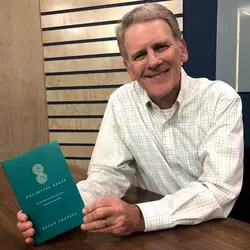
In Bryan Chapell's book, you will learn how God's unlimited grace leads us to heartfelt obedience and transforming joy. Explaining why grace is important and giving us tools to discover it in all of Scripture, Unlimited Grace helps us to see how gospel joy transforms our hearts and makes us passionate for Christ's purposes.
Past Episodes

Featured Offer
In Bryan Chapell's book, you will learn how God's unlimited grace leads us to heartfelt obedience and transforming joy. Explaining why grace is important and giving us tools to discover it in all of Scripture, Unlimited Grace helps us to see how gospel joy transforms our hearts and makes us passionate for Christ's purposes.
About Unlimited Grace
About Bryan Chapell
Bryan Chapell, Ph.D. is the Stated Clerk Pro Tempore of the Presbyterian Church in America (PCA), based in Lawrenceville, GA.
Dr. Chapell is an internationally renowned preacher, teacher, and speaker, and the author of many books, including Each for the Other, Holiness by Grace, Praying Backwards, The Gospel According to Daniel, The Hardest Sermons You’ll Ever Have to Preach, and Christ-Centered Preaching, a preaching textbook now in multiple editions and many languages that has established him as one of this generation’s foremost teachers of homiletics.
Dr. Chapell is passionate about sharing the truth of God's grace with others, because it provides the freedom and fuel for transformed lives of joy and peace.
He and his wife, Kathy, have four adult children, a growing number of grandchildren, and lives rich with friends, fishing and faith.
Contact Unlimited Grace with Bryan Chapell
info@unlimitedgrace.com