

The Father's Love - Part 2


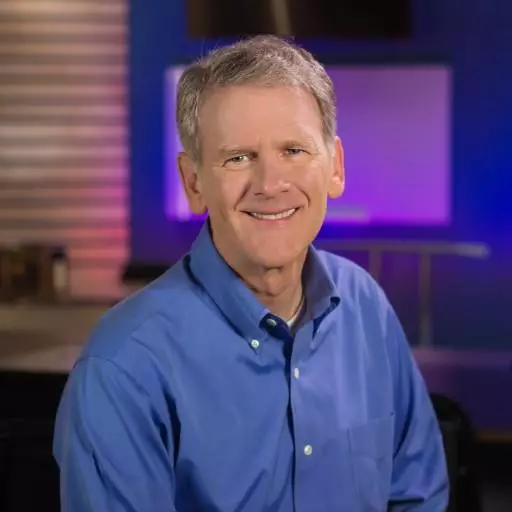
Pastor Bryan shares the second half of a lesson from verses 3-6 of Ephesians 1. Dr. Chapell explores Paul’s statement’s of predestination in the context of God’s fatherhood to His children.
Guest (Male): God's grace is to be displayed in you. If you were good enough, if you had measured up, if you were credit, it would be no credit to God's grace. The fact that God has loved you despite yourself is what gives glory to his name. And so when somebody comes to you and says, "You're a Christian? How could you be so foolish, backward, a cave-dweller?" Well, instead of arguing with them, you might just say, "Well, that's because grace is so great."
Guest (Male): So glad you joined us for today's Unlimited Grace, the audio broadcast ministry of pastor and author Bryan Chapell. In today's episode, Pastor Bryan shares the second half of a lesson from verses 3 through 6 of Ephesians 1. Dr. Chapell explores Paul's statements of predestination in the context of God's fatherhood to his children.
You can find this lesson and many others when you visit unlimitedgrace.com. And while you're there, check out the new daily devotional podcast called Daily Grace. Pastor Bryan will guide you through a devotion each day to help focus your attention on God's grace as you study his word. Let's hear now from Dr. Bryan Chapell as he shares the second half of the lesson, "The Father's Love."
Bryan Chapell: We believe that he tells us his will in his word. Let me ask that you turn there to Ephesians 1, Ephesians 1:3-6. Good word for some of you today. In our entire sermon today, we will be looking at just one sentence. Better, just one-third of one sentence. Now the bad news: it's the longest sentence in the Bible. I mean, fair's fair. Just a few weeks ago, we looked at the shortest chapter in the Bible, so now we have to look at the longest sentence in the Bible.
It goes on over 200 words. Paul the Apostle is so excited that he is just gushing, as it were, with truths that can't be stopped by social niceties like periods. What's he so excited about? Well, what he told us about last week as we were studying, that God has turned him around. That he was hell-bent and hell-bound and by a work of amazing grace, God has turned him around.
And now the Apostle Paul is speaking of that in terms so forceful that he just can't be stopped. He said, "I can't believe it. God knew me before I was born. He chose me before the foundation of the world. He predestined me." And we go, "Shh, Paul, predestined. We'll get upset with those words." He says, "Tough. God was working in my behalf."
Now listen, when we read words in the Bible like choose and predestine, no mystery. The church has debated precisely what those words mean for generations. And if you're one who struggles with why would God say things precisely this way, you're not alone. I've shared with you before that my father was a lay Baptist minister who very much emphasized the sovereignty of God in our salvation.
My mother was raised Free Methodist, and at least initially in her Christian walk, very much wanted us to talk about free choice and human will. And I will tell you, I went to seminary precisely to try to find the resolution between divine sovereignty and human responsibility, which is why I stayed there only 30 years. And I must tell you, I don't have it entirely solved yet.
But I do have some perspective that I would like to share with you today. How do we approach these notions that we know have to be addressed of divine sovereignty and human responsibility? Maybe for those of you who are engineers and scientists and educators, we can go down this path. Can you just think of how you would answer this question: Does light travel in particles or waves? Both.
Okay, is water a liquid, a gas, or a solid? Well, all of those. Okay, is God one or three? Yes. Is Jesus human or divine? You know, you're not making much sense today because you recognize as I recognize that answers that seem to be contrary are only going to be reconciled if you give the context of the question.
So if I say to you, what is the nature of water at zero degrees? You say, well, now I know, that's a solid. What's the nature of water at 70 degrees? Well, I know that's a liquid. Now the question becomes, how do we deal with God when he talks about a word like predestination? I will tell you that unless you recognize that the Apostle Paul is talking about that term in the context of the fatherhood of God, we will be very messed up.
I mean, even John Calvin, who sometimes gets the bad rap of emphasizing predestination too much, said, "If you do not talk about predestination in the context of God's fatherhood, you will only do mischief." I mean, we understand why the Apostle Paul would be saying for God that he loved us before the foundations of the world were laid if we talk in terms of God's fatherhood.
Fathers, when did you start loving your child? When he was five? When he was 35? No, when did we start loving our children? We would say, "Well, before they were even born. While they were still in the womb." Well, God is an eternal Father, and he operates on an eternal plane. And what he is saying through the apostle in this passage of scripture is, "Before you were born, I knew you. And before the foundations of the world were laid, I loved you."
That fathering of God is what we need to understand as we read this passage of scripture. Let me ask that you stand as we honor God's word, and I will read to you Ephesians 1:3-6 as Paul talks about the implications of our eternal Father.
"Blessed be the God and Father of our Lord Jesus Christ, who has blessed us in Christ with every spiritual blessing in the heavenly places, even as he chose us in him before the foundation of the world, that we should be holy and blameless before him. In love he predestined us for adoption as sons through Jesus Christ, according to the purpose of his will, to the praise of his glorious grace, with which he has blessed us in the Beloved."
Let's pray together. Heavenly Father, we humbly say to you that your ways are not our ways, and your glory beyond our full comprehension. And yet you tell us things in your word that while they stretch us, are meant to help us. So help us this day to understand why words that so challenge us are actually meant to comfort and heal, restore and strengthen us. Give us by your Holy Spirit insight into your word this day, we pray. In Jesus' name, Amen.
What does predestination sometimes mean to people? I mean, you know the arguments. If you accept predestination, it means that we're all puppets. That God is just kind of pulling strings. "Say that you love me; alright, you get into heaven." Pulling strings. "Say that you don't love me; alright, you go to hell." Is this passage saying that we're puppets? No, we are predestined to be adopted as sons, as the children of God.
Do you remember how Paul says it in Romans 8:29? That God predestined us to be conformed to the image of his Son, that he would be the firstborn among many brothers. I'm being called to be like Christ. Christ is no puppet. You know how I ultimately know I'm not a puppet? I sin. Oh, no you don't. Oh, yes I do. And that's not of God.
I mean, this letter is so assuring me that we're not simply puppets in whatever way that God is orchestrating and working our lives and our future and our past to make us love him when we would not have done it on our own. Whatever that is, it's not puppetry. And I know that because this is a letter full of responsibility. Over and over again, he's telling us how we are to be responding to him.
If your Bibles are still open, look at chapter 4, just the very first verse. Paul is in prison. He can't control much of anything. But he's writing to other people and he says in chapter 4 and verse 1, "I therefore, a prisoner for the Lord, urge you to walk in a manner worthy of the calling of which you have been called." Now that would be totally irrelevant if we're just puppets.
Why would he urge any responsibility, give any instruction, if we are just somehow under the influence of some sort of brute force of fatalism? The fact that he gives instruction means that there's some part of human responsibility that the same apostle who is talking about predestination is willing to talk to us about our responsibilities.
The Westminster Confession, when it tries to talk about these hard concepts, says in whatever way that God predetermines his will, he does no violence to the will of the creature. Now, I can't make sense of that entirely. I do recognize that when God is talking about his fatherhood, he's saying, "I loved you before the world began." And when he is talking about our responsibility, he says, "Now that you know me, walk with me."
And he's calling my heart to respond to his goodness and grace. And how all those things fit together, I think we'll know more when we get to heaven. Sometimes I think of it this way. One of my favorite activities is fishing in my kayak in the clear water streams of Southern Missouri or Colorado. And when I'm in my kayak fishing, I must tell you that sometimes I'm going straight down, and sometimes I'm going across, and sometimes I'm going backward.
But no matter what way I'm exerting my abilities and my intentions, there's an inevitability to the stream. It's taking me where it wants me to go. And I recognize in our lives that there's so much effort and energy that we are expressing and expected to express, but God is assuring his people despite our struggles, despite our weaknesses, there is an inevitability to his love.
Like this mighty river in our lives, God is taking us to the eternal destiny he intends because he's such a good Father. He doesn't stop loving us when we fail. He didn't start loving us just because we said the right word sometime. He has an eternal plan with an eternal destiny.
Chris Sobak: This is Chris Sobak, Executive Director of Unlimited Grace Media. I hope you have been enjoying this encouraging message from Pastor Bryan. If this program has been a blessing to you, I want to share with you a new way in which you can receive daily encouragement from Dr. Chapell. We've recently launched a daily devotional podcast entitled Daily Grace.
If you've already signed up to receive daily devotions by email, this podcast is a great companion piece. You can watch and listen to Pastor Bryan share these devotions daily when you visit unlimitedgrace.com. You can also find this podcast on all major podcast platforms or watch it on YouTube. This is just another way that we want to serve you with Christ-centered content and help focus your attention on the grace of God that pervades all of scripture. Let us know what you think of this new podcast. We're always encouraged to hear from you. And now, more from Bryan Chapell on today's Unlimited Grace.
Bryan Chapell: There is an inevitability to his love like this mighty river in our lives. God is taking us to the eternal destiny he intends because he's such a good Father. He doesn't stop loving us when we fail. He didn't start loving us just because we said the right word sometime. He has an eternal plan with an eternal destiny.
Now, I recognize that still our question is, are we puppets? And that's not just a question about responsibility. Ultimately, the question is answered because of relationship. He says we are united to the one who is beloved. He's expressing how great is his love. If I were just Pinocchio, if I were just an automaton, if I were just some sort of step-forged child, how could he love somebody who had no will, no autonomy whatsoever?
God is in fact indicating to us that he loves us as much as he loves his own Son, so that we will recognize the essence of this chapter is to communicate his love is unending. Now did you catch it right at the beginning of the service, the prelude that I asked Noah to play? Dan Fogelberg, Peoria native, right? The popular guitarist probably came to fame on the song "Longer Than."
"Longer than there've been fishes in the ocean. Higher than any bird ever flew. Longer than there've been stars up in the heaven. I've been in love with you." What is God saying to you and me in this chapter? Longer than there've been stars up in the heaven, your heavenly Father has loved you. It's answering key questions for us to see the scriptures that way.
One is just, are we fatalist? God's just going to do what God's going to do. It's not the way the scriptures are addressing us. I love you. This is not brute force. This is a Father's heart, and he's expressing to us what we need to know in the circumstances of our extremity. It's not the full story. It's not everything we need to know. But if the question is, does he love me still? The answer is, he will love you forever because he has loved you forever.
And that's the context of the fatherhood of God. Now I know there are questions that we all still have. What if I'm not predestined? Heard that question? What if I'm not predestined? The question is reflecting the worry that even if I love him, even if I long for him, it may not matter because I may not be one of the chosen.
I want to be careful when I say this, but I want you to know that if your question is, is my love for him irrelevant, the answer is the question itself is irrelevant. If you love God, why do you love God? You know 1 John 4:19. We love God because he first loved us. If your heart longs for God, there is no question that you are part of his chosen people.
If your heart longs for him, the very evidence that he is the Father to you is that you love him. Apart from that, you would be dead in your transgressions and sin. His love for you is what has enabled your love for him. If you love him, there is no question that you have to wrestle with. You have to understand this passage is not meant to spark questions; it's meant to spark assurance.
If I love him, it's the evidence of how great is his love for me because there's no reason he should. But he did anyway, and my love for him shows that he did. Alright, what's the other question we all ask? We all ask not only what if I'm not predestined, we say why aren't others chosen? If I'm chosen, why are not others chosen?
Well, it cannot be because they are not loved. How do I know that? Psalm 145. God loves all that he has made. John 3:16, "God so loved the world." Now, I recognize there are different dimensions of love. But clearly the gospels are telling me, as well as what the apostle and the prophets are telling me, that God is loving toward all he has made.
Is it a saving love? It's not. And why does he provide saving love for some and not for others? I don't know. It may surprise you that that question is asked precisely in Romans 9 by this same Apostle Paul. Where he says if God chooses, why can he condemn? Do you remember what Paul's answer is? By the way, he doesn't answer.
He asks the question and then does not answer it. He simply says, "How can the vessel answer back to the potter?" Which means it's not given to us in this life. But we at least have some partial understanding. If the question is why are some not chosen, believe it or not, the answer is because they may not be bad enough.
After all, why were you chosen? I mean, just think about it a little bit. Why does God choose people in the Bible? Why did he pick Israel? Because they were the nicest and the best and the biggest people, right? Why did God pick Israel? Because they were the dinkiest, meanest people, right? You're the smallest and the most stiff-necked of the people.
Why did God pick David to be King of Israel? Because he was the tallest, strongest, most experienced among his brothers? Is that why? No, because he was the least among his brothers. That means if he was going to be king, God had to be at work. What about just Paul? What do you know about the Apostle Paul? This one who has said I was foreordained before... Why did God choose Paul?
Paul would tell us about himself something later. Do you remember? He said, "I am the chief of what?" I am the chief of sinners. If you have been chosen by God, you know something for sure. You are from the wrong side of the tracks. God's grace is to be displayed in you. If you were good enough, if you had measured up, if you were credit, it would be no credit to God's grace.
The fact that God has loved you despite yourself is what gives glory to his name. And so when somebody comes to you and says, "You're a Christian? How could you be so foolish, backward, a cave-dweller?" Well, instead of arguing with them, you might just say, "Well, that's because grace is so great. I am what you say, but the grace of God is greater than all my sin. God chose me not because I qualified, but because it would display his glory to be merciful to someone as awful as I am."
When God is working that way, you begin to recognize the beauty of a song. That he could say, "Longer than there've been fishes in the ocean. Higher than any bird ever flew. Longer than there've been stars up in the heaven, I've been in love with you." "I had a plan for you. I knew the worst about you. I know the worst to come. But you're mine. And I will not let you go. I have loved you forever, and I will love you still."
I've not answered all your questions today. Now listen, some of you may want to come up and tell me some analogy that's just going to perfectly solve the question of divine sovereignty and human responsibility. I've been at a seminary for 30 years. I bet I can match you illustration for illustration and argument for argument.
But for me what helps so much is just thinking in the human terms of our reality. What is God saying here? I haven't fixed all your questions, but you can only talk about this topic in the context of God the Father, who has loved you always and will love you forever. Longer than there've been fishes in the ocean. Higher than any bird ever flew. Longer than there've been stars up in the heaven, God says he's been in love with you.
That's good news. Hang on to that. Father, so work in our hearts and lives we pray, that we who struggle because we're not divine, because our minds are not yours, we can't put it all together. But what's necessary we can surely see. We have a heavenly Father, and it's a Father who understands our own thoughts and hearts and emotions. Who loved us before we were, and will love us forever.
And that knowledge gives us security and joy and strength. So grant us this understanding that would give us the peace of your own Spirit, we pray. In Jesus' name, Amen. My friend, if there is something that is weighing you down and causing you to worry or be anxious, I want to pray for you right now.
Father, you know the difficulties I and my friends are experiencing. And you will provide as you know is best for our eternity. May confidence in this grace give us comfort in affliction and prepare us to share with others in need the greatness of your wisdom and your power and your love. We trust you. We love you because you first loved us. And so we pray in Jesus' name, Amen.
Guest (Male): That's Pastor Bryan Chapell, and you've been listening to Unlimited Grace. Please be sure to join us next time as once again we endeavor to put Christ at the center of our efforts so that lives might be transformed by his unlimited grace. This ministry is brought to you by Unlimited Grace Media and continues to be made possible with your generous financial support.
Featured Offer

In Bryan Chapell's book, you will learn how God's unlimited grace leads us to heartfelt obedience and transforming joy. Explaining why grace is important and giving us tools to discover it in all of Scripture, Unlimited Grace helps us to see how gospel joy transforms our hearts and makes us passionate for Christ's purposes.
Past Episodes

Featured Offer
In Bryan Chapell's book, you will learn how God's unlimited grace leads us to heartfelt obedience and transforming joy. Explaining why grace is important and giving us tools to discover it in all of Scripture, Unlimited Grace helps us to see how gospel joy transforms our hearts and makes us passionate for Christ's purposes.
About Unlimited Grace
About Bryan Chapell
Bryan Chapell, Ph.D. is the Stated Clerk Pro Tempore of the Presbyterian Church in America (PCA), based in Lawrenceville, GA.
Dr. Chapell is an internationally renowned preacher, teacher, and speaker, and the author of many books, including Each for the Other, Holiness by Grace, Praying Backwards, The Gospel According to Daniel, The Hardest Sermons You’ll Ever Have to Preach, and Christ-Centered Preaching, a preaching textbook now in multiple editions and many languages that has established him as one of this generation’s foremost teachers of homiletics.
Dr. Chapell is passionate about sharing the truth of God's grace with others, because it provides the freedom and fuel for transformed lives of joy and peace.
He and his wife, Kathy, have four adult children, a growing number of grandchildren, and lives rich with friends, fishing and faith.
Contact Unlimited Grace with Bryan Chapell
info@unlimitedgrace.com