

The Blessed One - Part 2


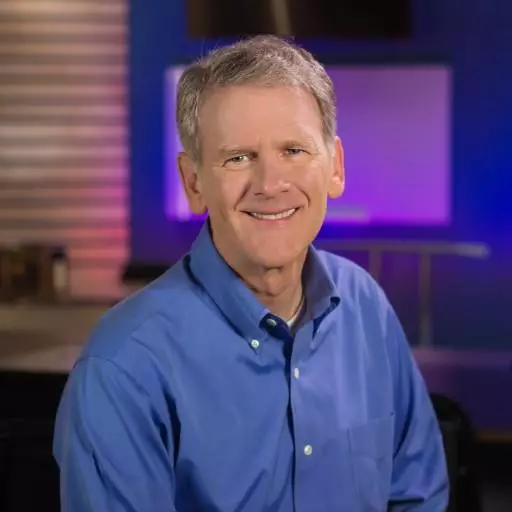
Pastor Bryan shares the second half of a lesson from Psalm 1. In this message about blessings, Dr. Chapell pints to the truth of this passage that in our weakness, God is the source of all our blessings.
Bryan Chapell: He will give provision far beyond my righteousness. He will provide providence far beyond my working, permanence of my heart and soul far beyond my deserving, and ultimately the prosperity of the righteousness I could not provide.
Guest (Male): So glad you joined us for today's Unlimited Grace, the audio broadcast ministry of Pastor and author Bryan Chapell. In today's episode, Pastor Bryan shares the second half of a lesson from Psalm 1. In this message about blessings, Dr. Chapell points to the truth of this passage, that in our weakness, God is the source of all our blessings.
You can find this lesson and many others when you visit unlimitedgrace.com. And while you're there, look for Pastor Bryan's book, The Multi-Generational Church Crisis. This compelling book asks the question of the church: what could be accomplished in the name of Christ if we could better understand each other? Let's hear now from Dr. Bryan Chapell as he shares the second half of the lesson, The Blessed One.
Bryan Chapell: As we've been working our way through different Psalms in God's own hymnal, the Psalms that are in the center of the scripture. And today we're looking at Psalm 1. For many a favorite, one that says very special things about God's blessing in your grace Bibles, that's page 448. Let me ask that you would turn there and let's stand together as I read God's word and we rejoice in His promises in the first Psalm. Psalm 1 is this:
Blessed is the man who walks not in the counsel of the wicked, nor stands in the way of sinners, nor sits in the seat of scoffers. But his delight is in the law of the Lord, and on His law he meditates day and night. He is like a tree planted by streams of water that yields its fruit in its season and its leaf does not wither. In all that he does he prospers. The wicked are not so, but are like chaff that the wind drives away. Therefore the wicked will not stand in the judgment, nor sinners in the congregation of the righteous. For the Lord knows the way of the righteous, but the way of the wicked will perish.
Let's pray together. Heavenly Father, we read in this Psalm of blessing and warning. Wonderful promises accompanying the path that leads to and follows after you. But also the promise of judgment for a way that is turned away from you. And so we would take both into consideration and ultimately recognize by this Psalm that the way to you is not made by us, but by you, who by the work of your Son, makes provision for us. It is only the way away from you that we make. Warn us from it, turn us from it, teach us of you. This we ask in Jesus' name. Amen. Please be seated.
I've mentioned to you in the past that for the first time, Kathy and I, after our kids being married for over a decade, we're now understanding a child is on the way. And that couple for whom a child is on the way, they are suddenly feeling the press against their independence. So they're trying to make up on some of the things they think they might not be able to do soon. Like this couple is trying to finish climbing as many 14ers in Colorado as they can. You know what I mean by a 14er? Mountains that are 14,000 feet and above.
My son was recently describing to me one of the 14ers that is on their list. It's called Capital Peak. Over 14,000 feet tall and known by the knife-edge traverse. Which means as you get up toward the top, there is one place where there is a land bridge that's only about two feet wide with 2,000 foot drops on both sides. And they are taking our grandchild there.
So what do we say? Hang on! Stay safe! That's the safe path. Stay on it, love it, hold it, hug it! If you really understand what the law of God is intended to be, God's safe path for His people, you recognize why the Psalmist could say, "The man of God delights in the law of God." Those who understand its revelation of the character and care of God recognize this is something to delight in. Remember the 19th Psalm? It's sweeter than honey, than honey from the honeycomb. Because we understand by this God is protecting, helping His people as He gives them the safe path in life.
It's for that reason that the last part of verse 2 says not only does the man of God delight in the law, but on God's law he meditates day and night. You have to really understand that it's sweet to meditate on it day and night. The great prince of preachers, Charles Haddon Spurgeon, said what that meant is we chew the cud of the Bible. We meditate on it day and night. Why would you?
I couldn't help thinking of it, but earlier this week, again by your wonderful generosity of sharing me with different ministries across the world, I was at the Global Leaders Conference this past week in Dallas where there were leaders from around the world from 25 nations who were getting instruction on how to take the gospel to different parts of the world. At one point in that conference, there was an Hungarian pastor who got up and gave his testimony.
He talked about at a younger period of his life just desperate for affection, just desperate to fit in, and how with the crowd that he was in, how the smoking and the drinking and the drugs and the pornography were just ways that he kept just trying to fit in to find a way. He said it only made him lonelier. And finally in some level of desperation and loneliness, he got on the internet one night and was Googling for or whatever it is in Hungary, looking up prostitute.
He just came across a reference to the Bible where it talked about the prophet Hosea, who God said, "I want you to take a prostitute to be your wife." And when Hosea did, and she went back to her profession, God said to Hosea, "Claim her again. Because as you love your wife, the prostitute, so is my love for my people. Though they turn away from me, I will love them."
The Hungarian pastor said at that moment he literally got up and danced. "My God loves me! He knows the worst about me, He knows my faithlessness and He loves me. It's in His word!" And he was delighting in the word of God. He was meditating on it day and night. He said he would go to his friends and he said he couldn't stop himself. He would just raise his hands and he would say, "God loves me, can you believe it? God loves me!" Until he finally went to an older pastor and said the same thing and the pastor said, "But have you repented of your sin?"
He said it was like ice water in my face. He said, "I had to tell the man no, I've not repented of my sin." And then the man said, "But if you confess your sin, God is faithful and just to forgive your sin and to cleanse you from all unrighteousness." And he said, "My joy then became even deeper, that I knew I could repent and that my God would love me still." It's the glory of the gospel.
It's why we see such goodness being expressed here. If you understand God's word in ways, then you want to read more, you want to meditate on it, you just want it to enter your heart and life. At least that's the way it's supposed to happen. Well, while I can speak of this in wondrous ways, I wonder if you haven't begun to feel a tension build.
After all, if you recognize these are the qualities of a person who is blessed. He does not walk in the counsel of the wicked, he does not stand in the way of sinners, he doesn't sit in the seat of scorners, but he delights in the law of the Lord and meditates on it day and night. Everybody who thinks they meet the qualifications, raise your hand. Well, what good is it then? I mean, if we are told the blessings are coming to people who meet these qualifications and then we begin to examine the qualities and realize they are qualifications that none of us meet. Suddenly the blessings begin to break us. I don't match up. I don't meet those qualifications. What then?
Guest (Male): You're listening to Unlimited Grace, the audio broadcast ministry of Pastor and author Bryan Chapell. It may seem hard for younger Christians to believe, but people over 50 were raised during an era when 90% of Americans identified as Christian. These older believers were once part of a majority group that understood the mission of the church was to take control of our culture, to halt its evils.
At the same time, Christians under 50 have lived their entire lives perceiving themselves as a minority that needs to make credible their faith to a secular pluralistic culture. These distinct experiences and perceptions have a profound impact on the priorities different generations have for church ministry. It's no wonder that younger and older believers don't always see eye to eye.
In his new book, The Multi-Generational Church Crisis, Dr. Bryan Chapell asks the question of the church: what could be accomplished in the name of Christ if we could better understand each other? This practical and hopeful book is backed by thorough research, revealing how to open the lines of communication, appreciate the experiences that shaped each generation in your church, and unite in one mission to impact your community and the world.
You can request your copy of The Multi-Generational Church Crisis when you donate online at unlimitedgrace.com or by calling 844-41-GRACE. That's 844-414-7223. And now, more from Bryan Chapell on today's Unlimited Grace.
Bryan Chapell: While I can speak of this in wondrous ways, I wonder if you haven't begun to feel a tension build. After all, if you recognize these are the qualities of a person who is blessed. He does not walk in the counsel of the wicked. He does not stand in the way of sinners. He doesn't sit in the seat of scorners. But he delights in the law of the Lord and meditates on it day and night.
Everybody who thinks they meet the qualifications, raise your hand. Well, what good is it then? I mean, if we are told the blessings are coming to people who meet these qualifications and then we begin to examine the qualities and we realize they are qualifications that none of us meet. Suddenly the blessings begin to break us. I don't match up. I don't meet those qualifications. What then?
Well, verse 3 is then. Verse 3 speaks of a righteous person saying: "He is like a tree planted by streams of water that yields its fruit in season." Now you have to make a decision about verse 3. Here's the decision you have to make: Is this a reward? You act so righteously and then you get the reward of being like a tree planted by rivers of water. Is this reward or is this rootedness?
Is this what came first? Is this the gift that preceded everything else? That the person who is truly righteous sinks his roots down into another supply? You have to recognize that I think what's happening here is not that God is telling us here's what you do to qualify, but rather here is His supply. After all, think of the image itself. The righteous person is like a tree planted by streams of water. That means the provision is coming from something else.
I didn't know when I was planning this message that our friends from Kenya would be here. But I can remember a particular safari that I took in Kenya some years ago and going out into a very arid region where you could see the elephants and the lions and that sort of thing. But even as impressive as that are the Baobab trees. And if I just showed you a picture, you'd immediately recognize it.
Just rising out of the arid grassland are these huge trees. They're known because they kind of have the texture of their bark like elephant skin. But if you were to look at the size of some of them, just the diameter of the trunk would be four or five or six elephants wide. These are huge things sitting out in a desert-like area. Now if you see such a large, flourishing tree in a desert area, what do you automatically know?
It's getting supplied by streams of water you cannot see. It is being supplied by something else that's not its own making. And I think that's exactly what's happening here. And you see it further as you understand how verse 3 unfolds. This righteous person is like a tree planted by streams of water. That means the provision is coming from something else. That yields its fruit in its season. There's not just provision, there is providence.
At the right time, God makes that life fruitful. It's Romans 8:28, that all things are being worked together for good. It's not everything is good in the moment, it's not everything seems good all the time, but rather in its time, the fruit comes that God intends for that life. This is God's providence as well as His provision. And its leaf does not wither. There's permanence.
And that's not something I can supply by my hand and you can't by your hand. And yet we are being told that the fruit, the provision is so powerful that it has a permanent effect. It's perhaps the last quality we struggle with the most. "In all that he does, he prospers." There's not just the promise of provision and providence and permanence, but ultimately prosperity. Is that true?
Do people that are godly always have prosperity? The tree image will help us again. If a peach tree prospers, it doesn't prosper by having pears. It prospers by having peaches. If the godly person prospers, they prosper in godliness. They don't necessarily prosper in wealth and easy living. After all, those would be the priorities of the world, the counsel that we're not regarding that says you're only happy if you get health and easy living and life without challenge.
After all, if the righteous living that somehow people do always result in worldly prosperity, then Jesus wasn't very righteous. But the prosperity of the godly is godliness, which is far more than this world can offer. To be able to experience the aches and the pains and the afflictions and the worries of a fallen world and still be at peace with God and to know that He provides what is most needful for our spiritual welfare and the spiritual welfare of those that we love.
To know that He is providing the providential working of all things for the spiritual things that last into eternity, that are permanent, and that those things will prosper, not by our hand, but by the streams of living water that are the grace of God. And put against it all is what the wicked have in their lives. Verse 4: "The wicked are not so, but are like chaff that the wind drives away."
What do you know about chaff? It doesn't have life. It doesn't have provision. It doesn't have a providential outcome. It's dead, it's just chaff. It doesn't have permanence, it just blows away. And it doesn't have prosperity because there's no seed of life in it for anything else to grow out of it. And therefore there is the summary that is warning: "Therefore the wicked will not stand in the judgment."
Here is the dire warning: why would you commit yourself to the counsel of the world when you know it is going to lead ultimately to eternal judgment? And instead, why would you not recognize that sinners will not be in the congregation of the righteous? That what God is planning and proposing for His people for an eternity with Him is not being provided for those who will not sink their roots into the living water.
It's the warning even for this day as we look at the Lord's table. And recognize that what God is reminding us again and again throughout the whole of scripture is the way that we make it in this world ultimately with hearts of peace with the satisfaction that is deeper than money and big houses is by knowing that our lives are fulfilling the purposes of the eternal kingdom.
And to believe that when we sink our roots deep into the one who provides more than we could ever provide for ourselves, that He is promising provision and the providential working out of all things and permanence beyond what we could provide, and ultimately the prosperity of godliness that multiplies beyond what we could ever imagine. I had to think of that when some years ago I took my sons to see the movie Saving Private Ryan.
It is kind of a graphic war movie that our family would not normally participate in, but I wanted my sons to see what their grandfather had gone through because he would never talk about it. In the Battle of the Bulge, in a group of 200 men, he was one of eight that survived. Awful, awful. And he would not talk about it. I wanted my sons to see: here's what your grandpa did for your freedom and for mine, here's what he went through.
Some of you may remember the end of that movie where men gave their lives to save Private Ryan. And the movie follows him all the way through to his old age and he goes to the graveside of those who gave their lives for him. And as he experiences the blessing of their sacrifice in his behalf, it breaks him. He falls down on his knees and he says to his wife through tears, "Tell me I'm a good man. Tell me I deserved what they gave for me."
And in the moment, I'm just cringing gospelly. I'm saying, "No! No!" I do not want to stand before God nor anyone stand before God and say, "I deserved what Christ did for me." No, it was out of His goodness. I plant my roots deep into His mercy, not into my righteousness. And what He has promised is that if I will depend upon Him, if my roots go deep down into the streams of living water that are His supply, He will give provision far beyond my righteousness.
He will provide providence far beyond my working, permanence of my heart and soul far beyond my deserving, and ultimately the prosperity of righteousness that I could not provide. I think of another graveside scene, some of you will know it. It's where Ravi Zacharias, the great Christian apologist of our era, who takes the defense of Christianity into atheistic settings and universities and places where there is challenge against the gospel like no other person.
Somehow he has the ability to answer, and he talks about what set him off on that ministry. As he decades ago stood by a garbage heap in Vietnam and recognized he was standing on the graveside of six missionaries who had given their lives for the gospel in that place. And as he thought to himself: "What did they give their lives for? There is no evidence that it meant anything." And he said, "It was for me. They gave their lives for me."
That I would recognize if you give yourself to the purposes of the gospel, God could multiply who you are far beyond your efforts. Those missionaries who died in that place surely never believed, could have known that their lives would have a far-reaching effect. But as it touched Ravi Zacharias, there was prosperity to their lives, multiplying far beyond them as their godliness touched a generation and through him, tens of thousands have believed the truth of the gospel.
And they've never seen it, but God was doing it. Why was He doing it? Because those missionaries were like trees planted by rivers of living water and God was providing far more than they knew. And He was in that provision working providentially beyond what they could understand and permanently for eternity beyond what they could provide and ultimately prospering their lives beyond their wildest dreams. Such is the nature of our God.
Guest (Male): That's Pastor Bryan Chapell, and you've been listening to Unlimited Grace. If you've been blessed by this message and would like to hear more from Dr. Chapell, I would encourage you to visit unlimitedgrace.com. Please be sure to join us next time as once again we endeavor to put Christ at the center of our efforts so that lives might be transformed by His unlimited grace. This ministry is brought to you by Unlimited Grace Media and continues to be made possible with your generous financial support.
Featured Offer

In Bryan Chapell's book, you will learn how God's unlimited grace leads us to heartfelt obedience and transforming joy. Explaining why grace is important and giving us tools to discover it in all of Scripture, Unlimited Grace helps us to see how gospel joy transforms our hearts and makes us passionate for Christ's purposes.
Past Episodes

Featured Offer
In Bryan Chapell's book, you will learn how God's unlimited grace leads us to heartfelt obedience and transforming joy. Explaining why grace is important and giving us tools to discover it in all of Scripture, Unlimited Grace helps us to see how gospel joy transforms our hearts and makes us passionate for Christ's purposes.
About Unlimited Grace
About Bryan Chapell
Bryan Chapell, Ph.D. is the Stated Clerk Pro Tempore of the Presbyterian Church in America (PCA), based in Lawrenceville, GA.
Dr. Chapell is an internationally renowned preacher, teacher, and speaker, and the author of many books, including Each for the Other, Holiness by Grace, Praying Backwards, The Gospel According to Daniel, The Hardest Sermons You’ll Ever Have to Preach, and Christ-Centered Preaching, a preaching textbook now in multiple editions and many languages that has established him as one of this generation’s foremost teachers of homiletics.
Dr. Chapell is passionate about sharing the truth of God's grace with others, because it provides the freedom and fuel for transformed lives of joy and peace.
He and his wife, Kathy, have four adult children, a growing number of grandchildren, and lives rich with friends, fishing and faith.
Contact Unlimited Grace with Bryan Chapell
info@unlimitedgrace.com