

The Blessed One - Part 1


Pastor Bryan shares the second half of a lesson from Psalm 1. In this passage, we see the characteristics of one who is blessed. Dr. Chapell shares the ways in which the blessings of God can sometimes challenge and even break us.
Bryan Chapell: If I just point at other people and say how silly, stupid, and awful of them, I somehow indicate they need God's help and I don't. It's actually a denial of the gospel that I somehow do not enter among the common faults and foibles of humanity. I'm better than all that. In which case, you're actually denying your need of the gospel as much as the very people you're critiquing.
Guest (Male): So glad you joined us for today's Unlimited Grace, the audio broadcast ministry of pastor and author Bryan Chapell. In today's episode, Pastor Bryan shares a lesson from Psalm 1. In this passage, we see the characteristics of one who is blessed. Dr. Chapell shares the ways in which the blessings of God can sometimes challenge and even break us.
You can find this lesson and many others when you visit unlimitedgrace.com. And while you're there, look for Pastor Bryan's book, The Multi-Generational Church Crisis. This compelling book asks the question of the church: What could be accomplished in the name of Christ if we could better understand each other? Let's hear now from Dr. Bryan Chapell as he shares the lesson, The Blessed One.
Bryan Chapell: All right, I know it's a cliché, but I'm going to tell you about the fish that got away. Just a few weeks ago, when I was working on the writing project that is occupying my weeks at this point, we took a trip down to our cabin in Missouri. I didn't realize it, but because I've been fishing here with Mike and Doug and Nate and Mel, I forgot to take my good fishing poles, which means when I got to the cabin, the only things that were available were those little green poles that have the Smurfs on them for the kids catching the little bitty bluegill. That's all there was. But water's there, evenings are nice, so I go out fishing.
Wouldn't you know it, I have got the kitty pole and what hits my line but the biggest bass of the season. Immediately two thoughts hit my mind at exactly the same moment: Thank you, Lord, and oh no, this line is never going to hold. So I got the bass relatively close, and then it opened that kind of monster mouth in one, I'm sure, great fish grin. In a mocking shake of its head, it broke that line like it was old spaghetti, and it's gone.
Of course, it didn't just break my line, it broke my heart, which is teaching a rather simple spiritual fact. Sometimes our blessings can break us. It's actually what's happening in this Psalm if you'll see it for its intent: that sometimes our blessings are the ways that God, by design, can break us.
We don't think about blessings breaking us, even though we have language to express it. We talk about how we can out-punt our coverage, the punt being too good to actually be able to cover it. Our businesses can grow faster than we have capacity or personnel to handle. You can pray for years for children and then have preschoolers in such number that it can almost break a marriage. You can have brains that are a blessing and end up isolating you from your peers. You can have beauty that is wondrous that can actually make you a prey of others or create pride in you. Blessings can break you.
When you see that, you may have questions about what God is actually doing in this Psalm. It is a Psalm about blessings, but just one note of trivia that gets us prepared to understand it. Right at the very beginning of the Psalm, in verse one, it says, "Blessed is the man." The two words actually don't match. The word "blessed" is the word "blessings" in the plural, and "man" is singular. A very literal translation is "blessings are to the man" who then has these qualities described in the Psalm.
You recognize that verse one is about negative qualities, and verse two is about the positive. We can just go down the list and see what the qualities are of a person who receives blessings from God. Well, he does not do this: "Blessed is the man who walks not in the counsel of the wicked." The word "counsel" is about advice. Blessed is the person who does not take the advice of the wicked, just follow the priorities, the perspective, or the life view of the world.
Almost none of us readily think we would do such things. Sometimes we have to be challenged to say, are you really following the counsel of the scriptures, or are you following the ways of the world? At Covenant Seminary, one of the professors we had for world mission used to challenge students in their very first class to say, "How many of you are following the priorities of scripture in the way in which you are ordering your life?"
Virtually everyone, not really wanting to brag about it, thought, after all, I'm here in seminary, I'm preparing for the mission field or ministry, so I guess I'm following the priorities of scripture. He said, "You really think you're following the priorities of the gospel? Since when was upward mobility part of the gospel? After all, you all think you're blessed when you succeed, when you get ahead, when you take the next step, when the world elevates you to another place. When was that ever part of the promise of God? After all, doesn't God say that blessings are to the ones who die to themselves?"
I recognize the struggle as I look back over my own life and recognize that in my senior year of college, one of the things I struggled with so much was having been raised in a Christian home and thinking, when it came time for career choices, I would not make decisions like the rest of the world because I was a Christian. Yet when it came to that senior year of college, I began to think about what was next. The only things that were coming into my gradient to evaluate were how much money could I make and how big a name could I make for myself.
I knew I wasn't supposed to be thinking that way, but the only things coming into evaluation were fame and fortune. I've told the young people here some of my own process of how it became a matter of really evaluating before the Lord where were my priorities as the Lord began to work on my heart. But it's not just young people who struggle.
One of the leaders in this church that I respect so much has talked rather honestly about the process toward adopting a child. He talked about how, as their children got older and they began to consider as the Lord had provided some means to the family, should they be providing for another child? He talked honestly about going on a business trip and just doing what business people do: creating the benefit-cost analysis, two columns. Should we adopt a child? Here's pros, here's cons.
The con list got very long: more time, more energy, more effort, more cost, loss of freedom, more worry. He said there was only one item on the pro side: opportunity to save a child from hell on earth. Though it was only one priority, it was God's priority, and it outweighed all the rest. For most of us, of course, asking the question, are we being guided by the counsel of the world or by the counsel of scripture, is not just a one-time evaluation. It's something we have to evaluate day after day.
What am I really thinking about? Am I just adopting the counsel of people around me who are on the path of the world, or am I really evaluating decisions and priorities and perspectives according to the counsel of God? Part of what helps us is to recognize that in this first verse, there is a progress that is being described. First, it's just a matter of belief. Are you walking in the counsel? Are you believing what the rest of the world believes?
But then there's the second step. The blessed man also does not stand in the way of sinners. If you've actually stepped into the way of sinners, this is not just about believing the perspective of the world, but behaving according to the world. After all, one of the saddest things that pastors hear from people from time to time is, "I never imagined that this is where I would be. That my marriage would fail, that my business career would end this way, that I would be participating in this sin, that I would have this kind of a relationship, that I would be in this theater at this time, that I would be addicted to this."
I never imagined that this is what I would be. In which case, you're recognizing that you have actually entered in. The perspectives of the world have not just affected your thought, but you're actually standing in the way of the wicked. But even that is not the end of the line of progress. For the last part of what the blessed man does not do is at the end of verse one: "nor does he sit in the seat of scoffers."
This is not just about standing or considering the ways of the world, but actually settling in. "Scoffers," after all, is being compared in this Psalm to what will follow. There are those who scoff at the word and ways of God, and the next verse talks about those who delight in the law of God. Why do you think the Psalmist makes the apex of sin, the end of the path, sitting in the seat of scoffers, being just cynical about things and people?
I suppose there's just a practical dimension. I can remember an older pastor who warned me a long time ago about Christians who've been baptized in lemon juice. They're just kind of sour all the time. You recognize that that can be very damaging to a church. When the leaders of this church were unfolding our strategic plan about Unlimited Grace, we said one of the things that could be so damaging to our church making progress and taking the gospel to our community in new and different ways is just plain old cynicism.
People who would just say, "Well, that's not going to work. How could you be so foolish?" People don't recognize what cynicism is actually revealing. After all, when anybody stands back and points to others and says how foolish, how stupid, how misdirected, how awful, what you're doing is you're saying, "I know better. I step aside and say I'm not like you."
The Bible itself says there's no temptation taken you but such as is common to man. There is none righteous, no, not one. If I just point at other people and say how silly, stupid, and awful of them, I somehow indicate they need God's help and I don't. It's actually a denial of the gospel that I somehow do not enter among the common faults and foibles of humanity. I'm better than all that. In which case, you're actually denying your need of the gospel as much as the very people you're critiquing.
So the Psalmist, understanding the progression of sin here, is saying it's not just adopting the perspective of the world, it's not even behaving like the world. It's where you actually are saying in cynicism, "I don't need the work of God." It's the apex sin.
Guest (Male): You're listening to Unlimited Grace, the audio broadcast ministry of pastor and author Bryan Chapell. It may seem hard for younger Christians to believe, but people over 50 were raised during an era where 90% of Americans identified as Christian. These older believers were once part of a majority group that understood the mission of the church was to take control of our culture, to halt its evils.
At the same time, Christians under 50 have lived their entire lives perceiving themselves as a minority that needs to make credible their faith to a secular, pluralistic culture. These distinct experiences and perceptions have a profound impact on the priorities different generations have for church ministry. It's no wonder that younger and older believers don't always see eye to eye.
In his new book, The Multi-Generational Church Crisis, Dr. Bryan Chapell asks the question: What could be accomplished in the name of Christ if we could better understand each other? This practical and hopeful book is backed by thorough research, revealing how to open the lines of communication, appreciate the experiences that shaped each generation in your church, and unite in one mission to impact your community and the world.
You can request your copy of The Multi-Generational Church Crisis when you donate online at unlimitedgrace.com or by calling 844-41-GRACE. That's 844-414-7223. And now, more from Bryan Chapell on today's Unlimited Grace.
Bryan Chapell: Kathy's here, and so she's let me tell you this. There was a time in our lives, early in our marriages, where we had young kids and were living in a neighborhood where lots of young families could afford the homes, so there were lots of young kids around. The moms, through whatever way, adopted a kind of evening ritual in the summers that they would gather around a swing set in a neighbor's yard and just kind of enjoy each other's company and tell stories about their husbands.
It wasn't the intent, it wasn't the design, but at some point Kathy came and said, "Bryan, I can't go to that anymore because what we end up doing is just being cynical about our own families." Sometimes sitting in the seat of scoffers is attending a certain Bible study that's taken a turn, and everybody there is just kind of cynical and mean about other people. It could be a particular lunchroom conversation that meets at the same table week after week and kind of poisons everybody's minds about superiors or even their obligation as Christians in the company.
What we don't recognize is that little eking out of cynicism is actually a denial of the gospel, that I can't stand apart and say how foolish they are without somehow saying I'm different and therefore pretending that we don't need the gospel as much as others. Of course, it's not just the negative in which things are stated here. You recognize there is a positive, too. It says in verse two what characterizes the righteous man is his delight is in the law of the Lord.
Now, if you think of the law only as being the handcuffs on good behavior, that you can't have fun because of the law of God, you're not understanding what a Jew would have understood when he talked about delighting in the law of God. The law was God's word and ways, the way in which God was revealing his own character and care to his people. So God, by designing law which his people could follow, was actually providing them safe path, blessing, that which would protect them in life.
I've mentioned to you in the past that for the first time, Kathy and I, after our kids being married for over a decade, we're now understanding a child is on the way. That couple for whom a child is on the way, they're suddenly feeling the press against their independence. So they're trying to make up on some of the things they think they might not be able to do soon, like this couple is trying to finish climbing as many fourteeners in Colorado as they can. Do you know what I mean by a fourteener? Mountains that are 14,000 feet and above.
My son was recently describing to me one of the teeners that is on their list. It's called Capital Peak, over 14,000 feet tall and known by the Knife Edge Traverse, which means as you get up toward the top, there is one place where there is a land bridge that's only about two feet wide with 2,000-foot drops on both sides. And they are taking our grandchild there. So what do we say? Hang on, stay safe. That's the safe path, stay on it, love it, hold it, hug it.
If you really understand what the law of God is intended to be, God's safe path for his people, you recognize why the Psalmist could say the man of God delights in the law of God. Persons who understand it's a revelation of the character and care of God recognize this is something to delight in. Remember the 19th Psalm: it's sweeter than honey, than honey from the honeycomb, because we understand by this God is protecting, helping his people as he gives them the safe path in life.
It's for that reason that the last part of verse two says not only does the man of God delight in the law, but on God's law he meditates day and night. You have to really understand that it's sweet to meditate on it day and night. The great Prince of Preachers, Charles Haddon Spurgeon, said what that meant is we chew the cud of the Bible. We meditate on it day and night. Why would you?
I couldn't help thinking of it, but earlier this week, again by your wonderful generosity of sharing me with different ministries across the world, I was at the Global Leaders Conference this past week in Dallas, where there were leaders from around the world from 25 nations who were getting instruction on how to take the gospel to different parts of the world. At one point in that conference, there was a Hungarian pastor who got up and gave his testimony.
He talked about at a younger period of his life, just desperate for affection, just desperate to fit in, and how with the crowd that he was in, the smoking and the drinking and the drugs and the pornography were just ways that he kept just trying to fit in, to find a way. He said it only made him lonelier. Finally, in some level of desperation and loneliness, he got on the internet one night and was Googling for looking up "prostitute."
He just came across a reference to the Bible, where it talked about the prophet Hosea, who God said, "I want you to take a prostitute to be your wife." And when Hosea did, and she went back to her profession, God said to Hosea, "Claim her again, because as you love your wife, the prostitute, so is my love for my people. Though they turn away from me, I will love them."
The Hungarian pastor said at that moment, he literally got up and danced. "My God loves me. He knows the worst about me, he knows my faithlessness, and he loves me." It's in his word. He was delighting in the word of God. He was meditating on it day and night. He said he would go to his friends and said he couldn't stop himself. He would just raise his hands and say, "God loves me. Can you believe it, God loves me?" until he finally went to an older pastor and said the same thing, and the pastor said, "But have you repented of your sin?"
He said it was like ice water in my face. He said I had to tell the man, "No, I've not repented of my sin." And then the man said, "But if you confess your sin, God is faithful and just to forgive your sin and to cleanse you from all unrighteousness." He said, "My joy then became even deeper, that I knew I could repent and that my God would love me still." It's the glory of the gospel. It's why we see such goodness being expressed here. If you understand God's word and ways, then you want to read more, you want to meditate on it, you just want it to enter your heart and life.
Hi, friend. This is Bryan Chapell. I'm so glad you chose to spend some of your valuable time studying the scriptures with me today. If God has spoken to you about an issue, a problem, or situation you're dealing with and you'd like to ask him to help you get things straightened out, I'd like to pray with you right now for his guidance.
Heavenly Father, your understanding of this world is beyond what I can imagine and your love for me more than I can fathom. So I come seeking your wisdom and trusting your heart. I turn this concern over to you, and I entrust it to you. Please show me the path that I should take by guiding me with your word. Help me to take the next right step and then trust you to do as you know is best. For then we shall be truly blessed. I pray this in Jesus' name. Amen.
Guest (Male): That's Pastor Bryan Chapell, and you've been listening to Unlimited Grace. If you've been blessed by this message and would like to hear more from Dr. Chapell, I would encourage you to visit unlimitedgrace.com. In addition to messages from Pastor Bryan, you can explore the many sermon podcasts, seminars, and more available to you.
Please be sure to join us next time as, once again, we endeavor to put Christ at the center of our efforts so that lives might be transformed by his unlimited grace. This ministry is brought to you by Unlimited Grace Media and continues to be made possible with your generous financial support.
Featured Offer
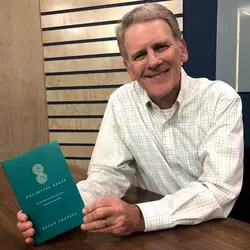
In Bryan Chapell's book, you will learn how God's unlimited grace leads us to heartfelt obedience and transforming joy. Explaining why grace is important and giving us tools to discover it in all of Scripture, Unlimited Grace helps us to see how gospel joy transforms our hearts and makes us passionate for Christ's purposes.
Past Episodes

Featured Offer
In Bryan Chapell's book, you will learn how God's unlimited grace leads us to heartfelt obedience and transforming joy. Explaining why grace is important and giving us tools to discover it in all of Scripture, Unlimited Grace helps us to see how gospel joy transforms our hearts and makes us passionate for Christ's purposes.
About Unlimited Grace
About Bryan Chapell
Bryan Chapell, Ph.D. is the Stated Clerk Pro Tempore of the Presbyterian Church in America (PCA), based in Lawrenceville, GA.
Dr. Chapell is an internationally renowned preacher, teacher, and speaker, and the author of many books, including Each for the Other, Holiness by Grace, Praying Backwards, The Gospel According to Daniel, The Hardest Sermons You’ll Ever Have to Preach, and Christ-Centered Preaching, a preaching textbook now in multiple editions and many languages that has established him as one of this generation’s foremost teachers of homiletics.
Dr. Chapell is passionate about sharing the truth of God's grace with others, because it provides the freedom and fuel for transformed lives of joy and peace.
He and his wife, Kathy, have four adult children, a growing number of grandchildren, and lives rich with friends, fishing and faith.
Contact Unlimited Grace with Bryan Chapell
info@unlimitedgrace.com