

Success


Pastor Bryan shares a lesson from Deuteronomy 8 25. In this series entitled, “Mission at Work,” Dr. Chapell highlights the ways we as believers are called to honor and serve God in our work. We must ask then, as a Christian, how do you measure success.
Bryan Chapell: We think of blessing as something that we receive. But when you bless God, it’s something that you give. You give God honor, you give him glory. If you make good use of the resources that God puts into your life, you’re actually honoring him.
Chris Sobak: So glad you joined us for today’s Unlimited Grace, the audio broadcast ministry of Pastor and author Bryan Chapell. In today’s episode, Pastor Bryan shares a lesson from Deuteronomy 8. In this series entitled Mission at Work, Dr. Chapell highlights the ways we as believers are called to honor and serve God in our work. We must ask then, as a Christian, how do you measure success?
You can find this lesson and many others when you visit UnlimitedGrace.com. And while you’re there, check out the new daily devotional podcast called Daily Grace. Watch and listen to each episode when you visit UnlimitedGrace.com today. Let’s hear now from Dr. Bryan Chapell as he shares the lesson, Success.
Bryan Chapell: How do you define success? One measure: He who dies with the most toys wins. I couldn’t help but think of that phrase in reading an interview recently with Joseph Dear, the chief investment officer for our nation’s largest pension organization. The interviewer speaking of Joseph Dear said, "We expected dry, sculpted responses from such a high official of such a large fund, but Dear surprised us. He was funny as he was wise. He was humble as he was brilliant. He was our favorite interview."
Well, there’s more than just celebration of his wealth, there’s celebration of his wisdom and his humor, how he does a good interview. You kind of think, well, what really is the measure of success if you have just tremendous wealth, if you’re the chief investment officer of the wealthiest pension fund in the world’s wealthiest nation? Then how do you mark success? Well, maybe it’s because people think you’re very wise, people think you’re brilliant, people think you just do a good interview.
In all those measures of success, I had to think of what it meant as I read the parting words of that interview, what the interviewer said right toward the end of the article. Joseph Dear was diagnosed with cancer soon after our interview. He passed away yesterday. Whoever dies with the most toys wins. Well, I’m not certain that’s true. What I am certain of: whoever dies with the most toys, dies.
That’s usually not what we want to think of as the culmination of our success. Whether you’re recognized for your wisdom or your artistry or your money or your accomplishment, we recognize the end of those things is not something that we will celebrate in this life. As somebody said after the first service, there simply aren’t Brinks trucks in funeral processions.
So how do you mark success, particularly as a believer? Well, whether you’re in business or whether you’re in education or virtually any other endeavor, you can’t measure success unless you have a goal. What’s the goal you’re trying to achieve? That will mark success. Previously we’ve said that at least for the believer, if you have Christ upon you, if you bear his name into the workplace as well as into the world, then you recognize that what magnifies the name of Jesus is ultimately what is the measure of your success before God.
I mean, we say in business, of course, that the mark of success in business is when you maximize shareholder value. But for the believer, whether in business or arts or education or agriculture, we recognize that when we maximize the Savior’s value to ourselves, to our families, and to our world, that ultimately becomes the mark of success for a believer. If you think of how success is being measured here, there’s much said in this account of Moses to the Israelites about things that they receive, but even he is helping them to understand how the metrics of success before God are maximizing his gifts.
The gifts are well-defined here if you’ll just look at verse seven and following. Moses speaking to Israel says, "The Lord your God is bringing you into a good land, a land of brooks of water, of fountains and springs flowing out in the valleys and hills, a land of wheat and barley, of vines and fig trees and pomegranates, a land of olive trees and honey, a land in which you will eat bread without scarcity, in which you will lack nothing, a land whose stones are iron and out of whose hills you can dig copper." Moses is just expecting people to make use of God’s resources.
That is part of success before God: to make good use of the resources that he has given. If you’ll see just a little bit later, Moses will say God expects you to make good use of the land, he expects you to build homes, he expects you to multiply your families. There’s supposed to be good use of the resources that God is giving. The lesson for us as we begin to understand that is really at the end of verse ten. "You shall eat and be full, you shall bless the Lord your God for the good land that he has given you." Good use of the resources blesses God.
Now, we think of blessing as something that we receive. But when you bless God, it’s something that you give. You give God honor, you give him glory. If you make good use of the resources that God puts into your life, you’re actually honoring him. The corollary: not to use God’s gifts is to dishonor him. What that means is we have to analyze our own lives and say, what are the gifts that God has put into my life? What are the gifts, the talents, the resources?
When gifted musicians make music, that honors God. When farmers harvest fields, that honors God. When businesspeople maximize shareholder value, that honors God. When engineers move earth or open the skies, that honors God. When teachers share information, and most particularly when they brighten futures, that honors God. When a mom or a dad nurtures the gift of children that are put into our lives, that honors God.
The Scriptures say it over and over again. Ephesians 2:10: "We are God’s workmanship, created in Christ Jesus to do good works that he prepared in advance for us to do." We are fulfilling his mission, fulfilling his purposes as we are using the gifts that he has put into our lives. To work according to our wiring is to honor the God who wired us. But we don’t merely use God’s gifts. The expectation is that we will maximize the gifts that he has given, that we will actually multiply them.
Verse 12 is right in the middle of a warning where we are being cautioned with the Israelites not to forget the one who provided the gifts: "Lest, when you have eaten and are full and have built good houses and live in them, and when your herds and flocks multiply and your silver and gold is multiplied and all that you have is multiplied." There’s the expectation that we are properly using the gifts of God in such a way that their effects, that their goodness is multiplying through what God has provided.
This is a message repeated in the Scriptures. Matthew 25, a number of you will remember the parable of the talents, where Jesus talks about a master who leaves, but before he leaves, he gives to those who serve him a number of talents: five to one, two to another, one to another. He says to the one who has five when he returns and finds out that five has been invested and made money, "Well done, good and faithful servant." But to the one who has only two, even as that is invested and multiplied, he said, "Well done, good and faithful servant."
The amount is not so much important as the multiplication. You’ve made good use of what I’ve given you. Who’s the only one who does not get the commendation? The one who had one talent. His critique at the end is not because he had one talent, but what did he do with the one talent? Do you remember? He buried it. He did not make good use of it. God’s expecting us to take what he has given and use those resources.
It’s really a wonderful message that depending on how God has wired us, depending on what resources he has given to us, even if the resources vary, even if the gifting varied, just to use them in the way that God has designed them to be used is bringing honor to him. We’re not setting up comparisons: you got more, you got less. We’re simply being held accountable for using what God has provided. Using resources that God provides, in the opportunities that he provides, according to his design purpose, is success. We’re not saying how much, we’re simply saying if you take the resources that God provides and you use them in the opportunities he provides for the purposes he designs, that’s biblical success.
Why do I need to know that? As I was watching the estate planning video, I couldn’t help but think of an account that I read recently in Tim Keller’s Every Good Endeavor, a book that I would recommend to you if you’re thinking about faith in work. He talks about an estate planner who wondered, how does my job, simply helping people disperse their wealth after their death, how does that honor God? He began to think about that as he was dealing with a Christian woman who was wanting to deal with blessing the purposes of Christ beyond her own life. She had this eternal perspective.
The estate planner began to recognize: I’m still doing worship at my work. Now, maybe that’s obvious when you’re an estate planner. It wasn’t obvious to him at that point. I had to begin to think of it as I have read other accounts recently of people who are simply taking the resources God provides in the opportunity God provides for the purposes that he designs. Bethany Jenkins works for the Gospel Coalition, and she was describing recently a bus driver in Alabama who had been on the same route for 17 years.
In the course of that time, she had actually had her life touch 300 students through the course of that 17-year bus driving experience. She began to see those 300 children as her opportunity to witness and experience and show the hand of Christ, the heart of Christ, day after day. One of the more telling experiences was her beginning to recognize that there was a special needs girl that would get on the bus, who on some days was particularly agitated.
The bus driver began to notice that the young woman was agitated on the days that her father’s car was in the driveway and began to suspect that things were not right. She did report it, and as a consequence, the life, the future, the blessing upon that child was saved because somebody simply said, "Here I am, not a billionaire, I’m a bus driver, taking God’s resources in God’s opportunity for God’s purposes." And that was success.
I think of how it varies even in life for some of us. Don McRaven, the wise and respected cardiologist of this congregation, who now is not able to express his profession as he once was able to, and is more often in the hospital as a patient than caring for patients. But when John Hopwood, our minister of pastoral care, goes to him and plays the guitar, then Don McRaven and Pastor Hopwood sit on the hospital bed and they belt out hymns until it rings down the hallway.
It’s still God’s resources, I can still sing; it’s still God’s opportunity, he’s right here with us, and here’s his purpose, let’s let the world know. It’s God’s resources in God’s opportunity according to God’s design. It does not matter how young or old you are, it matters simply that you are doing what God is calling you to do faithfully. That’s the mark of success. Not fat paychecks, if that’s what God has called you to do, and some people here in this congregation have an amazing ability to earn money, some have an amazing ability to share sentiment and love with other people.
However God has called us, however he's made us, that’s our opportunity to honor him. The oldest member of this congregation is Lillian Flurry. She is—anybody want to guess? She's 106. She is 106. And when she is visited by John Hopwood or Lois Hunt, when they cannot even get out of their nursing home beds at this point, and John sings "Holy, Holy, Holy," what can they do now? They raise a hand in praise. That’s what they can do. This is their opportunity, this is God’s design. That’s success.
Chris Sobak: You’re listening to Unlimited Grace, the audio broadcast ministry of Pastor and author Bryan Chapell. This is Chris Sobak, executive director of Unlimited Grace Media. I hope you have been enjoying this encouraging message from Pastor Bryan. If this program has been a blessing to you, I want to share with you a new way in which you can receive daily encouragement from Dr. Chapell.
We’ve recently launched a daily devotional podcast entitled Daily Grace. If you’ve already signed up to receive daily devotionals by email, this podcast is a great companion piece. You can watch and listen to Pastor Bryan share these devotionals daily when you visit UnlimitedGrace.com. You can also find this podcast on all major podcast platforms or watch it on YouTube.
This is just another way that we want to serve you with Christ-centered content and help focus your attention on the grace of God that pervades all of Scripture. Let us know what you think of this new podcast. We're always encouraged to hear from you. And now, more from Bryan Chapell on today’s Unlimited Grace.
Bryan Chapell: We need to remember it wherever we are called because we tend to measure by the world’s measurement. But if we’re simply saying God is simply calling me to be faithful in this moment to what he has given me the opportunity to do, that takes such pressure off of us of the world’s expectations. But there is a problem. If we begin to say that what God is actually calling me to be, what I can rejoice in is the freedom to be me.
You recognize that the freedom to be me is sometimes the sanctified selfishness that excuses the worst of this world’s evils. The people who abandon marriage or morality, give in to sexual urges, give in to selfishness with their own families because they say, "I’m free to be me." In the modern era, it’s no longer called self-actualization, it is expressive individualism. That’s the great honor.
But if it can actually be used to hurt people, if it actually deprives people, how do we take this freedom to be me and actually use it in a way that is biblically successful? The answer to that is in verse 11. Even as God is calling his people to use these great resources that he has provided, he says in verse 11, "Take care lest you forget the Lord your God by not keeping his commandments and his rules and his statutes which I command you this day."
What a downer. All this freedom to be me! How do you become you? Follow God’s commands, just be good. You know, that’s not exactly the hope I was hoping for here, that we’re going to be told the great way to experience the blessing of God is just to follow his commands. Why does God say that? What’s he actually trying to do? Part of what God is doing is he’s actually trying to preserve his people from harm.
Yes, the commands are in verse 11, but the reasons are reflected in the character of God, verses 14 through 16. I’m just going to remind you what’s there. He says in verse 14, "I’m the God who freed you from slavery." Verse 15, "I protected you from the terrors in the wilderness." Verse 15 and 16, "I gave you water from rocks and manna in the desert." And verse 16, perhaps the most telling of all, "Despite your rebellion, I was working out everything to a good end." God works all things together for good to them that love God and are called according to his purpose.
Here’s God saying, "Listen, why would you follow my ways? Why would you follow the paths I designed? Well, remember I’m good. I’m the one who took you out of slavery. I’ve got better plans for you than you yourself would have." And to throw off these shackles of God’s standards is actually to re-enter slavery. Think of it if you think of those who have delighted to throw off the shackles, whether it’s a Bernie Madoff in the business world, who abandoned all standards of ethics and therefore not only hurt himself but ultimately multiple generations of his family as well as others by his lack of integrity.
Or if that’s not the example, if it’s not the business world, what about Johnny Manziel, the Cleveland Browns quarterback who now before the whole world is this slow train wreck of a guy with such tremendous gifts and talents and abilities, who by partying and alcohol and apparently abuse is just wrecking his life? He's capturing himself in his own irresponsibility. And God is saying, "I’ve got a better way, I’ve got a better thing for you." And what I’m actually trying to do, God says, the one who released Israel from slavery, is to protect you from slavery.
Because if faithfulness to God is not our measure of success, then the world is going to begin to describe the measure of success by its expectations. I mean, if you just think to yourself, what’s the mark of success as I understand it? Well, in our culture, we’d say, you know, big home, luxury car, nice clothes, which because everybody uses a toaster and everybody drives a car and everybody has a TV, I mean, we all have basically the same stuff. We just have bigger stuff or newer stuff.
If we’re defining what makes us happy by what we have, then there are cultural expectations that are driving us, not just what God provides, but what we’re saying we have to have in order to show people that we’re successful. And it doesn’t have to just be in terms of homes or cars or clothes. You recognize whatever segment of culture you’re from, that segment of the culture is desiring to play the tune that you’re going to dance to. If you’re an artist, what’s the mark of success? Well, the beauty that you can make, the amount that you can produce, the personal recognition that you will receive.
If you’re an athlete, how many wins, how much recognition, how many records can you set? If you’re a builder or realtor, what’s your reputation, how many contracts have you signed, how many sales this week, this month, this year? All are measuring us by other people’s expectations. Which, if you meet those expectations, feels good. But if the expectations of your cultural segment begin to elude you, or your own expectations are not measured up, or your family’s expectations cannot be met, then ultimately you become a slave to other people’s expectations rather than the God who said, "I’ll provide you everything I know you need that is best for your life."
What if you and I can say that? I must tell you that that little phrase of mine—it’s not mine alone, others of you heard it, but it’s come to me so often—my identity is in Christ. In the worst moments of my life, in the most embarrassing times of my life, when I have been shocked at times what people have done or been willing to say, what people have done to my reputation, what has happened to my job, what things happen at times to my children, to my family, to be able to say: "But my identity is in Christ. I am held dear by the Creator of all. He treasures me."
And the reality of that is going to free me from other people’s expectations. And being free to be me is free to be the one who is loved by the Redeemer. And that’s my ultimate hope, that’s my ultimate success to say: "I will live faithfully for the one who has been faithful to me." How do we respond then, when we know that faithfulness is the mark of Christian success, and we have not succeeded in our faithfulness?
Then we remember the God that he calls us to remember, verse 18: "You shall remember the Lord your God, for it is he who gives you power to get wealth, that he may confirm his covenant that he swore to your fathers as it is this day." What are you to remember? Remember it’s his power that provided for you. It’s the old gospel message: not what my hands have done, that’s not why I stand before God, but because of what he has done for me. It’s his power to do what? To establish a covenant with his people. That’s old language we don’t always think about anymore.
It’s a covenant by which God makes a prior commitment to us, not based upon our achievement, not based upon our accomplishment, not saying, "You do good and then I’ll love you." But a covenant says, "I love you. Now walk with me. But even if you don’t, I prior committed to you." My love came first, my mercy came first. And the reason I know that is when I have failed in my faithfulness, I remember it was God’s power that called me in the first place, and it’s God’s covenant that keeps me always.
Chris Sobak: That’s Pastor Bryan Chapell and you’ve been listening to Unlimited Grace. If you’ve been blessed by this message and would like to hear more from Dr. Chapell, I would encourage you to visit UnlimitedGrace.com. In addition to messages from Pastor Bryan, you can explore the many sermons, podcasts, seminars, and more available to you. Once again, go to UnlimitedGrace.com or you can give by calling 844-41-GRACE. That’s 844-414-7223.
Please be sure to join us next time as once again we endeavor to put Christ at the center of our efforts so that lives might be transformed by his unlimited grace. This ministry is brought to you by Unlimited Grace Media and continues to be made possible with your generous financial support.
Featured Offer
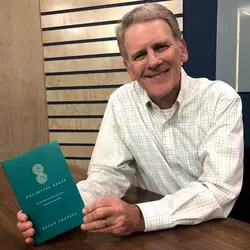
In Bryan Chapell's book, you will learn how God's unlimited grace leads us to heartfelt obedience and transforming joy. Explaining why grace is important and giving us tools to discover it in all of Scripture, Unlimited Grace helps us to see how gospel joy transforms our hearts and makes us passionate for Christ's purposes.
Past Episodes

Featured Offer
In Bryan Chapell's book, you will learn how God's unlimited grace leads us to heartfelt obedience and transforming joy. Explaining why grace is important and giving us tools to discover it in all of Scripture, Unlimited Grace helps us to see how gospel joy transforms our hearts and makes us passionate for Christ's purposes.
About Unlimited Grace
About Bryan Chapell
Bryan Chapell, Ph.D. is the Stated Clerk Pro Tempore of the Presbyterian Church in America (PCA), based in Lawrenceville, GA.
Dr. Chapell is an internationally renowned preacher, teacher, and speaker, and the author of many books, including Each for the Other, Holiness by Grace, Praying Backwards, The Gospel According to Daniel, The Hardest Sermons You’ll Ever Have to Preach, and Christ-Centered Preaching, a preaching textbook now in multiple editions and many languages that has established him as one of this generation’s foremost teachers of homiletics.
Dr. Chapell is passionate about sharing the truth of God's grace with others, because it provides the freedom and fuel for transformed lives of joy and peace.
He and his wife, Kathy, have four adult children, a growing number of grandchildren, and lives rich with friends, fishing and faith.
Contact Unlimited Grace with Bryan Chapell
info@unlimitedgrace.com