

Song for All Peoples - Part 2


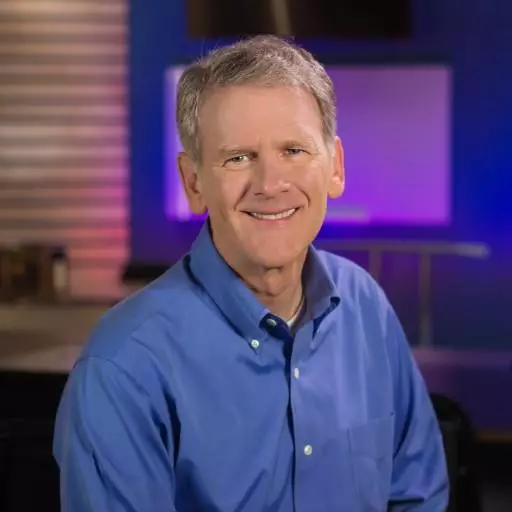
Pastor Bryan continues his lesson from Psalm 117. This passage reminds us that God’s steadfast love creates a sense of purpose and meaning in our lives, and we can be assured that His love will triumph over the trails we may face.
Bryan Chapell: One of the greatest gifts of the persecuted church is its continuing praise. As the church praises God in the midst of difficulty, the world has to stand up and say, "How could they possibly?" And the answer is because they are not bound to the realities and the promises of this world, but they are bound to the eternity and promises of God.
Narrator: So glad you joined us for today's Unlimited Grace, the audio broadcast ministry of pastor and author Bryan Chapell. In today's episode, Pastor Bryan continues his lesson from Psalm 117. This passage reminds us that God's steadfast love creates a sense of purpose and meaning in our lives, and we can be assured that His love will triumph over the trials we may face.
You can find this lesson and many others when you visit unlimitedgrace.com. While you're there, look for Pastor Bryan's book, *The Multi-Generational Church Crisis*. This compelling book asks the question of the church, what could be accomplished in the name of Christ if we could better understand each other? Let's hear now from Dr. Bryan Chapell as he shares the second half of the lesson, *Song for All Peoples*.
Bryan Chapell: If you were the Lord, and you were thinking, "How shall I make what I most want to communicate to God's people known? What would you put dead center in the middle of the Bible?"
You do not have to guess, because our Psalm this morning, Psalm 117, is dead center in the middle of the Bible. There are 1,189 chapters in the Bible, and Psalm 117 is the very middle chapter in the Bible. What message do you think the Lord would communicate there in that, that central place in His word? Well, we are going to read that.
But just a word to the wise, if ever in life you are required to memorize an entire chapter of the Bible, you want it to be this one. Why? It's not just center. What is it also? It is the, it's the shortest chapter in the Bible. Right, just two verses.
Let's stand and read the Lord's word, Psalm 117, this great commission of the Old Testament. As God makes central what we most should know.
Psalm 117: "Praise the Lord, all nations. Extol Him, all peoples, for great is His steadfast love toward us, and the faithfulness of the Lord endures forever. Praise the Lord." Let's pray together.
Father, thank You for making central in Your word a message of steadfast love and enduring faithfulness. The message that would unfold in the Scriptures is how that is communicated to us by the gift of Your Son.
This day, as we would seek Your word, show us Christ, that our praises would also enthrone Him on high, and in the hearts of those that You love and we love. This we pray in Jesus' name. Amen. Please be seated.
Bryan Chapell: For many of you in this room, you were raised at a time that I was, that we, we simply took for granted that the greatest challenge to Christianity were going to be communist countries and the communist philosophy. I must tell you that that is now just passé.
I mean, the two communist nations that are the greatest threat to Christianity right now are North Korea and Vietnam, small nations. The threat to Christianity is not coming out of formerly communist nations. The greatest threat to Christianity is coming out of the Muslim world. And as hard and politically incorrect as that is to say, we have to say, how can we say that as believers and still have the praise of God and the purposes of God in our hearts?
I mean, you take a place right now like, like Southern Sudan. Some of you know in elections a year ago, Southern Sudan became a nation. 4 million primarily Christians, whose economy and lifeline is still controlled by an Islamic government in Northern Sudan, who is currently orchestrating a famine in Southern Sudan.
Those who study it say that there will be 50,000 Christian children who die by Christmas. It is genocide of starvation. And of course, we do not hear about that so much because Sudan is not particularly critical to the US interest or economy. But where there is great interest, you recognize, even the news should tell us how difficult it would be right now to affirm the faithfulness of the Lord endures forever.
British historian Tom Holland simply writes these words: "What is happening in the Middle East is the virtual extinction of Christianity from its birthplace." You hear bits and pieces, we hardly ever put it all together.
What is happening in Iraq? Some of you, of course, recognize that what is happening in Iraq is that ISIS is there in force. A third of Iraq now is controlled by ISIS. As they moved into Mosul, and you hear it on the news and you think, "Where in the world is that?" Okay, think the land of Jonah and Nahum. Those biblical people and biblical lands.
What has happened as ISIS has moved into Mosul? The soldiers have come with clear orders. We have them in our own intelligence. "Burn all business selling cigarettes or liquor. Burn all churches. Take all money and food. Behead all Christian men. Take their women. They are yours."
The reality if you just back away from the incidents and take the big picture, when the United States entered Iraq now more than a decade ago, 1.2 million Christians in Iraq. Now less than 200,000, and most of them are refugees in dire circumstances. Our brothers and sisters in Christ.
And that's just Iraq. Some of you know that in Syria, where also ISIS is having strong influence, but there is also a civil war that's going on. Before the civil war, 10% of Syria was Christian. Now very few Christians remain at all. They basically all have been driven out into the refugee camps into surrounding nations.
Palestine makes our news, particularly as the rocket attacks from Hamas happen. What do you know about Palestine? Did you know that 1.2 million Palestinians are Christians? Basically, they have been spread throughout the world. And because of the conflict with Israel, because of Hamas, because of what's happened there for the last two decades, very few Christians remain in Palestine.
There are some. You know, Abu Daoud was here teaching in our church just a few weeks ago. A Christian Palestinian, as he is here. What is he doing? He's reminding us of our brothers and sisters who are standing for the Lord, singing praises in the most hostile places of the world, so that God in Christ Jesus will be enthroned in the praises of His people. As they are being reminded and reminding others, this world is not the full picture.
Our God is about eternal purposes, and we exist through the persecution and through the oppression and through the difficulty that God may be known. Some of you may be aware of Egypt, what's happening there. As the different Muslim forces have moved back and forth, that what has happened is Christians themselves have been caught in the crossfire. Many churches burned, many Christians in hiding now.
Where some of you may have visited on some Holy Land tour, St. Catherine's Church, which is at the foot of Mount Sinai where Moses, remember, was with the people of Israel. St. Catherine's Church now, right now, is being threatened with bulldozing by an Egyptian general who says that it is a threat to national security. Do you know why? Because in St. Catherine's Church is the oldest copy of the Bible that we have in the language of Jesus. A threat to national security of Egypt. So, let's bulldoze it down.
What we understand over and over again is that there are hard things that Christians are facing. How in the world could we say this Psalm that God is saying, "Mighty is His steadfast love and the faithfulness of the Lord endures forever?" Can we believe that?
I was helped recently by the report of a friend. Some of you may know the name Mindy Belz, who was a war correspondent and a Christian. Her daughter and my daughter were actually roommates in college in their first year together.
And Mindy Belz recently wrote of what was happening in Northern Nigeria. Now, some of you know that North Africa is primarily Muslim as well. And so she wrote what was happening in Northern Nigeria. That is where that other strange name enters our news reports, Boko Haram, which even Al-Qaeda fighters are terrified of.
Why? Because they are not only filled with religious zeal, but the more that they have slaughtered, the more the bloodlust has filled them, and the atrocities are so numerous and so common that we cannot even talk about them in a church setting.
And in that particular place, Mindy was recently visiting a town where all the churches had been burned. And as she was visiting to give a report to say what has happened to the Christians in Northern Nigeria, she says she entered that town and getting near one of the burned-out churches, actually heard a strange noise coming from behind the building.
And going around behind the building, she saw with just kind of fence posts and a corrugated roof building, she saw the pastors of the town, gathered together with open Bibles in their laps and singing songs of praise.
We will enthrone our God among the peoples. And the way we do that is to extol Him, to praise Him, not for our present circumstances, but for a grace that is eternal, for a plan that is beyond us.
Narrator: You're listening to Unlimited Grace, the audio broadcast ministry of pastor and author Bryan Chapell.
Narrator: It may seem hard for younger Christians to believe, but people over 50 were raised during an era when 90% of Americans identified as Christian. These older believers were once part of a majority group that understood the mission of the church was to take control of our culture, to halt its evils. At the same time, Christians under 50 have lived their entire lives perceiving themselves as a minority that needs to make credible their faith to a secular pluralistic culture.
These distinct experiences and perceptions have a profound impact on the priorities different generations have for church ministry. It's no wonder that younger and older believers do not always see eye-to-eye. In his new book, *The Multi-Generational Church Crisis*, Dr. Bryan Chapell asks the question, what could be accomplished in the name of Christ, if we could better understand each other?
This practical and hopeful book is backed by thorough research, revealing how to open the lines of communication, appreciate the experiences that shaped each generation in your church, and unite in one mission to impact your community and the world. You can request your copy of *The Multi-Generational Church Crisis* when you donate online at unlimitedgrace.com or by calling 844-41-GRACE. That's 844-414-7223.
And now, more from Bryan Chapell on today's Unlimited Grace.
Bryan Chapell: What you recognize when people face such persecution, such hardship, and they praise God, is just what you sang earlier: The church of Christ shall never perish; her dear Lord to defend.
There will be opposition, there will be hardship and difficulty, but, but kings and kingdoms may come and go, Jesus Christ shall prevail. And when we recognize that, we do not just kind of write off Christians in other countries. We recognize we have tremendous privileges, and one of those tremendous privileges is the ability to praise God without fear of reprisal, with the recognition that as we gather together, we can be supporting in mission and prayer and purpose, believers from across the world and across the generations.
Our, our end is not in the present. We are about an eternal purpose for God's sake. And when we see persecuted Christians who continue to praise God, not only for their own sake, but for the sake of enemy and neighbor, then we recognize this, this is something more powerful than we can imagine. After all, one of the greatest gifts of the persecuted church is its continuing praise.
As the church praises God in the midst of difficulty, the world has to stand up and say, "How could they possibly?" And the answer is because they are not bound to the realities and the promises of this world, but they are bound to the eternity and promises of God. And He has said what would happen. There will come the day when the knowledge of God covers the earth as water covers the sea.
Every other false thing will fall away. Jesus Christ will reign. And when I know that and you know that, it means that our lives have purpose. And it says why the psalmist ends the Psalm as he does, saying, "Praise the Lord!" Because there is a, a compulsion to praise among those people who understand how great are the purposes and the love of God.
The song that we sang earlier, "How can I keep from singing?" is a song itself that came out of the Civil War agony and angst of this nation. And yet what people did was they said, if, if the horror is so great, then the message of salvation in Jesus Christ, His deliverance from the evil and the darkness and the blackness of the earth, even appears greater. In the midst of the agony, "How could I keep from singing?" If what God is promising is that His steadfast love toward us is great, and His faithfulness will endure forever.
I mentioned to you last week when we were looking at Psalm 116, it is one of four Psalms that for a thousand years plus more the Israelites repeated annually in their Passover service. The Psalm that ended the service was this one, which means on that Last Supper night when Jesus was celebrating the Passover with His disciples, before He walks to Gethsemane to sweat blood of agony in prayer for His people, and before He goes to Calvary to shed His blood for the sins of His people.
It was Jesus Himself who would say, "Praise the Lord all nations. Extol Him all peoples, for great is His steadfast love toward us, and the faithfulness of the Lord endures forever. Praise the Lord!" And then the soldiers arrested Him.
It seems senseless, it seems wrong, it does not seem like it's faithfulness at all, but Jesus knew that there was the most faithful act of God since the creation of the world that was about to happen. And so He was praising God for a faithfulness beyond circumstances, a love beyond human explanation that was actually in divine provision.
It's, it's what motivates us to say, we have to enthrone our God in our praises. Not because we do not face darkness, but because we know darkness does not triumph. Because we know this is not the final chapter. Because we know that His faithfulness endures, that His steadfast love is powerful.
I could not help but think of it in a more recent report by Mindy Belz. When, when she was writing of what has happened in Northern Iraq, as the Christians have been forced into refugee camps, but not Christians alone.
Some of you know enough about kind of the political religious world to know that ISIS is primarily made up of Sunni Muslims, which means they have also driven out Shiite Muslims from Mosul and surrounding areas. All of which have flooded into the refugee camps.
But the Christians, even in the refugee camps, have set up churches and shared what little food and little water and few medical supplies they have. And so Mindy Belz wrote of churches filled up with Muslim women in head coverings from head to foot, listening to Bible stories and Iraqi soldiers standing at the windows and listening in.
The steadfast love of the Lord is mighty, and His faithfulness endures forever. Kings and kingdoms may come and go. The Gospel of Jesus Christ is like a steel locomotive going through history. It will not be stopped. We know it sometimes in its power because it faces resistance. How could you recognize that a bulldozer was powerful if it never faced any resistance?
It has to push through the difficulty and the dictators and the famines and the floods and the hardship that God's people face. And when they say, "But our praises are still to our God, who has eternal faithfulness," then we enthrone Christ above all the world and say, "This is the God that we worship."
Does it apply to you at all? I mean, I have, I have spent so much time talking about world events, but I hope you recognize here in this, this area of the country that is ours, this, this Midwest, 70 million people live according to the demographers in this Midwest. And in this, this Midwest, those who study religion across our world say right now the moral center of Christianity is not on our coasts, it's not in England. The moral center of Christianity is in the Christian states of Africa and in the American Midwest.
This is where the values are maintained, the sense of mission and the holiness of God and the greatness of His grace. It's here. And we have a responsibility. Among these 70 million, you must recognize the influx of people. We, we have those Burundis and Sudanese. They are here. We have those from Pakistan and India and China. They are here.
And to your amazement, I am going to guess the largest grouping of Arabs outside the Middle East is in Middle America. Do we have a job to do? How do we do it? Our God is enthroned on the praises of His people. So in difficulty, in hardship, with people sometimes laughing at us, ridiculing us, we say, we have a purpose.
If I am a businessman, I recognize in my, in my work associations, maybe in my international associations, there is a purpose in the eternal plan of God. If I am a young person, I say the extraordinary life that God is calling me to live is not just for myself, it is to participate in an eternal purpose that is far beyond me. If I am a mom, I say, "I have eternal souls in my care." I, I know it is dishes and diapers, but at the same time there are eternal things being done.
So that God will make sure He knows through the praises of moms and business leaders and bricklayers and farmers and parents and students. What will we know? "Great is His steadfast love toward us, and the faithfulness of the Lord endures forever." It's, it's not an isolated story. It's the same story repeated over and over again through history.
I, I could not help but think of it this last week when, when one of the sweet people in this church mailed me a photograph of a memorial plaque from Hopedale, Illinois. Okay, I did not know it, I had to look it up. 868 people.
And in 1894, in the little red brick schoolhouse, under the guidance of the wife of the Methodist pastor, the first Vacation Bible School in the world. 37 students attended that first summer. And from that isolated, nondescript, insignificant, nobody will know about it effort, what has happened? Across all denominations, across all borders, across all nations, across all prejudices, literally millions of young people have come to know the Lord because of what was done in that place.
Our God is enthroned on the praises of His people. As we are faithful to Him, we take the Gospel past boundaries and enemies and prejudices and our own sin. And we recognize what He will do is He will use us, because if you have breath, you can give praise. And praise is the plan that our God will enthrone Himself in the praises of His people. Praise the Lord!
Narrator: That's Pastor Bryan Chapell, and you've been listening to Unlimited Grace. If you've been blessed by this message and would like to hear more from Dr. Chapell, I would encourage you to visit unlimitedgrace.com. Please be sure to join us next time as once again we endeavor to put Christ at the center of our efforts so that lives might be transformed by His unlimited grace. This ministry is brought to you by Unlimited Grace Media and continues to be made possible with your generous financial support.
Featured Offer

In Bryan Chapell's book, you will learn how God's unlimited grace leads us to heartfelt obedience and transforming joy. Explaining why grace is important and giving us tools to discover it in all of Scripture, Unlimited Grace helps us to see how gospel joy transforms our hearts and makes us passionate for Christ's purposes.
Past Episodes

Featured Offer
In Bryan Chapell's book, you will learn how God's unlimited grace leads us to heartfelt obedience and transforming joy. Explaining why grace is important and giving us tools to discover it in all of Scripture, Unlimited Grace helps us to see how gospel joy transforms our hearts and makes us passionate for Christ's purposes.
About Unlimited Grace
About Bryan Chapell
Bryan Chapell, Ph.D. is the Stated Clerk Pro Tempore of the Presbyterian Church in America (PCA), based in Lawrenceville, GA.
Dr. Chapell is an internationally renowned preacher, teacher, and speaker, and the author of many books, including Each for the Other, Holiness by Grace, Praying Backwards, The Gospel According to Daniel, The Hardest Sermons You’ll Ever Have to Preach, and Christ-Centered Preaching, a preaching textbook now in multiple editions and many languages that has established him as one of this generation’s foremost teachers of homiletics.
Dr. Chapell is passionate about sharing the truth of God's grace with others, because it provides the freedom and fuel for transformed lives of joy and peace.
He and his wife, Kathy, have four adult children, a growing number of grandchildren, and lives rich with friends, fishing and faith.
Contact Unlimited Grace with Bryan Chapell
info@unlimitedgrace.com