

Song for All Peoples - Part 1


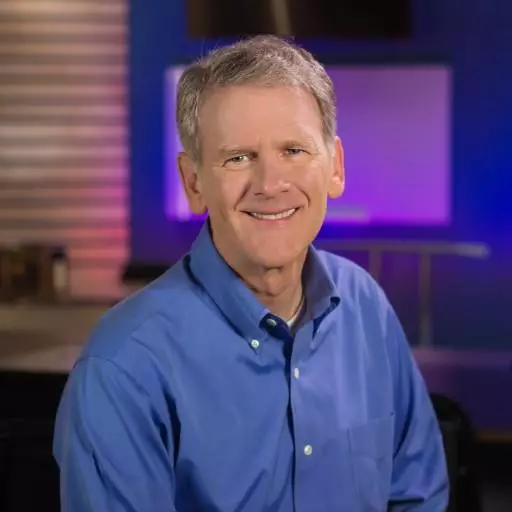
Pastor Bryan shares a message from Psalm 117. Dr. Chapell highlights how we are to go forth and preach the gospel, and to urge all nations to praise our God
Bryan Chapell: Worthy is the lamb who was slain because by your blood you purchased people for God from every tribe and language and people and nation. It's your goal, God, to get all peoples together so that one day every knee will bow and every tongue will confess that Jesus Christ is Lord.
Guest (Male): So glad you joined us for today's Unlimited Grace, the audio broadcast ministry of pastor and author Bryan Chapell. In today's episode, Pastor Bryan shares a message from Psalm 117. Dr. Chapell highlights how we are to go forth and preach the gospel and to urge all nations to praise our God. You can find this lesson and many others when you visit unlimitedgrace.com.
And while you're there, look for Pastor Bryan's book, The Multi-Generational Church Crisis. This compelling book asks the question of the church, what could be accomplished in the name of Christ if we could better understand each other? Let's hear now from Dr. Bryan Chapell as he shares the lesson, Song for All Peoples.
Bryan Chapell: The month that starts tomorrow will mark the one-year anniversary of the bombing of All Saints Church in Peshawar, Pakistan. A church not as large as ours, which on a Sunday morning had two Muslim suicide bombers enter, detonate the explosives, and kill 127 men, women, and children. 250 were wounded. Because it's an Islamic state, those who were Christians in that church were those who were the oppressed minority of that particular area.
There were not jobs for them apart from the jobs that nobody else wants, which meant most of the people in the church were garbage collectors. They made their money collecting and sorting garbage. There's no safety net for their wounds or their funerals. There were no social services. There was no one in the society to help them along. And so the Monday, the day after the bombing, the people of the church came back.
And they gathered the Sunday school papers that had been spread by the bomb. And they gathered the shoes of the children murdered and wounded so that they could be used by others who needed them. And then they washed the walls of the blood of their families and friends. And as they did so, even the secular report said their wails of agony pierced the silence of the indifferent neighborhood around them.
And then when the walls were clean, they arranged the pews and sat and began to sing songs of praise to God. Why? Because they remembered their charter. The church established over 100 years before had said from its outset, this church is to be a witness for Christ in a major Islamic city. They believed that they truly would do what the psalmist had said so long ago, that they would enthrone Christ in the praises of his people.
That they would be a witness to the greatness and the goodness of their God, particularly in the face of tragedy. If they would continue to praise him in the midst of agony and oppression so that all the world could see, our God is not going to be stopped by this. Our praises will not be stopped by this. Because our God and his love and purposes are eternal. How could we keep from singing? Because we know the purpose of our praises, to enthrone the glory of our savior.
It's what this psalm is all about, Psalm 117, talking so clearly about what our calling is. We are to praise our God. It's right there at the beginning in the first verse. Praise the Lord, all nations; extol him, all peoples. What we may not see is the emphasis with which the psalmist is writing. In our English Bibles, it's "Praise the Lord." It's a word you know. It's just "Hallelujah."
Except in this particular place, and only other three other places in the Bible, this "Hallelujah" is in the long form. "Hallelujah Yahweh." As though the psalmist is saying with peculiar emphasis and force, "Praise the Lord. Don't miss this. Don't miss this focus." And you get the emphasis in the expanse of the praise. "Praise the Lord, all nations." Now again, it just goes by in our worship tradition, but we don't understand how strange it must have been for the Jews to say, "Praise Yahweh, our God, all nations."
Because that word for nations is talking about the geopolitical states, the way people draw on the maps, the line of a country and designate nations. But for Israel, the word nations just doesn't mean a political entity. It means our enemies. These were the goyim, the gentiles, the non-elect, the non-treasured people. We're the chosen people. And yet here they are being put and told right in their own prayer book that we are to urge all nations to praise our God.
And it's not just nations. Extol him, all peoples. This would be the Hebrew word not just for nation-states, but for people of different ethnicities, different tribes and races and backgrounds. And for Israel, that meant those who were unclean, those who are not part of our people. And yet the expression of what the psalmist is doing is saying, I will remind my people that from the very beginning, it was God's plan to use their blessing to be a blessing to the nations.
And so the reason that he is saying we are to praise him with such expanse is that there is to be an expectation that the God of Israel will one day be praised by the whole world. It is, after all, what the apostle Paul would do later when the church gathered in Rome and gentiles began to believe in Jesus Christ, those from other nations and ethnicities. And they began to join Jews in worship at Rome. And the Jews began to get so upset. What are these other people doing coming into our church?
And Paul actually quotes this psalm to say it was the purpose of God from the beginning to have all nations give him praise. What this psalm is is just a foretaste of what we know is to happen at the end of the ages. You know, in our Unlimited Grace calling, we have talked about our desire to aspire to be a church who can early join the song of Revelation 5, that there will be that time that all nations gather together before the throne of Christ and they will say, "Worthy is the lamb who was slain. Because by your blood you purchased people for God from every tribe and language and people and nation."
It's your goal, God, to get all peoples together so that one day every knee will bow and every tongue will confess that Jesus Christ is Lord. And what we are doing when we welcome others, in some ways people not of the dominant ethnicity that is here, is we are saying we are joining with the Christians of the ages and of the world to be a part of the praise of God for something that's bigger than we are.
After all, when those Christians in Peshawar were singing praise to God, you recognize that they wanted their voices to touch their neighborhood, the very neighborhood that had bred the hatred that had resulted in the murder of their children. And still they are saying this praise is to touch every tribe, every language, every people, every nation. Friend or foe, we want all to know the wonder of our savior. Because that was the plan of God and we want to be in the purposes of God.
Why would we sing such praises? Verse 2 simply gives the cause of the praise. For great is his steadfast love toward us and the faithfulness of the Lord endures forever. Steadfast love. It's the Hebrew word hesed, which means covenant love. Not just affection, not romantic love, but love that is based upon the prior commitment of another that's not going to be conditional. It's not contractual. It's not I'll love you if you love me.
It is the steadfast love of the Lord that never ceases. As God is saying, I am to be praised for a love that's not based upon your praising me well enough, not by your life's action, not by your performance, not by your doing, but upon my love for you that's based totally upon my mercy. And that's why the psalmist continues. Not only do we praise God for his steadfast love, but for the faithfulness of the Lord. Now, I recognize in some of your translations it says the truth of the Lord.
And the word truth there is not about what's true or false. It's not about what's accurate. The word truth there means something that's true to its word. When God is identifying himself as truthful here, you have to say, how is he being true to his word? By having a plan for the nations and all peoples. After all, how did God establish the nation of Israel? Did he pick them because they were the best and the nicest people?
No, he said, you're the most stiff-necked, awful people. So I'm going to choose you so it will be obvious how great is my mercy. And it's that faithfulness to his word that God is identifying and reminding the Jews that when they were established as a people, what after all did God say to their forefather Abraham? I will make you a father of many what? Nations. I will make you a father of many nations.
And then saying to Abraham, all the nations of the earth shall be blessed through you. If God is to be true to his word, then his faithfulness is going to extend far beyond the Jew. His faithfulness will touch many and it will not be based upon anybody's qualifying, not upon their performance, not upon their goodness, not upon their merit, but entirely upon his steadfast love and his wondrous faithfulness.
And we recognize there would be every reason in our lives for God to turn his back and walk away. But as far as the east is from the west, so far has he removed our transgressions from us. As high as the heavens are above the earth, so great is his love toward us. Why? Because of his steadfast love and his faithfulness. He's been true to his word. And that is the message of the church that's supposed to ignite praise in us.
And just so that it will, the psalmist actually puts words in front of those. He says, for great is his steadfast love. The word great there is not talking about big. It's talking about powerful. Mighty is the Lord's covenant love. It's overcoming barriers. It's moving past people's sin. It's moving past their prejudice. It's moving past their bias. It is mighty covenant love.
And then the psalmist says in addition, and the faithfulness of the Lord endures forever. It's unstoppable and it's endless. And it's this understanding that makes our hearts want to sing. To say, I recognize there are all kinds of barriers in my sin, in the hatreds and antipathies of others, in the hardness of others' hearts, in the differences among nations. But we believe that God has a promise that is in essence a prophecy that will come true.
That he has said he would be true to his word. And his word was that Abraham would be a blessing to the nations. And therefore, as we are praising God, we are adding our voices, our song to the means by which God is going to reach the world for his son in love and mercy for the sake of those who deserve it not at all.
Guest (Male): You're listening to Unlimited Grace, the audio broadcast ministry of Pastor and author Bryan Chapell. It may seem hard for younger Christians to believe, but people over 50 were raised during an era when 90% of Americans identified as Christian. These older believers were once part of a majority group that understood the mission of the church was to take control of our culture, to halt its evils. At the same time, Christians under 50 have lived their entire lives perceiving themselves as a minority that needs to make credible their faith to a secular, pluralistic culture.
These distinct experiences and perceptions have a profound impact on the priorities different generations have for church ministry. It's no wonder that younger and older believers don't always see eye to eye. In his new book, The Multi-Generational Church Crisis, Dr. Bryan Chapell asks the question, what could be accomplished in the name of Christ if we could better understand each other? This practical and hopeful book is backed by thorough research, revealing how to open the lines of communication, appreciate the experiences that shaped each generation in your church, and unite in one mission to impact your community and the world.
You can request your copy of The Multi-Generational Church Crisis when you donate online at unlimitedgrace.com or by calling 844-4-GRACE. That's 844-414-7223. And now more from Bryan Chapell on today's Unlimited Grace.
Bryan Chapell: I recognize that everything in us fights the truth of this. In our hearts, we say, but if the people around me knew this about me, if God himself ever holds me accountable for, there is no way that his love will apply to me, that his grace will help me. And that is why the psalmist is so definite in saying, but great, mighty, and powerful is the steadfast love of God and his faithfulness without end.
So that we will not base his love upon our affection. We will not base his purposes upon our performance, but will simply say, praise God for how great and marvelous and majestic is his mercy. If we begin to recognize what that is about, I will say again, everything around us fights its truth. Is it really true? Could we say in our age that we believe that God is faithful to his people? That his purposes don't end? After all, you must recognize the horrors of the church in the age in which we live.
Next month will also mark the one-year anniversary of what has now become a famous speech by a cardinal in New York. Some of you know who was raised here in the Midwest. And in that time, Cardinal Timothy Dolan simply said we have reached a new age of Christian martyrdom. And he cited a year ago in New York City over a million Christians that could be identified as having been slain in this last decade, since this century began. We have entered a new age of Christian martyrdom.
So is God's steadfast love enduring? Is his faithfulness continuing? I mean, that was said before the events of this last year. For many of you in this room, you were raised at a time that I was, that we simply took for granted that the greatest challenge to Christianity were going to be communist countries and the communist philosophy. I must tell you, that is now just passé. The two communist nations that are the greatest threat to Christianity right now are North Korea and Vietnam, small nations.
The threat to Christianity is not coming out of formerly communist nations. The greatest threat to Christianity is coming out of the Muslim world. And as hard and politically incorrect as that is to say, we have to say how can we say that as believers and still have the praise of God and the purposes of God in our hearts? I mean, you take a place right now like Southern Sudan. Some of you know an election a year ago, Southern Sudan became a nation. Four million primarily Christians whose economy and lifeline is still controlled by an Islamic government in Northern Sudan, who is currently orchestrating a famine in Southern Sudan.
Those who study it say that there will be 50,000 Christian children who die by Christmas. It is a genocide of starvation. And of course, we don't hear about that so much because Sudan is not particularly critical to the US interest or economy. But where there is great interest, you recognize even the news should tell us how difficult it would be right now to affirm the faithfulness of the Lord endures forever.
British historian Tom Holland simply writes these words, what is happening in the Middle East is the virtual extinction of Christianity from its birthplace. You hear bits and pieces, we hardly ever put it all together. What's happening in Iraq, for instance? Some of you may remember just a couple of weeks ago when the Yazidi cult, driven out by ISIS, so that's the Islamic State of Iraq and Syria, as they moved into Northern Iraq, they moved out the Yazidi.
Now, the Yazidi is a cult group and they were driven to the Sinjar Mountain. And you read the terrible accounts of what was happening there as people were being starved and parched to death. Ultimately, there were supplies sent by the United States, but prior to that time, the conditions were so horrible that the people who were on the mountain knew that their children would die in hours, some of them.
Some of them knew if their children got into the hands of the ISIS soldiers, that terrible things would happen. They threw their own children from the mountain rather than let them be taken. We read about the Yazidis. What we did not read was that there were dozens and dozens of Christian families there too. And that's just a piece of the story. What is happening in Iraq? Some of you of course recognize that what is happening in Iraq is that ISIS is there in force. A third of Iraq now is controlled by ISIS.
As they moved into Mosul, and you hear it on the news and you think, where in the world is that? Okay, think the land of Jonah and Nahum. Those biblical people and biblical lands. What has happened as ISIS has moved into Mosul? The soldiers have come with clear orders. We have them in our own intelligence. Burn all business selling cigarettes or liquor. Burn all churches. Take all money and food. Behead all Christian men. Take their women; they are yours.
The reality if you just back away from the incidents and take the big picture, when the United States entered Iraq now more than a decade ago, 1.2 million Christians in Iraq. Now less than 200,000 and most of them are refugees in dire circumstances. Our brothers and sisters in Christ. And that's just Iraq. Some of you know that in Syria, where also ISIS is having strong influence, but there's also a civil war that's going on.
Before the civil war, 10% of Syria was Christian. Now very few Christians remain at all. They basically all been driven out into the refugee camps into surrounding nations. Palestine makes our news, particularly as the rocket attacks from Hamas happen. What do you know about Palestine? Did you know that 1.2 million Palestinians are Christian? Basically they've been spread throughout the world. And because of the conflict with Israel, because of Hamas, because of what's happened there for the last two decades, very few Christians remain in Palestine.
There are some. You know, Abu Daoud was here teaching in our church just a few weeks ago, a Christian Palestinian. As he is here, what is he doing? He's reminding us of our brothers and sisters who are standing for the Lord, singing praises in the most hostile places of the world so that God in Christ Jesus will be enthroned in the praises of his people. As they are being reminded and reminding others, this world is not the full picture. Our God is about eternal purposes and we exist through the persecution and through the oppression and through the difficulty that God may be known.
Guest (Male): That's Pastor Bryan Chapell, and you've been listening to Unlimited Grace. If you've been blessed by this message and would like to hear more from Dr. Chapell, I would encourage you to visit unlimitedgrace.com. Please be sure to join us next time as once again we endeavor to put Christ at the center of our efforts so that lives might be transformed by his unlimited grace. This ministry is brought to you by Unlimited Grace Media and continues to be made possible with your generous financial support.
Featured Offer

In Bryan Chapell's book, you will learn how God's unlimited grace leads us to heartfelt obedience and transforming joy. Explaining why grace is important and giving us tools to discover it in all of Scripture, Unlimited Grace helps us to see how gospel joy transforms our hearts and makes us passionate for Christ's purposes.
Past Episodes

Featured Offer
In Bryan Chapell's book, you will learn how God's unlimited grace leads us to heartfelt obedience and transforming joy. Explaining why grace is important and giving us tools to discover it in all of Scripture, Unlimited Grace helps us to see how gospel joy transforms our hearts and makes us passionate for Christ's purposes.
About Unlimited Grace
About Bryan Chapell
Bryan Chapell, Ph.D. is the Stated Clerk Pro Tempore of the Presbyterian Church in America (PCA), based in Lawrenceville, GA.
Dr. Chapell is an internationally renowned preacher, teacher, and speaker, and the author of many books, including Each for the Other, Holiness by Grace, Praying Backwards, The Gospel According to Daniel, The Hardest Sermons You’ll Ever Have to Preach, and Christ-Centered Preaching, a preaching textbook now in multiple editions and many languages that has established him as one of this generation’s foremost teachers of homiletics.
Dr. Chapell is passionate about sharing the truth of God's grace with others, because it provides the freedom and fuel for transformed lives of joy and peace.
He and his wife, Kathy, have four adult children, a growing number of grandchildren, and lives rich with friends, fishing and faith.
Contact Unlimited Grace with Bryan Chapell
info@unlimitedgrace.com