


Snakes The Eat Gods


Pastor Bryan shares a message from Exodus 7. Dr. Chapell outlines the demonstration of God’s power through Moses that lead to the hardening of Pharaoh’s heart
Bryan Chapell: Their hardened hearts are actually what is causing them not to listen to the word of God. A hardened heart is making them hard of hearing to what God himself is saying. And that’s more what is unfolding here.
Guest (Male): So glad you joined us for today’s Unlimited Grace, the audio broadcast ministry of pastor and author Bryan Chapell. In today’s lesson, Pastor Bryan shares a message from Exodus chapter 7. Dr. Chapell outlines the demonstration of God’s power through Moses that leads to the hardening of Pharaoh’s heart.
You can find this lesson and many others when you visit unlimitedgrace.com. And while you’re there, look for this wonderful resource from Dr. Chapell, Holiness by Grace. In this book, Pastor Bryan will guide you through reassuring scripture passages to discover how works and obedience are not a means of establishing or maintaining salvation, but a grateful response to God’s mercy. Let’s hear now from Dr. Bryan Chapell as he shares the lesson, Snakes That Eat Gods.
Bryan Chapell: The gingham dog and the calico cat, side by side on the table sat. It was half past twelve, and what do you think? Not one or the other had slept a wink. The old Dutch clock and the Chinese plate appeared to know as sure as fate there was going to be a terrible spat. The gingham dog said, "Bow-wow-wow," and the calico cat, "Meow."
They wallowed this way and tumbled that, employing every tooth and claw in the awfulest way you ever saw. And oh, how the gingham and calico flew. Next morning, where the two had sat, they found no trace of dog or cat. And some folks think until this day that burglars stole that pair away, but the truth about the cat and pup is this: they ate each other up.
Now what do you think of that? And what do you think about Exodus 7, where there is this delightful account of a staff becoming a serpent, and then more staffs becoming a serpent, and then the one eats up all the others? It's what the moviemakers love and the storytellers love to talk about. It’s delightful to think about until you consider what is actually happening in the heart of Moses and his people.
God does something amazing. He gives Moses the staff that becomes a serpent, and then the Egyptian magicians can do the same thing. And seeing that they can, Pharaoh, whose heart is supposed to be made tender by the miracles, actually becomes harder against the purposes of God. And not just harder, but madder and meaner.
Even when the staff of Aaron eats up the serpents, Pharaoh just thinks, "Another trick, another parlor game, a little magic show combined with a zoo act." And so he does not listen. The consequence for the people of Israel and surely Moses is that they will just get more and more frightened of the condition they're in.
After all, the very first time that Moses threw down his staff at God's order and it turned into a snake, Moses cried, "Snake!" and he runs away from it. And then when the magicians can produce snakes as well, not only do they know Pharaoh won’t care about them, but he is bound to have more and more consequence toward them in terms of his anger.
It is a lesson for us, a reminder that we sometimes, when God begins to work, can lose heart because it doesn't seem he's accomplishing everything that he should in the very first round. We look at a boss who’s not been changed because of our testimony, a child who continues to be wayward despite the way we raised them or what we try to say in the phone calls long distance now.
Or we look at family members that we love, even a spouse who will not listen to the things that we are saying out of faithfulness to the Lord. What Exodus is saying is the first round is not the end of the fight. There are ten plagues coming, and God is saying, "I'm in for all ten rounds." And for that reason, we do not lose heart, even when we face hard hearts.
What, after all, are we supposed to be learning from Exodus 7? What is God teaching us? First, that God himself can harden hard hearts. It's a simple message in verse three: "I will harden Pharaoh's heart, and though I multiply my signs and wonders in the land of Egypt, Pharaoh will not listen to you." We know that God can do that. Our question, if we're being honest, is: is that fair?
I mean, is it right for God to harden a person's heart? It’s been a question that Christians have struggled with through centuries, not just in this moment. I can remember my very first class in seminary, and we had the privilege of having R. Laird Harris, one of the great theologians of the last century, and we were just going straight through the Bible, lesson by lesson.
R. Laird Harris was the author of the Theological Wordbook of the Bible, a textbook that’s gone across the world. In early life, he was actually a chemical engineer, and then the Lord called him out of engineering and into ministry. And yet he still had that very fine mind and very particular mind, and yet at the same time, he was such a humble spirit.
I mean, as sophisticated and knowledgeable as he was, if you ever sat in his class, you would say, "There is just very simple faith here and honest." So when we got to this chapter, he just said to us, "I struggle with this too. God hardening a man’s heart." He said, "I struggled for years to try to figure out how this could be and how it could be right."
And then he said, "I came to this conclusion, and it's just stuck with me: God only hardened a heart that was already hard." To think about the fairness of that, you have to look both backward and forward in the account. What do you know about Pharaoh already? This is not exactly an innocent.
He has put the people of God under slavery. He has tried to practice ethnic cleansing—kill all the baby boys, let the girls live. He has ordered bricks without straw. His oppression becomes harder and harder. And now God says, "I'm going to harden his heart, and he will not listen."
We have to say, what is the purpose of that? I mean, if God sees this hard heart, isn't it his obligation to break it? The evidence of Pharaoh's hardness, of course, and the consequence of it are both in those opening verses. "I will harden Pharaoh’s heart, and he will not listen." We know he won't listen despite the fact that Moses does miracles.
And you might say, well, Pharaoh had a reason not to listen. After all, his hardworking magicians keep up with the very work that Moses does. Moses makes a serpent; they make a serpent. Why would you change your opinion if you were Pharaoh? It's not just something that’s mystery and magic in the Bible.
Some of you use the Good News book for your daily devotionals, and there was actually a commentary on that a little while back in which there were those who were identifying what many of the art pieces in ancient Egypt signify. They actually show serpents in the shape of a cane.
And the reasoning is that the Egyptian sorcerers learned how to put a crick in the neck of a serpent so that it became paralyzed and straight. And then they would know how to throw it to the ground and it would become an active serpent again, and the people were awed and amazed by that. Is that what's happening here? Well, maybe.
It is possible that it's plain demonic power, that God simply has let people proceed in such a way that they are going to face the consequences of their own sorcery. I mean, recognize that even Jesus in Matthew 24 tells us that in the final days, there will be false Christs and prophets who come who will do great signs and wonders so that, if it were possible, even the elect would believe.
We begin to understand that there is great power and wonder that can be on display, but that does not necessarily prove it is godly. We are urged as the people of God not just to watch for the signs and the miracles and say, "Well, it must be of God," but to listen. If even Satan can appear as an angel of light, then evaluate what is being said according to the Word of God.
And as a consequence, we recognize when people do not do that, their hardened hearts are actually what is causing them not to listen to the word of God. A hardened heart is making them hard of hearing to what God himself is saying. And that’s more what is unfolding here. That we see Pharaoh’s hard heart, meaning that he will not even listen to the God of Moses who is over and over again tapping on his door and saying, "Listen, listen, listen."
And it is actually those plagues that are the way in which God is trying to wake him up, to break his heart at the right moment and at the right time.
Guest (Male): You're listening to Unlimited Grace, the audio broadcast ministry of pastor and author Bryan Chapell. God instructs us in his Word to be holy as he is holy. How can God expect us to be as holy as he is? Such a standard seems either to ignore our frailty or to impose certain failure. That is, until we understand how God views us.
In this challenging yet heartwarming book, Holiness by Grace, Dr. Bryan Chapell illustrates the principles of grace, the practices of faith, and the motives of love in living a life of holiness. Pastor Bryan will guide you through reassuring scripture passages to discover how works and obedience are not a means of establishing or maintaining salvation, but a grateful response to God’s mercy.
Holiness by Grace draws straight from the heart of God as Pastor Bryan’s encouraging words will help you understand that your holiness is not so much a matter of what you achieve as it is the grace that God provides, a grace so rich as to make the pursuit of his holiness your soul’s deepest delight. You can request your copy of Holiness by Grace when you go online to unlimitedgrace.com or by calling 844-41-GRACE. That’s 844-414-7223. And now, more from Bryan Chapell on today’s Unlimited Grace.
Bryan Chapell: There are people who say, "Well, it's no wonder that Pharaoh didn't listen. I mean, these are just natural phenomena." And by the way, for a while, his magicians can keep up with it. They keep doing whatever Moses—for a while. And the natural phenomena has some explanation. First plague, Nile turns to blood. People say, "Well, that's just an algae bloom, red tide."
And then there’s frogs that begin to go across the land. Well, the frogs are getting out of the red tide. And then flies everywhere because the fish die and the frogs die. It makes perfect sense. It’s just natural phenomena. Is it? What should Pharaoh actually have noted and seen? There's an intensification of the natural phenomena.
What is actually happening as God by Moses is showing, "I’m the God above all your gods"? You have gods of river and land and life, and what is God ultimately saying as he intensifies the plagues? "I’m the God of the river. I’m the God of the land. And ultimately, I’m the God of life itself, and your magicians cannot overcome me."
This first little step of the serpent that comes from the staff of Aaron and eats all the other serpents is supposed to be indication to Pharaoh and the people of God that the God of Israel is going to consume all of your gods. No one stands a chance against him. No one can stand up to him. There's not merely intensification; there is prediction.
Yes, was there some degree of natural phenomena? I don’t know, but the miracle surely was that Moses begins to predict it before it happens. And not only does Moses predict it, it does not affect the people of Israel, only the Egyptians. Something more than natural phenomena is happening, something supernatural is happening, and ultimately there is this orderliness that the Egyptians would have known.
The weaker gods of the river, they’ve been overcome. The land gods that affect the crops, they’ve been overcome. And ultimately the gods that are supposed to protect our lives and our firstborn, they have been overcome too. Pharaoh should listen, but he does not. Why? Because his heart is hard. And when your heart is hard, you become hard of hearing to God.
That's not just for Pharaoh. That’s why the writer of Hebrews will pick it up later and say, "Today, if you hear his voice, harden not your hearts." I recognize the consequence, you do too. There are times when there's been some avenue of my life that I want to seal off and say, "I don't want to listen to the Lord in that. I’ve got reason or I’ve got upset enough that I don't want to hear the Lord on that just now."
And I recognize if there have been critics or those who have been on attack against me or my family, that I want to, as it were, defend my bitterness, allow my unforgiveness, and then not recognize how that being hard of hearing to the Word of God hardens my heart. When my family needs forgiveness, when there are close ones to me who have not met my expectations and I allow the hard-heartedness to grow.
It’s what happens when you’re hard of hearing to God's Word. The hardness of heart just increases. It happens in so many dimensions of our lives. The man who ignores the Word of God, turns a deaf ear to his standards, and so continues in an affair. And as a consequence, does not even hear the cries of his children and the consequences for his family long-term and perhaps for generations.
The hard heart has made him hard of hearing and made life even harder for others. A woman so concerned for the idolatry of keeping up appearances with peers that she does not hear her husband's frustration and desperation to say, "Honey, I just can't keep up with you in what you require to be happy."
A church so accustomed to its own interests that it does not hear the cries of the poor and the refugees, so that ultimately when there are the cries of children in our nation separated from their families, we don't even hear it, though the First Lady in the White House does.
A young person so callous, hardened to God’s standards for purity, that entertainments and dating practices get sealed off in their hearts, and they no longer hear the Word of God saying, "The reason I have called you to purity is because of the wonder of love that you will have in its expression in marriage if you have not spoiled it."
But we don't want to hear that, and so we seal off that dimension of God’s Word, become hard of hearing to it, not recognizing it just makes us harder and harder and harder, not only to hearing the Word of God, but to being sensitive to those that God intends for us to influence.
It’s actually what is happening here. We’re learning not only that God can harden a human heart, but he does so for a purpose. In Pharaoh, we recognize the purpose. It’s ultimately God hardening Pharaoh's heart so much over the course of the plagues that it finally becomes brittle and breaks. "Okay, just go." And they only asked for three days.
He said, "Go forever. And not as slaves. Take whatever you need from Egypt. Plunder us if you must. Just get out of here." And Israel leaves, no longer slaves, but rich in the resources they will need to establish the land and the people to which God has called them. God is using Pharaoh's hardness beyond what he could have imagined.
If you think about Pharaoh’s hardening, we know the reasons—verse five. God's explaining to Pharaoh, "The Egyptians shall know that I am the Lord." If after the very first round of the fight, the duel between God and Pharaoh, Pharaoh had simply said, "Okay, go ahead, you can go," no one would have heard. There would have been no impact upon him or the nations.
But there is a progress in what is happening here. Verse five: "Pharaoh, I want you to know." Verse ten: "So Moses and Aaron went to Pharaoh and did just as the Lord commanded. Aaron cast down his staff before Pharaoh and his servants." Not just Pharaoh sees; others see.
By the time you get to chapter nine, God actually says to Pharaoh, "The reason that I've appeared before you with these great acts of judgment is so that the earth may know that I am the Lord." Israel is about to leave. God knows that. He also knows they are going to face great opposition in the nations and the armies that are between them and the promised land.
But now the reputation begins to precede them. "These are the people that conquered Pharaoh. This is the God that overcame all the gods of Egypt." And as a consequence, you recognize many simply try to negotiate rather than fight with Israel. There are some fights, we know that, but they are fights from people already afraid of the God of Moses.
You think of the words of Jeremiah as he is saying what is actually happening with the hard heart of Pharaoh. Jeremiah said, speaking for the Lord, "Is not my word like a hammer that breaks a heart in pieces?" Pharaoh’s heart becomes hard so that ultimately God can break it. What God is doing through Pharaoh is he is showing God's power.
But as much as we focus on the life of Pharaoh, you must recognize there's another hard-hearted man on display in this chapter. Who is the other hard-hearted man? That's Moses. What do you remember about Moses? Murderer. Raised his children in pagan customs before he goes back to Egypt.
When God calls him out of the burning bush, his response: "Hear my Lord, send Aaron." He's a coward. And when it does not go very well in the opening minutes of the battle, it is Moses who says, "God, you are evil." He blasphemes God himself though he is the called deliverer. Moses himself is demonstrating hardness, but in a very different way.
Ultimately what we begin to understand is while Moses has had hardness in his heart in life, he's listening and changing and being transformed. Verse six: "Moses and Aaron did as God said, they did just as the Lord commanded them." He's listening. And as he's listening, his heart is changing.
So many things he's done wrong, but now he's starting down a better path, starting down a better course. He'll say it over and over again, the writer will, "Moses listened." Pharaoh's hard-hearted, he won't listen. Moses is a murderer, a coward, a blasphemer, a pagan practicer, but he listened.
What is God showing us here? Not only that he has power to overcome, but he has mercy to claim. Moses is being mercifully claimed by God. And God is going to keep that message going for his people through all the ages. "I have power to warn, I have power to judge, but remember, I also have the mercy to claim."
Guest (Male): That's Pastor Bryan Chapell, and you've been listening to Unlimited Grace. If you've missed anything that you'd like to hear once again, just visit unlimitedgrace.com. And when you do so, you can sign up for Pastor Bryan’s daily devotional sent right to your inbox.
Please be sure to join us next time as once again we endeavor to put Christ at the center of our efforts so that lives might be transformed by his unlimited grace. This ministry is brought to you by Unlimited Grace Media and continues to be made possible with your generous financial support.
Featured Offer
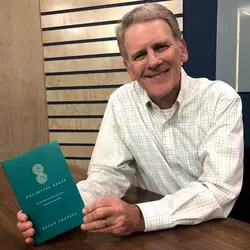
In Bryan Chapell's book, you will learn how God's unlimited grace leads us to heartfelt obedience and transforming joy. Explaining why grace is important and giving us tools to discover it in all of Scripture, Unlimited Grace helps us to see how gospel joy transforms our hearts and makes us passionate for Christ's purposes.
Past Episodes

Featured Offer
In Bryan Chapell's book, you will learn how God's unlimited grace leads us to heartfelt obedience and transforming joy. Explaining why grace is important and giving us tools to discover it in all of Scripture, Unlimited Grace helps us to see how gospel joy transforms our hearts and makes us passionate for Christ's purposes.
About Unlimited Grace
About Bryan Chapell
Bryan Chapell, Ph.D. is the Stated Clerk Pro Tempore of the Presbyterian Church in America (PCA), based in Lawrenceville, GA.
Dr. Chapell is an internationally renowned preacher, teacher, and speaker, and the author of many books, including Each for the Other, Holiness by Grace, Praying Backwards, The Gospel According to Daniel, The Hardest Sermons You’ll Ever Have to Preach, and Christ-Centered Preaching, a preaching textbook now in multiple editions and many languages that has established him as one of this generation’s foremost teachers of homiletics.
Dr. Chapell is passionate about sharing the truth of God's grace with others, because it provides the freedom and fuel for transformed lives of joy and peace.
He and his wife, Kathy, have four adult children, a growing number of grandchildren, and lives rich with friends, fishing and faith.
Contact Unlimited Grace with Bryan Chapell
info@unlimitedgrace.com