

Remembering Dust - Part 2


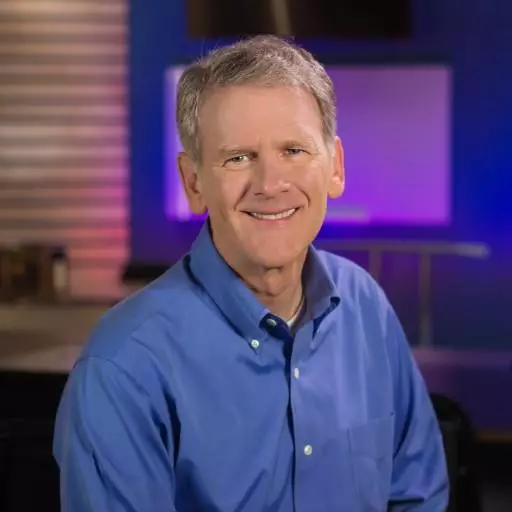
Pastor Bryan continues his message from Psalm 103. In this lesson, Dr. Chapell illuminates the path to knowing the blessings of God, and celebrates the Lord’s declaration of His nature to us.
Bryan Chapell: So far has he removed our transgressions from us. You just can't hold it in. You can hardly fathom it. Cheer up. You're worth than you think you are. And the gospel is better than you can imagine. As far as the East is from the West, so far has he removed our transgressions from us.
Guest (Male): So glad you joined us for today's Unlimited Grace, the audio broadcast ministry of pastor and author Bryan Chapell. In today's episode, Pastor Bryan continues his message from Psalm 103. In this lesson, Dr. Chapell illuminates the path to knowing the blessings of God and celebrates the Lord's declaration of His nature to us. You can find this lesson and many others when you visit unlimitedgrace.com. And while you're there, look for Pastor Bryan's book, The Multigenerational Church Crisis. This compelling book asks the question of the church: What could be accomplished in the name of Christ if we could better understand each other? Let's hear now from Dr. Bryan Chapell as he shares the second half of the lesson, Remembering Dust.
Bryan Chapell: Let me ask that you would look in your Bibles this morning at Psalm 103. Psalm 103, and to remind you as we are going through the Psalms, the Psalms themselves are compiled from different times of Israel's history. And in this, the fourth book, we have a collection of Psalms intended for God's people in a time of trial and exile. As a nation, they have been separated from their land, smashed by an enemy. How do you praise God at such a time? This is one of the most well-known and beautiful Psalms as it speaks to a sinful people about a compassionate God, whose mercies never fail.
Let's stand as we read Psalm 103.
Bless the Lord, oh my soul, and all that is within me, bless His holy name. Now that's what I want to sink into your hearts today. Can you just repeat these phrases as I say them? Bless the Lord.
Guest (Male): Bless the Lord.
Bryan Chapell: Oh my soul.
Guest (Male): Oh my soul.
Bryan Chapell: And all that is within me.
Guest (Male): And all that is within me.
Bryan Chapell: Bless His holy name.
Guest (Male): Bless His holy name.
Bryan Chapell: Amen.
Verse 2. Bless the Lord, oh my soul, and forget not all His benefits, who forgives all your iniquity, who heals all your diseases, who redeems your life from the pit, who crowns you with steadfast love and mercy, who satisfies you with good so that your youth is renewed like the eagles. The Lord works righteousness and justice for all who are oppressed. He made known His ways to Moses, His acts to the people of Israel. The Lord is merciful and gracious, slow to anger and abounding in steadfast love. He will not always chide nor keep His anger forever. He does not deal with us according to our sins, nor repay us according to our iniquities. For as high as the heavens are above the earth, so great is His steadfast love toward those who fear Him. As far as the East is from the West, so far does He remove our transgressions from us.
As a Father shows compassion to His children, so the Lord shows compassion to those who fear Him. For He knows our frame. He remembers that we are dust.
We'll finish the Psalm and the message itself. Let's pray together for this portion that we have read.
Bless the Lord, oh my soul. And all that is within me, bless His holy name. Father, I would pray this day that those words would by the end of the service be able to resonate from all. Those who struggle with the circumstances that have crushed them. Those who struggle with the sin that even now attracts them. Teach them of a God whose steadfast love endures and is more powerful than the evil and the hurt of this world. Grant that we may rejoice in a Psalm whose very intention was to give people hope in a hard time. You put this here by Your Holy Spirit for our comfort and strength. So work by Your Spirit in our hearts we pray. In Jesus' name, amen.
Please be seated.
The Lord is merciful and gracious, slow to anger and abounding in steadfast love. Now, those words may be so familiar to you that their significance has been lost to you. I mentioned in the introduction of our service, this is the most common way that God identifies Himself in the Bible. I am merciful and compassionate, gracious, abounding in love. Where does that come from? Exodus 34. If I mention the events, you will know them. God has given the Ten Commandments to His people.
As Moses is coming down Mount Sinai with the Ten Commandments, he hears a sound of partying. What are the people doing at the party? God's people are worshipping a golden calf. God has released them from Egypt. He's released them from slavery. And Moses comes down from the mountain where he's going to give them the blessed way that God tells them they should go, and what they are doing instead is committing immorality and worshipping a pagan god. You may remember Moses destroys the tablets. So God calls him back up the mountain. The Ten Commandments are written down again, and it's in Exodus 34 God says, "Write the Ten Commandments and declare who I am." The Lord, who is merciful and gracious, slow to anger and abounding in love.
It's not the only time it appears. Ten times in the Old Testament, this one verse is repeated. As though God is saying, "This is who I am. This is who I am. You didn't get it? This is who I am. This is who I am." It's like the spine that runs through the Bible, God's declaration of His own nature. "You can trust me. You can turn to me, because though you have been guilty of sin, even the sin of my people Israel, worshipping a golden calf right after I had delivered them, I am the God who redeems. There is hope for you again. There is restoration here. How do you know that? I am merciful and gracious, abounding in love." So I go to Him. That's, that's the confidence that I have. He's declaring constant care over and over again. And that care is expressed in, in just extravagant grace.
Again, as you kind of move through the passage and think how God is speaking to a people who are in exile, verse 10. God says about Himself, "He does not deal with us according to our sins, nor repay us according to our iniquities." Verse 12, "As far as the East is from the West, so far does He remove our transgressions from us." We covered this earlier in Psalm 32. Here all the dimensions of sin being mentioned: sin, the New Testament term is to miss the mark, as though God has given standards and we haven't kept them. But not just sin is covered, iniquity. That's the inside stuff. The covetousness and the lust and the anger and the bitterness. God says the stuff that's inside, "I cover that too." And then finally, transgression. This is not just missing the mark, it's not just keeping stuff inside. It's actually rebelling against God, crossing the standards that we knew, doing what we knew not to do. And God Himself is saying, "No, even as high as the heavens are above the earth, so great is my steadfast love toward those who fear me, as far as the East is from the West, so far has he removed our transgressions from us."
Maybe we need to deal with that word "fear" for just a moment. As high as the heavens are above the earth, so great is His steadfast love toward those who fear Him, says God in verse 11. "Wait, wait, you were talking about all this love that comes our way, and now you say that His love comes for those who fear Him." What does that mean? Because somewhere deep in us, we know that if we fear God enough, we actually cannot love Him. Some of you know what it means to be in abusive relationships. "You love me or I'll hit you." Well, I may obey you, but I can't love you if that's the condition. If, if God is simply threatening us in order to get us to love Him, we can't actually do it. The heart will not respond that way. So, so what is this fear that God is saying, "As high as the heavens are above the earth, so great is my love toward those who fear me?"
One of the great passages that helped me to understand that is Isaiah 11:2-3, the great prophecy of the coming Messiah. And there we are told that when the Messiah comes, He will come in the fear of the Lord. In fact, we are told He will delight in the fear of the Lord. Now, you know who that Messiah is, that's Jesus. And whatever you know intuitively about the relationship between God the Father and God the Son, you know it is infinite and perfect love. So what is that fear? It's, it's proper apprehension of all that God is. It's reverence, it's, it's proper regard. It's all He is. He's just and He's merciful. He extracts justice with wrath and extends compassion for those who turn to Him though they cannot make it right. He's all-powerful and all-good. And taking in that great circumference of all who God is, we fall on our knees in wonder and awe, and it's that sort of of reverential fear that God says, "I will take and love people as high as the heavens are above from the earth, when they really regard who I am. I am the God who is able to bless because I'm that powerful. And I'm holy. I only operate out of good motives." And when that is your regard for me, then blessings come.
Guest (Male): You're listening to Unlimited Grace, the audio broadcast ministry of pastor and author Bryan Chapell. It may seem hard for younger Christians to believe, but people over 50 were raised during an era when 90% of Americans identified as Christian. These older believers were once part of a majority group that understood the mission of the church was to take control of our culture, to halt its evils. At the same time, Christians under 50 have lived their entire lives perceiving themselves as a minority that needs to make credible their faith to a secular, pluralistic culture. These distinct experiences and perceptions have a profound impact on the priorities different generations have for church ministry. It's no wonder that younger and older believers don't always see eye to eye.
In his new book, The Multigenerational Church Crisis, Dr. Bryan Chapell asks the question: What could be accomplished in the name of Christ if we could better understand each other? This practical and hopeful book is backed by thorough research, revealing how to open the lines of communication, appreciate the experiences that shaped each generation in your church, and unite in one mission to impact your community and the world. You can request your copy of The Multigenerational Church Crisis when you donate online at unlimitedgrace.com or by calling 844-414-GRACE. That's 844-414-7223. And now, more from Bryan Chapell on today's Unlimited Grace.
Bryan Chapell: As high as the heavens are above the earth, so great is His compassion toward those who fear Him. I think that's, that's just one axis of God's dimension of covering the sin and the the iniquity and the transgression. But there's another dimension as well, did you catch it? Those of you who are engineers, you know the Y-axis is now covered, right? Y to the sky, right? As high as the heavens are above the earth. But there's another axis that's covered as well. Do you see it? Verse 12. As far as the East is from the West, so far is He removed our transgressions from us.
You know, one of the things I love about being here in Central Illinois, you can travel to certain places on the highway, if you're going to Lincoln, if you're going to Springfield, that you can actually get to a certain place on the highway where you actually have a totally unencumbered view of both horizons. I mean, nothing in the way. And and you can look and see all the way to the East and all the way to the West and nothing between. And when you get to that place this week or this month, I, I want you just to do that. I want you to mark the East horizon and mark the West horizon and say, "As far as the East is from the West, so far has He removed my transgressions from me."
So far has He removed our transgressions from us. You just can't hold it in. You can hardly fathom it. Cheer up. You're worth than you think you are. And the gospel is better than you can imagine. As far as the East is from the West, so far has He removed our transgressions from us. And the wonderful proof of that is the Father's heart that is now speaking to us. Verse 13, "As a father shows compassion to his children, so the Lord shows compassion to those who fear him. For he knows our frame. He remembers that we are dust." Hey, only the worst fathers expect their children to act like adults.
And God is a perfect father, and He expects children sometimes to be children. He understands, which is why He provides His power and He provides His holiness, but He also provides His forgiveness. And He remembers that we are dust. You and I recognize that's a reference all the way back to Genesis that we are formed out of dust. But if He remembers we are dust, what does He know about us? We're messed up but we can be cleaned up, right? If we're dust, we can be awful messed up. But He's the Father who can clean us up if we are dust. Even to restore us. It's the gospel. The God is able to take what is dust and broken and smashed and ruined in so many ways and say, "But I'm a father who understands my children. I know they're dust, and I can restore them because I've made them."
God says, "Bless the Lord, oh my soul, all that is within me, bless His holy name. For He has done great things." And the rest of the gospel here is, "And He will do great things." Not just in the past, it's to come. Verse 15, "As for man, his days are like grass. He flourishes like a flower of the field, for the wind passes over it and it's gone. Its place is known no more." Hey, human effort just whithers away. But in contrast is the work of God. Verse 17. "But the steadfast love of the Lord is from everlasting to everlasting on those who fear him, and his righteousness to children's children." What we do fails. What God does endures. And what He does is love His children. And that endures to children's children. And the reason it does is because He is able to control what has to happen to make that so. Verse 19. "The Lord has established his throne in the heavens, and his kingdom rules over all." His love endures past time and trial, even generation upon generation. And yet at the same time He says, "And my rule is from the heavens." As though again, He is separate in His rule, in such a way that He's not upset, He's not surprised, He's not undone by what happens on the earth.
And so when He says He will maintain His love, and He will bless those who honor Him, we believe it because we know He is able to rule over all things. That becomes so important when things have come undone to us, and we wonder if these words actually apply to us. Verse 17, "The steadfast love of the Lord is from everlasting to everlasting on those who fear him, his righteousness to children's children, to those who keep his covenant, and remember to do his commandments." Now we struggle with that a bit. "Wait, you've told me all about this compassion that God has for those who fail. Now you say He will bless those who keep His commands, who walk in His ways." I hope you recognize what a good father God is. He is saying to those who fail, "I will love you still." But failure is not His desire. Sin and its consequences are not what He hopes. So He says at the very same moment, "I will forgive, and I will hold you, and I will help you." He says, "But here's a better path. Here are my commands. If you walk in these commands, if you walk in these ways, I who rule from heaven will bless your obedience." To children's children. Wow, what a promise. If you walk in my ways, though the world may assault you, though they may difficult in your life, I will bring about blessing generation to generation. And we trust that because God rules from heaven. He doesn't rule in the vagaries of earth. And for that reason, the heavens themselves rejoice.
Verse 20, "Bless the Lord, oh you His angels. You mighty ones who do His word, obeying the voice of His word. Bless the Lord all His host, His ministers who do His will. Bless the Lord all His works, in all places of His dominion. Bless the Lord, oh my soul." Did you catch the vastness? If God is ruling from heaven, if He is making His righteousness rule and His compassion touch generation upon generation, then the heavens themselves are rejoicing, the angels, the ministers of His word. I don't think that's me. I think those are the ministers who bring the word to the Old Testament saints. And all creation, and ultimately my soul. From heaven to my heart springs praise, and it's the path to knowing the blessing of God. After all, what good is it if the angels praise God and my heart can't? And so God is saying here, "Because you know that I am compassionate and gracious and rule over all, you can trust me, and you can return to me, and I can restore you. I have the power for that, as well as the heart to do it." And for that reason, we bless the Lord in our souls because He is good generation upon generation, not undone by time or trial. He is so great a God.
I think of the impact upon that blessing when life gets hard through the writings of Karen Tippetts. Some of you have followed Karen. She's the wife of a PCA pastor who has struggled with cancer. It claimed her in March of this year. Prior to that, her blog was being followed by tens of thousands of people because she was writing of life and its preciousness, even against those who wanted assisted suicide to be the course of some. And she kept talking about the preciousness of life even in the struggle, of a God who is compassionate and gracious, who is not bound by time or trial, whose blessings would go generation upon generation to children's children. She wrote what that meant in just the most private of terms. "My greatest prayer," she wrote, "is just to have more time with my children, to focus on their hearts and to shepherd them while I'm here. It's easy as a parent to want to press beyond where my children are. There are things I want to talk to them about, things I want to nurture them about, about godly relationships and godly living. And a five-year-old just doesn't understand that. So I realize I get to nurture them now and let them know me now, but then I get to trust them to a covenantal God, who's bigger than me, who's bigger than my story. And so, as I grasp for the moments, He has all of their moments for eternity, and I bless the Lord, who is the forever God of me and my children."
Bless the Lord, oh my soul. And all that is within me, bless His holy name. He forgives me and holds me, and by His sovereign rule blesses to children's children. Bless the Lord, oh my soul, and all that is within me, bless His holy name.
Guest (Male): That's Pastor Bryan Chapell, and you've been listening to Unlimited Grace. Please be sure to join us next time as once again we endeavor to put Christ at the center of our efforts so that lives might be transformed by His Unlimited Grace. This ministry is brought to you by Unlimited Grace Media and continues to be made possible with your generous financial support.
Featured Offer

In Bryan Chapell's book, you will learn how God's unlimited grace leads us to heartfelt obedience and transforming joy. Explaining why grace is important and giving us tools to discover it in all of Scripture, Unlimited Grace helps us to see how gospel joy transforms our hearts and makes us passionate for Christ's purposes.
Past Episodes

Featured Offer
In Bryan Chapell's book, you will learn how God's unlimited grace leads us to heartfelt obedience and transforming joy. Explaining why grace is important and giving us tools to discover it in all of Scripture, Unlimited Grace helps us to see how gospel joy transforms our hearts and makes us passionate for Christ's purposes.
About Unlimited Grace
About Bryan Chapell
Bryan Chapell, Ph.D. is the Stated Clerk Pro Tempore of the Presbyterian Church in America (PCA), based in Lawrenceville, GA.
Dr. Chapell is an internationally renowned preacher, teacher, and speaker, and the author of many books, including Each for the Other, Holiness by Grace, Praying Backwards, The Gospel According to Daniel, The Hardest Sermons You’ll Ever Have to Preach, and Christ-Centered Preaching, a preaching textbook now in multiple editions and many languages that has established him as one of this generation’s foremost teachers of homiletics.
Dr. Chapell is passionate about sharing the truth of God's grace with others, because it provides the freedom and fuel for transformed lives of joy and peace.
He and his wife, Kathy, have four adult children, a growing number of grandchildren, and lives rich with friends, fishing and faith.
Contact Unlimited Grace with Bryan Chapell
info@unlimitedgrace.com