

Remembering Dust - Part 1


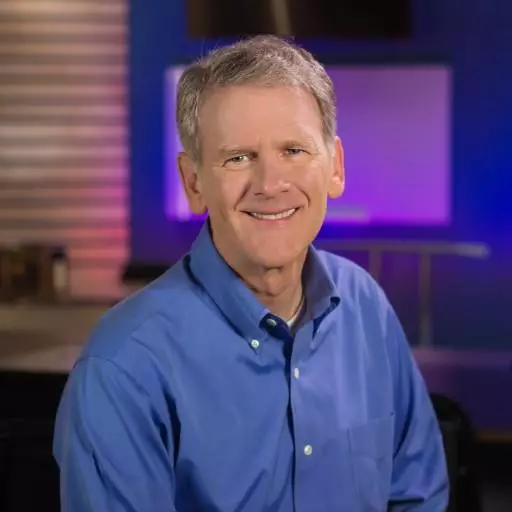
Pastor Bryan shares a lesson from Psalm 103. Dr. Chapell urges us to remember that God can restore what has been broken by the sin and circumstance of this world.
Bryan Chapell: For all its sin that crushes us, for all that is wrong about our circumstances inside and outside of us, God says, "My love is greater and it doesn't change." Bless the Lord, oh my soul, and all that is within me, bless His holy name, and forget not His benefits.
Guest (Male): So glad you joined us for today's Unlimited Grace, the audio broadcast ministry of pastor and author Bryan Chapell. In today's episode, Pastor Bryan shares a lesson from Psalm 103. Dr. Chapell urges us to remember that God can restore what has been broken by the sin and circumstances of this world.
You can find this lesson and many others when you visit unlimitedgrace.com. And while you're there, look for Pastor Bryan's book, The Multi-Generational Church Crisis. This compelling book asks the question of the church, "What could be accomplished in the name of Christ if we could better understand each other?" But let's hear now from Dr. Bryan Chapell as he shares the lesson, Remembering Dust.
Bryan Chapell: He dashed past the guards with a hammer in his hand. Laszlo Toth, a geologist with a broken marriage, a broken career, and a broken mind. Pushing his way through the crowds, he jumped over barricades and climbed onto Michelangelo's Pietà, the masterpiece in marble of Mary holding the crucified Jesus.
And Toth, believing that he was Jesus in his demented state, cried out, "I am Jesus!" And he began to attack with his hammer the statue that he believed was his rival. He smashed the face of Mary. He broke off her arm. He smashed the hand of Jesus before he was restrained. The masterpiece was broken.
And the nation of Italy believed it could never be made right, never be repaired. And as they faced the consequence of their masterpiece ruined, some began to cry out for the ruin of the demented man. "He broke the statue, break him. An eye for an eye!" But saner and softer hearts prevailed. And he was taken to a place where he could receive healing.
And if you would go to Italy now and look at Michelangelo's Pietà, you would recognize it has been remarkably restored. You would never have seen or noted that it had been hurt as badly as it had been. It's the message not just of a statue, but of the psalm. That what has been smashed by sin and circumstance can be restored.
It's why the psalmist begins with such wonderful extravagant praise, "Bless the Lord, oh my soul, and all that is within me, bless His holy name." It's happened here, it really has. We've seen it. We have seen lives that have been smashed by divorce and addictions and disgrace made right again, fixed, restored, made whole.
And it's what the psalmist is saying God can do for a people who are broken and writes it down for us. So that when we face the brokenness, we recognize a God who can restore as well. What's the path to such restoration against all the improbabilities of our world and its evil and our own sinfulness?
The path to that restoration actually begins with the very words that the psalmist says. "Bless the Lord, oh my soul, and all that is within me, bless His holy name." The path to experiencing the restoration begins with declaring something about God. "Bless the Lord, oh my soul."
You know, we think about the Lord blessing us. And the Lord blesses us when He endows us with the opportunity or ability to receive blessing. What's it mean to bless the Lord? It means to declare that He is able. That He is able to restore and give blessing. What we receive, He is able to give.
And right with that statement of the Lord's power, "Bless the Lord, He is able to do as He has said," is a statement of His name. "Bless the Lord, oh my soul, all that is within me, bless His holy name." What's it mean that His name is holy? In the Bible, the concept of holiness is separation from sin or stain.
As the prophet Isaiah looks and sees God in His heaven, he says, "Holy, holy, holy is the Lord God Almighty and the whole earth is full of His glory." But he sees God separate in heaven, His robe separated from earth but coming down to the world, as though God is untouched by earth's stain. The sin that sullies and dirties us doesn't touch Him.
And because He is holy, the power of His blessing can be trusted. He is not bitter. He is not vengeful. He is not one who is petty. He is holy. And because we declare Him both powerful and holy, we have the ability to remember what needs to be remembered in our own times of devastation.
Do you remember the end of verse two? As the psalmist now declares the greatness and the goodness of God, he says, "Bless the Lord, oh my soul, and forget not all His benefits." This path to blessing is declaring who God is, naming who He really is, and then remembering it. Forget not all His benefits. As simple to say, very hard to do, right?
When the crush of sin or circumstances come upon us, particularly if we've been sinned against, we can't stop thinking about the crisis, the crush, the hurt. It preoccupies our thoughts. It preoccupies our dreams. We have every waking moment with even when we try to push our thoughts another way, going back to the hurt, to the harm, to the guilt.
And here's the psalmist just saying so simply, but the path to knowing the blessing of God is forget not His benefits. Kathy and I have a pastor friend who studies with dark clouds coming into his mind sometimes. He struggles with depression from time to time. And he even writes into his sermon notes these words: "Forget not His benefits. Note to self: forget not His benefits."
I think of some of the great Christian leaders of the past and near present. Martin Luther echoed in the writings of Jack Miller, who said we have to learn to preach the gospel to our own hearts every day. That so much else presses in, my opinion of me, my opinion of circumstances, my opinion of God, that I have to actually say, "No, He's powerful and He's good. That's His character and that's His name. And I need not to forget that. I need to preach the gospel to my own heart." Jack Miller's quick summary: "Note to self: cheer up, you're worse than you think you are, and the gospel is better than you can imagine."
Guest (Male): You're listening to Unlimited Grace, the audio broadcast ministry of pastor and author Bryan Chapell. It may seem hard for younger Christians to believe, but people over 50 were raised during an era when 90% of Americans identified as Christian. These older believers were once part of a majority group that understood the mission of the church was to take control of our culture, to halt its evils.
At the same time, Christians under 50 have lived their entire lives perceiving themselves as a minority that needs to make credible their faith to a secular pluralistic culture. These distinct experiences and perceptions have a profound impact on the priorities different generations have for church ministry. It's no wonder that younger and older believers don't always see eye to eye.
In his new book, The Multi-Generational Church Crisis, Dr. Bryan Chapell asks the question, "What could be accomplished in the name of Christ if we could better understand each other?" This practical and hopeful book is backed by thorough research revealing how to open the lines of communication, appreciate the experiences that shaped each generation in your church, and unite in one mission to impact your community and the world.
You can request your copy of The Multi-Generational Church Crisis when you donate online at unlimitedgrace.com or by calling 844-41-GRACE. That's 844-414-7223. And now, more from Bryan Chapell on today's Unlimited Grace.
Bryan Chapell: "Bless the Lord, oh my soul, and all that is within me, bless His holy name, and forget not His benefits." When everything else presses in, remember the benefits. What are they? He says, verse three, "This is the God who forgives all your iniquity, who heals all your diseases, who redeems your life from the pit, who crowns you with steadfast love and mercy, who satisfies you with good so that your youth is renewed like the eagles."
Now honesty on the page here, these are words we find very comforting and very troubling at exactly the same moment. I like that part about forgiving all my iniquities. But what is this about healing all your diseases? I mean, is this just hyperbole, religious speech? Doesn't seem to be true of people I know. There are faithful people who have disease.
And of course you get to that part about your youth being renewed like the eagles, some of you getting old. I mean, do we just say this doesn't apply? I mean, even for those who are healed of their diseases, they're getting older. That's true of all of us. So how do we take these words of scripture?
I will tell you various ways that the commentators have tried. They have sometimes said that what God is doing is simply saying if your diseases are healed, remember He's the one who did it. Now I find that a bit unsatisfactory. Because as you get to that verse where it talks about our youth being renewed, He doesn't seem to be talking about just some people, but everybody experiencing that who trust in the Lord.
Let me try this. I actually think it's a wonderful aspect of scripture. If we put all of these promises in the present tense, then we all become liars, right? Yes, He forgives all your iniquities. Great, present tense. Heals all your diseases? Renews your youth? If that's all in the present tense, then I just don't observe it being true for any people, any congregation.
So I can put it all in the future tense. Well, when we're in heaven, He will heal all our diseases. He will renew our youth. But the trouble is I need Him to forgive my iniquities in the present tense. That can't all be in the future. One beautiful way of looking at this passage is to recognize it's not immediate and it's not future, but progressive.
He forgives all of your iniquities. And that understanding that God begins to work in our lives so as to break the consequences of our fallen condition that touches us all, means He is then healing all of our diseases. All the brokenness of this fallen world is being done away with not immediately, but progressively.
So that God then would say that He actually redeems our life from the pit. The pit is the Hebrew expression for death. That He actually redeems us from death, crowns you with steadfast love and mercy, and satisfies you with good so that your youth is renewed like the eagle. Isn't this the path of the Christian life?
We are forgiven. The effects of the fall, all the disease and corruption of this world, is being broken until ultimately what happens is we are saved from death. And in resurrection, we are crowned with glory and honor and renewed in youth like the eagles, we are given the blessing of everlasting eternal life.
Some have said this is like a time capsule of the gospel planted in the Old Testament. So that we later on can go back and say the gospel was being preached to God's people. That there would be an immediate and eternal effect of God's blessing. And proof of that, as it were, further strength of it is in verse four because God will redeem your life from the pit.
The word redeem in the Old Testament almost always means release from bondage at the price of blood. Remember, as Israel was taken out of slavery, they put blood of an innocent animal on the doorpost and lintel in the Passover. Release from bondage came through blood.
And now God is saying to His people, "You will be redeemed from death." But if the word consistent is there, you will be released from bondage by blood. And it's the preaching of the gospel of Jesus Christ even in Old Testament terms. So that we now, looking backward this side of the cross, can say, "I get it, I understand. He forgives my iniquities and now He's still working in my life so the effects of the fallenness that I experience are being broken until one day I will be redeemed from death by faith in Jesus Christ whose blood has purchased me. And I will be crowned with glory and honor and my life and those that I love who love Jesus will be renewed. And it is the blessing of the gospel that comes now in Old Testament page."
Why can we count on it? Why can we bank on it? Because if He redeemed us with blood, we are precious to Him regardless of what crushes us, circumstance or our own sin. Rick Warren tells an account of preaching in a large prison one time where there were four or five thousand prisoners in a prison yard who'd pretty much been forced to come to the religious service.
Most had no intention of listening to him, no desire to. And so as the inattention grew, he said at some point he took out a $50 bill and he said, "How many of you would like this $50 bill?" He had their attention. Five thousand hands go up. So he took the $50 bill and he crumpled it and tore it and he said, "Now how many of you want the $50 bill?" Five thousand hands still went up.
So he threw it on the ground and smashed it and spat on it and said, "Now how many want a $50 bill?" And five thousand hands still went up. He said, "Such is the love of God for you. Though you be smashed and dirtied by what you have done or what's been done to you, you are eternally valuable to God. He purchased you with His own Son's blood."
And because you would affirm faith in that, you are precious to Him regardless of the dirt and the corruption and the crushing that you are experiencing. It's what you and I need to know as well. That we go through things in life sometimes that we think are our disgrace, they can't be set right, they can't be made right.
And here is this wonderful time capsule of the gospel where God is saying, "No, this is not the end of the story. The hurt and the damage is not the end of the story. I am the God who redeems you from the pit wherever that pit is in your life, and I will crown you with glory and honor and I will call you My own. You will be renewed with the eternal youth of the blessing and the goodness of God."
It's what holds us, it's what comforts us, it's what brings us to God again and again, if we remember His benefits even in the face of the smashing that we experience. How do we remember? "Bless the Lord, oh my soul, and all that is within me, bless His holy name." Why? Because He has done great things.
Even the great things are listed here, verses six and seven, "The Lord works righteousness and justice for all who are oppressed. He made known His ways to Moses, His acts to the people of Israel." It's the reference to the Exodus, right? Here were a people enslaved and God said, "I show mercy to the oppressed. I prove it through Moses, I provided a deliverer for you."
But the great evidence to the people who are in exile has been superseded by the greater evidence to you and me. God did not just send Moses, He sent Jesus. And the evidence of our redemption in Christ is what gives us confidence to move forward, to believe in Him despite the difficulties that we may face. God has demonstrated His faithfulness. But even more than that, He declares His fatherliness. That's the great thing that He has done.
My friend, this is Pastor Bryan. I'm glad you decided to tune in and listen and I would consider it a privilege to pray over you today. Let's pray together. Heavenly Father, what a privilege we have to come to You in prayer. Your word says that we can come to You about anything, not just the big things and not just the things that we think we have figured out.
Instead, You love us so much that You say do not be anxious for anything, but in everything by prayer and petition with thanksgiving for Your certain care we can offer our requests to You. And then because we know that the God who controls all the outcomes of things on earth and for eternity cares this much for us, the peace of God which surpasses all understanding will guard our hearts and minds.
For whatever we face with Jesus, we do not expect our prayers to end all our trials before Jesus comes. But we know that You will use our prayers, Father, to make all things work together for good until Jesus returns. Thank You for this promise and assurance. Give us the peace and the strength we need through these promises and assurances we pray in Jesus' name, Amen.
Guest (Male): That's Pastor Bryan Chapell and you've been listening to Unlimited Grace. If you've been blessed by this message and would like to hear more from Dr. Chapell, I would encourage you to visit unlimitedgrace.com. In addition to messages from Pastor Bryan, you can explore the many sermons, podcasts, seminars, and more available to you.
Once again, go to unlimitedgrace.com or you can give by calling 844-41-GRACE. That's 844-414-7223. Please be sure to join us next time as once again we endeavor to put Christ at the center of our efforts so that lives might be transformed by His unlimited grace. This ministry is brought to you by Unlimited Grace Media and continues to be made possible with your generous financial support.
Featured Offer

In Bryan Chapell's book, you will learn how God's unlimited grace leads us to heartfelt obedience and transforming joy. Explaining why grace is important and giving us tools to discover it in all of Scripture, Unlimited Grace helps us to see how gospel joy transforms our hearts and makes us passionate for Christ's purposes.
Past Episodes

Featured Offer
In Bryan Chapell's book, you will learn how God's unlimited grace leads us to heartfelt obedience and transforming joy. Explaining why grace is important and giving us tools to discover it in all of Scripture, Unlimited Grace helps us to see how gospel joy transforms our hearts and makes us passionate for Christ's purposes.
About Unlimited Grace
About Bryan Chapell
Bryan Chapell, Ph.D. is the Stated Clerk Pro Tempore of the Presbyterian Church in America (PCA), based in Lawrenceville, GA.
Dr. Chapell is an internationally renowned preacher, teacher, and speaker, and the author of many books, including Each for the Other, Holiness by Grace, Praying Backwards, The Gospel According to Daniel, The Hardest Sermons You’ll Ever Have to Preach, and Christ-Centered Preaching, a preaching textbook now in multiple editions and many languages that has established him as one of this generation’s foremost teachers of homiletics.
Dr. Chapell is passionate about sharing the truth of God's grace with others, because it provides the freedom and fuel for transformed lives of joy and peace.
He and his wife, Kathy, have four adult children, a growing number of grandchildren, and lives rich with friends, fishing and faith.
Contact Unlimited Grace with Bryan Chapell
info@unlimitedgrace.com