

Reflecting His Light - Part 2


Guest (Male): This is not all I hope in. My life is not even my hope. Jesus is my hope. He provides eternity. I will trust in Him. Jesus is Lord, even of this moment. I'm going to redeem this time, too, because God gives us that great privilege to reflect His light in all the darkness of all the world, regardless of where we are. And knowing that, we feel the wonderful call of His Spirit upon our life in every moment.
Guest (Male): So glad you joined us for today's Unlimited Grace, the audio broadcast ministry of pastor and author Bryan Chapell. In today's episode, Pastor Bryan shares the second half of a lesson from Ephesians 5. Dr. Chapell illuminates how we are to reflect the light of Christ, and in doing so, we shine light on the darkness.
You can find this lesson and many others when you visit unlimitedgrace.com. And while you're there, look for Pastor Bryan's commentary on the book of Ephesians, which he wrote for the Reformed Expository Commentary series. Dr. Chapell reveals how when we lift our eyes beyond ourselves to share Paul's expansive vision, then we, too, will join his doxology for God's amazing grace that transforms the world. Let's hear now from Dr. Bryan Chapell as he shares the second half of the lesson "Reflecting His Light."
Bryan Chapell: Let me ask that you stand as we honor God's word and consider again what it means not to walk with the sons of disobedience, but to fulfill our calling before the Lord. Verse 8, Paul says, "At one time you were darkness, but now you are light in the Lord. Walk as children of light. For the fruit of light is found in all that is good and right and true, and try to discern what is pleasing to the Lord. Take no part in the unfruitful works of darkness, but instead, expose them. For it is shameful even to speak of the things that they do in secret."
"But when anything is exposed by the light, it becomes visible, for anything that becomes visible is light. Therefore it says, 'Awake, O sleeper, and arise from the dead, and Christ will shine on you.' Look carefully then how you walk, not as unwise but as wise, making the best use of the time because the days are evil. Therefore do not be foolish, but understand what the will of the Lord is. And do not get drunk with wine, for that is debauchery, but be filled with the Spirit, addressing one another in psalms and hymns and spiritual songs, singing and making melody to the Lord with your heart, giving thanks always and for everything to God the Father in the name of our Lord Jesus Christ, submitting to one another out of reverence for Christ."
We are to reflect the goodness of God in such a way that our lives become that honor to Him. How do we do it? Some pretty plain words in verse 14 and following. I'll give you the words first and then you can see them. Basically, what Paul is saying in verses 14 through 16 is if you are going to reflect this light, expose the darkness by reflecting the light, then you need to wake up, wise up, and mark your days.
Wake up. Verse 14: "Anything that becomes visible is light. Therefore it says, 'Awake, O sleeper, and rise from the dead, and Christ will shine on you.'" Wake up. Have you lived in the darkness for so long that it's not become obvious to you anymore that this is not fun, this is not good, this is not satisfying? What Clint said so beautifully earlier this morning in his own testimony: "So much was going right, and then I recognized if it went away, my life was ruined."
And what that meant was I was depending upon the ephemeral things of the world to bring me hope and satisfaction, and that began to press upon me in itself. What if it goes away? I've lost everything then. And what we recognize is God is saying, "Will you just wake up to recognize that the things you're counting on to make you happy and right—the relationships, the entertainment, the things that you are pursuing of home or income or career—if that's where your happiness is, there is so little to cling to there for long term?"
And so He says, not only wake up, but verse 15, wise up. Look carefully how you walk, not as unwise but as wise. Have you counted the cost with everything that you're giving energy and effort and time at the cost of your own life? You're giving yourself to those things that if you will but think about it, if you'll wake up for a little while, are not the things that are satisfying, that are providing eternally for you.
They're hard words, not only for unbelievers, but even believers at times. I mean, we can get caught on the paths of darkness and we can get caught on the paths of which the world is saying, "Man, are you on a good path?" and occasionally we need the Lord Himself to kind of shake us and say, "Wake up. Is this the path that's actually providing for you? Wise up. Count the cost. Is this really worth what you are giving to it before the Lord?"
So that ultimately the Lord is saying in very clear terms, verse 16, "Make the best use of the time because the days are evil." I know it may sound cliché, but one life to live. Is this the way you want to spend your life? Is the path you're on, is the darkness in which you're living, is that really what you want your life to be?
So that if you recognize what God is calling me to do is to say—I love the way the older translation says it—"Redeem the time." You have this much time. If you can use it to make a difference for the Lord of all eternity, to recognize not only your happiness but the joy of others can be influenced by marking the days and saying, "This is a time to live for Christ," then every day becomes an eternal calling.
Pastor Johan mentioned it in his prayer; it's appropriate to say again. Do you recognize those 21 Coptic Christians out of Egypt who were last week beheaded, murdered in Libya by Islamic extremists? They were not soldiers. They were just ordinary workers out of the oil fields who had been kidnapped—people like you and me, just going about their professions.
Taken and, in those awful last moments of their lives, what did virtually every one of them say? Did you hear it? "Ya Rab, ya Yasu. Jesus is Lord." With my dying breath, in this last moment, I am redeeming the time. As dark as it is, as awful as it is, I am becoming witness and radiance to the world to say, "This is not all I hope in. My life is not even my hope. Jesus is my hope. He provides eternity. I will trust in Him. Jesus is Lord, even of this moment. I'm going to redeem this time, too."
Because God gives us that great privilege to reflect His light in all the darkness of all the world, regardless of where we are. And knowing that, we feel the wonderful call of His Spirit upon our life in every moment. That is why verse 17 says, "Therefore do not be foolish, but understand what the will of God is. What the will of the Lord is."
It's almost as though the Lord is saying to us in our terms of today: Listen, just do the will of the Lord and trust Him with the rest. You don't know what all the outcomes will be, you don't know what all the reverberations will be, but do the will of the Lord. That's wisdom. He's the eternal sovereign God. If He's the eternal sovereign God, do His will and let Him take care of the rest.
If that's what you're called to do, then ultimately what you're doing is you are being that reflection of God, the eternal one who lives in unapproachable light, to a world that is dark. And that's why the Apostle ultimately says to us, not only should you reflect His light and expose the darkness, but our ultimate calling is to share the light.
What the Apostle actually says in verse 18: "Do not get drunk with wine, for that is debauchery, but be filled with the Spirit." Now, will you please not get hung up on being drunk with wine and go to the end of the verse and understand what this is saying? To be drunk with wine, to be intoxicated, is to be controlled by that substance.
But the point of the Apostle is He's saying, "I want you to be filled with the Spirit." Throughout this book, the notion of being filled is the notion of being under the control of Christ for the glory of the Savior. It's been said over and over again in the book already. The Apostle said in chapter 1 and verse 23: "The church—us—is the fullness of Him who fills everything in every way." We are the ones who are to be filling the world with the knowledge and the glory of God.
Ephesians chapter 3 and verse 19: "May Christ dwell in your hearts through faith that you may be filled with all the fullness of God." Chapter 4 and verse 10: "Jesus ascended far above all the heavens that He might fill all things." If we are filled with the Spirit, the Spirit who is to testify of Jesus—that's the Spirit's job—then what we are doing as we are being filled with the Spirit is we are being controlled by the things of God.
The counter to that is being controlled by the things of the world. And so the Apostle uses the example of being intoxicated with wine, being drunk, to say, "Don't be controlled by the things of the world. What you want to be controlling you are the things of the Spirit." To be filled with what is ultimately going to fill the world with the glory and the power and the dominion of Christ.
Guest (Male): You're listening to Unlimited Grace, the audio broadcast ministry of pastor and author Bryan Chapell. The Apostle Paul wrote the letter to the Ephesians to declare God's plan that the gospel of Jesus Christ would reach the world through weak and sinful people like you and me. He writes that God has redeemed us to unite all things in Him—things in heaven and things on earth.
When we lift our eyes beyond ourselves to share Paul's expansive vision, then we, too, will join his doxology for God's amazing grace that saves individuals, empowers the church, and transforms the world. Yes, such grace really is possible, and Pastor Bryan's commentary on the book of Ephesians clearly teaches the details of this amazing truth.
As a thank-you for your support of our ministry here at Unlimited Grace, we would like to send you a copy of Dr. Chapell's commentary, which he wrote for the Reformed Expository Commentary series. You can request your copy of the commentary on Ephesians when you donate online at unlimitedgrace.com or by calling 844-41-GRACE. That's 844-414-7223. And now, more from Bryan Chapell on today's Unlimited Grace.
Bryan Chapell: What does it mean to be being filled with the Spirit? Well, the Apostle tells us directly; it's in the following verses. It's actually in four key words. Look at verse 19: addressing one another in psalms and hymns and spiritual songs, singing to the Lord with melody in your heart, giving thanks to God, and submitting to one another. They are the definition of what it means to be being filled with the Spirit. What does that definition mean to us?
First, let's take the first one, verse 19: addressing one another in psalms and hymns and spiritual songs. Part of being filled with the Spirit is worshiping God rightly. Do you remember the psalmist sang: "God inhabits the praise of His people"? That to worship God rightly is actually to have the Spirit and the power of God present among us.
But one key thing you have to observe, at least as the Apostle starts this portion of the word, He is reminding us that worship is not just vertical. I know it can sound very spiritual to say the audience of our worship is God alone. It sounds noble; it's just not true. "Speak to one another, address one another in psalms and hymns and spiritual songs." That music is mission.
Praise is not personal, not alone. That God is saying to us in our praise of Him, even as in the baptism today, Clint and Jessica were reminding us, "We are not just doing this for us; we are testifying to the world what our faith is," and our worship is intended to do that in all its dimensions. So that when we sing in psalms and hymns and spiritual songs, what we are intending to do is, yes, bring glory to God.
But also to bring encouragement and instruction and correction to one another. How? In psalms and hymns and spiritual songs. Now, do you mind my telling you that virtually no three words in scripture are debated more than these three? What in the world are psalms and hymns and spiritual songs? I mean, psalms is easy; we got that one down, right? Those are the words of scripture that God has put in the psalms, in the Jewish Psalter, that people sang even in New Testament times.
What are the hymns, though? Well, one example may be verse 14 that's right in front of you. I mean, if you look at that little poem put together in verse 14 and try to find what scripture it's based on, you're actually going to find it's a variety of scriptures that are put together with some human words, too. As though the hymn that the early church was using—and we find similar hymns in Philippians and in Colossians—that the church was taking keywords of scripture and putting it into its worship.
And that is at least one possible definition of what a hymn is. Now, you really want to know what the controversial one is? It is what is a spiritual song? Is it, if it's not the words of scripture, is it our words that minister to our spirits that we are giving back to God in our singing? What we recognize, of course, is however you define psalms and hymns and spiritual songs, they are different things.
They are a variety. Varieties of people, varieties of occasion, different ways in which we approach God in worship. But all of them are being given credence and validity by the Apostle. Why do I say that? Because we are a multi-generational, multi-demographic church, and we are being given license here to sing to one another.
We cannot disregard one another. We live in such a way that our worship is helping one another. We consider one another, not just our needs. Praise is not personal. It is horizontal. Music is mission. That God is calling us as we consider one another to actually be concerned for one another in our worship. How might I encourage you, not just me? How might I correct you, not just me?
How might I glorify God in a way that you can as well as a way that I can? We are not allowed to disregard one another because our worship is horizontal. It's not only horizontal, of course. You remember the second: halfway through verse 19, "singing and making melody to the Lord with your heart." Now, I'll tell you one kind of amazing observation: I want you to remember that the singing and making melody to the Lord with your heart is by definition what it means to be filled with the Spirit.
Which means, of course, the Spirit is the one making melody. God is not merely the audience of our worship; God is also the author of our worship. Which means as we are singing and making melody to the Lord, we are God's instrument to bring glory to God. Now, I know some of you, when we sing in worship, you protect us by not singing.
But the majority of us, it is our calling not to stifle the Spirit. That to say, "God, You are welling up in me, You're giving me opportunity to witness You in the world," and I'm not going to do it. That while we may have all kinds of reasons that are valid for a time—our background, our culture, we're trying to adapt to a new church, all kinds of things—that ultimately, the concern for others and the concern for God is what compels God's people to say, "I need to find a place, a way that I can worship God rightly, not just concern for me, but for my Lord and for His people."
And when I'm doing that, what then happens? Verse 20: "I will be giving thanks always and for everything to God the Father in the name of our Lord Jesus Christ." Why giving thanks? Because thanksgiving is actually the fundamental antidote to sin and impurity. Why do we sin? Because we love it. Because it appeals to us.
But if what I'm doing in my worship is I'm giving thanks to God, I'm remembering how great is His love for me, then love for God begins to fill my heart to displace love for sin. That the reason we are giving thanks to God—it's the power of the Spirit among us, driving out love for sin as we are in thanksgiving saying how much I love the Lord, I want to walk with Him, live with Him, help other people to do the same.
In that way, music is mission. And praise is not personal, but rather is devoted to God's purposes and ultimately to driving out sin in our lives by being filled with adoration for the greatness and the goodness of our God. So much so that what we ultimately do is verse 21: "submitting to one another out of reverence for Christ."
That what I'm doing is I'm not living by my preferences, not living by just what helps me feel right. I'm seeking to discern as a reflector of the glory of Christ Jesus who gave Himself for me. How can I give my heart, my life, my preferences, my privileges, my entertainment for your sake? I have to live for you, and you have to live for me, and we for each other.
It's what God is doing to bind the church together. So that if we can worship that way, something remarkable happens. As a church, you know what we're trying to do: "All right, which style of music, which songs, which this?" Do we not recognize that there is always in the life of the church a doxological evangelism?
That when the people of God from all their different backgrounds and preferences are united in a heart of worship, that even the world is magnetized to that? I want to be a part of those kind of people, that kind of worship, that kind of praise. They come out of different backgrounds and circumstances and hard lives and darkness, and they come together and there's light in that place.
When that is happening, we become the people to whom the world itself begins to look for answers, to become the light in darkness, because we are submitting to one another out of reverence for Christ. What are His purposes? As I live those, I find my greatest joy and His greatest glory by reflecting what He has done in my life.
I can remember dear words of my father once upon a time when he took me to college for the first time. I've told you this, I know, before. And he said to me, knowing my fear, "Bryan, I don't know if you'll do well or poorly. I don't know if you'll succeed or fail. But regardless of what happens, you are my son, and there's a place in my house for you."
Many years after my father said that, my son Jordan was at school, diagnosed with a chronic illness that was incurable. Soon after he learned that, one of his very dear friends in high school was killed in a freak accident in the mountains of Colorado. In actually coming home for her funeral, he was broadsided by another car and his car was totaled.
Our son came home to be with us for a few days for that funeral, and living with the reality of an incurable disease, living with the reality of a car that was gone, living with the reality of a friend who was gone—how do I tell you he was so low? Some of you parents know what I'm about to say: we got scared for him, I mean just scared.
And the time came when he was ready to go back to school, you know, pack up the bags, put the things back together. We just hadn't had all the conversation we needed. And so finally, as he was going in one trip out to the garage and coming back in, I went out to the garage to meet him. And I just stopped and said, "Jordan, listen to me. I'm your father. And when you go back to school, I don't know if it will go well or poorly, I don't know if you will fail or you will succeed. But you are my son. I am your father. There will always be a place for you here."
I was reflecting the goodness of my father to my son. And as I tell it to you, I want to reflect it to your children and to the children after, because what we have the privilege of doing is saying how great is the love of God for us. I'm going to reflect that. It's going to be the hope of people around me, the hope of my own family. And here is my privilege: I get to walk in the light and reflect it to others. What a joy that God gives to us.
Guest (Male): That's Pastor Bryan Chapell, and you've been listening to Unlimited Grace. You can find a collection of more valuable resources at unlimitedgrace.com. When you visit, you will find today's message and many others from Pastor Bryan. Also, be sure to request a copy of Dr. Chapell's commentary on Ephesians. Please be sure to join us next time as once again we endeavor to put Christ at the center of our efforts so that lives might be transformed by His unlimited grace. This ministry is brought to you by Unlimited Grace Media and continues to be made possible with your generous financial support.
Featured Offer
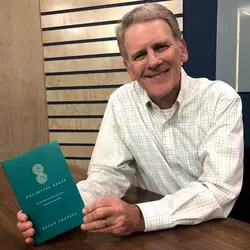
In Bryan Chapell's book, you will learn how God's unlimited grace leads us to heartfelt obedience and transforming joy. Explaining why grace is important and giving us tools to discover it in all of Scripture, Unlimited Grace helps us to see how gospel joy transforms our hearts and makes us passionate for Christ's purposes.
Past Episodes

Featured Offer
In Bryan Chapell's book, you will learn how God's unlimited grace leads us to heartfelt obedience and transforming joy. Explaining why grace is important and giving us tools to discover it in all of Scripture, Unlimited Grace helps us to see how gospel joy transforms our hearts and makes us passionate for Christ's purposes.
About Unlimited Grace
About Bryan Chapell
Bryan Chapell, Ph.D. is the Stated Clerk Pro Tempore of the Presbyterian Church in America (PCA), based in Lawrenceville, GA.
Dr. Chapell is an internationally renowned preacher, teacher, and speaker, and the author of many books, including Each for the Other, Holiness by Grace, Praying Backwards, The Gospel According to Daniel, The Hardest Sermons You’ll Ever Have to Preach, and Christ-Centered Preaching, a preaching textbook now in multiple editions and many languages that has established him as one of this generation’s foremost teachers of homiletics.
Dr. Chapell is passionate about sharing the truth of God's grace with others, because it provides the freedom and fuel for transformed lives of joy and peace.
He and his wife, Kathy, have four adult children, a growing number of grandchildren, and lives rich with friends, fishing and faith.
Contact Unlimited Grace with Bryan Chapell
info@unlimitedgrace.com