

Purpose - Part 2


Bryan Chapell: And when others see me sacrifice for the sake of my Savior, they understand him more. And that's our calling, to make sure that the profession of our faith is apparent in our character, in our product, but ultimately in our sacrifice for him, that people see you know Jesus. And because I see you, I begin to know something about him too.
Guest (Male): So glad you joined us for today's Unlimited Grace, the audio broadcast ministry of pastor and author Bryan Chapell. In today's episode, Pastor Bryan continues a lesson from Colossians 3. Dr. Chapell addresses a prevalent question in our Western culture: can I do the work that God wants if I don't have the career I want?
The truth of this passage is that we are to profess Christ in our work, even if our vocation is not of our choosing. You can find this lesson and many others when you visit UnlimitedGrace.com. And while you're there, check out the new daily devotional podcast called Daily Grace.
Pastor Bryan will guide you through a devotion each day to help focus your attention on God's grace as you study his word. Watch and listen to each episode when you visit UnlimitedGrace.com today. Let's hear now from Dr. Bryan Chapell as he shares the second half of the lesson, Purpose.
Bryan Chapell: Let me ask that you would look in your Bibles this morning at the book of Colossians, chapter three. We will consider verse 23 and then some other verses surrounding. When Paul sang so beautifully, "I will rise when he calls my name," you recognize that what the Apostle Paul is doing in this passage is reminding us that we bear about on us, Christian, the name of Jesus Christ.
And we are called to bear that name in every place that we go, including our workplaces. And it is that specific subject that Paul addresses in Colossians 3:23. Let me ask that you would stand as we would read this portion of God's word, Colossians 3:23. The Apostle writes, "Whatever you do, work heartily as for the Lord and not for men." Let's pray together.
Heavenly Father, thank you for the word that calls us not just to holy living in a holy place, but reminds us all the world before us is a holy place of your calling. For you take us from here into places of home and work, neighborhoods, nations; all of it is holy because you are there. And because you are there, you call us to honor you there.
Help us to see how that we would have the privilege of singing with the passion and the wonder and the glory that we have just sung here of you in the places to which you call us to proclaim the name of our Savior. Help us, guide us we pray, in Jesus' name. Amen. Please be seated.
I think of an old story about an entrepreneur who tried to set up a business in a developing country, and the people there were not well-educated. Lots of superstition still ruled in that country. Things went well for a time, and then workers kind of began to learn the ropes and they began to learn ways around doing a good job.
The boss, frustrated at some point, decided to take advantage of their superstition. And so he took out his glass eye and put it up on a shelf when he left the room as though he would keep watching them. Which worked for a while until somebody decided they could put a hat over the glass eye.
Well, the reality is you can't put a hat over God's eye. He is saying, I'm building a world here, and I'm using my people in testimony of my character and care to do it. So we do it with a whole heart, we do it with excellence because we recognize we are serving God's purposes. Our work is holy before God, and it's honorable before men because it is creating the world God intends to work for his own purposes.
Now, when I say that, I recognize, and you should recognize too, it sounds noble and good as long as we can do the things that we want. Right? We're in a society where we talk about people finding out what their calling is. What am I wired to do? What are my talents? What are my gifts? And I'll do what I find good to do, and then I'll be fulfilled.
But Paul is actually saying something different here. What if you are called to work in a place that is difficult, with difficult people, maybe even a job that you don't want to do? Paul is calling us to recognize our vocation is our profession, our professing Christ, even if our vocation is not our choosing.
How do I know that's the case? Because of verse 22 again. Slaves, obey in everything those who are your earthly masters. Yeah, in North American culture, if I get enough education, if I work hard enough, I may be able to fulfill a job, find a job that is in accord with my gifts and talents. That's not the way in most of the world or in most of world history.
For most people in the world, in most times, if your dad was a farmer, you're a farmer. If your dad is a miner, you're a miner. If your dad was a slave, you're a slave. Your rank, your caste, your race, your economic condition, your educational background, your nationality, your demography; all predetermined.
And we're feeling some more of that in this community, aren't we? As we begin to recognize as economic pressures come, as people are having to leave jobs that they have loved, as layoffs occur, we begin to have this basic question: can I do what God wants if I can't do what I want?
And God with all blessing to us is saying, yes. Even if you cannot do what you want, you can still do what God wants. How do I know? Slaves, in everything, obey your earthly masters, not by way of eye-service, but fearing the Lord. You have the ability to honor him. Now, we're concerned about this verse for any number of reasons.
First, it starts with the word slaves. And so we're saying, why isn't Paul outlawing slavery rather than telling slaves how to work? Well, a couple of thoughts here. Number one, it's not American chattel slavery as we think of it. I mean, a slave in Paul's time would sometimes include cruel forms of servitude.
But city managers and city treasurers were also in service to the city. Indentured servants, tenant relationships, apprentice relationships were all forms of servitude that are being addressed here. But that doesn't solve it all. What you and I should recognize if you go on to the next chapter, things are being said here that are chopping away at the roots of slavery as an institution, even as the gospel is beginning to spread across a society that is stable, at least for the moment.
In chapter four and verse one, Paul says, "Masters, treat your slaves justly and fairly, knowing that you also have a Master in heaven." If you were to go across the scope of Paul's writings, you would recognize he is outlawing cruelty and he is commanding love. So much so that he will say to Philemon in a letter to come, you are to treat your slave as your brother.
Christianity is undermining all the presumptions that supported slavery for a while, but Paul is still saying to those who serve another, remember you have a higher authority. It's not the master. It is God himself who is your authority. You may be in an undesirable job and still able to do God's work because you're actually serving the Lord.
You're not serving men, verse 23. You are serving the Lord, verse 23. "Whatever you do, work heartily as for the Lord and not for men." Some time ago, a friend that some of you in this room I know have, Howard Hendricks, who was a longtime professor at Dallas Seminary, was on an American Airlines plane where the stewardess was handling a drunk businessman, a screaming set of babies, unruly and unkind passengers, and treating them with politeness and courtesy.
But even as that flight attendant was treating them with courtesy and kindness throughout the long trip, Howard Hendricks was noticing. And at the end of the trip, said to her as he was leaving the plane, "Can I write a note to your supervisor at American Airlines?" And she said, "Well, sure, you can do that, but I don't actually work for a boss at American Airlines." She said, "My boss is Jesus Christ."
Now, I'm not exactly asking you to go into work tomorrow and say to your supervisor, "You ain't the boss of me." But I want you to know it in your heart. That your true master, the one that you're actually serving is the Lord himself. And for that reason, when the difficulties come, you recognize if somebody's asking you to do something that's unethical or ungodly or unfair, even if your worldly boss has that authority, that's not your ultimate boss.
And you don't do what's ungodly or unfair or unethical because it is the Lord Christ that you serve. You're not working as unto men. You're working as unto the Lord. And that means if you're working to the Lord and not as unto men, that means you're not ultimately working as unto you either. That there's a higher priority than you in the workplace.
Chris Soback: This is Chris Soback, executive director of Unlimited Grace Media. I hope you have been enjoying this encouraging message from Pastor Bryan. If this program has been a blessing to you, I want to share with you a new way in which you can receive daily encouragement from Dr. Chapell.
We've recently launched a daily devotional podcast entitled Daily Grace. If you've already signed up to receive daily devotions by email, this podcast is a great companion piece. You can watch and listen to Pastor Bryan share these devotions daily when you visit UnlimitedGrace.com.
You can also find this podcast on all major podcast platforms or watch it on YouTube. This is just another way that we want to serve you with Christ-centered content and help focus your attention on the grace of God that pervades all of scripture. Let us know what you think of this new podcast. We're always encouraged to hear from you. And now, more from Bryan Chapell on today's Unlimited Grace.
Bryan Chapell: When we are thinking, am I willing to do this for my profit or my promotion, my position, or even my family's immediate welfare, am I willing to transgress what I know God requires because it's better for me or better for mine? If that's the case, then we need to hear, too, you are not serving you either.
Ultimately, you are serving the Lord. Key things to take away from knowing that: you have important calling beyond the work itself if you are serving the Lord. You are called to honor him. You are called to provide for your family. In this culture right now, in this city right now, where jobs are hard and decreasing, sometimes people are having to do things they don't want to do. It's not their talent, it's not their gifting.
But ringing in our ears should be the words of Paul in 1 Timothy 5, where he says, "He who will not provide for his own family is worse than an unbeliever." And sometimes we'll say, but I want to do what I like. I want to do what promotes me. Well, what is right for your family? Do you have to do the things that are undesirable, unpleasant because that is your calling in the responsibility that God has given you?
And even though you may desire something else, something else may be pleasant for you, is this responsible before God in providing for your family? I've told you before, I hope I have opportunity to tell you other times, of a decision that my father made when I was in high school and my parents were in deep tension with each other at the time.
My father had an opportunity to go to Oklahoma and take a regional directorship of the company that he worked for, but turned it down. And explaining to me and to my brothers in private, simply said, "Because of the way things are between your mom and I right now, this family needs to settle and it needs to stay here, and I'm not going to take that promotion." It would have been great for him, for career, for income, it would have been great for him.
But he recognized he had a higher calling before God. He was called to provide for his family in the way that he felt was best and most appropriate for their welfare and long-term good. It's what God is calling us to do, to recognize we have a calling which may even be honorable for us. And we need to know it's honorable not to do the things that we would choose to do because we have a calling that supersedes our choosing if we are honoring God first.
What this ultimately means is that we are to be honoring God, we are to be pursuing our profession from the heart. After all, why would we do the things that put us at risk, that make us sacrifice for the honor of Christ? The answer is in verse 23. Why would we do the things that put us at risk and cause us to sacrifice? Whatever you do, verse 23, work heartily as for the Lord.
Some of you may be interested to know that that word heart there is not the Greek word kardia, like cardiac. It's the Greek word psuche, as in psyche or psychology, something even deeper in the very fiber of your being. You're to be responding out of the depth of your soul. That when you recognize you are working, it is actually your soul singing Hallelujah, as we sang earlier today.
That I am seeking to praise God out of my soul's depth. And sometimes that's not just based upon how many toys I can get or how easy my life. Sometimes I stand up to hard things, sometimes I make hard decisions. Why? Because I am serving the Savior from my very soul's depth. This is my heart of hearts to do what he requires because I love him.
Why do I love him? Remember verse 17. "Whatever you do in word or deed, do everything in the name of the Lord Jesus, giving thanks to God the Father through him." He is the Lord Jesus. He is the one who came for us. Verse 24, "knowing that from the Lord you will receive the inheritance as your reward. You are serving the Lord Christ."
The first part of that verse, why should you do the hard stuff? Well, because you will receive an inheritance. Now, that's having an eternal perspective. That I recognize this life is short, there may be hard things here, but I'm actually living for an eternal weight of glory that goes on eternally. And how do I say that to you? That sounds good here.
It will be harder to make sense when you've got a hard business decision to make. And what I think makes sense then is to remember you are giving thanks to the Lord Christ. He was the King of all creation, the Lord of all things that brought your life, your family, this world into existence. And he was also the Christ, the anointed one who gave himself to die on a cross for your sin and my sin when he had to do none of that.
And it is not gain but gratitude now that drives us. Not just eventually down there somewhere I'll get a reward, but right now a heart that is saying, if he loved me so, then I want to live for him. It is gospel-drivenness. I recognize the instinct of my heart is to serve the Savior who loved me enough to give himself for me, and I want other people to know that.
And sometimes just as his sacrifice has touched my heart, my sacrifice will touch other hearts for Christ's sake. After all, I bear on me the name of Jesus. And when others see me sacrifice for the sake of my Savior, they understand him more. And that's our calling, to make sure that the profession of our faith is apparent in our character, in our product, but ultimately in our sacrifice for him, that people see you know Jesus.
And because I see you, I begin to know something about him too. It's our heart's response to his love for us that leads us down the path of true honoring him in workplace, in home, in easy places, in hard places, for easy people, for hard people, for Christ's sake.
Somebody who is a friend of Grace Church, who watches us by podcast in Australia, is Casey Vallance. I've told you about him before. A couple of years ago, Casey won the World Architecture Award for designing a home to fit into a rejected part of a major Australian city. And his design became a model for using rejected spaces and rejected materials in major cities around the world.
Casey, because of having won that award, is being asked now to lecture at various places about what motivates him, what should motivate somebody in the field of architecture. And he wrote me recently about what he's doing. He was being asked to give a lecture at a university on what it meant to have architecture reflect his values.
Well, his values are the values of living for the Lord. And so he wrote this: "We presented our house design and discussed our architectural purpose explored over 12 years of designing and building this home. We said we want to build this house and houses like it to show the blessings of Christ on restoring the rejected, and to show his love as we serve others in our life and in our work."
That was the lecture he gave, explaining how his job, his design, his values were meant to express the name of his Savior. Afterwards, he wrote again of a young woman who had heard the lecture, and she said this: "I have never heard anyone say how the gospel affects daily work and gives meaning to life."
A man who had been an architect for a number of years wrote and said, "That was a powerful moment in your lecture because I have prayed for a decade for God to show me how to use my profession to bring light to a broken world." And what Casey was basically saying was: do your job with excellence, with integrity, with love and compassion. Show what you believe by your values as God has called you to the place where it's pleasant or difficult.
And remember, Casey is the one who turned past the billion-dollar contract to create the city design that would take people into the casinos of a major Australian city. Rejected it because it's not according to my values. Sacrificed much for the sake of showing the world Christ. And now as he rejoices to see people hearing and responding to him, he says, "As I have honored Christ, he has honored his own name in us."
And that's the beauty that you and I have. The one who gave himself for us as we consider every square inch of our life holy ground. When we honor him, he honors our work. It is holy and for him and makes a difference for eternity. God is calling you to a profession. His name's on you. Live for him and he will honor your work. It is holy before him.
Hi friend, this is Pastor Bryan Chapell, and I hope this message today has been a blessing to you. As we finish up, I would be honored to pray for you. Heavenly Father, thank you for showing us the grace of Jesus Christ through the conversations and interactions he had with all kinds of people: the anxious and the proud, the religious and the outcast.
When we understand Jesus' relationships with other people, we get to know his heart and understand his ministry was meant for people like us. So, Lord we ask, please forgive our sin, pardon our past, and love us for eternity. We confess we don't deserve any of that, but you sent Jesus for the undeserving.
So we rest our souls on his promised grace. Each of us now prays in our hearts, may the one who died for my sin now rescue me from my guilt, and may his love now live in my heart forever. As you pray that, you have Jesus' assurance of his love. And so we pray in Jesus' name. Amen.
Guest (Male): That's Pastor Bryan Chapell, and you've been listening to Unlimited Grace. If you've been blessed by this message and would like to hear more from Dr. Chapell, I would encourage you to visit UnlimitedGrace.com. In addition to messages from Pastor Bryan, you can explore the many sermons, podcasts, seminars, and more available to you.
Please be sure to join us next time as, once again, we endeavor to put Christ at the center of our efforts so that lives might be transformed by his unlimited grace. This ministry is brought to you by Unlimited Grace Media and continues to be made possible with your generous financial support.
Featured Offer

In Bryan Chapell's book, you will learn how God's unlimited grace leads us to heartfelt obedience and transforming joy. Explaining why grace is important and giving us tools to discover it in all of Scripture, Unlimited Grace helps us to see how gospel joy transforms our hearts and makes us passionate for Christ's purposes.
Past Episodes

Featured Offer
In Bryan Chapell's book, you will learn how God's unlimited grace leads us to heartfelt obedience and transforming joy. Explaining why grace is important and giving us tools to discover it in all of Scripture, Unlimited Grace helps us to see how gospel joy transforms our hearts and makes us passionate for Christ's purposes.
About Unlimited Grace
About Bryan Chapell
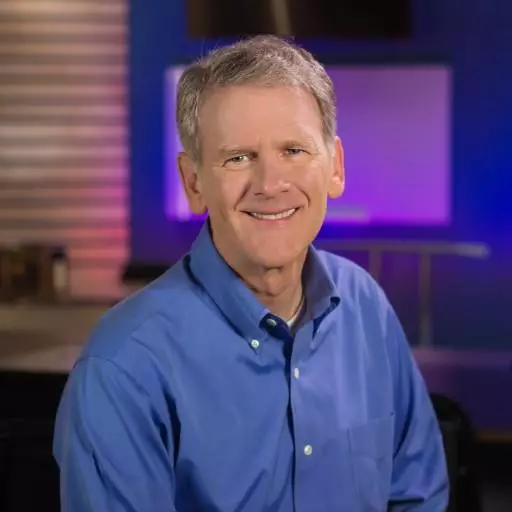
Bryan Chapell, Ph.D. is the Stated Clerk Pro Tempore of the Presbyterian Church in America (PCA), based in Lawrenceville, GA.
Dr. Chapell is an internationally renowned preacher, teacher, and speaker, and the author of many books, including Each for the Other, Holiness by Grace, Praying Backwards, The Gospel According to Daniel, The Hardest Sermons You’ll Ever Have to Preach, and Christ-Centered Preaching, a preaching textbook now in multiple editions and many languages that has established him as one of this generation’s foremost teachers of homiletics.
Dr. Chapell is passionate about sharing the truth of God's grace with others, because it provides the freedom and fuel for transformed lives of joy and peace.
He and his wife, Kathy, have four adult children, a growing number of grandchildren, and lives rich with friends, fishing and faith.
Contact Unlimited Grace with Bryan Chapell
info@unlimitedgrace.com