

Purpose - Part 1


Guest (Male): And when you're able before God to say, "I begin to understand. I'm not just a cog in a wheel somewhere. I'm actually doing a holy calling because God has called me to make a difference in this way for the world that He is building." God is making the world a better place and He's doing it through people who work faithfully in His name.
Guest (Male): So glad you joined us for today's Unlimited Grace, the audio broadcast ministry of pastor and author Bryan Chapell. In today's episode, Pastor Bryan shares a lesson from Colossians 3. In this continuing series called Mission at Work, Dr. Chapell shares how we are serving the Lord in our work. In all that we do, we ought to do it unto the Lord, for every place that we go, we are on God's holy ground.
You can find this lesson and many others when you visit UnlimitedGrace.com. And while you're there, check out the new daily devotional podcast called Daily Grace. Pastor Bryan will guide you through a devotion each day to help focus your attention on God's grace as you study His word. Watch and listen to each episode when you visit UnlimitedGrace.com today. Let's hear now from Dr. Bryan Chapell as he shares the lesson Purpose.
Bryan Chapell: I want to tell you, I know it can be hard to say, "I will follow Jesus," not just here where we are among friends and where our souls rise in the worship of God, but where we meet life's great challenges at work, in difficult places with difficult people, still saying, "I will follow Jesus. I will take my stand."
That is actually what we are being called to do in every place. In Colossians 3:17, the apostle begins this way: "Whatever you do in word or deed, do everything in the name of the Lord Jesus, giving thanks to God the Father through him." And just so that we know that everything includes our workplaces, the apostle says in verse 23: "Whatever you do, work heartily as for the Lord and not for men."
It is the reminder that every place that we go, we are on God's holy ground. The words of Abraham Kuyper not so long ago, there is not one square inch on this world over which Jesus does not stand and say, "This is mine. This is mine." Which means work, school, neighborhood, that is holy ground and we serve God in worship in that place when we do our work.
Martin Luther, so long ago, perceiving the reality that every person serves in a holy place because it's holy ground before God, said we ought to have ordination services for bricklayers. After all, the work they do is holy before God. As they do honest work, they are doing holy work. And my goal this morning is not just that you would hear me say that, but that the reality of doing holy work for God in whatever place He calls you to work would penetrate your own mindset, your understanding, and that you would take joy from the privilege of serving God wherever He calls you.
You would not be like that bricklayer that Martin Luther approached one time and said, "What are you doing?" and the bricklayer said, "Well, I'm laying bricks." Martin Luther asked the one beside him, "What are you doing?" Said that bricklayer, "I'm building a cathedral to the glory of God." We have the opportunity to see the bricks that we lay, the work that we do in every place we are, as being an opportunity to honor God and bring glory to Him.
How do we do that? How do we begin to perceive and act as though the work that we do is part of our profession of Jesus Christ? We begin by understanding our vocation is actually our profession. Now, we use those words differently in modern times. Our vocation is what we do. But last week, I reminded you that comes from the word vocal, and vocation is actually our calling.
This week to be reminded that our profession is actually what we profess about the nature of our relationship with God and His relationship with us. Our vocation is actually our profession. What are we actually professing in our work? Verse 17: "Whatever you do in word or deed, do everything in the name of the Lord Jesus." If you do something in someone's name, you represent them and you promote them. "I'm doing this in the name of that person."
And what that means is when we are in the workplace, we actually have upon us, everyone of us who is a Christian, the name of Christ upon us. We take Christ's name into the workplace into what we are called to do. Kathy and I have a friend who is a marathon runner. And he was in a race some time ago that he knew would be tough, particularly at the end.
Knowing what happens at the ends of races, how people call out encouragement, he put on his racing bib not his name, but actually wrote on the racing bib the word "Christian." So that when he got to that final mile and all the people are cheering, they wouldn't say, "Go Jack! Go Bill!" They would say, "Go get them, Christian! You can do it, Christian! Hang in there, Christian!"
And he recognized he was running with the name of his Savior upon him. When we are in the workplace, we bear the name, we wear the name of our Savior. And that has certain implications for us. We recognize that we are representing His character and His care in our practices and in our products. If I am representing, seeking to honor my Savior in my practices, I represent His character.
His righteousness is to be seen in my integrity. So, my annual reports and my reviews are honest. I don't cheat customers in pricing or in billing. I don't cheat the boss on time cards or on expense reports, even if others do. I don't lie to regulators. I don't lie to the IRS. Why? Because I'm wearing the name of Jesus. I am representing Him in what I do.
His character of righteousness is represented in my integrity. His justice is to be seen in our fairness. We don't show favoritism and we don't ride the people that we don't like. We give benefit of the doubt and we try to treat others as we ourselves would wish to be treated. And that's not just lip service to something, it's actually living that way.
Dick Halverson, the longtime pastor of Fourth Presbyterian Church in Washington D.C. and then the Senate Chaplain, spoke one time of a businessman who had been converted in his church and wanted to make a difference in his workplace and reported to his pastor at one point, "I decided to give New Testaments to all of my employees and to all of my customers." And Dick Halverson, who knew something of the man, said, "Well, that's wonderful, but it might be better if you gave them some respect."
You bear on you the name of Jesus in how you treat people with justice and fairness. His character is represented in such a way that His heart is to be seen in our compassion. So, we give people second chances and an opportunity to change. We provide help or coaching for those who are struggling. And if it works out poorly and we cannot make it work, we wrestle and weep over the hard decisions even when we have to make them.
We are not callous to the difficult things. We represent the heart of our Savior. We are generous with God's provision because we recognize God's people and those not yet God's people need to know Him through what we can provide in our own means for the work of the church and the work of missions. Finally, to represent His character, His humility is to be seen in our humility.
We don't always have to have the first word. We don't always have to have the last word. And we don't always have to have the credit. Those of you who know a little bit about basketball know perhaps the most famous thing that Dean Smith did teaching players at North Carolina basketball was if you made a basket, you always, you always pointed at the man who passed you the ball.
Strutting and showboating was not to be a part of that program. It's the person who helped, you don't need the credit, give the credit away. And for us as Christians, that can be difficult in the workplace because we recognize we, even in being credited for goodness in reflecting Christ's character, can sometimes take the credit to ourselves.
After all, if you work hard, if you faithfully put your dollar in the cuss jar when you mess up, if you don't cat around on the business trips, you get known for that. And you can just be thought of as a good person. But where there are opportunities to speak for the Savior, that is giving the credit to Him. "He enabled me. I trust Him. And when I mess up, I ask His forgiveness."
His grace, not my goodness, is what makes me right before my God. And I live this testimony so that you would know my Savior, not that you would think highly of me. It is my Savior that gets the credit for what I do and who I am.
Chris Sobak: You're listening to Unlimited Grace, the audio broadcast ministry of pastor and author Bryan Chapell. This is Chris Sobak, Executive Director of Unlimited Grace Media. I hope you have been enjoying this encouraging message from Pastor Bryan. If this program has been a blessing to you, I want to share with you a new way in which you can receive daily encouragement from Dr. Chapell.
We've recently launched a daily devotional podcast entitled Daily Grace. If you've already signed up to receive daily devotions by email, this podcast is a great companion piece. You can watch and listen to Pastor Bryan share these devotions daily when you visit UnlimitedGrace.com. You can also find this podcast on all major podcast platforms or watch it on YouTube.
This is just another way that we want to serve you with Christ-centered content and help focus your attention on the grace of God that pervades all of Scripture. Let us know what you think of this new podcast. We're always encouraged to hear from you. And now, more from Bryan Chapell on today's Unlimited Grace.
Bryan Chapell: If we are to reflect Christ to wear Him, then we recognize His character is to be reflected in our practices. And in addition, His care is to be reflected in our products. We are in essence saying of the things that we produce, whether we are on the line or whether we are the company owner, we are saying, "I stamp the name of Jesus on this product. It's my duty in the world."
It's not the Good Housekeeping seal of approval. I am putting the name of my Savior on what I am doing. Now, that happens in lots of ways, sometimes inadvertent ways if we are believers. When my son Jordan was learning the stock business and was learning trading, he got, as a junior person in the particular company, assigned to the task of following up on the leads by making endless phone calls to possible leads.
That was dreary, deadening work. One phone call after another phone call after another phone call. And he told us that one point as it was getting late, he was very tired and almost began to just work instinctively out of repeating his little slogans of what he had to say. He finally got to the end of the phone call and he said, "And so that's our deal. In Jesus' name, amen."
And then recognized he wasn't supposed to say that, didn't quite know what to do next, so he actually had to call back and apologize. But you recognize it was something almost instinctive in him by that point, right? I was actually very proud of him that that was somewhere deep in him. That's the way you end a conversation even to the wrong person at that point.
But there are other ways that we stamp on our products, the things that we produce, who we are and who our Savior is. And it can be very difficult at times to say, "I'm actually promoting the purposes of my God in what I'm producing." Kathy and I lived a long time in St. Louis and some of the major industries there are major chemical companies.
And we recognize just in the cultural cycles how people's perceptions of those chemical companies can change. At some point, you may produce some great pesticide and it enables farmers to grow in the developing world so they can feed millions of people with different products, and people cheer the company. And then you go a decade or two later in the cultural cycle and people say, "You're not feeding millions of people, you're poisoning millions of people."
Well, I'm not going to try to solve that today. What I'm saying is as believers, it is legitimate to ask us to think through, to examine our jobs to say, "Is what we are doing honoring to God?" and not just be swayed by the cultural moment nor even to be swayed by the opinions of people around us, but actually be those believers who are saying, "Is my work righteous before God?"
Is the product righteous? And in an integrated economy, those are hugely complex questions. I only for the moment say we're obligated to examine, to think through carefully, not just to be oblivious to the fact that my product has implications. And sometimes the righteousness of what we're producing is not our problem, it's the significance of what we're producing.
We're wondering can this really serve God? Two weeks ago, I was in Oregon at a pastor's conference and just in the break in the day, they took us to a cheese producing factory, one of the largest cheese producers in the United States. And so it was interesting, but I remember watching people on the assembly line. And I remember watching one particular man whose job was to straighten the little cakes of cheese when they got twisted on the conveyor belt.
So he stood there all day with one hand out doing this. About every 10th cake of cheese, he would straighten it up. And I think to myself, I'm glad I'm not doing that. But that's not to say it's not good work or even holy work. What actually makes our work significant before God? One of the things that we can do is we can use the George Bailey test. Remember *It's a Wonderful Life*?
What would the world be like if you weren't doing that? I mean if there were not quality control on the line so that the business no longer had a reputation, so that it could no longer sell its product, so there were no longer jobs available, so that families could not be provided for. What if the quality control is not just about the adjustment of the cheesecake, but what actually happens if sanitation is not maintained and Listeria outbreaks occur so that people not only get sick, they lose father or mother or child?
What would happen if you did not do your job well? As we begin to examine our jobs with that world perspective, we begin to recognize what God is giving us the opportunity to do is to actually fit our work into His world with a perspective that's not just about me, but thinking about the implications of my job. Is it righteous? Is it significant as it influences the world?
And that's a question beyond just whether or not I like it or see that it's something the pastor would like to do. One of the people that I appreciate reading is David Wright. He's a college president now but used to be a missionary in Haiti and wrote a wonderful book called *How God Makes the World a Better Place*. And he wrote about his experience in Haiti and he said this:
"I saw the purpose of every profession while I was in Haiti as a missionary. Without a fair and dependable court system that ensured honesty, fairness, and ownership, Haitians struggled to find value in work for themselves, their families, or for the society as a whole. Without a banking system that ensured money would be protected and borrowed on fair and workable terms, businessmen could not operate. And because businessmen could not operate, jobs and income were not available. Because jobs and income were not available, families could not thrive, some could not survive."
And it just reminded me of those of you who are here. Some of you are in the banking industry, some of you are in legal, and some of you are in criminal services of various sorts. But I think if you were not doing your job, how our community would just crumble, how families could not be provided for, how we could not thrive here as a church.
And when you're able before God to say, "I begin to understand. I'm not just a cog in a wheel somewhere. I'm actually doing a holy calling because God has called me to make a difference in this way for the world that He is building." God is making the world a better place and He's doing it through people who work faithfully in His name.
Now, I don't just have to guess at that. That's actually something that's being made clear here. Verse 22 of Colossians chapter 3, Paul says something difficult for us to hear. He says, "Slaves, obey in everything those who are your earthly masters, not by way of eye-service as people-pleasers, but with sincerity of heart, fearing the Lord."
Now again, the fearing the Lord, can you let me say honoring God? It's a holy reverence that even slaves here are being called to honor God, not just by doing good work when the boss is around, but all the time, believing that their work is God-honoring. And if we see that, we're recognizing we're being called to ministries of excellence in whatever jobs we are being called to do.
I think of an old story about an entrepreneur who tried to set up a business in a developing country. And the people there were not well educated, lots of superstition still ruled in that country. And things went well for a time, and then workers kind of began to learn the ropes and they began to learn ways around doing a good job.
And the boss, frustrated, at some point decided to take advantage of their superstition. And so he took out his glass eye and put it up on a shelf when he left the room as though he would keep watching them, which worked for a while until somebody decided they could put a hat over the glass eye. Well, the reality is you can't put a hat over God's eye.
He is saying, "I'm building a world here and I'm using my people in testimony of my character and care to do it." So we do it with a whole heart, we do it with excellence because we recognize we are serving God's purposes. Our work is holy before God and it's honorable before men because it is creating the world God intends to work for His own purposes.
Now, when I say that, I recognize and you should recognize too, it sounds noble and good as long as we can do the things that we want. We're in a society where we talk about people finding out what their calling is. "What am I wired to do? What are my talents? What are my gifts? And I'll do what I find good to do and then I'll be fulfilled."
But Paul is actually saying something different here. What if you are called to work in a place that is difficult, with difficult people, maybe even a job that you don't want to do? Paul is calling us to recognize our vocation is our profession, our professing Christ even if our vocation is not our choosing. How do I know that's the case? Because of verse 22 again: "Slaves, obey in everything those who are your earthly masters."
Yeah, in North American culture, if I get enough education, if I work hard enough, I may be able to fulfill a job, find a job that is in accord with my gifts and talents. That's not the way in most of the world or in most of world history. For most people in the world in most times, if your dad was a farmer, you're a farmer. If your dad is a miner, you're a miner.
If your dad was a slave, you're a slave. Your rank, your caste, your race, your economic condition, your educational background, your nationality, your demography, all predetermined. And we're feeling some more of that in this community, aren't we? As we begin to recognize, as economic pressures come, as people are having to leave jobs that they have loved, as layoffs occur, we begin to have this basic question: can I do what God wants if I can't do what I want?
And God, with all blessing to us, is saying yes. Even if you cannot do what you want, you can still do what God wants. Friend, will you allow me to pray with you that the work God is doing in your life through the teaching of His word would take hold and help you?
Heavenly Father, thank you for the fact that you pardon and give purpose to messed up people like me, like us. Today, help us so to believe in your grace that we rejoice to receive it and live to reflect it. This we pray in Jesus' name, amen.
Guest (Male): That's Pastor Bryan Chapell, and you've been listening to Unlimited Grace. If you've missed anything that you'd like to hear once again, just visit UnlimitedGrace.com. And when you do so, you can sign up for Pastor Bryan's daily devotional sent right to your inbox.
Please be sure to join us next time as once again we endeavor to put Christ at the center of our efforts so that lives might be transformed by His unlimited grace. This ministry is brought to you by Unlimited Grace Media and continues to be made possible with your generous financial support.
Featured Offer

In Bryan Chapell's book, you will learn how God's unlimited grace leads us to heartfelt obedience and transforming joy. Explaining why grace is important and giving us tools to discover it in all of Scripture, Unlimited Grace helps us to see how gospel joy transforms our hearts and makes us passionate for Christ's purposes.
Past Episodes

Featured Offer
In Bryan Chapell's book, you will learn how God's unlimited grace leads us to heartfelt obedience and transforming joy. Explaining why grace is important and giving us tools to discover it in all of Scripture, Unlimited Grace helps us to see how gospel joy transforms our hearts and makes us passionate for Christ's purposes.
About Unlimited Grace
About Bryan Chapell
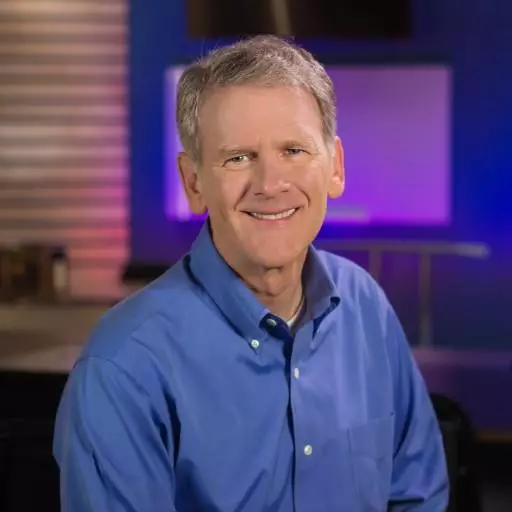
Bryan Chapell, Ph.D. is the Stated Clerk Pro Tempore of the Presbyterian Church in America (PCA), based in Lawrenceville, GA.
Dr. Chapell is an internationally renowned preacher, teacher, and speaker, and the author of many books, including Each for the Other, Holiness by Grace, Praying Backwards, The Gospel According to Daniel, The Hardest Sermons You’ll Ever Have to Preach, and Christ-Centered Preaching, a preaching textbook now in multiple editions and many languages that has established him as one of this generation’s foremost teachers of homiletics.
Dr. Chapell is passionate about sharing the truth of God's grace with others, because it provides the freedom and fuel for transformed lives of joy and peace.
He and his wife, Kathy, have four adult children, a growing number of grandchildren, and lives rich with friends, fishing and faith.
Contact Unlimited Grace with Bryan Chapell
info@unlimitedgrace.com