

Our Living Legacy - Part 1


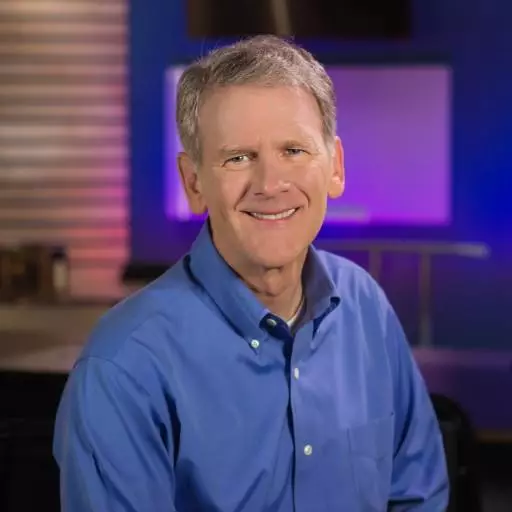
Pastor Bryan shares a lesson from Psalm 112. Dr. Chapell investigates what this passage says about legacy, and what is promised to those who are righteous.
Bryan Chapell: He is promising that when we are faithful, that he will use that to touch life upon life, upon life so that ultimately the annals of heaven, what will happen is the righteousness that we are establishing will endure forever.
Guest (Male): So glad you joined us for today's Unlimited Grace, the audio broadcast ministry of pastor and author Brian Chapel. In today's episode, pastor Brian shares a lesson from Psalm 112. Dr. Chapel investigates what this passage says about legacy and what is promised to those who are righteous. You can find this lesson and many others when you visit unlimitedgrace.com. And while you're there, look for pastor Brian's book, The Multi-Generational Church Crisis. This compelling book asks the question of the church, what could be accomplished in the name of Christ if we could better understand each other? Let's hear now from Dr.
Brian Chapel as he shares the lesson, Our Living Legacy.
Bryan Chapell: The writer Roy Atwood writes this. The days of my father's life were by reason of strength and God's grace 80 years. He died a year ago. We still grieve his death, of course. But as the pain of his passing fades, we are struggling with a new pain. The realization of how swiftly the memory of someone as close as a husband, a father, and a friend can fly away. If each day dims the memory of the contours of his face and the sound of his voice, what will we remember of him 10 or 20 years distant?
What will his children's children know of him, of his life, his hopes and fears, his failures and successes, or his view of God's world? What will be the legacy of his life? Over time, we will forget. We'll forget the things that he enjoyed. He he loved the company of his well-oiled tools and rifles. He loved the rhythmic pulse of the waves against the hull of his sailboat running ahead of a fresh breeze. However, over time, the waves will not reflect his image. And his precious tools and guns will be recycled into someone else's rusty barbecue pit or dented wheelbarrow.
We will forget the work of his hands. We will forget his strengths. We will forget his weaknesses. We'll even forget how his illusions of independency and self-sufficiency were shattered when he fell off the roof of his home while cleaning the gutters in the rain. He landed on the corner of a concrete sidewalk. He broke his spine between his shoulder blades. The fall almost killed him. But in a split second, his pride and his dreams and many of the things that he loved were gone. He never walked or worked or sailed again. He struggled with depression.
He talked of suicide many times. He never wanted to be a burden to his wife or to his children, but his self-sufficiency was gone. In an instant, gone forever. We do not like the words, but we know that they are true. All that we seek to accomplish, all that we build, all that we hope will last will not. It will fade. Wind and erosion and time will take it all away. So the question is, why bother to live for the Lord, to give ourselves for our families and children? Why bother if it will all just blow away in the breeze ultimately?
The answer is because it is not the whole truth. There are some things that will never pass away. And the psalmist has in fact identified that three times in this particular Psalm. The first appears at the end of verse three. Did you see it there? I slowed down as I was reading it. It says of the righteous man, wealth and riches are in his house and his righteousness endures forever. There is something that endures forever and it is the righteousness of the one who follows after God. Now there are many blessings identified in this particular Psalm that come to the righteous man.
Talks about wealth and wisdom and offspring and and you have to say those those are generic references. They are not unqualified statements of what happens to righteous people, right? Even in the Psalm itself, you remember may remember in verse four it talks about darkness coming in to one's life. In verse seven, bad news. In verse eight, adversaries or enemies. And yet despite the statement of reality, there is this overarching understanding that there is righteousness that when we do that that has an enduring quality, how can that possibly be? We've already said you build a business, it it may outlast you, but it's unlikely to last forever.
You may build some building. There may be some architecture that you can participate in, but even the pyramids are eroding. Your family will forget you. Ultimately, yes. My writings will fade away. It will all go. And yet we are told of the righteous man, his righteousness endures forever. How can that possibly be? Maybe some hint of that is in verse two. In describing the righteous man, the psalmist says his offspring will be mighty in the land. The generation of the upright will be blessed. Here is the sense that part of our righteousness in its impact is its influence upon others.
And one of the way in which righteousness endures is by righteous influence as life touches life touches life touches life as a child by the example and teaching of parents understands who God is and what it means to trust in Jesus Christ. there is some transfer of righteousness as that righteous influence reverberates. That's really a wonderful thought. Some years ago, I had the opportunity to participate in the funeral service of a well-known Christian. His name was Stu Parren. He was a pastor. And the one who is delivering the eulogy, the funeral sermon was his son who is also a pastor.
And the son gave a little of the height life history of his father. His father, growing up in the upper Midwest, had been raised by parents at the time that some of the influenza epidemics were crossing this country. And when he was still a boy, Stu's lost both his mother and his father to an influenza epidemic. So he was he was raised by his grandmother. But not too many years after his grandmother took over his upbringing, she too contracted a terminal illness. He was going to lose her too. And as he was losing this grandmother, at some point she called him to her bedside.
And she said, my child, I do not have things of this world to give you. But this word of God I share with you. Do not fear. I am with you. Do not be afraid. I am your God, declares the Lord. I will uphold you by my righteous right hand, declares the Lord. The words of Isaiah 41:10. And she passed on to the child the the message of faith. Now now as Stu's son was preaching the funeral sermon and told that account of how that grandmother had passed to her grandson the message of faith, not only did that particular son recite the story, but his brother, another pastor, nodded his head.
He knew the story. And their spouses nodded their heads. They had heard the story. And their children nodded their heads. They knew the story. Now just think of that. A grandmother had passed to her son's son the testimony of faith. And that son had passed to his sons the testimony of faith, and now their children knew that same testimony. Five generations knew the testimony of faith from that faithful grandmother. Listen, her goods and in many ways her memory had passed away long ago, but the testimony of faith had been maintained in that family. The generations of the upright were blessed.
I don't know how many things you think you can do in this life that will last five generations. Not many. But God's promise is greater. He is promising that when we are faithful, that he will use that to touch life upon life, upon life so that ultimately the annals of heaven, what will happen is the righteousness that we are establishing will endure forever. I mean it it just is an amazing thought, made more amazing because you understand that what God is saying here is not just that righteous influence is maintained, but that righteousness itself is maintained forever.
I mean if you look at verse three closely, it doesn't say that a man's righteous influence will endure forever. It says his righteousness will endure forever as though the good itself is enduring, not just by influence, but the righteousness itself is enduring. Now now that is a a larger thought. I mean even even secular sciences can talk about cascade theory, you know, where a a butterfly flapping its wings in Hong Kong can by influence upon influence upon influence become a thunderstorm in San Francisco three weeks later. But this is saying something different. Not only does righteous influence continue, but the righteousness itself endures forever.
How can that possibly be? Maybe a verse that helps us is one like Ephesians 2:10 that we are God's workmanship created in Christ Jesus to do good works that he prepared in advance for us to do. So that we understand as believers that every righteous action is a link in an eternal chain of the purposes of God so that by doing what God calls us to do, in a moment, perhaps even unnoticed by the rest of the world, is nonetheless vital an eternity to what God is doing. I must tell you that when I was a a solo pastor in a much smaller church, I used to think that that one of the purest things that I would do would be to visit an Alzheimer's patient in a nursing home.
Now the reason I say it was one of the purest things that I would do is because of the sin in my heart. There are lots of reasons that pastors and caretakers, those of you who do these things, I know there are lots of reasons that that we care for people who cannot express their gratitude. We do it because we want to show the compassion of Christ, because we want to show our own care. But I must tell you as a pastor, there's another reason that I will sometimes check in on the nursing home because there are people who are keep and count.
They want to know, did you visit? And you'll get in trouble if you don't. And there's just a human part of me that wants to stay out of trouble. But when you visit an Alzheimer's patient, there is no record. And three seconds after you're gone, there may be no memory of your even having been there. And it just it stretches my faith as well as my imagination to believe that that that act of care, that gentle righteousness will actually endure forever. How is that so? Maybe by the witness to other people, maybe by the witness of the other people in the nursing home, maybe by the caretakers themselves, maybe just because of the change it makes in me to be willing to care for another person selflessly.
But for whatever reason, what God is promising is that that that act of righteousness endures forever. And it just changes what you're willing to do, the significance you perceive in your actions that are in many ways just bypassed by the rest of the world. I thought of it as as we had 638 children here and and 368 volunteers and I think what brought you here? They won't remember your names. They they they won't remember all that you're doing. But but as I witness a special needs child being helped up these stairs in that final night program by adults and then by other children, to think it is eternal.
It is a righteousness that endures forever, that God is by testimony and witness and the the changing of hearts who would care for the for the unlovely and the needy and the orphan and the widow in distress. When when all of that is happening, though the world pays no attention to it, it endures in the purposes of God and that is his promise. And and we are willing to extend that cup of water or to let the business deal go or to help the neighbor or to sacrifice ourselves at times for our own children because we profoundly believe that it is not forgotten by God.
It is actually a righteous thing that God is going to make glow on in his eternal purposes. And that makes you do things for God even when the world takes no notice whatsoever.
Guest (Male): You're listening to Unlimited Grace, the audio broadcast ministry of pastor and author Brian Chapel.
Guest (Male): It may seem hard for younger Christians to believe, but people over 50 were raised during an era when 90% of Americans identified as Christian. These older believers were once part of a majority group that understood the mission of the church was to take control of our culture, to halt its evils. At the same time, Christians under 50 have lived their entire lives perceiving themselves as a minority that needs to make credible their faith to a secular pluralistic culture. These distinct experiences and perceptions have a profound impact on the priorities different generations have for church ministry.
It's no wonder that younger and older believers don't always see eye to eye. In his new book, The Multi-Generational Church Crisis, Dr. Brian Chapel asks the question, what could be accomplished in the name of Christ if we could better understand each other? This practical and hopeful book is backed by thorough research revealing how to open the lines of communication. Appreciate the experiences that shaped each generation in your church and unite in one mission to impact your community and the world. You can request your copy of the Multi-Generational Church Crisis when you donate online at unlimitedgrace.com or by calling 844-41-GRACE.
That's 844-414-7223. And now more from Brian Chapel on today's Unlimited Grace.
Bryan Chapell: To think it is eternal. It is a righteousness that endures forever, that God is by testimony and witness and the the changing of hearts who would care for the for the unlovely and the needy and the orphan and the widow in distress. When when all of that is happening, though the world pays no attention to it, it endures in the purposes of God and that is his promise. And and we are willing to extend that cup of water or to let the business deal go or to help the neighbor or to sacrifice ourselves at times for our own children because we profoundly believe that it is not forgotten by God.
It is actually a righteous thing that God is going to make glow on in his eternal purposes. And that makes you do things for God even when the world takes no notice whatsoever. We do it not only because the righteousness endures. There's there's actually something even better said. It it occurs halfway through the Psalm at the end of verse six. Now again, describing the righteous man, verse six says, the righteous will never be moved. He will be in remembered forever. Not not just the righteous action, but it says the righteous person will be remembered forever.
Again, it sounds impossible. I mean you and I have walked in the graveyards where the names are carved in stone and even now we have trouble reading them because the names are being erased by the weather of the world. How can it possibly be that the person would be remembered forever? I mean I know you can trace a long way back on ancestry.com. But you can go all the way back. There are many names you will never know and will not be remembered by anyone in this generation. And yet it's so precious to us that God is saying, I remember you.
The world may forget, but I will remember those who stand for righteousness in this world. I so much want that because I ultimately do not want to be remembered for my accomplishments, for what I do. Listen, I don't know what you've accomplished in life, even if you've accomplished a great deal. I will tell you if you are truly honest, you will confess that if you have accomplished a great deal, it's because the right things happened at the right time by the grace of God. You have known smarter people who have not done as well. And you have known better people who have suffered more.
If you have been blessed, it is by the grace of God. Ultimately, I don't want to stand before God and be remembered for what I have done. And time after time, God is reminding us of the ephemeral nature of our own works so that we will recognize how blessed it is that he remembers us. Some of you may know the verse Malachi 3:16, not John 3:16, but Malachi 3:16. In that particular verse, it describes the hosts of heaven speaking to one another. And God listens in. And then at some point there is taken out what is called the scroll of remembrance, whereupon are written the names of those who fear and honor the name of God, that that when earth's records fade away, that there is a record in heaven of those who have honored God and that doesn't fade away.
You know, that becomes important to me because we were moving, you know, how you go through papers and boxes and all that sort of thing. So I found my last report card for my senior year of college. Yellowed, I know, but what became more interesting to me as I began to go back to tally my accomplishments and my good grades. And all of you can see this, maybe just the pastors on the front row, it's just a yellow sheet to most of you, but there are no grades on this report card. The ink has faded away.
There are no names of courses. There are no names of professors. I can't record even myself what I got in those courses. It's all faded away. How wondrous to know that God not only knows the grades, he knows me and remembers me. Why is that important? You can work for a company for 30 years and three weeks after you're gone, they do not know your name. You can be forgotten by your company. You can be forgotten by your family. You can be forgotten by your country. You can be forgotten by your church. And God says, I remember you.
Heavenly Father, the Holy Spirit, inspire those who wrote these scriptures so that we would know your divine nature and your heart of compassion. You wanted people like us in every situation and generation to know your heart and your power to help us. So we pray for that power and that love right now, assure us of grace that is greater than all our sin and of Christ's power to rescue us from circumstances we can't figure out or control. We ask you to forgive us so that we can live for you. And we ask you to change our hearts so that fear and anger, anxiety and resentment fade into the distance because we are so close to you.
Assure us that whatever is troubling us is no surprise to you. We know you now and we know you've got this and you've got us in the palm of your hand. We are loved and secure forever. So now we rest our hearts in your heart in Jesus' name. Amen.
Guest (Male): That's pastor Brian Chapel and you've been listening to Unlimited Grace. If you've been blessed by this message and would like to hear more from Dr. Chapel, I would encourage you to visit unlimitedgrace.com. In addition to messages from pastor Brian, you can explore the mini sermons, podcasts, seminars, and more available to you. Once again, go to unlimitedgrace.com or you can give by calling 844-41-GRACE. That's 844-414-7223. Please be sure to join us next time as once again we endeavor to put Christ at the center of our efforts so that lives might be transformed by his Unlimited Grace.
This ministry is brought to you by Unlimited Grace Media and continues to be made possible with your generous financial support.
Featured Offer

In Bryan Chapell's book, you will learn how God's unlimited grace leads us to heartfelt obedience and transforming joy. Explaining why grace is important and giving us tools to discover it in all of Scripture, Unlimited Grace helps us to see how gospel joy transforms our hearts and makes us passionate for Christ's purposes.
Past Episodes

Featured Offer
In Bryan Chapell's book, you will learn how God's unlimited grace leads us to heartfelt obedience and transforming joy. Explaining why grace is important and giving us tools to discover it in all of Scripture, Unlimited Grace helps us to see how gospel joy transforms our hearts and makes us passionate for Christ's purposes.
About Unlimited Grace
About Bryan Chapell
Bryan Chapell, Ph.D. is the Stated Clerk Pro Tempore of the Presbyterian Church in America (PCA), based in Lawrenceville, GA.
Dr. Chapell is an internationally renowned preacher, teacher, and speaker, and the author of many books, including Each for the Other, Holiness by Grace, Praying Backwards, The Gospel According to Daniel, The Hardest Sermons You’ll Ever Have to Preach, and Christ-Centered Preaching, a preaching textbook now in multiple editions and many languages that has established him as one of this generation’s foremost teachers of homiletics.
Dr. Chapell is passionate about sharing the truth of God's grace with others, because it provides the freedom and fuel for transformed lives of joy and peace.
He and his wife, Kathy, have four adult children, a growing number of grandchildren, and lives rich with friends, fishing and faith.
Contact Unlimited Grace with Bryan Chapell
info@unlimitedgrace.com