

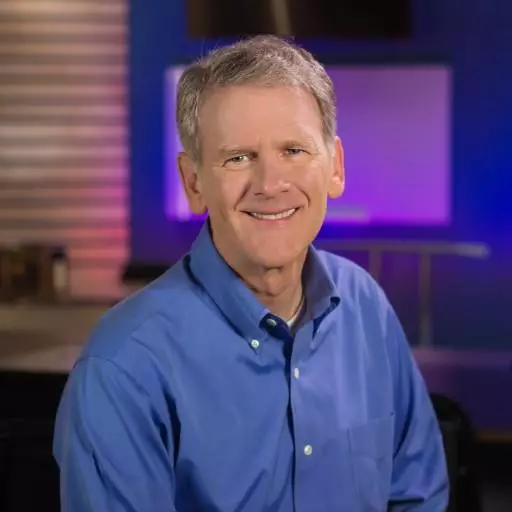
O Give Thanks to The Lord - Part 2


Bryan Chapell: The same God in His great mercy and grace, who would have every reason to walk away, is saying, "No, you call on me again and I will hear you." And this is the God who redeems. And if you've been a family in those dire straits and God has delivered you, what do you say? "Oh give thanks to the Lord, for He is good."
Guest (Male): So glad you've joined us for today's Unlimited Grace, the audio broadcast ministry of pastor and author Bryan Chapell. In today's episode, Pastor Bryan shares the second half of a lesson from Psalm 107. Dr. Chapell points to how we can give thanks to the Lord, for if we call out to God in our shame and distress, He listens and He redeems.
You can find this lesson and many others when you visit UnlimitedGrace.com. And while you're there, look for Pastor Bryan's book, *The Multi-generational Church Crisis*. This compelling book asks the question of the church: what could be accomplished in the name of Christ if we could better understand each other? Let's hear now from Dr. Bryan Chapell as he shares the second half of the lesson, "Oh Give Thanks to the Lord."
Bryan Chapell: The psalmist says, "Oh give thanks to the Lord, for He is good, for His steadfast love endures forever. Let the redeemed of the Lord say so, whom He has redeemed from trouble and gathered in from the lands, from the east and from the west, from the north and from the south." Let's do what the psalmist says. Let's give God thanks.
Heavenly Father, we have had such great opportunity to thank You this day already. And still we recognize, Father, what we are thankful for is not only for what You have done, but what You are doing. You make us members of the household of faith, and in doing so, You make us also the instruments of Your proclamation, not just by a physical facility, but by being the church that is the body of Christ.
Each equipped in a very special way, ways that we don't always perceive, by the words that we say, the experiences we go through, the faithfulness we express sometimes even in the worst of times. To be mechanisms by which thankfulness to God becomes a means by which others will see who He really is—a faithful God who preserves souls forever through the good, through the bad, through everything, that we might be with You forever by the knowledge that we have made known in this place and places like it.
Teach us not just to value the beauty of the place, the sturdiness of it, the niceness of it. Father, help us to value what You do here: make the love of Christ known. For then we shall be truly thankful and instruments of Your praise, which we would be in Jesus' name. Amen.
Why are these people in Israel in prison? Because they had turned to idolatry. They had rejected the word of God. They had turned to their own ways. In some ways, God could simply turn His back and say, "You deserve it." Instead, this great God, our Redeemer, says this. What happened? Verse 13: "Then they cried to the Lord in their trouble, and He delivered them from their distress."
Oh give thanks unto the Lord, for He is good. For what He did to people who had turned away from Him in idolatry, rebellion, and sin, when they called out to Him, He delivered them. He did not say, "Make your bed, now lie in it." It was the grace of God of the Old Testament. It is the grace of God revealed in Jesus Christ, that for those who are experiencing the consequences of their sin, when they call out to Him, He hears and redeems because He is the great Redeemer.
The dimensions of that begin to unfold more in the Psalm. If you look at verse 17, it says of these who were in Israel experiencing such awfulness, "Some were fools through their sinful ways, and because of their iniquities suffered affliction." Verse 18: "They loathed any kind of food, and they drew near to the gates of death."
I am not saying that all sickness is a consequence of sin. I am saying that God can discipline. And one of the things that are being shown here is that people who are going through affliction are needing to examine: Lord, is there something in me? God says here there are people who are simply suffering the consequences of their foolishness. Have you ever wondered about that? Is what you or your family going through a consequence of your foolishness?
In the first four years of our youngest daughter's life, she spent three Christmases in the hospital. Every Christmas it came around, it seemed like she would get terribly sick and have to be in the hospital. So frequently was she in the hospital at Christmas time that at one point when she was four years old, she was asked what was her favorite Christmas song and she said, "I love the song about the Holly and the IV."
She knew about the IV because she had a blood poisoning so intense that we had to do an antibiotic drip into her heart cavity to try to save her. Scary times for us as a family. Our family doctor at some point during that fourth Christmas went to a seminar somewhere and discovered something. He discovered that the doctors were discovering that in natural Christmas trees, in their shipping and storage, often accumulate a mold that some children are intensely allergic to, like our daughter.
And we recognized why was she getting sick every Christmas. We were doing it to her. We were bringing in the Christmas tree into the house and exposing her to the mold to which she was terribly allergic, and it was putting her in the hospital every Christmas. We are smart people. We've got college degrees. We should have figured this out. And we look back and we say how foolish we were.
But folks, you and I know things. We look back at times at our families and our distress and we wonder—we put God on the periphery of our lives. We did not make Him part of our homes and our devotions and our family life. We put God on the extreme and then somewhere things happen to us and we say to ourselves, "What was I thinking?" when I put God on the periphery when there inevitably is going to come into every family the time that we need Him so desperately.
And sometimes we think, "I can't go back to God. I put Him on the corner for so long. It would be just wrong and foolish to ask God to help now." But the wonder of the Psalm is He repeats again, verse 19. These very people are on the edge of death because of their own foolishness. Verse 19: "Then they cried to the Lord in their trouble, and He delivered them from their distress."
Our God is a great Redeemer. And what we believe as a people of God is He can take those who've experienced distance from Him. He can work in such a way to cause us to rejoice in His goodness. He can work with those who've experienced the captivity of their own vices and addictions. He can take those who have wandered far away. In their pride, they have failed to be humbled, and when they are now humbled out of their failure or affliction or oppression or imprisonment or refugee status, God says, "I will hear you yet if you call to me."
And it is that knowledge that calls out of us the great awakening to say, "Oh give thanks to the Lord, for He is good." Though I did not deserve His care, though I didn't warrant His grace, nonetheless, He is the God who hears His people when they cry. And for this reason, we give thanks unto the Lord.
And there are some whose distress is of another nature. They have not been made refugees or imprisoned or suffered affliction, but rather they have simply been humbled. Verse 23: "Some went down to the sea in ships, doing business in the great waters." It's kind of the naval portion of the 107th Psalm. And we think of it often because of its poetic nature, but we don't recognize what's being said.
What happens when these people go down to the sea in ships? They see the hand of God is greater than they. Verse 24: "They saw the deeds of the Lord, His wondrous works in the deep. For He commanded and raised the stormy wind, which lifted up the waves of the sea. They mounted up to the heaven, they went down to the depths." Are you getting seasick?
It's the intention of the psalmist that you would recognize in business of any sort the waves of the world are greater than you. It can be tough to realize. We go through a certain career period in which we're just flying along. We don't need the Lord. Our ability, our smarts, the opportunities are all there, and we just think, "I could just keep going like this." And then suddenly you recognize there are waves out there. And there is wind of greater resistance than you have. And some of you have experienced that. You did your business on great waters, and the waters began to consume you.
And if you've been on the waters without God, you think, "What use is it to call on Him now?" And the psalmist answers, reminding us to remember, verse 28: "Then they cried to the Lord in their trouble, and He delivered them from their distress." Our God is a great Redeemer.
Guest (Male): It may seem hard for younger Christians to believe, but people over 50 were raised during an era where 90% of Americans identified as Christian. These older believers were once part of a majority group that understood the mission of the church was to take control of our culture, to halt its evils.
At the same time, Christians under 50 have lived their entire lives perceiving themselves as a minority that needs to make credible their faith to a secular pluralistic culture. These distinct experiences and perceptions have a profound impact on the priorities different generations have for church ministry. It's no wonder that younger and older believers don't always see eye to eye.
In his new book, *The Multi-generational Church Crisis*, Dr. Bryan Chapell asks the question: what could be accomplished in the name of Christ if we could better understand each other? This practical and hopeful book is backed by thorough research, revealing how to open the lines of communication, appreciate the experiences that shaped each generation in your church, and unite in one mission to impact your community and the world.
You can request your copy of *The Multi-generational Church Crisis* when you donate online at UnlimitedGrace.com or by calling 844-4-GRACE. That's 844-414-7223. And now, more from Bryan Chapell on today's Unlimited Grace.
Bryan Chapell: Look at verse 33: "He turns rivers into a desert, springs of water into thirsty ground, a fruitful land into a salty waste because of the evil of its inhabitants." Our God is not just the great Redeemer, He is the great Reverser. Now the first reversal here that is described is He can take what is fertile and good, a land with rivers, and turn it into a desert.
And for that reason, we are warned that God cannot be on the periphery of our lives. He who can take what is evil and punish it, He can take what is unconscious of Him and bring back to consciousness—He can reverse the situation, and we need to take warning. We cannot exclude God. You don't tug on Superman's cape, you don't ignore God.
But there is another reversal. Verse 35: "He turns a desert into pools of water and parched land into springs of water." He can reverse things. He can take that which is wrong and gone and abhorrent to Him, and when we cry to Him, He can turn it around. We don't just worship a great Redeemer, we worship a great Reverser. When you believe that, it will change what you're willing to pray for, what you're willing to believe God can do.
I said I would not mention names, so I won't, but I will mention friends in this church who just a few weeks ago, because of their belief in God as the great Reverser, did a very special thing. Driving home from a movie one night, they were at a stop and on the curbside in the dark was a young woman with her head down. They rolled down the window. "Are you okay?" "No, I'm not okay."
And they asked her where she needed to go and what she needed, and so they gave her a ride to the place that she said she needed to go. She grabbed her possessions in the black plastic garbage bag, got into the car, and told the story. Kicked out of the house by the boyfriend, now needing to return to her grandparents' house because her mother was dead, her father's a crackhead, and she had been raised by the grandparents—a pastor's home, by the way.
But she had turned her back on all of it, wandered away, gone another direction. And as she was now reaching out for help from them and they listened—just with care for her, that's all, just with care—listened to her story. At some point she said, "I'm a Christian. Are you Christians?" They said, "Yes, we're Christians."
And so when they got to the grandparents' house, they said, "Could we pray for you?" And she practically shot into the front seat, putting her hands up to hold theirs and saying, "Yes, would you pray for me?" And they prayed for her, at the end of which she said, "Wow, isn't God great?"
Now if you're cynical, you say, "Well, what difference did it make to pray for her or to give her the lift or to get her back to her family? Because she's just going to take advantage and go down the wrong path again." Unless you believe that our God is the great Reverser. That He can take what is a desert life and He can put streams of water into that life again. That He can bring the gospel in, that He can change a heart, that He can take the witness of a couple in a car after a movie and He can use it as an instrument of His own grace to reach a heart.
It's what we're all believing in this place, what we're celebrating this day, that we believe in a God who's a great Redeemer and even a great Reverser. It's what you believed as a church when you built this church. This is not to be our playpen. This is not our trophy. This is a vessel for the grace of God to come out of our lives into the world around us.
And when you believe that, you didn't give to release a debt in some way so that life would be easy. You did it so that you would fuel ministry. So that you would believe profoundly that what God has redeemed you from, He may redeem others from. And though you may have gone astray, He still would listen to your prayers. And there are people who have gone astray and they will be heard by a God who can reverse the course of their lives because He is the Redeemer who reverses things. And you believe that. And that's why you're here, and that's this wondrous thing that we are doing in this place is making sure the world hears it. Oh give thanks unto the Lord, for He is good. And we want people to hear our story so that their story will be different too.
And the reason we believe it's possible is because of what God says toward the end of this Psalm. Verse 40: "He pours contempt on princes and makes them wander in trackless waste." This is God pointing to those who have taken advantage of the people of Israel and He says, "I can reverse their course too." But then He says to the people of Israel, verse 41: "But He raises up the needy out of affliction and makes their families like flocks."
Now I want you to think. If you're an Israelite in a refugee situation or in a prison somewhere and here is this promise of God: "I can make your family like a flock. Like a flock of sheep in green pastures on a hillside." I'm not just the God who reverses things. I can restore them. For the people who call out to Me in humility and love and seek My way again, I can restore you.
May not even be in this life, it may not be in every immediate situation, but I recognize what you must recognize where the psalmist began: His steadfast love endures how long? Forever. It's not just the immediate. Our God is saying He is working on an eternal plane. And what He is able to do because He is the Redeemer, who is the Reverser, who is the Restorer eternally of His purposes, is He is saying, "I can make things right again. I can take the years that the locusts have eaten and I can restore them. I can make it right again."
Listen, I don't know anyone who can say that with greater authority than I. I look at my own family, my parents at odds for decades, until my brother was put in prison. And then because of his mentally handicapped status, they had to minister to him and work through the attorneys and work through the legal system and work through all the systems they had to. How they needed each other desperately, and God used the worst of occasions to bring my parents together so that now in their 80s, as my father is struggling with kidney disease and heart disease and I watch my mother care for him with such tenderness and love that I have never seen in the rest of their life.
And I look at the beauty and the wonder and the goodness of their relationship. I say these are the years the locust ate that God is restoring in my own family. This is beautiful. This is wonderful. Oh give thanks unto the Lord, for He is good and His mercy endures forever. It is the wonder and the goodness of grace that we have to say—it's why we are here, it's what we profoundly and deeply believe—that our God is a great Redeemer and that our God is a great Reverser.
He can take what is wrong and make it right. He really can. And He does that because He is a great Restorer. He works not just in this life, but in the life to come, as He takes all that is happening. Joel said it so beautifully before, to work all things together for good because of the great God that He is. When you know that, you want to be a part of this purpose. It's why you're here today. It's what this church is about.
To actually believe that God can reverse things. That a church can be in decline for three decades and God can reverse that. That a family can be broken apart and God can restore that. That God can take a people who don't earn or deserve His blessing and He can make them a blessing because He is good and His faithfulness endures forever. When you know that, you know what you want to do. You want to be a part of the game to say, "God, if You're doing that, I want in that game. I want to be part of what You're doing."
It's what you've contributed to, it's what you're doing, and it's what will keep us moving forward as well. You know, in St. Louis every year there is at the botanical garden the Japanese festival. And what my kids always wanted to go see was those who'd take a piece of paper and they would make something beautiful out of it. You know, they can take a piece of paper and they can turn it into a bird whose wings move, or a dragon or a crystal or a snowflake or the Taj Mahal.
And when you see them take what was so plain and turn it into something beautiful, you know what I want to do? I'd say, "Have another piece of paper! I want to see what you can do." And when we have seen what God has done in this place, we say, "God, how about a little more? Show us what You can do." It's His call not only to thanksgiving, but stewardship, because it's what He said, right? "Oh give thanks unto the Lord, for He is good. Let the redeemed of the Lord say so." Because we want to see what He's going to do next. Oh give thanks unto the Lord, for He is good and His faithfulness endures forever.
Guest (Male): Please be sure to join us next time as once again we endeavor to put Christ at the center of our efforts so that lives might be transformed by His unlimited grace. This ministry is brought to you by Unlimited Grace Media and continues to be made possible with your generous financial support.
Featured Offer

In Bryan Chapell's book, you will learn how God's unlimited grace leads us to heartfelt obedience and transforming joy. Explaining why grace is important and giving us tools to discover it in all of Scripture, Unlimited Grace helps us to see how gospel joy transforms our hearts and makes us passionate for Christ's purposes.
Past Episodes

Featured Offer
In Bryan Chapell's book, you will learn how God's unlimited grace leads us to heartfelt obedience and transforming joy. Explaining why grace is important and giving us tools to discover it in all of Scripture, Unlimited Grace helps us to see how gospel joy transforms our hearts and makes us passionate for Christ's purposes.
About Unlimited Grace
About Bryan Chapell
Bryan Chapell, Ph.D. is the Stated Clerk Pro Tempore of the Presbyterian Church in America (PCA), based in Lawrenceville, GA.
Dr. Chapell is an internationally renowned preacher, teacher, and speaker, and the author of many books, including Each for the Other, Holiness by Grace, Praying Backwards, The Gospel According to Daniel, The Hardest Sermons You’ll Ever Have to Preach, and Christ-Centered Preaching, a preaching textbook now in multiple editions and many languages that has established him as one of this generation’s foremost teachers of homiletics.
Dr. Chapell is passionate about sharing the truth of God's grace with others, because it provides the freedom and fuel for transformed lives of joy and peace.
He and his wife, Kathy, have four adult children, a growing number of grandchildren, and lives rich with friends, fishing and faith.
Contact Unlimited Grace with Bryan Chapell
info@unlimitedgrace.com