


Money - Part 2


Bryan Chapell: If you knew for sure that God was providing exactly the, to the penny, what you needed to glorify Him and know contentment in your life. That He knowing your soul, your children, your family, your needs, your eternity, that He was providing exactly what you needed that was best for you, you would be content.
Chris Sobak: So glad you joined us for today's Unlimited Grace, the audio broadcast ministry of pastor and author Bryan Chapell. In today's episode, Pastor Bryan continues a lesson from 1st Timothy 5. Dr. Chapell shares how we can joyfully use our money to be part of the call and purposes of God.
You can find this lesson and many others when you visit UnlimitedGrace.com. While you're there, check out the new daily devotional podcast called Daily Grace. Pastor Bryan will guide you through a devotion each day to help focus your attention on God's grace as you study His word. Watch and listen to each episode when you visit UnlimitedGrace.com today. Let's hear now from Dr. Bryan Chapell as he shares the second half of a message entitled Money.
Bryan Chapell: I'm going to ask that you look in your Bibles this morning at 1st Timothy, 1st Timothy chapter 5 and verse 8 through 18. We're supposed to talk about grace in this church, and we're going to talk about money. Those are not contrary subjects when they are rightly held within God's word.
Because this is kind of a hard passage, I'm going to ask that you just sit and kind of let these words sink into you as you consider what God is saying. We're going to pick up the apostle Paul right in the middle of a discussion about the church's responsibility to care for those in need, particularly a very special group of people who have need. Then he'll say where do those principles extend in the life of the church.
Right in the middle of the conversation, verse 8 of 1st Timothy 5: "But if anyone does not provide for his relatives, and especially for members of his household, he has denied the faith and is worse than an unbeliever. Let a widow be enrolled if she is not less than 60 years of age, having been the wife of one husband, and having a reputation for good works. If she has brought up children, has shown hospitality, has washed the feet of the saints, has cared for the afflicted, has devoted herself to every good work."
"But refuse to enroll younger widows, for when their passions draw them away from Christ, they desire to marry and so incur condemnation for having abandoned their former faith. Beside that, they learn to be idlers, going about from house to house, and not only idlers, but also gossips and busybodies, saying what they should not. So I would have younger widows marry, bear children, manage their households, and give the adversary no occasion for slander, for some have already strayed after Satan."
"If any believing woman has relatives who are widows, let her care for them. Let the church not be burdened, so that it may care for those who are truly widows. Verse 17: Let the elders who rule well be considered worthy of double honor, especially those who labor in preaching and teaching. The double honor, not just office, but also provision, if there is full-time labor in the preaching and teaching of the word."
Verse 18: "For the scripture says, you shall not muzzle an ox when it treads out the grain." Well, I don't necessarily like being compared to an ox, but there it is. "Because the laborer deserves his wages." Okay, we've suddenly come to the point in the message that everybody dreads. Our money is supposed to provide for ministry, and now my goal is to see how guilty I can make you feel. No, that's really not the goal, that's what you dread. Do you know what I dread? I dread the inevitable, "Oh here we go, praise the Lord and pass the plate," smirk.
You don't want to be manipulated, and I don't want to be a manipulator. I recognize that there is great tendency to move away from these passages because you and I have a dread of what we may do to each other. So let me just tell you honestly what I believe. God's people want to support Christ's cause. You rejoiced today when all these people were up here, when the mission team was getting ready, when you heard about people who were providing for us to worship in this wonderful facility.
You rejoiced to say, "God is at work in this place." When you meet people who are rejoicing in generosity, you recognize your own heart longs for that. I want to be a part of God's cause, Christ's purpose. I long for this. Listen, I have spent a lot of my life asking people for money. That's reality. Because of my previous position, particularly as a seminary president, I asked lots of people, some of the wealthiest people in the world, for money.
I began to recognize the character of people that I would deal with in two categories. There are those believers who seriously have discovered the joy of giving, that they see their money being multiplied for eternal and heavenly purposes. They have to steward it, they can't give to everybody, but they actually delight to find the causes that they believe in.
There's another category of person who will give money, but they begrudge it. They do it because they think God's going to get mad at them if they don't, and so they give begrudgingly. Their response almost always, if they are a giver who gives begrudgingly, is they will try to turn me into a beggar. I'm not a beggar, I'm a child of the King. On a holy errand, I can tell you the great things that God is doing.
But because people try to set that smirk on you, "Now come begging me for more money," when that goes on, I will tell you there's a friend I had who was also in my business of asking people for money who tried to help me one time with dealing with being made into a beggar, but he actually hurt me. He hurt me by telling a story that I couldn't get rid of in my brain.
The story he told was this: he said, "I went to a wealthy man one time, and the wealthy man kind of stiff-arming me, didn't really want to help. He said, 'Oh pastor, when we get to eternity, you're going to be so pleased to find out how much money I have given to the Lord.' And the pastor said to him, 'You will be in eternity for three seconds, and you will grieve that you did not triple your gifts.'" Now, it sounds kind of spiritual. It is totally untrue. If heaven is real, you will not feel guilty for a single thing when you get there.
No, now I've lost my leverage. No, I haven't lost my leverage. Those who give out of joy are not giving under compulsion, they're not giving under guilt. Why do God's people give with joy? Because they actually believe that God is using their wealth, their resources, their stewardship for eternal purposes. The man who helped me the most, he's with the Lord now, so I can mention his name, was Ben Edwards, who was the head of AG Edwards.
A lot of his money had supported Christian causes around the world. When I went to him as a new seminary president, I didn't know how to raise money. I said, "Ben, how do you do this? What do you?" He said, "It's not that difficult. Tell God's work to God's people and let God take care of the rest." Oh, I love that. I can do that. Tell God's work to God's people and let God take care of the rest.
I so delight that you as a church have so many opportunities for us to tell of God's work, not just this morning. But I think of all the people that are in this church who you see representing the causes of Christ: Youth for Christ, Child Evangelism Fellowship. As I think of the rescue missions here in town that we regularly have here, you on the board of the Salvation Army. As I think of the world missionaries who will be here in just a few weeks, who will tell you their stories, who will represent God to you.
You will see men and women of courage and compassion for whom the gospel means so much. I get to participate in that. I get to be a part of that. I ask your forgiveness everyone whose ministry I have not mentioned by name so far. We have such wonderful privilege to tell God's work to God's people and then rejoice at the work that God is doing among us. When you find that joy, it just changes you.
It's not twisting arms, it's actually rejoicing that God is able to use people like us and steward what we give to Him for amazing eternal purposes. If that's what's really going on in our stewardship, that God is changing lives through mercy and through family and through ministry, and eternity is different because of that messaging of the gospel, then why do we so struggle to give? It's because we don't actually see the great privileges that we have. Money is not just resourcing God's purposes; ultimately, money is revealing our privileges.
Chris Sobak: You're listening to Unlimited Grace, the audio broadcast ministry of pastor and author Bryan Chapell. This is Chris Sobak, executive director of Unlimited Grace Media. I hope you have been enjoying this encouraging message from Pastor Bryan. If this program has been a blessing to you, I want to share with you a new way in which you can receive daily encouragement from Dr. Chapell.
We've recently launched a daily devotional podcast entitled Daily Grace. If you've already signed up to receive daily devotions by email, this podcast is a great companion piece. You can watch and listen to Pastor Bryan share these devotions daily when you visit UnlimitedGrace.com. You can also find this podcast on all major podcast platforms or watch it on YouTube.
This is just another way that we want to serve you with Christ-centered content and help focus your attention on the grace of God that pervades all of scripture. Let us know what you think of this new podcast, we're always encouraged to hear from you. And now, more from Bryan Chapell on today's Unlimited Grace.
Bryan Chapell: Kathy's father used to regale us with the story of a couple that he knew in college, married young, still in school, scraping money to get by every month. The way in which they assured themselves that they could make it through, not starve that month, is that they made sure that on their shelf every month they at least maintained their collection of 31 cans of pork and beans.
They had no fear of what might happen because they believed they had the daily bread of pork and beans in their lives. What does it mean when you and I have the money for mercy and family and ministry? I mean, that we just even have daily bread. Do you remember? Every good and every perfect gift falleth from above, coming down from the Father of lights with whom there is neither darkness nor shadow of turning.
The fact that you and I can buy groceries, go to Walmart, or even go to the soup kitchen if we need, is because the hand that created the lights of the sky, the sun, moon, and stars, that same hand is operating in your life and mine. We have money for daily bread because the King of the universe is active in our lives. If I really believe that, that God who created the universe cares for me and He's working in my life, then I'm kind of removed from the fear that makes me hoard and count and accumulate and keep away everybody who might need the generosity that God would be requiring of me.
The reality is what God is providing in daily bread is a freedom from fear that He actually means for us as He is providing for the funds that He gives us in life. Sometimes that provision is actually working as a heavenly Father does to remind us that our security is not in our bank accounts. Every now and then, as the stock market does this, I lose a lot of money in my retirement account.
I've discovered that sometimes when I lose the most money, I get to be the most generous. You know why? Because my child will come and say, "Dad, I need some money for the car" or "I need some money for college." I go, "Well, here it is, I've already lost so much, what does a little more?" When my security is not in my bank account, then God is teaching me my security's in Him that actually creates what I need to cast fear aside.
We sometimes forget that money, even though we make bad about it at times, it just can't be God's. That this same love of money, that's the bad thing, but the money itself is not the bad thing. Money is actually granted to us as a holy compass in our lives, a privilege that you and I have before God. Now, that verse that we all know comes out in the next chapter: the love of money is the root of all kinds of evil. But it's right in the context of God reminding us that godliness with contentment is great gain.
The verse actually continues after that love of money being the root of all kinds of evil, with God reminding us it is through craving more that some have wandered away from the faith and have pierced themselves with many pangs. I want more, what I have isn't enough. Paul says actually because you're not content, because you want more and more and more or different or measured by other people, you're actually hurting yourself.
You're piercing yourself with what God does not intend when your contentment goes away. If we were actually contented, if we could pray the prayer of Proverbs 30—do you remember? That's where that daily bread figure comes from. Proverbs 30 and verse 8: "Lord, give me neither poverty nor riches, but only my daily bread, lest I steal and dishonor you, or lest I get full and forget you."
Listen, the money that God puts into our lives, He knows our personalities, He knows our needs, He knows our souls, He knows what tempts us, He knows what supports us. So God is giving us sometimes just enough this side, not poverty, just this, not too many riches. Just enough given who we are, what He knows we're like, knows what we're tempted by, knows what we can handle. He's actually steering us in life with this road between poverty and riches.
A little bit more here, no steer that, not quite that, go that way. He is actually steering us in the direction He goes. If you knew for sure that God was providing exactly the, to the penny, what you needed to glorify Him and know contentment in your life. That He knowing your soul, your children, your family, your needs, your eternity, that He was providing exactly what you needed that was best for you, you would be content.
Where we don't get content, where we get off the path, where we actually bust through the guardrails that God has intended to steer us with in terms of the moneys He's providing in our lives, we know that we are getting off track through a couple of fairly obvious means. How do we know we're getting lost? Envy. I need what they have, Lord, not what you're providing.
We get driven by a consumer culture, but also by our sinful nature to want more and more and more than what God supplies. If we had the faith that God is guarding the money supply in such a way that we are being perfectly provided for in a way that's best for us, how our contentment would grow and the comparisons that hurt us so would become so much less intense.
I've got to have that kind of car, I've got to have that big a house, I've got to have those kind of clothes, I've got to have that. If we actually believed God had given exactly what was needed, then His contentment would guide us so much more than the compulsions of other things. So often the evidence of our envy is our debt. From the December survey of the Wall Street Journal: average credit card debt in the United States, $16,000.
Average auto loan debt, $27,000. Average mortgage debt, $166,000. Average student loan debt, $48,000. Now, I recognize the last two can be called investment debt rather than consumer debt. But the cumulative effect of all of those is families feeling absolutely crushed by debt. The same Wall Street Journal report said half of all American families are embarrassed by their debt. Well, I'm not so concerned about your embarrassment as I am about our imprisonment.
The way our families don't satisfy us, that our marriages are not so sweet, that what God has provided seems never to be enough, that we're sleepless and pressured and hurting and answering to creditors in ways that rob us of the joy of our salvation. Not what God intends for us is the way to live. What pushed us to that place was actually the lack of contentment.
If envy and debt are not necessarily the signs that we have pushed past the guardrails that God intended, maybe the greatest evidence that we've pushed past the guardrails that God put in our lives is not just that we've lost our contentment, we've lost our generosity. Well, I can't do more. I can't provide mercy, I can't provide for ministry, at least not very much. Well, I'm providing what my granddad did. Well, that was a different era.
If we have lost the capacity for generosity, contentment is gone too. We need more than what God intends for us to have because we are taking from God what would actually support His purposes. When that happens, generosity hurts us. I mean, if you think of the big picture what God is saying to us, He's saying, "All right, there are people who need mercy, and there is family who need your care, and there is ministry for the gospel."
If you knew that your funds were actually supporting mercy, then you would earn all you could. If you knew that your funds were providing for the security of your family, you would save all you could. If you knew that your funds were providing for the ministry of the gospel, you would give all you could. Earn all you can, save all you can, give all you can. I don't have a formula for that.
Now, I know a lot of us have been taught about tithing, and I'm going to teach you right now just a little bit. The people who talk about tithing are saying, "I've got a formula that will fix all these concerns for you." Here's the problem: the people who talk about tithing are typically pointing back in the Old Testament to the temple tithe. They forget that was just one of the tithes for the Old Testament people.
There were temple tithes and priestly tithes and tithes for the poor and tithes for the feast days, and there were the sacrifices and there were the Passover feasts. Don't forget the year of Jubilee when all debts got canceled and all land went back to the original owner and almost nobody wants to go there. So is there a tithe? Listen, the only place in the New Testament where a tithe is specifically mentioned as obligating any New Testament people is where Jesus actually criticized the Pharisees and the scribes for tithing mint and cumin, their spices, and ignoring the weightier matters of the law: compassion and mercy.
That you could tithe in such a way that you actually did not do your job. God is calling us to, if you will, tithe from the heart. Because if we begin to establish some kind of rule for tithing, I know what happens and you know what happens. Wait, is it on the gross or the net? Before taxes or after taxes? Wait, is it the investment value, the purchase value, or the market value? I have heard preachers and accountants argue this in ways that just make me blush. What verse do you think you're quoting?
I think what God is reminding us to do is what happened when you had the ten lepers come to Jesus and He was showing us a pattern as it begins to apply to our lives. Yes, there were another ten as we see a tithe pattern, not a rule, but hearts that are being motivated by thanksgiving. One out of the ten returned to give Him thanks. We're seeing God establishing kind of a minimal standard.
I think if we know in the Old Testament those under the law gave one dollar in ten of whatever account you want to look at, how much more should we who've seen the resurrected Lord, who know the goodness of the gospel, who know how the gospel of grace is working in the world, be willing to say God is calling for my heart to respond to the greatness and the goodness that's in Him. If I can help, I help. I don't want to damage my family by making it insecure.
I don't want to fail to think about the mercy needs of others, but God is putting things in my life that He is making me responsible for. Not so that I will qualify for heaven, so that I can reflect in gratitude how great is His mercy toward me. When that is what we are doing, the apostle Paul has actually given us the standard. You remember it: each one should give what he has decided to give in his own heart, not reluctantly, not under compulsion, for God loves a cheerful giver. Listen, God's not wanting you to be controlled by a formula or fear, but rather by cheer. When you know how great is His love toward you, your heart responds well.
Chris Sobak: That's Pastor Bryan Chapell, and you've been listening to Unlimited Grace. If you've been blessed by this message and would like to hear more from Dr. Chapell, I would encourage you to visit UnlimitedGrace.com. In addition to messages from Pastor Bryan, you can explore the many sermons, podcasts, seminars, and more available to you.
Please be sure to join us next time as once again we endeavor to put Christ at the center of our efforts so that lives might be transformed by His unlimited grace. This ministry is brought to you by Unlimited Grace Media and continues to be made possible with your generous financial support.
Featured Offer
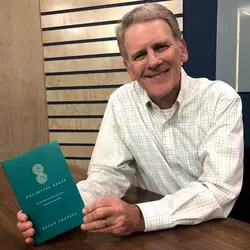
In Bryan Chapell's book, you will learn how God's unlimited grace leads us to heartfelt obedience and transforming joy. Explaining why grace is important and giving us tools to discover it in all of Scripture, Unlimited Grace helps us to see how gospel joy transforms our hearts and makes us passionate for Christ's purposes.
Past Episodes

Featured Offer
In Bryan Chapell's book, you will learn how God's unlimited grace leads us to heartfelt obedience and transforming joy. Explaining why grace is important and giving us tools to discover it in all of Scripture, Unlimited Grace helps us to see how gospel joy transforms our hearts and makes us passionate for Christ's purposes.
About Unlimited Grace
About Bryan Chapell
Bryan Chapell, Ph.D. is the Stated Clerk Pro Tempore of the Presbyterian Church in America (PCA), based in Lawrenceville, GA.
Dr. Chapell is an internationally renowned preacher, teacher, and speaker, and the author of many books, including Each for the Other, Holiness by Grace, Praying Backwards, The Gospel According to Daniel, The Hardest Sermons You’ll Ever Have to Preach, and Christ-Centered Preaching, a preaching textbook now in multiple editions and many languages that has established him as one of this generation’s foremost teachers of homiletics.
Dr. Chapell is passionate about sharing the truth of God's grace with others, because it provides the freedom and fuel for transformed lives of joy and peace.
He and his wife, Kathy, have four adult children, a growing number of grandchildren, and lives rich with friends, fishing and faith.
Contact Unlimited Grace with Bryan Chapell
info@unlimitedgrace.com