

Make Way For The Lamb - Part 1


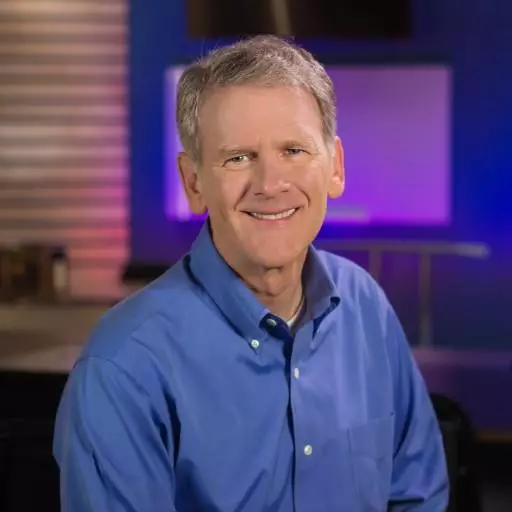
Pastor Bryan shares a lesson from John 1. As we investigate the life of John the Baptist, we see his pronouncing the coming of Jesus Christ. Dr. Chapell gives a good reminder from the humble words of John the Baptist, “I Am Not The Christ.”
Bryan Chapell: It is the faith that is the core of what we believe, why we gather here, not because we are good, not because we are better, but because we believe that when we trust in the blood of Jesus Christ, that the wrath of God passes over us, not our goodness but his, we trust in the blood of an innocent shed for us.
Guest (Male): So glad you joined us for today's Unlimited Grace, the audio broadcast ministry of pastor and author Bryan Chapell. In today's lesson, Pastor Bryan shares a message from John 1.
As we investigate the life of John the Baptist, we see his pronouncing the coming of Jesus Christ. Doctor Chapell provides a good reminder from the humble words of John the Baptist. "I am not the Christ."
You can find this lesson and many others when you visit unlimitedgrace.com. And while you're there, look for Pastor Bryan's book, The Multi-Generational Church Crisis. This compelling book asks the question of the church, "What could be accomplished in the name of Christ if we could better understand each other?"
Let's hear now from Dr. Bryan Chapell as he shares the lesson, "Make Way For The Lamb."
Bryan Chapell: There is an old parable that tells of a king who wanted to test the loyalty of his guests. And so he had a craftsman prepare a golden goblet, large and ornate, a goblet that could be filled with the finest wine that was intended to both please and intoxicate.
Because as the guests were being tested by the king, he would drink of the great blessing that the king were offering, not recognizing that at the very bottom of the goblet, only to be seen after the wine was drained, was an emerald serpent with diamond eyes of incalculable value.
The intent with the one who had drunk, now whose will and mind had been weakened, was to see if there would be a temptation to steal from the king who had been so generous.
The parable is not without application in the Christian life. For after all, it's at times when we have drunk most deeply of the blessing of the Lord that we become the most vulnerable to temptation.
You would think it the opposite, that when you're on some spiritual high, having just experienced some great blessing or won some great spiritual battle, that you would be at the absolute point of strength. But somehow lifted high, we are often on a cliff, ready for a spiritual fall.
What John is telling us through the example of John the Baptist is when you have drunk deeply of the blessing of the Lord, been tempted, and even fallen, at the bottom of the cup is mercy.
The way we see it is maybe through an unlikely person. We think of John the Baptist as being such a hero, a warrior for the Lord. After all, he is the one intended to announce who Jesus is. And he begins with great humility, declaring who Jesus is by first declaring who he, John the Baptist, actually is not.
You may remember the account as John is explaining who he is, people come and ask him, and he confesses, verse 20 of chapter one, "I am not the Christ." I'm going to announce him, but I am not he.
Who is the Christ? That Christ that the people are expecting is the fulfillment of the promise to David, that there would be a king from the line of David who would have an eternal kingdom to save God's people. And the people, the Jews, have been looking for centuries for this Christ to come.
And now as John is with great power in the wilderness declaring the word of God, people are saying, "Are you the Christ?" And John the Baptist says, "I am not he." "The one who comes after me is greater than me because he was before me." The true Christ is not me. Then they said, "Well, then are you Elijah?"
Do you know why they asked the question, "Are you Elijah?" Because if you're not the Christ, maybe you are the prophet who is meant to prepare for him. Some of you will recognize that the very last book of the Old Testament is the Book of Malachi. And at the very last book of the Old Testament, the very last chapter of the Old Testament, the very last verses of the last chapter of the last book of the Old Testament is a promise.
Elijah will come again to prepare for the very great and awesome day of the Lord. He will turn the hearts of the fathers to their children and the children to their fathers. There will be great repentance in the kingdom as God is preparing a way through his prophet. And now as John comes preaching repentance to the leadership and the people of Israel, people say, "Are you Elijah? Are you the one that God would send to prepare the way for the great Messiah at the end of time?"
And John the Baptist says, "I'm not Elijah either." "Then are you the prophet?" Now the words don't mean much to you, but to the Jews they knew exactly what was being asked. Moses, way back at the beginning of this writing of God's plan for his people, said that when he Moses had gone, ultimately, God would send another prophet like Moses, to whom God would give the word and deliver his people.
And so now the question is, if you are not Elijah, and you're not the Christ, are you that prophet who is going to be giving us the word of God in such a way that creation itself would be changed by the ultimate coming of the Messiah? And John the Baptist says, "I'm not the prophet either."
"Well, who are you then? If if you're not him, well," John the Baptist says, "I'm not the one who has the ability of the Christ." And this is said in very special language. If you look in your Bibles, in John chapter 1, you may remember in verse 26 of chapter 1 of John, John answers having said he's not Christ, not Elijah, not the prophet. He answered them in verse 26 saying, "I baptize with water."
"But among you stands one you do not know, even he who will come after me, whose sandal I am not worthy of latching." Now you say, "Why is John making a point that his baptism is with water?"
Baptism as we know it was not an unusual thing in Jewish households or practice. We don't recognize it so much anymore, but baptisms of various sorts were a regular purification practice in ancient Jewry. So that there were many forms of baptisms. You may remember at one point Jesus and his disciples got in trouble, think of it now, because they did not baptize their hands before they ate as the Jewish leaders expected them to do.
Well, they were expecting a purification ritual where people would hold out their hands and water would be poured over their hands. Even the tables were to be, quote unquote, baptized. The tables were to be washed with water. And of course, if you were to go up to the temple, it wasn't just tables or pots and pans or hands that were to be washed. You yourself were to be washed before you could enter the temple to pray or to offer sacrifice.
There were many types of, quote unquote, baptismos, baptisms. Some sprinkling, some pouring, some immersion, various ways in which the people of God would be purified externally, temporarily, to honor God. John says, "I baptize with water." But if you look at verse 33, he says that the one who is coming will do something else. Verse 33.
"I myself did not know him," this one who is to come, "but he who sent me to baptize with water said to me, 'He on whom you see the Spirit descend and remain, this is he who baptizes with what?'" "The Holy Spirit." This is something different. Not external and temporary. But there is one who comes to baptize, to cleanse with something that will be internal and life-giving.
There will be a Holy Spirit who comes and this cleansing experience will be absolutely life-changing as new life is imparted by the baptism of this Messiah, this Christ who is to come. I am not he. I am not that Christ. I have certain ability, certain gifts, certain calling, but I am not the Christ. Only he can give life.
Now as familiar as these words are to many of you, I want you to recognize their power in perhaps an unusual way. Kathy and I have a friend who when he teaches this portion of scripture to ministry students, actually has them go down the line of each desk in the class and repeat these words of John the Baptist. "I am not the Christ."
Which you might think is not a bad thing for ministry students to learn. I have gifts, I have the word of God, I can preach, I can teach, all these different things, but I am not the Christ. I am not the salvation of God's people. I just point to another. But of course, it's not just a good lesson for ministry students. It's a good lesson for the people of God.
Think about it. Now, 10 days ago, 260 of this church's leaders gathered together to think about our future. What does it mean to plan, to do God's will going forward into another generation? And we divided ourselves and will continue to be in various committees, talking about major issues that this church needs to be thinking about.
And you know, I am so encouraged as I think about who is on those various committees, different people of different backgrounds, ages, all kinds of different talented, smart, able, opinionated people who are being put on those committees.
And you know, all of us have strong thoughts, strong feelings about what we think ought to be the right way to go. And many good things will be discussed, but each one of us needs to be on our knees first before God saying something. What is it? "I am not the Christ."
If it doesn't go my way, if it's not my opinion, if it's not entirely my way, if I haven't got the final word, "I am not the Christ." And of course, it's not just for people in leadership, it's, it's parents, it's youth leaders. It's those of us in any way responsible for other people's lives. We're sometimes we see them going headlong into what we believe is folly. And we can do our best to share with them the thoughts that we have, the wisdom from God's word.
But ultimately, we must say, "I am not the Christ." I must pray for the one who is to work in your heart to do what I cannot do. Ultimately, it is not my power, my wisdom, my strength, my talent. "I am not the Christ." And so I get on my knees and I pray for something greater than me to accomplish what God must in this church.
I'm going to ask for you to do it right now. Can you just say these words with me? "I am not the Christ." Say it again. "I am not the Christ." It drives you to your knees. Because if I am not the Christ, I need him to navigate my life, to help get wisdom for other people's lives. I just begin this walk that John the Baptist is leading me on by echoing his own words, "I am not the Christ. I need him."
Guest (Male): You're listening to Unlimited Grace, the audio broadcast ministry of pastor and author Bryan Chapell.
It may seem hard for younger Christians to believe, but people over 50 were raised during an era when 90% of Americans identified as Christian. These older believers were once part of a majority group that understood the mission of the church was to take control of our culture, to halt its evils. At the same time, Christians under 50 have lived their entire lives perceiving themselves as a minority that needs to make credible their faith to a secular, pluralistic culture.
These distinct experiences and perceptions have a profound impact on the priorities different generations have for church ministry. It's no wonder that younger and older believers don't always see eye to eye.
In his new book, The Multi-Generational Church Crisis, Dr. Bryan Chapell asks the question, "What could be accomplished in the name of Christ if we could better understand each other?" This practical and hopeful book is backed by thorough research, revealing how to open the lines of communication, appreciate the experiences that shaped each generation in your church, and unite in one mission to impact your community and the world.
You can request your copy of The Multi-Generational Church Crisis when you donate online at unlimitedgrace.com or by calling 844-41-GRACE. That's 844-414-7223.
And now, more from Bryan Chapell on today's Unlimited Grace.
Bryan Chapell: "I am not the Christ." It drives you to your knees. Because if I am not the Christ, I need him to navigate my life, to help get wisdom for other people's lives. I just begin this walk that John the Baptist is leading me on by echoing his own words, "I am not the Christ. I need him."
So much does John want us to hear that. He declares not only who he is not, he is not the Christ. He declares who he is. Do you remember that's verse 23. "I am the voice of one crying out in the wilderness, make straight the way of the Lord as the prophet Isaiah said." Why would John have been sent by God out into the wilderness to declare the coming of Jesus? I mean, why not in the city, in the place of population?
I think I had some sense of it a few years ago when I was with a team and we were establishing a school in very rural Kenya. We were three hours beyond the very last rail stop. All paved roads were many, many hours back behind us. We were way, way out in the bush.
And because we were establishing this theological education school where there had not been one previously in Kenya's history, we actually got a visit from the Vice President of Kenya. Now he did not come along the dirt trails that we had followed. He came in a helicopter with a military escort.
And I cannot tell you what it does to you when you are out in the middle of a jungle, which you'd think you're hearing lots of noise because of the animal noises, but it is nothing like the thumping of the military helicopter that is coming. And I am telling you, it is shattering. You just want to tremble as you start hearing these military helicopters come through the jungle. The noise that would be drowned out in a civilized large city, you hear unfiltered and straight when you're in the wilderness.
And John is saying in the wilderness, "You make straight. You make a way for the one who is coming." And then tells us who he is. You know these words, they are verse 29, and Scott mentioned them earlier. "The next day, he, that is John the Baptist, saw Jesus coming toward him and said, 'Behold, the Lamb of God who takes away the sin of the world.'"
Why lamb? Why should the Prince of Heaven be identified as a lamb? Well, because he's the fulfillment of prophecy. You may remember the words of Isaiah that are being cited here. Isaiah speaking of the coming Messiah says, "He was oppressed and afflicted, yet opened not his mouth. Like a lamb led to slaughter. And like a sheep before his shearers."
What Isaiah is saying and John is quoting is the way in which salvation will come through this Christ that God has promised is through suffering and sacrifice. The king who comes will be wounded deeply. It's really the fulfillment of the promise that we talked about that began at the beginning of human history.
As God, having said, "I must rescue a people who've been led astray by their own selfishness," made a promise. Speaking actually to Satan, "I will put enmity and antagonism between you and the woman, between your seed and her seed. You will strike his heel, he will crush your head. You will in fact wound him before he has the victory over you."
It is the message that is fulfilled as we understand it by all that Christ would do, that he would come to defeat sin and Satan in our lives, but it would be through his own wounding, through his own sacrifice. He would have to become a lamb. And the the archetypal illustration, the most typifying example of that in all the Bible is the Passover lamb. Remember the account?
As the people of Israel are in slavery in Egypt, and as Moses, the prophet, is sent to deliver them. He begins to tell Pharaoh, "Let my people go," but Pharaoh will not let them go until the very last of the plagues. As God finally to break the will of the one who holds his people captive, says, "You tell Pharaoh that I will require the firstborn of all the households of Egypt, but to my people say this, 'You take a lamb without blemish and sacrifice it and put its blood on the doorpost of your house.'" And God says, "When I see the blood in which you have put your faith, I will pass over you."
It is the message that God's people claim ever since, that when Christ came as the unblemished lamb, the one who was without sin, the one who was innocent, and yet would take upon himself our sin, that what would occur would be a great exchange. John says, "He is the Lamb of God who would take away the sin of the world." But the way that he takes away the sin of the world is by taking it on himself.
And what happens is that your sin and mine is made right before God because Christ took the penalty in his sacrifice. It is the thing that you and I must say to one another, to those who do not know the essential message of the gospel, that what God would do through Jesus Christ is he would let his son suffer for your sin and for my sin.
And as we believe that, as we believe it was his blood that makes us right with God, faith in that has our sin taken away. The great exchange takes place. And it's why I say to you, to any who would hear today, if you don't know that, if you don't understand it, it is the faith that is the core of what we believe, why we gather here, not because we are good, not because we are better, but because we believe that when we trust in the blood of Jesus Christ, that the wrath of God passes over us, not our goodness but his.
We trust in the blood of an innocent shed for us. And as a consequence, our sin is taken away by the promise of God. Behold, the Lamb of God who takes away the sin of the world. He is my Jesus. That is why I believe in him. He did this for such as I.
Now for many of you in the room, that's the old, old story. And we love it, and it is wonderful. It is not the end of the story that you need to hear. What I've read to you is the most familiar portion of the life of John the Baptist, as he is declaring the wondrous truth of the Lamb of God.
But Paul Harvey, some of you in the room will know who that is, used to always end his news broadcast by saying what? "Now you need to hear the rest of the story." And for that I'm going to ask that you look at another place in your Bibles. That you look at Matthew chapter 11, as we look at what now happened to John the Baptist. The one who has had such power and privilege in announcing the Lamb of God. What's the rest of the story?
Matthew chapter 11 and verse 2. "Now when John, and that is John the Baptist, now when John heard in prison about the deeds of the Christ, he sent word by his disciples and said to them, 'Are you the one who is to come, or shall we look for another?'" And Jesus answered them, "Go and tell John what you hear and see. The blind receive their sight and the lame walk, lepers are cleansed and the deaf hear, and the dead are raised up and the poor have good news preached to them. And blessed is the one who is not offended by me."
Did you get it? The very one who has early in the ministry of Jesus said, "This is the Lamb of God who takes away the sin of the world." And by the revelation of God, "I declare to you, this is the Son of God."
We're now two years later in the life of John. Where is he? He's in prison. And he sends some of his messengers to ask Jesus a question. Really? Really? Are you the one? Or are we supposed to look for another?
The very one who's had such privilege and power in declaring who Christ is has now fallen off a cliff of spiritual confidence. And he asks this terrible question, "Are you really the one?"
Guest (Male): That's Pastor Bryan Chapell, and you've been listening to Unlimited Grace. Doctor Chapell will continue this lesson next time, and we'll see the response to John's questioning of Jesus.
Please be sure to join us next time as once again we endeavor to put Christ at the center of our efforts so that lives might be transformed by his unlimited grace. This ministry is brought to you by Unlimited Grace Media and continues to be made possible with your generous financial support.
Featured Offer

In Bryan Chapell's book, you will learn how God's unlimited grace leads us to heartfelt obedience and transforming joy. Explaining why grace is important and giving us tools to discover it in all of Scripture, Unlimited Grace helps us to see how gospel joy transforms our hearts and makes us passionate for Christ's purposes.
Past Episodes

Featured Offer
In Bryan Chapell's book, you will learn how God's unlimited grace leads us to heartfelt obedience and transforming joy. Explaining why grace is important and giving us tools to discover it in all of Scripture, Unlimited Grace helps us to see how gospel joy transforms our hearts and makes us passionate for Christ's purposes.
About Unlimited Grace
About Bryan Chapell
Bryan Chapell, Ph.D. is the Stated Clerk Pro Tempore of the Presbyterian Church in America (PCA), based in Lawrenceville, GA.
Dr. Chapell is an internationally renowned preacher, teacher, and speaker, and the author of many books, including Each for the Other, Holiness by Grace, Praying Backwards, The Gospel According to Daniel, The Hardest Sermons You’ll Ever Have to Preach, and Christ-Centered Preaching, a preaching textbook now in multiple editions and many languages that has established him as one of this generation’s foremost teachers of homiletics.
Dr. Chapell is passionate about sharing the truth of God's grace with others, because it provides the freedom and fuel for transformed lives of joy and peace.
He and his wife, Kathy, have four adult children, a growing number of grandchildren, and lives rich with friends, fishing and faith.
Contact Unlimited Grace with Bryan Chapell
info@unlimitedgrace.com