

Life of Lizards and Stallions - Part 1


Pastor Bryan shares a lesson from Ephesians 4. Dr. Chapell leads a study of the Christian faith and the call to turn from our sin that can numb us and to be made new.
Bryan Chapell: Tomorrow is not hopeless, today you are not powerless. Evil shall not win. Christ shall reign and He is here. And that reality of the power of Christ for us is to be claimed for the spiritual warfare that is certain to face us.
Guest (Male): So glad you joined us for today's Unlimited Grace, the audio broadcast ministry of pastor and author Bryan Chapell. In today's episode, Pastor Bryan shares a lesson from Ephesians chapter four. Dr. Chapell leads a study of the Christian faith and the call to turn from our sin that condemns us and to be made new.
You can find this lesson and many others when you visit unlimitedgrace.com. And while you're there, look for Pastor Bryan's commentary on the book of Ephesians, which he wrote for the Reformed Expository Commentary series. Dr. Chapell reveals how when we lift our eyes beyond ourselves to share Paul's expansive vision, then we too will join his doxology for God's amazing grace that transforms the world. Let's hear now from Dr. Bryan Chapell as he shares the lesson "Life of Lizards and Stallions."
Bryan Chapell: In his book "The Great Divorce," C.S. Lewis describes a young man who is troubled by a red lizard that always sits on his shoulder. The red lizard is an analogy for a besetting sin—things that he and we sometimes just cannot be rid of. At the same moment, the red lizard attracts us and tells us what good things are available in the things of the world, and at the same moment, mocks us by saying, "When you get it, it really didn't satisfy, did it?"
One day, an angel comes to the young man and promises he can get rid of the red lizard. And the young man is thrilled; he can be rid of this mocking temptation in his life. How? He begins to discern it as the angel begins to glow red-hot. Suddenly, the young man recognizes what the angel intends to do is to kill the red lizard. And now he gets a little afraid. What would life be like without this particular thing in his life? And so he says to the angel, "Well, maybe another day. I mean, you don't really have to kill it, do you?"
And the angel said, "This is the moment of all moments. You must decide." At that moment, the red lizard himself recognizes the danger that he is in and begins to plead with the young man. "That angel can do as he says. He can kill me. One fatal word from you and he will, and then you'll be without me forever and ever. It's not natural. How could you live without me? You'll only be a sort of a ghost, not a real man as you are now. That angel doesn't understand; he's only a cold, bloodless thing. It may be natural for him to be holy, but not us. I know there's no real pleasures for you now. I know you only dream about the things that are good, but dreams are better than nothing, aren't they? And I promise you, I'll be so good in the future. I admit sometimes I've gone too far in the past, but I promise I won't do it again. I'll give you nothing but nice dreams. They will be sweet and fresh and almost innocent."
And so the red lizard pleads for his life. It's the internal conscience desiring the things that we know are not of God. And the way we excuse them is sometimes saying, "But listen, it's only human. I'm not superhuman. To be some sort of dead, cold, holy thing is not really natural for anyone. And beside, it's almost innocent what I'm pursuing. It's not really hurting anybody. It's got to be better than the alternative."
And the Apostle Paul, dealing with such temptation that comes out of our own hearts, writes to us these hard but important words of verse 17 in Ephesians 4: "Now this I say and I testify in the Lord that you must no longer walk as the Gentiles do in the futility of their mind." He is saying simply that the calling of a Christian is to a separated path. If what we are doing is simply walking down a path like everyone else, there is something radically wrong with our lives. God is calling us to something different, but not just different—better.
Because not to follow what the Apostle Paul is calling us to, a life with Christ, is to live a life of futility. Now the apostle is honest that turning away from the life of futility, turning from the path that everybody else is walking on, is not always easy. And so he says, "Now this I say and testify in the Lord." That word "testify" is the Greek word *martureō*, as in martyr. As when Sam Dunlap prayed just a little bit ago about the persecuted church and you could hear the tears in his voice as if to say, to walk with Christ will cost you something.
What might it cost you? I'm going to ask that the very last slide that I showed you from our trip be put back up on the screens and maybe show you something you did not notice the first time around. Paul the Apostle, who wrote these words to those at Ephesus about needing to testify, *martureō*, be a martyr for the things of God, would himself have been imprisoned about 300 yards to our right for three years awaiting a trip to Rome so that he could testify to the things of the Lord Jesus Christ.
But that's not just an ancient thought, that those who live for the Lord will have to spend something of themselves. Did you notice between these two people in our group, there are a couple of individuals in the aqueduct opening? Do you see those two people? Those are leaders of the Coptic church. What do you know of the Coptic church happening just two months ago? 21 Coptic Christians beheaded in Libya for saying "Jesus is my Lord."
Not only did we walk with Coptic Christians when we were in Israel, at the hotel we stayed, we stayed with Ethiopian Christians. Some of you know that in the last week, 30 Ethiopian Christians were beheaded or shot for their faith. For us to think that to walk with Christ, who sacrificed Himself for us to be united to Him, would cost us nothing is not to face the reality of what the apostle says is necessary. To walk differently from the world is in itself costly.
The question for us is, why then do it? And the response of the apostle is because anything else is absolute futility. It's actually what he has said at the end of verse 18, that you must no longer walk as the Gentiles in the futility of their minds. I want you to think with me what it would mean to live in futility. To live in futility is to keep grasping after something you cannot get, or to get it and find out it does not satisfy. It's fool's gold. It's something hollow. It's to live the life of a lizard—to just live to catch flies, and having caught some, want some more flies.
That's the life of futility the apostle is warning us against and saying, "I want you to know, I know it sounds shocking and arresting, but it's the way the apostle is addressing us." What it would be like to live the life of lizards? To have the earth, the terrain, the dirt, this material world be the only thing that drives you, the only thing in your existence? To live as the Gentiles, to live as those who don't know God—what would that life be like?
He explains when he says in verse 18: "They are darkened in their understanding, alienated from the life of God because of the ignorance that is in them, due to the hardness of their heart." The first mark of this lizard life, this terrestrial existence that's all we know, is to actually have absence of the light of spiritual understanding. To live in a darkened world that no longer has the spirit's light coming in.
For those of us who were just in Israel, there was a time at which we go to the Wailing Wall where even now, centuries and centuries after the Temple of Solomon has been destroyed, people go there regularly to pray and put little prayer notes in the cracks in the wall as somehow that's a holier or better place. But that is not as discouraging as to actually go in the tunnel beside the wall and to get to the one place where Jews believe that beyond that wall, where the Muslims now control, beneath the earth is the Holy of Holies. And to be in this dark tunnel where women come every day and sit in chairs in the dark and pray to the wall and to grieve.
Darkened in understanding, as though somehow being in the right place and praying at the right place and the right wall is somehow going to bring the Spirit of God to you. It's darkened in understanding. But more painful is the apostle saying that those who are darkened in their understanding are alienated from the life of God because of the ignorance that is in them, due to the hardness of their heart. They are alienated from God. There is not the penetration to the reality of the spiritual world that God intends, the light really to come in to make your life bright and free and have the power of God there.
Guest (Male): You're listening to Unlimited Grace, the audio broadcast ministry of pastor and author Bryan Chapell. The Apostle Paul wrote the letter to the Ephesians to declare God's plan that the gospel of Jesus Christ would reach the world through weak and sinful people like you and me. He writes that God has redeemed us to unite all things in Him, things in heaven and things on earth. When we lift our eyes beyond ourselves to share Paul's expansive vision, then we too will join his doxology for God's amazing grace that saves individuals, empowers the church, and transforms the world.
Yes, such grace really is possible, and Pastor Bryan's commentary on the book of Ephesians clearly teaches the details of this amazing truth. As a thank you for your support of our ministry here at Unlimited Grace, we would like to send you a copy of Dr. Chapell's commentary, which he wrote for the Reformed Expository Commentary series. You can request your copy of the commentary on Ephesians when you donate online at unlimitedgrace.com or by calling 844-41-GRACE. That's 844-414-7223. And now, more from Bryan Chapell on today's Unlimited Grace.
Bryan Chapell: Some of you snowbirds are back now, and so when I talk about geckos, you recognize that's not just something in an insurance commercial. When you're in Florence, the geckos are everywhere. They're on your path, they're on your patio, they're on your screens. And sometimes when we have gone to Florida, just to entertain my kids, I'll take one of the geckos off the screen and hold it to my finger and it just clings to me. It doesn't even try to escape because its only reality is the extent of its instincts and the patio. That's the only world it knows.
And the apostle is saying that to be darkened in understanding, to be futile in what you are pursuing, is not to have the life of God because all you know is the terrestrial existence. Your experience is only that of the material world. And the reason that is the only experience of those who are turning away from God is the apostle says at the end of verse 18, the hardness of their hearts.
This is not pleasant to talk about. The word "hardness" there actually is a word talking about the stubbornness of people. As though there has been the opportunity to see beyond the terrestrial world, to lift your eyes above the dirt, to know something beyond the material, but there is resistance. There's a stubbornness, a hardness of heart.
We experienced it in our trip, and those of you who travel in Israel know that you typically will have a Jewish Israeli guide even as you go to the Christian sites, and they kind of know what Christians expect to hear and they kind of know what Christians expect to be told about. But it was interesting on this particular trip as we would go to traditional sites, that our particular guide had not heard some of the explanations that we were talking about.
How when Jesus came into the world, He made specific actions and trips that were declaring Himself to be the greater Abraham. That He did very specific things to prove that He was the greater Moses. That He went in a specific way to prove that He was the greater David. That He made a specific path to show He was the greater Joshua. That God was putting together this mosaic through the Old Testament, one common thread going across time and centuries and armies and nations to say, when Jesus comes, what He does will declare Himself to be the culmination of all things.
And our Jewish guide began to get it, to actually say Jesus was doing things that no other prophet had done, that no other person had done. And He actually in our very last stop began to say it—that when David was king over Israel, he said to those who were lame and blind, they could not enter the holy city. But when Jesus performed His miracles in Jerusalem, there were only two: He healed the lame and the blind within the city walls. And our guide said, to show that He was the greater David.
And we're thinking, "He gets it!" We're not telling him the story; he's now telling us the story. And so at dinner that night, some of our brave co-travelers actually said to our guide, "If you believe that Jesus is the greater David, why do you not believe that He is your Messiah?" And the answer was, "Because then I could not be a Jew. I could not be the person that I want to be." It's not that I haven't had opportunity, it's not that I don't know the story, it's not that I haven't heard the word, but there is this refusal to accept.
By the way, there's a pastor going to stay with him fairly soon for two weeks just to be a witness of the gospel to him. Pray about that as an openness is growing. But it's the hardness of the heart that can turn it away. And I know when you hear that, we all will say, "Well, I'm glad that's not me." But it's just what Paul is saying. He is warning people. Listen, have you really said, "I know what God says, but then I can't be the person I want to be, so I reject it"?
In marriage decisions, "I can't do what the Bible says because then I could not be the person I want to be or be with the person I want to be." In our entertainments, "I can't walk the walk of Christ because then I could not have the fun that I want to have." In our ethics, in our generosity, "I can't give up that position, I can't give up that money, because then I could not have the things that I want to make me who I am." And we think it's just somebody out there somewhere who by the hardness of their heart is not going to walk in the goodness and the glory of the gospel.
And yet over and over again, this is our temptation—to recognize that we are living just as the Gentiles do, just like the rest of the world. If there's no different path that we are on, there is something wrong with our priorities according to scripture. And what we're ultimately doing is pursuing the futile things, the things that promise help but actually turn us dead.
I cannot help but think of the occasion when a pastor friend told me some years ago of meeting with a man who was now pursuing a woman not his wife. And at the breakfast table in the restaurant, the pastor said, "Look what you're doing to yourself, to your family, to your witness." And the man's response was, "I have never felt more alive." But my pastor friend said he said it with steely cold eyes as though his heart was dead.
We think it's going to make us more alive. But the apostle says precisely what happens. The hardness of their hearts takes over, and the consequence of that hard heart he begins to explain. Do you see it? Verse 19: "They have become callous and given themselves up to sensuality, greedy to practice every kind of impurity." It's just a process—that if there's a willingness to turn away from the things of God, if there's a hardness, a stubbornness not to receive it, our hearts get hardened.
And when your heart gets hard, your body, your senses, the things of this world, you just become insensitive to them. I've experienced it, some of you have too, when you're in a hospital or you're in a home at that death moment. And as the sclerosis of a heart, as the hardening, as the deadening of the heart occurs, you can hold the hand of a loved one. And at the very moment that their heart is dying, what are their minds screaming for? "I want to feel you. I'm holding your hand, I don't feel it. Squeeze me, squeeze. I don't feel it. Squeeze harder, harder."
Or you put your arms around them and you hold them. "Hold me tighter, tighter." Because as the heart is dying, the body, the mind is actually craving for the senses to be fulfilled. And we recognize it happens even spiritually—that when we turn away from the things of God, we think, "I'll pursue this entertainment, this career, this person, this passion, and I'll feel fulfillment." Instead, as our hearts die and become hard, what happens is our passions, our bodies, our senses just begin to crave more.
It's precisely what the apostle says will happen. Verse 19: "They have become callous, have given themselves up to sensuality, greedy to practice every kind of impurity." I mean, those of you who are in the psychology professions, the medical profession, you know these truths. I mean, we sometimes tease about it—that so much indulgence of internet pornography actually desensitizes the body to passion. And so people just now long for more and more. More graphic, more aggressive, more of it. I just want to feel something again.
Because the indulgence of the thing that is ungodly actually is hardening your heart and your body now just wants more. And of course the thing that is most precious, which is the pattern of sexuality that God intends for a man and a woman, just doesn't satisfy anymore. And so we become greedy for every kind of impurity just to feel something again.
The people who lust for money pursue it and pursue it until ultimately they are desensitized to the satisfaction of present possessions. "I need something more. How much more? Just more, more and more, because I'm looking for the things of earth to satisfy." The people who have a passion for a higher position and so they get desensitized to the privileges of the place God has put them in life—to be the witness, to be the light to people around them. "I want more, I want higher." Why? Do you recognize you're the lizard chasing flies, and when you get the fly you're just going to want another fly?
It's the path we go. The people who feed on bitterness because somebody has hurt them or hurt their family, and not being able to forgive, they want vengeance and satisfaction. And what's actually happening when we do not pursue the priorities of scripture is our own hearts get hard. And the loveliness of family and people united and wanting to be close to us—they actually begin to stand away from us because they sense the bitterness in us. It may even be justified.
But as our hearts become hard, we even stop feeling the goodness of the love that God would bring into our lives. And so we long for it. "I want somebody to love me, care for me," but the vengeance, the greed, the bitterness hardens us, and so we don't even enjoy the very thing that God intends to bring us, the compensation as it were for the hurt that came by the love that is near but doesn't touch us anymore because of our hard hearts.
Guest (Male): That's Pastor Bryan Chapell, and you've been listening to Unlimited Grace. If this message has been an encouragement to you, you can find a collection of more valuable resources at unlimitedgrace.com. When you visit, you will find today's message and many others from Pastor Bryan. Also, be sure to request a copy of Dr. Chapell's commentary on Ephesians. We'll send you this book right away as our way of saying thank you for your most generous financial support.
Please be sure to join us next time as once again we endeavor to put Christ at the center of our efforts so that lives might be transformed by His unlimited grace. This ministry is brought to you by Unlimited Grace Media and continues to be made possible with your generous financial support.
Featured Offer
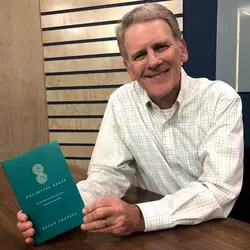
In Bryan Chapell's book, you will learn how God's unlimited grace leads us to heartfelt obedience and transforming joy. Explaining why grace is important and giving us tools to discover it in all of Scripture, Unlimited Grace helps us to see how gospel joy transforms our hearts and makes us passionate for Christ's purposes.
Past Episodes

Featured Offer
In Bryan Chapell's book, you will learn how God's unlimited grace leads us to heartfelt obedience and transforming joy. Explaining why grace is important and giving us tools to discover it in all of Scripture, Unlimited Grace helps us to see how gospel joy transforms our hearts and makes us passionate for Christ's purposes.
About Unlimited Grace
About Bryan Chapell
Bryan Chapell, Ph.D. is the Stated Clerk Pro Tempore of the Presbyterian Church in America (PCA), based in Lawrenceville, GA.
Dr. Chapell is an internationally renowned preacher, teacher, and speaker, and the author of many books, including Each for the Other, Holiness by Grace, Praying Backwards, The Gospel According to Daniel, The Hardest Sermons You’ll Ever Have to Preach, and Christ-Centered Preaching, a preaching textbook now in multiple editions and many languages that has established him as one of this generation’s foremost teachers of homiletics.
Dr. Chapell is passionate about sharing the truth of God's grace with others, because it provides the freedom and fuel for transformed lives of joy and peace.
He and his wife, Kathy, have four adult children, a growing number of grandchildren, and lives rich with friends, fishing and faith.
Contact Unlimited Grace with Bryan Chapell
info@unlimitedgrace.com