

Inviting 5000 to Dinner


Pastor Bryan shares a lesson from John 6. Dr. Chapell highlights the feeding of the 5000 and how this miracle proves that Jesus is who He says He is and that God’s promises are real.
Bryan Chapell: Through it all, there has been this promise: the Messiah will come. There is one who will deliver you. There is one who will set you free. Can they believe it? Can they trust that it is real? And this account, more than any other in the miracles of the New Testament, is meant to say: you can trust the promises are real.
Guest (Male): So glad you joined us for today’s Unlimited Grace, the audio broadcast ministry of pastor and author Bryan Chapell. In today’s episode, Pastor Bryan shares a lesson from John chapter six. Dr. Chapell highlights the feeding of the 5000 and how this miracle proves that Jesus is who He says He is and that God’s promises are real.
You can find this lesson and many others when you visit UnlimitedGrace.com. And while you’re there, look for Pastor Bryan’s book, The Multi-Generational Church Crisis. This compelling book asks the question of the church: what could be accomplished in the name of Christ if we could better understand each other? Let’s hear now from Dr. Bryan Chapell as he shares the lesson, Inviting 5000 to Dinner.
Bryan Chapell: There are miracles throughout the New Testament, but no biblical book gives all the miracles. Instead, the biblical writers take from the various accounts of Jesus' life and they use those accounts that will fulfill the purpose for their particular book as they are writing with particular emphasis. There is only one miracle that makes all four Gospels of the Bible. Only one. It’s this one. Only the feeding of the 5000. Only this big meal that all the Gospel writers are celebrating.
If every single one of them would include this big celebration, what are they celebrating that no one can exclude it? I suppose the way to think about it is not just to think about the big meal itself. If you can imagine what this passage is about, don't think about all the food for the moment. Not the sweet potatoes with the marshmallows, not the turkey, not even the lime Jell-O. Now you're thinking about it, aren't you?
Not even all the people around the table who laugh and tell stories—the one that tops the other that tops the other to talk about things sentimental or funny. I want you to get the sense of this passage by thinking about the person that doesn't participate. They sit around the table, but by emotion or action, are somewhat beyond the conversation. When they speak, they speak too much and then look down as though they have betrayed something.
Some hurt or pain or disappointment or loss that is so deep that to participate in the celebration is seeming to betray their own pain. They smile, but when they smile, it is a mask because something has happened. Some loss or abuse or devastation or hurt is there. What happens is they have lost the ability to trust. The meal itself, as much as it is celebrating the great provision of God, doesn't seem to penetrate to what actually is the loss within them that makes them wonder if they can trust the meal, can trust the people, can trust the Savior who says that He is supposed to take care of them.
What you're looking at in the 5000 is 5000 people plus more who have lost trust. They are under the oppression of the Romans. That's only the last of the armies of the aliens who have come in to overwhelm them and oppress them and take their taxes and put them in slavery over and over again. And yet through it all, there has been this promise: the Messiah will come. There is one who will deliver you. There is one who will set you free. Can they believe it? Can they trust that it is real?
This account, more than any other in the miracles of the New Testament, is meant to say you can trust the promises are real. After all, what is Jesus doing when He presents all of this food to so many? He is first of all just declaring His nature. It happens so subtly, beginning we don't really understand all that is happening. In verse five, we read these words: "Lifting up his eyes then and seeing that a large crowd was coming toward him, Jesus said to Philip, 'Where are we to buy bread so that these people may eat?'"
We know from other biblical passages this is Philip's home region. He should know the place. And so Jesus says to Philip, "Where's the Kroger? Where's the Aldi? Where can we get some bread? Where can we get some meals for these people?" And of course, Philip answers in verse seven: "Two hundred denarii"—now that's 200 days' wages, maybe $20,000—"would not buy enough bread for each of these to get even a little." Now you don't understand Philip's consternation until you actually do the math a little bit more.
There were 5000 present, but do you remember the gender that is identified? There were 5000 men. And the actual Greek word means able-bodied men, like men who could join an army, overcome an oppressor. 5000 able-bodied men, but they're not the only ones there. Their families, their kids, grandparents—those who do the estimates say there weren't just 5000 here, there may have been 20,000 here. And Philip is quite right when he says, "Listen, a dollar per person is not even going to get them a little."
It's not just that there's little money. You recognize what else is the problem. Verse eight: "One of his disciples, Andrew, Simon Peter's brother, said to him, 'There is a boy here who has five barley loaves and two fish, but what are they for so many?'" That's a good question. Five loaves and two fish for 20,000? How is that going to provide? Of course Jesus is not just showing great wisdom in saying He knows what He is going to do. He is showing great power when He begins now to provide for those who are present.
Do you remember what happened? Verse ten: "Jesus said, 'Have the people sit down.' Now there was much grass in the place, so the men sat down, about 5000. And then Jesus took the loaves, and when he had given thanks, he distributed them to those who were seated; so also the fish, as much as they wanted. And then when they had eaten their fill, there was more left over." I just had to do it on a napkin. 20,000 people, five loaves, two fishes. And He's providing so much that they don't want any more. They are actually filled. This is the post-Thanksgiving meal feeling. They are full.
What would that have meant in today's terms? If you are providing bread for 20,000—just assuming a loaf of bread would make about ten sandwiches—that's 2000 loaves. If you didn't even give a quarter-pounder of fish to all the people, just a fifth of a pound so that they've got to be full, right? At the end there's a lot of fish. A fifth of a pound for 20,000 people? That's 4000 pounds of fish. That's two tons. If you just take a little while, take a half an hour to organize the people into groups of 50 that they sat in, and then you begin to distribute. That means you have to be producing a loaf of bread a second and two pounds of fish a second.
This is the fastest McDonald's on steroids. I actually can't even visualize how this is happening, that He is breaking the bread and fish and it is mounting up so fast that in whatever time it takes to feed the people, to get them down and seated, you have two tons of fish and 2000 loaves of bread. This is an incredible display of power. And we read earlier, of course, that Jesus knew He was going to do it. Even though He asked Philip, "Where's the Kroger?" He says, "I'm doing this to test Philip, not because I don't know what I'm going to do."
There is extraordinary wisdom and extraordinary power on display, and yet as great as the wisdom and power, it is not reason to trust Jesus. When I was in grad school, the first car I ever owned came my way and it was a Plymouth Cricket. Now, if you haven't heard about a Plymouth Cricket, the reason is Chrysler imported it only one year from England. And there was a reason that they imported it for only one year. During the time that I owned the Plymouth Cricket, somehow I got the feeling that people who own cars have breakdowns about every 300 miles.
I just assumed that was the norm because I owned a Plymouth Cricket and that's what happened. And by the way, the parts are in England. This is a problem. At least I learned a little bit about car repair by owning a Plymouth Cricket, but I didn't know nearly as much as my father. And so about Thanksgiving time one year, I was taking the trip from St. Louis to Memphis, and on the trip my Cricket did what it could be relied upon to do: it broke down on the way to Memphis.
My father, I well knew, had the knowledge to know how to fix my car. He also had the tools and the power to fix it. But he's in Memphis and I'm a hundred miles away. I don't just need him to have knowledge and power. I need him to have the heart to come. And what we're seeing in the feeding of the 5000 is not just Jesus' great wisdom and not just His great power, but His great heart. He looked at the crowd and He saw that they were harassed and helpless, like sheep without a shepherd. And He said, "How can we help them?"
Guest (Male): You’re listening to Unlimited Grace, the audio broadcast ministry of pastor and author Bryan Chapell. It may seem hard for younger Christians to believe, but people over 50 were raised during an era when 90% of Americans identified as Christians. These older believers were once part of a majority group that understood the mission of the church was to take control of our culture, to halt its evils. At the same time, Christians under 50 have lived their entire lives perceiving themselves as a minority that needs to make credible their faith to a secular pluralistic culture.
These distinct experiences and perceptions have a profound impact on the priorities different generations have for church ministry. It’s no wonder that younger and older believers don’t always see eye to eye. In his new book, The Multi-Generational Church Crisis, Dr. Bryan Chapell asks the question: what could be accomplished in the name of Christ if we could better understand each other? This practical and hopeful book is backed by thorough research, revealing how to open the lines of communication, appreciate the experiences that shaped each generation in your church, and unite in one mission to impact your community and the world.
You can request your copy of The Multi-Generational Church Crisis when you donate online at UnlimitedGrace.com or by calling 844-41-GRACE. That’s 844-414-7223. And now, more from Bryan Chapell on today’s Unlimited Grace.
Bryan Chapell: You may remember that before Jesus began to distribute the bread, in verse 11, we read this key thing: "Jesus then took the loaves, and when he had given thanks, he distributed them." There has to be an authority that's asked for. He's recognizing there's an authority beyond Himself, and the people recognize there's an authority beyond Jesus. They recognize the Romans are in authority. They recognize Jesus is recognizing a higher authority. So even if Jesus has wisdom, even if He has power, even if He has a heart to help, does He have the authority to help us?
The things that are obscure to our modern eyes are what the Jews began to recognize was the declaration of His authority as well as of His nature to help. The authority is in display as you read verse 14. After Jesus has distributed, we read this: "When the people saw the sign that he had done, they said, 'This is indeed the prophet who is to come into the world.'" Now, it's unfamiliar language to you, "the prophet", but the Jews had a very specific reference in mind. In Deuteronomy 18, Moses, as he was preparing to leave the exclusive authority of Israel, said to the people: "There is one who comes after me who will be like me, but greater than I."
There is a greater Moses to come. Now, why would that come to the people's minds? I'm just going to call on some of you to think back to your Bible knowledge a little bit and recognize why people would be thinking about Moses at this time. Way earlier in this passage, something that just goes by very quickly is verse four. What time of year is it that Jesus is offering all this food to the people? It says at the beginning of verse four: it was the time of Passover. What happened at the very first Passover? Moses delivered the people from slavery.
Now it is the time of Passover. And as the people get into the desert, they begin to get hungry. They're in a desolate place. And what does Moses pray for? And what does God provide from heaven? Manna. Bread from heaven is provided for the people. And when Moses addresses the people, he goes up upon a mountain to address the people. Where does Jesus go? He's up on a mountain. Now the one that you may not have thought about is this: after He has provided for them from the mountain, something happens next.
If you'll just let your Bible go down a little bit more in John chapter six, what happens after the feeding of the 5000? Jesus walks on the water. He crosses water as though it is dry ground. And do you remember what happens when one of the apostles starts to fade into the water? What does Jesus do? He lifts him up as though he too can walk on dry ground. There is manna in the wilderness, there is addressing the people from the altar, it is the time of Passover, and it's followed by a water miracle in which people pass over as though on dry ground.
Would you think of Moses? If you were a Jew, you would be thinking of Moses, but you would say this: He did it Himself, and right before our eyes. This is the greater Moses. This must be the prophet. And even then, you're not done with what a Jew would be thinking. Earlier in this passage, you may remember that one of the disciples said, in verse nine, "There is a boy here who has five barley loaves." In Second Kings chapter four, there is another multiplication of loaves. A young man comes to Elisha. Elisha followed Elijah.
Elijah, as he was ending his rule, was told, "There will be one who comes after you who is greater than you." That was Elisha. And during the time of Elisha, there was a group of people who began to be in want. And there was a young man who came to Elisha and he had with him barley loaves. And Elisha began to break the loaves and multiplied them and gave them to a hundred people. A couple of key things: that word for young man in Greek in the Bible of Jesus' time, that word only appears here in John six in that verse. It's the only place that word appears and it's the same word that was used of the man who helped Elisha.
And the loaves were barley then and the loaves are barley now. What the people are saying is, "This is Elisha, this is the greater Elijah." Why is that important? I had Jordan read earlier. Did you catch the passage when Jordan was playing earlier? He read from that last book of the Bible, from Malachi, when we were told that before the Messiah comes, who is going to precede him? There will come one named Elijah. And after him will come one who is greater. Jesus has already told us that Elijah has come. Remember, John the Baptist, he was Elijah.
And when John came, he said, "There is one who comes after me whose shoelaces I'm not worthy to undo." And now who's here? One who acts like Elisha. He is greater than Elijah, just like we were told he would come. We have the greater Moses and we have the greater Elijah. It will actually happen visually in Matthew 17. In Matthew 17, at the Transfiguration, Jesus goes up on a mountain again. And when He goes up on the mountain, two people appear in the cloud with Him. Do you remember who they are? Moses and Elijah. To say all the law and the prophets come to give testimony: He's the one we've been about.
He is the fulfillment of the ages. He is the one we prophesied about. Here He is. He's come. He's here. It's Him. And now it's not just Elisha and Elijah who are presenting it; it's all represented in Christ Himself. This is why the Gospel writers cannot avoid the account. They recognize that everything that's going on here is saying: this is the one. He is the fulfillment of the ages. He's the one we've been waiting for. He's the one who can help us. And He's here now, the one we wanted to come. He's here now to fix everything.
If you feel that, you may know why the tune is about to change. Because while He has declared His nature and while He has declared that He is the one with authority, He's also about to declare His purpose. I wrote down some of the interaction that is about to come just to kind of help us feel through what these people must be thinking and saying and what it would mean when Jesus responded. They are saying to Jesus: "Moses delivered us from the Egyptians and you're the greater Moses, so deliver us from the Romans."
But He says, "I came to deliver you from you, and from your sin." They say, "Give us bread to fill up our bellies." And He says, "I am bread to fill up your hearts." They say, "Be our king." He says, "My kingdom is not of this world." They say, "Fix all our problems." He says, "I came to fix you. You, after all, are the problem between God and this world." And when He says that, they walk away from Him and He walks to a cross for them.
He provided food even though He had the wisdom to know they would walk away. Do you recognize that? If He knows what's going to happen, He knows they're going to walk away. He has the power to take Himself out of the situation and still He humbles Himself and dies on a cross for them. And though their hearts reject Him, His heart breaks for them and He offers Himself upon that cross. Whose sin put Him there? Mine. If I read the Bible the way God wants me to, I recognize I'm just a bum at the banquet too. My sin put Him there, but He provided Himself as bread for my heart and soul eternally.
But you know what the greater message is? There were 12 baskets left over. What is Jesus saying through the leftovers? There's a place for more. And in the abundance, He is saying to us how great is His provision. He's saying, "Look, there's still abundance available," and He throws His heart open wide so that even in the hard times, we would know we could run to Him.
Guest (Male): That’s Pastor Bryan Chapell, and you’ve been listening to Unlimited Grace. If you’d like to hear more from Dr. Chapell, you can find a collection of valuable resources at UnlimitedGrace.com. Please be sure to join us next time as once again we endeavor to put Christ at the center of our efforts so that lives might be transformed by His unlimited grace. This ministry is brought to you by Unlimited Grace Media and continues to be made possible with your generous financial support.
Bryan Chapell: Thank you for listening to today's Unlimited Grace with Dr. Bryan Chapell. This message was from the Gospel of John series titled, "Jesus, God and Man." Join us next time as we continue to study God's Word. Until then, remember that the Gospel of Jesus Christ provides all the grace you will ever need. God bless you.
Featured Offer

In Bryan Chapell's book, you will learn how God's unlimited grace leads us to heartfelt obedience and transforming joy. Explaining why grace is important and giving us tools to discover it in all of Scripture, Unlimited Grace helps us to see how gospel joy transforms our hearts and makes us passionate for Christ's purposes.
Past Episodes

Featured Offer
In Bryan Chapell's book, you will learn how God's unlimited grace leads us to heartfelt obedience and transforming joy. Explaining why grace is important and giving us tools to discover it in all of Scripture, Unlimited Grace helps us to see how gospel joy transforms our hearts and makes us passionate for Christ's purposes.
About Unlimited Grace
About Bryan Chapell
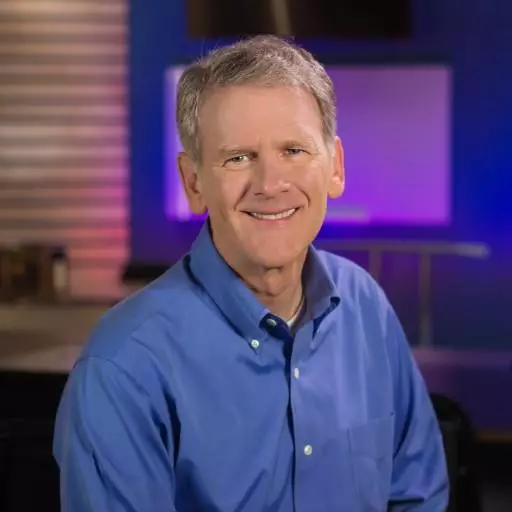
Bryan Chapell, Ph.D. is the Stated Clerk Pro Tempore of the Presbyterian Church in America (PCA), based in Lawrenceville, GA.
Dr. Chapell is an internationally renowned preacher, teacher, and speaker, and the author of many books, including Each for the Other, Holiness by Grace, Praying Backwards, The Gospel According to Daniel, The Hardest Sermons You’ll Ever Have to Preach, and Christ-Centered Preaching, a preaching textbook now in multiple editions and many languages that has established him as one of this generation’s foremost teachers of homiletics.
Dr. Chapell is passionate about sharing the truth of God's grace with others, because it provides the freedom and fuel for transformed lives of joy and peace.
He and his wife, Kathy, have four adult children, a growing number of grandchildren, and lives rich with friends, fishing and faith.
Contact Unlimited Grace with Bryan Chapell
info@unlimitedgrace.com