

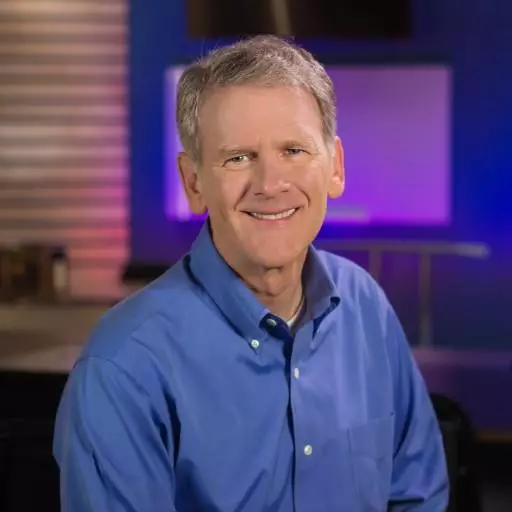
Integrity - Part 2


Pastor Bryan continues a lesson on integrity from Psalm 25. Dr. Chapell highlights the ultimate goal of integrity, which is to direct everyone to Christ. It is our working with integrity that points not only the world to our savior, but also our own hearts to the character and purposes of God.
Bryan Chapell: And I and you recognize there are times that we are needing to wrestle and search God's word and seek Christian counsel and be in prayer and ask for the guidance of the Holy Spirit. And that's not a bad thing to actually say, "God, I have to depend upon you beyond my own wisdom of the obvious now. I've got to search deep into your word in ways to find out what you're calling." And that is so making more clear the reality of who he is as we're diving into his word and seeking his wisdom about what we are facing.
Guest (Male): So glad you joined us for today's Unlimited Grace, the audio broadcast ministry of pastor and author Bryan Chapell. In today's episode, Pastor Bryan continues a lesson on integrity from Psalm 25. Dr. Chapell highlights the ultimate goal of integrity, which is to direct everyone to Christ. It is our working with integrity that points not only the world to our Savior but also our own hearts to the character and purposes of God.
You can find this lesson and many others when you visit unlimitedgrace.com. And while you're there, check out the new daily devotional podcast called Daily Grace. Pastor Bryan will guide you through a devotion each day to help focus your attention on God's grace as you study his word. Watch and listen to each episode when you visit unlimitedgrace.com today. Let's hear now from Dr. Bryan Chapell as he shares the second half of the lesson "Integrity."
Bryan Chapell: In the message today, I would like for you to think if you could how God is orchestrating his choir in the world. That in the workplace, in the home, all that we do by vocation is a profession of him and he's orchestrating that chorus for his glory.
Somebody who apparently perceived that was the son of Supreme Court Justice Antonin Scalia. If you did not hear the funeral eulogy yesterday, let me just tell you how that eulogy began. The son of Justice Scalia said, "We are gathered here today because of one man. A man known personally to many of us, a man known only by reputation to many more. A man loved by many, scorned by others. A man known for great controversy and great compassion. That man, of course, is Jesus of Nazareth."
The surprise ending should be a surprise to no believer. For we recognize that daily we bear on us the name of the Lord Jesus. You are, after all, a Christian. You bear on you the name of Christ. That means in what we do, where we go, how we work, we are always naming another. We are pointing to him.
The psalm that we were reading today, Psalm 25 and verse 21, is a reminder of one of the very basic ways in which we bear the name of our Savior in the workplace. Let's stand and I will read to you this brief portion of God's word. Keep your Bibles open; we'll look more throughout the psalm as we go. But for this moment, consider how God is orchestrating his chorus in the way that this is professed in you. Verse 21, Psalm 25, "May integrity and uprightness preserve me, for I wait for you."
Please be seated. Why is integrity good for God's business? Number one: It rescues us from uncertainty. What should I do? Listen, if the options are clear, if it's either ungodly, unethical, or true to God's word and ethical, the choice is clear. Regardless of the consequences, if the ethical choices are clear, we do what the psalmist says here: We take our refuge in him.
Verse 20, "Guard my soul, deliver me, let me not be put to shame for I take refuge in you." When I hear that word "refuge," I think of the bomb shelter. That we're saying, "God, I have to dive into you." And what you're actually securing me with is your own standards. You're the creator of the universe. You're the one who controls all things. I recognize you've set the standards. You've set the world in a way that operates according to what is best in your commands. And so, I'm going to dive into you and leave the rest to you.
What's the danger of that? Because if it's a refuge, if it's a bomb shelter, it means the bombs are going to come. It means it's dangerous. And that reality is to say, but at least it takes the uncertainty away from me. If these are obvious choices, right or wrong—it may be to my penalty to do it in terms of earthly terms—but I'm going to do what God calls me to do and take my refuge in him.
Now having said that, you and I, I hope, both recognize were it only that easy. "Here's a clear choice: right and wrong." Now, sometimes that's there. But even as some of you have come to me since I have been here in this church with ethical, difficult dilemmas, I recognize I am scratching my head at times. What is required here? Because it is a complex, broken, fallen world. And even Jesus told the parable of the wheat and the tares, the wheat and the weeds that grow up together. How do you make hard decisions?
One of the reasons that this integrity is so important is not just that it rescues us from uncertainty when the options are clear, but it actually provides opportunity for wrestling with God's word when the options are not so clear. Verse nine may surprise us a bit. It speaks of God leading the humble in what is right and teaches the humble his way. The leading and the teaching are both words of process. That we've got to kind of find our way. We have to be taught; it's not immediately clear.
I and you recognize there are times that we are needing to wrestle and search God's word and seek Christian counsel and be in prayer and ask for the guidance of the Holy Spirit. And that's not a bad thing to actually say, "God, I have to depend upon you beyond my own wisdom of the obvious now. I've got to search deep into your word in ways to find out what you're calling." And that is so making more clear the reality of who he is as we're diving into his word and seeking his wisdom about what we are facing.
New York City pastor Tim Keller tells an account of a man coming to him for advice. And the thing that he was struggling with is this man was an investment counselor for a major equity firm. And the team had discerned that there was a particular company that they could invest in that looked like it was going to turn a huge profit very quickly and others had not discovered it.
The problem was not the investment opportunity; the problem was the product of that company. Not illegal, but clearly not something that a Christian wanted to bank his future upon. And yet this one investment counselor said, "My whole team was making this advice to the company. If that particular company that we'd be investing in made a lot of money, there wouldn't just be profit to me; there would be profit to the whole team. There would be bonuses for people. Our company would thrive. There would be more maximized value of shareholder holdings if our company did well. Everybody would do better."
"But I did not want to invest my life. I did not want to give advice to go to that company whose product I felt was against my own standards." What did he do? At some point, what he did was he said this: "I cannot for my scruples hold these other team members back from what they think can result in prosperity. It's not illegal what they're asking. But neither can I in good conscience benefit from that investment." And so he told his team, "If this makes money, I will accept no profit from it. I will accept no bonus from it."
Now, maybe you think that's an inadequate answer. I don't know. You're not in that situation; I'm not. I typically find things are a lot clearer when they're not in your life. But what I recognize was the willingness to struggle, the willingness to stand and make a testimony, the willingness to say, "I'm still going to stand. It's fuzzy to me, but as best I am able, I'm going to stand for my Savior."
And that reality means not only that we have the opportunity to wrestle with God's word, we recognize God is over and over again providing us with opportunity to witness his hand. Verse 21 ends with that strange ending: "May integrity and uprightness preserve me for I wait for you." God, you may have to unfold this. I'm waiting to see what you will do. I think of similar words in the minor prophet Habakkuk, the second chapter and the third verse. "The vision of what God will do awaits its appointed time. If it seems to delay, wait for it. It will surely come."
Sometimes we have to wait for it to witness the hand of God. When I was in seminary, one of my very good friends was being put through seminary by the work of his wife. She was a quality control inspector for a major pharmaceutical company in St. Louis. And as that quality control inspector, one day a particular set of syringes had been manufactured by her company, came down through her, and in the quality inspection, she found out that the lot was contaminated.
Her boss quickly did the math. If we have to re-manufacture this lot of syringes, the losses are going to be huge. "Sign anyway that they are not contaminated," was the order to our friend's wife. She said she could not do that because of whatever government regulations were in place. If she personally did not sign, that lot of syringes could not be approved. And so her boss said, "I'll give you the weekend to think about it. But if you will not sign on Monday morning, you're done at this company."
A lot of prayer on that weekend. Monday morning, she did not sign. She was fired. Her future, her husband's future, all kinds of ministry potential in jeopardy. It seemed surely the wrong decision. Wait for it. The company for whom the syringes were intended found out about the delay, found out who had caused the delay and why, and they hired her.
Does it always work that way? No. It was a wonderful benefit and blessing. But you and I would not be honest if we said in a fallen, broken world that it always works that way. And so we would have to say, beyond the benefits of rescuing us from uncertainty and giving opportunity for wrestling with God's word and witnessing God's hand, the final benefit for believers of integrity in the workplace is it gives us opportunity to suffer for the Savior.
Chris Sobak: You're listening to Unlimited Grace, the audio broadcast ministry of pastor and author Bryan Chapell. This is Chris Sobak, executive director of Unlimited Grace Media. I hope you have been enjoying this encouraging message from Pastor Bryan. If this program has been a blessing to you, I want to share with you a new way in which you can receive daily encouragement from Dr. Chapell.
We've recently launched a daily devotional podcast entitled Daily Grace. If you've already signed up to receive daily devotions by email, this podcast is a great companion piece. You can watch and listen to Pastor Bryan share these devotions daily when you visit unlimitedgrace.com. You can also find this podcast on all major podcast platforms or watch it on YouTube. This is just another way that we want to serve you with Christ-centered content and help focus your attention on the grace of God that pervades all of scripture. Let us know what you think of this new podcast; we're always encouraged to hear from you. And now, more from Bryan Chapell on today's Unlimited Grace.
Bryan Chapell: The final benefit for believers of integrity in the workplace is it gives us opportunity to suffer for the Savior. I know that doesn't sound like a good thing. Think how the Apostle Paul says in Philippians 1:29, "It has been granted to you for the sake of Christ, not only to believe in him but also to suffer for his sake."
I don't like that grant. I don't like that gift. Nobody does. But the reality of what Christ has done for us, that he gave himself, he gave up his glory, he suffered for our sake when he had to do none of it, but so that we would recognize the basic essence of a Christian message is that I would disadvantage myself for the sake of others is sometimes what we are called to do. In the most profound of ways to bear on us the name of our Savior by suffering for the sake of others who are watching, who are aware.
We actually give ourselves for their spiritual eternity by our own earthly and temporal suffering, which is exactly what our Savior did. To have on us the name of the Savior is at times to be willing to suffer and to actually know him better even as we are making him known better by our own suffering, to which integrity may call us. It's one thing to say it so simply that our vocation is our calling by which we make profession of the Lord Jesus, but that reality can be truly a profession by the sacrifice of ourselves to show who he was and what he did in our behalf.
Kenneth Bae, as he was in the hard labor camp, wrote of the difficulty of maintaining his commitment to integrity. He said, "From the time of my arrest, I had meditated on all the promises of rescue in the Bible, especially in the Psalms. I began to wonder: Does it mean God doesn't love me if he does not rescue me? Can I keep trusting in God if the worst of scenarios comes true?"
He wrote, "My mood jumped and began to go back and forth between very depressed and not very depressed. I sang sad songs in my cell like Elvis's 'Are You Lonesome Tonight?' and Eric Carmen's 'All By Myself'." Finally, on September 24, 2013, "I got down on my bed, on my knees by my bed, and prayed: 'Lord, you know my heart. You know what I want, but not my will, your will be done. I want to go home. But if you want me to stay, I will stay. I will give up my right to go home. I surrender it to you. If this is where you want me to be, okay. I embrace that as your will'."
He wrote peace came over him as a weight lifted off his shoulders. God's spirit filled the room and reminded me of my calling. I prayed, "This is the mission field you have given me. Now, Lord, use me in this place." And the moment I stopped praying "God save me" and instead prayed "God use me," I felt free.
It's the freedom I recognize God is calling us all to and the freedom we actually fear. God, I'm not just asking you to save me for the moment; I'm saying use me in the way that you think is best and right. And I don't know what the earthly consequence may be, but I'm living for an eternal glory. I'm living for your sake. And for your sake, I am willing to sacrifice the temporal good of my own life so that those about me and my own soul may know the eternal Savior even better.
That reality is what we're doing as we recognize the ultimate goal of integrity is to point everyone to the Savior. It's to glorify him by making clear what we are saying to the world. And it is among other things making clear the Savior to our own hearts. After all, if I talk to you about integrity, I hope what you begin to feel is this overbearing weight. How can I live that way? How can I do all that's being called of me?
Ultimately, you become like the psalmist in verse seven where he says, "Lord, remember not the sins of my youth or my transgressions as in now. God, I'm not depending on my integrity to rescue me; I've become aware of my great need." It's what the world does not perceive when it just considers the ordinary concerns of integrity. I could not help but just laugh inside reading an excerpted article from the *Harvard Business Review* of September 2015 where supposedly very able person Michael Shrage said in response to the Volkswagen cheating.
"I believe Volkswagen's debacle signals the likely end of deliberate corporate malfeasance." Are you kidding me? Have you ever heard of something like Enron? That one major story is going to be the end of corporate malfeasance. Somebody doesn't understand for all have sinned and fall short of the glory of God. That there is struggle in every one of our hearts. I'm not just talking about people out there; I'm talking about my heart, I'm talking about your heart.
The pressures upon every one of us to meet the numbers, to hold the relationships, to get the dollars, that we can just color the truth, twist it—it is so easy to do. And God is saying, "If I'm calling you to this standard, I hope you begin to recognize your need of me. Because as you seek to live by this integrity, I will tell you something: Your integrity is not your salvation." What God is calling us to do even as we recognize the stresses and pushes and faults in us is to say you need somebody beside you.
The psalm ends so wisely. Verse 22, "Redeem Israel, O God, out of all his troubles." It's the reminder that if I struggle so much, if you struggle, if the world is so broken, it actually rewards the deceit, then you and I need a redeemer. We need a redeemer who says, "Lord, forget the sins of my youth. Don't hold my transgressions against me." And then we begin to live in integrity, not to save us, but to show our gratitude to our Savior.
It's not gaining grace; it's responding to it. And when we begin to do that, we begin to rejoice when we see the hand of God. We begin to see God working around us in ways that we can't always explain and still say, "But he's my redeemer. So I'm going to dive into him and trust in him even when I cannot judge or anticipate what may come of these moments."
Kenneth Bae, there in that hard labor camp, had one very unusual task. He was required to raise his own food. For a man who had never been a farmer, that was an awful task, and they gave him an awful plot of land on a hillside to do it. And for a man with health problems and diabetes, to stand in the hot sun at times and with a hoe try to break the hard dirt, it was an awful task.
One day he said the camp commander chided him, pointing to his struggling, ragged little crops on the hillside and pointed to the prison's cultivated crops in the valley in the neat rows below. And the commandant said, "You have your help from heaven, 103. We have an agricultural system from Kim Il-sung, our supreme leader. Look at the difference."
That night Kenneth said there was intense thunderstorm over the prison. And the next morning, a commotion in the camp. The entire valley had been flooded. The only field preserved was his on the hillside. He wrote in his journal, "Lord, I guess you made your point." The point is to point others to Christ. As we bear on ourselves his suffering as well as his nature, we say to the world: I trust a Savior beyond myself. So much so, I will give myself to his purposes because he gave himself for my salvation. I will live for him. And when I fall, he'll pick me up, he'll forgive me, and I'll live for him again because he gave himself for me.
Chris Sobak: That's Pastor Bryan Chapell, and you've been listening to Unlimited Grace. This lesson is available in its entirety right now when you visit unlimitedgrace.com. And when you visit us online, you'll find all of Dr. Chapell's messages there, as well as a growing collection of videos, podcasts, and more. You can also sign up for Pastor Bryan's daily devotional sent right to your inbox. Please be sure to join us next time as once again we endeavor to put Christ at the center of our efforts so that lives might be transformed by his unlimited grace. This ministry is brought to you by Unlimited Grace Media and continues to be made possible with your generous financial support.
Featured Offer

In Bryan Chapell's book, you will learn how God's unlimited grace leads us to heartfelt obedience and transforming joy. Explaining why grace is important and giving us tools to discover it in all of Scripture, Unlimited Grace helps us to see how gospel joy transforms our hearts and makes us passionate for Christ's purposes.
Past Episodes

Featured Offer
In Bryan Chapell's book, you will learn how God's unlimited grace leads us to heartfelt obedience and transforming joy. Explaining why grace is important and giving us tools to discover it in all of Scripture, Unlimited Grace helps us to see how gospel joy transforms our hearts and makes us passionate for Christ's purposes.
About Unlimited Grace
About Bryan Chapell
Bryan Chapell, Ph.D. is the Stated Clerk Pro Tempore of the Presbyterian Church in America (PCA), based in Lawrenceville, GA.
Dr. Chapell is an internationally renowned preacher, teacher, and speaker, and the author of many books, including Each for the Other, Holiness by Grace, Praying Backwards, The Gospel According to Daniel, The Hardest Sermons You’ll Ever Have to Preach, and Christ-Centered Preaching, a preaching textbook now in multiple editions and many languages that has established him as one of this generation’s foremost teachers of homiletics.
Dr. Chapell is passionate about sharing the truth of God's grace with others, because it provides the freedom and fuel for transformed lives of joy and peace.
He and his wife, Kathy, have four adult children, a growing number of grandchildren, and lives rich with friends, fishing and faith.
Contact Unlimited Grace with Bryan Chapell
info@unlimitedgrace.com