

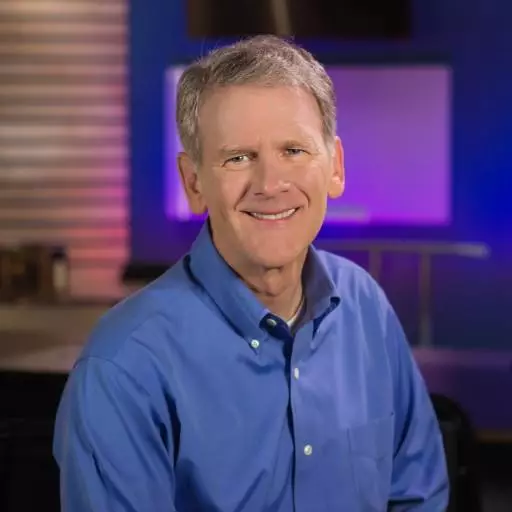
I Love The Lord - Part 1


Pastor Bryan shares a message from Psalm 116. Just as the Psalmist writes, we can love the Lord, even when we face the darkness and shame of life.
Bryan Chapell: He hears. It may not be the timing that we understand. It may not be the way that we understand, but he hears. He inclines his ear, and he has a heart that is gracious, even when we have rebelled, even we've turned away from him. He will hear us. And he will do what is best, even in this long, dark hallway.
Guest (Male): So glad you joined us for today's Unlimited Grace, the audio broadcast ministry of pastor and author Brian Chapell. In today's episode, pastor Brian shares a message from Psalm 116. Just as the psalmist writes, we can cry out to the Lord, and he will hear our prayers when we face the darkness and shame of life. You can find this lesson and many others when you visit unlimitedgrace.com. And while you're there, look for pastor Brian's book, The Multi-Generational Church Crisis. This compelling book asks the question of the church, what could be accomplished in the name of Christ if we could better understand each other?
Let's hear now from Dr. Brian Chapell as he shares the lesson, I Love the Lord.
Bryan Chapell: When she was quite small, a friend of ours fell and was hurt. In the fall, she hit her chin, and the split was bad enough that she had to get some stitches. So she went to the emergency room and was pretty anxious. And the doctor not quite wanting to do the stitches until she had settled down a little bit, gave her a a pill to knock off some of the anxiety, a sedative that was small. But because he was a tease and thought it would be funny, he said to the little girl, now when I give you this pill, it is going to make you tell us all your deepest, darkest secrets.
Then he went away for a little bit to let the pill do its work and came back. But when he came back, he hadn't forgot his joke as he thought it was a joke. And so he winked at the parents and said to the little girl, all right now, tell us your deepest, darkest secret. And she turned red and began to tremble, and the tears came. And finally, it burst out. Jesus loves me, this I know, for the Bible tells me so. Were it only so that in our deepest, darkest moments, the thing deepest in us that would burst out would be the love of Jesus.
It has to be hard even for a writer of scripture to talk about the love of God, and yet he does so. It's the opening words. I love the Lord. That may just seem so easy to say to you that you don't recognize how strange it is even in the Psalms. Only one other time in the Psalms is that phrase appear, I love the Lord. It is deeply personal. The Psalms, of course, are the Hebrew's hymn book, and so the the phrases are so often corporate and formal. But here there's none of that. The psalmist just says, I I love the Lord.
And the reason that is so special is because the psalmist apparently does know the dark hallways of life when he says that. The dark hallway after all is described in verse 3 early on. The snares of death encompassed me. The pangs of Sheol had hold upon me. I suffered distress and anguish. Sheol is the place of the dead. I was so suffering. I was so much in anguish that it's almost as though death itself had already claimed me. My heart was torn. I was struggling so much. It was as though I were going to die.
This man knows dark hallways. The question of course we have is what why would he say I love the Lord in the midst of such a long dark hallway? The answer is right at the beginning. He says the because in verse 1, I love the Lord because he has heard my voice and my plea for mercy, because he inclined his ear to me. The images is of the father of God of the universe bending down and inclining his ear to hear a child. Some of you have been on a cave tour, Mammoth Cave or Meramec Caverns.
You know, there's there's that standard moment when the tour guide is taking you through the cave that say, we want to show you what absolute darkness looks like, right? And far below the earth, what do they do? Turn out all the lights, turn out all the flashlights and tell you not to use your cell phone. You want to find out what absolute darkness looks like. And as soon as it's absolutely dark, what do all the 5-year-olds do? They go, mom. And mom or dad leans down and says, I'm right here. I'm still here. The reason the psalmist loves the Lord in the dark hallway is he knows the Lord's hearing.
He hears our cry, and by his word is saying, I'm still here even in the dark hallway. Not only is the Lord's hearing described, but his heart is described as well. Verse 5, gracious is the Lord and righteous. Our God is merciful. He's righteous. He's right all the time and holy and good. But before his righteousness is described, we are told that he is gracious. He cares for those who are not right all the time. He provides for those who cannot provide for themselves. He is after all merciful. And that mercy is described in the verses that follow.
Verse 6, the Lord preserves the simple, those who haven't got it all figured out. When I was brought low, when I had not risen above the crisis, before I had all this fixed and solved, when I was brought low, he saved me. It is the great statement of grace that that when we haven't got life all figured out, when we're when we're a mess, when we have been brought low, when we haven't solved the situation yet, that God says, before you fixed it, I am loving you. Before you've got it straightened out, I care for you.
What what would that look like if you weren't looking at a Psalm that's thousands of years old, but recognize that God is saying, I care for you even when you haven't got it figured out? When it's it's not something you understand when when you've not risen above the problems. John Leonard is a friend who wrote recently about his own experience. He described just a a situation at a restaurant where he had sat down and was getting ready to pray when the waitress came over and said, when you get our drinks, why don't you think of something I can pray about for you?
He said she just looked frantic. You don't have to pray for me. No. Think about it. What can I pray about for you when you come back? He writes, in a few minutes, she came back, placed our drinks on the table and looked around the diner to make sure no one was looking. Then she sat down beside me and said, I've been on drugs most of my adult life. I've only been clean for the last 6 months. Would you pray that God keeps me clean? And as she said it, her hands were expressive, and the sleeve pulled back on her wrist, and he saw the signs of a recently cut wrist.
She saw that he saw it. And she said, and would you pray that God could keep me happy? And he said, I can pray for that. Is it right? Should he pray for that? Drugs for so long, taking your own life, unhappy. Of course he should pray for that. When does the Lord listen to the simple who haven't got life figured out? To those who are brought low, they haven't risen above it yet. It's it's in the midst of the awful. It's in the long dark hallway that we cry out to the Lord, and the Bible says, and he hears our cry.
The reason we can call out to the Lord in our own behalf or the behalf of others is we know it is it is not a God who is unwilling to be gracious. He is merciful. And the mercy is saying, I will deal with the simple. I will deal with those who have brought low. You don't have to have it figured out. You don't have to have the solution. You don't have to have it all right. Just call out to me. And even if you're still in the long dark hallway, God says he will listen because he inclines his ear and he has the heart to do so.
The psalmist says what the response is. Verse 7, return on my soul to your rest. If God is really hearing, if he's really caring, then then I can be at peace inside, for the Lord has dealt bountifully with you, says the psalmist. How has he done that? How has the Lord dealt bountifully people even while they are in the long dark hallways of life? Verse 8, for you have delivered my soul from death, my eyes from tears, my feet from stumbling. Here the psalmist is looking back. We don't know the crisis. We don't know the situation, but he says somewhere there has been a deliverance.
And so recognizing God's affirmation of having heard his cry, he says, I I even in the dark hallway can be at rest. My soul at peace. It may help you to recognize that even though we don't see the particular crisis of the psalmist, we know that what he must be thinking about to some extent. He says in verse 7, we will return to rest. Do you remember what God called Canaan to the people of Israel when they had been laboring in slavery for 400 years in Egypt? He said, I will take my people to Sabbath land.
What does Sabbath mean? Rest. I will take my people to rest. It may help you to know that this particular Psalm 116 was one of four Psalms that the Israelites read during their Passover celebrations for thousands of years as they thought back to God's release from slavery that had lasted for 400 years. God will give us rest. He has delivered us our eyes from crying, our feet from stumbling. He has given our selves life in the land of the living. The reason they read the Psalm was they recognize God had showed himself faithfully, at least corporately.
That they repeat over and over again, he hears. It may not be the timing that we understand. It may not be the way that we understand, but he hears. He inclines his ear, and he has a heart that is gracious, even when we have rebelled, even we've turned away from him. He will hear us. And he will do what is best even in this long, dark hallway.
Guest (Male): You're listening to Unlimited Grace, the audio broadcast ministry of pastor and author Brian Chapell. It may seem hard for younger Christians to believe, but people over 50 were raised during an era when 90% of Americans identified as Christian. These older believers were once part of a majority group that understood the mission of the church was to take control of our culture, to halt its evils. At the same time, Christians under 50 have lived their entire lives perceiving themselves as a minority that needs to make credible their faith to a secular pluralistic culture. These distinct experiences and perceptions have a profound impact on the priorities different generations have for church ministry.
It's no wonder that younger and older believers don't always see eye to eye. In his new book, The Multi-Generational Church Crisis, Dr. Brian Chapell asks the question, what could be accomplished in the name of Christ if we could better understand each other? This practical and hopeful book is backed by thorough research revealing how to open the lines of communication. Appreciate the experiences that shaped each generation in your church and unite in one mission to impact your community and the world. You can request your copy of the Multi-Generational Church Crisis when you donate online at unlimitedgrace.com or by calling 844-41-GRACE.
That's 844-414-7223. And now, more from Brian Chapell on today's Unlimited Grace.
Bryan Chapell: He will hear us. And he will do what is best even in this long, dark hallway. As you think of what that may mean, it it strikes us as quite hard at times to recognize that God would he care, but the grace keeps being pushed by the psalmist. One of the most remarkable statements is verse 10. The psalmist who has said, the Lord has delivered me, nonetheless says verse 10, I believed. Even when I spoke, I am greatly afflicted. Do you hear the words? I I believed, but coming out of my mouth was but God, it hurts.
I believe you, but I am so greatly afflicted. How can I deal with this? How can I deal with you? And and the desperation of I believe, but help me is so much in my mind echoing that of Mark 9. Remember the man who came to Jesus with a son that was not well, and he wanted Jesus to help, and Jesus said, do you believe? And the man said, I believe, but what? Help my unbelief. God, I do believe, but I hurt so much. I'm afflicted. And the despair even turns to doubt as you look at verse 11.
I said in my alarm, all mankind are liars. There's there's no rest. There's no assurance. People tell me about God and his care, and at some point I got to the state of just saying, it's all a lie. The hurt is too much. The affliction is too great. It's not real. And it's in the midst of that despair of that doubt that the psalmist says God inclined his ear and opened his heart and heard the cry. What amazing grace. I love the Lord, says the psalmist. Despite my doubt, my desperation, my lack of understanding, I couldn't make sense of it and couldn't rise above it.
And he heard me and helped me. I love the Lord. If it weren't on the pages of scripture written thousands of years ago, what would it look like you for you today? What what would real life look like to know even in the dark hallway God is listening and working in such a way that we can trust him? Christianity today, this past month, recorded the story of Tara Elenshik, not a name that I knew, but an amazing story. They wrote this she first telling her own story. The message of my childhood was clear and insistent.
You work, you play, and you love hard, but at all times stay in control because something scary is waiting to take you down. I heated that message, she said. I went to a great college. I found the perfect job. I chose a wonderful husband. Weaker souls might need a God, but I needed no such crutch. I was in control. That belief she wrote was obliterated when my husband of 5 years died from complications of routine surgery. 10 days later, she said she gave birth to her first daughter, still born. I had a choice, she wrote.
Did I still want to go it alone, trying desperately to keep all the balls in the air, or did I want to admit that Jesus had offered himself so that I didn't have to be alone, to admit that I had little control, but was infinitely loved? She said I had to admit that what I had fought so long I was actually hungry for. I was hungry for Jesus, for the Jesus who hung out with whores, who wept with his friend when he died, who claimed to be the way, the truth, and the life. I didn't have to find him or to explain him or even make sense out of him.
I just had to say yes to him. And she did. Years later, she remarried. She started a life and family again, and after bearing two sons and adopting a third child who would have been the age of the one that she lost, she discovered that one of her Christian friends in another state had encouraged her community group, her prayer group to be praying for Tara those years ago. The woman didn't even know Tara. She had just heard about her circumstance. She'd lost her husband. She'd lost a child. And so this this woman prayed in her prayer group for Tara, lost track of her, didn't know about her, moved to England.
Years later, came back. And through a mutual friend asked, what happened to Tara? The answer, she got married. Who did she marry? Jeff Barnison. You're kidding, said the friend. Jeff was in the community group that was praying for her. When Tara heard that story, she was amazed. Her husband had been praying for her before he even knew her and didn't know that he was doing so until the friend returned from England years later and told the connection. Tara went to work the next day and told her friends at work, my husband was praying for me in this prayer group before he even knew me.
Wait, said one of the friends. Were you the one that lost the husband and the child? Yes, said the friend. I was in that prayer group, too. And then another friend at the lunch table said, I was in that prayer group, too. And then a third friend at the table said, I was in the prayer group, too. Tara writes her story, you will understand. I spent the rest of the day crying. I had just learned that my husband had been praying for me before he knew me. Now I learned that three of the five women who are in my present prayer group today had been praying for me before they knew me, piecing it all together.
I wept and wept, unable to imagine the grace of it all. I was an agnostic widow living in New Jersey. A group of Christians praying in Massachusetts had been praying for me. They not only prayed me into the kingdom of God, but God arranged for them to include my husband and my now best friends who pray with me every week. She concludes, these days I am in awe of how little we control, how ugly life can be, and of the beauty that seeks us out in the midst of all the horror.
Guest (Male): Friends, I'm so glad you decided to tune in today and listen. And I would consider it a privilege to pray for you right now. Let's go together before the throne of heaven and pray for the Lord's blessing. Father, thank you for being merciful to us. Help our hearts to grasp the greatness of that mercy that you provide so that we can offer our lives to Jesus as a sacrifice of praise that you have made holy and acceptable despite our many weaknesses and flaws. We thank you for this great grace and pray in Jesus' name. Amen.
That's pastor Brian Chapell, and you've been listening to Unlimited Grace. If you've been blessed by this message and would like to hear more from Dr. Chapell, I would encourage you to visit unlimitedgrace.com. Please be sure to join us next time as once again we endeavor to put Christ at the center of our efforts so that lives might be transformed by his unlimited grace.
Guest (Male): This ministry is brought to you by Unlimited Grace Media and continues to be made possible with your generous financial support.
Featured Offer

In Bryan Chapell's book, you will learn how God's unlimited grace leads us to heartfelt obedience and transforming joy. Explaining why grace is important and giving us tools to discover it in all of Scripture, Unlimited Grace helps us to see how gospel joy transforms our hearts and makes us passionate for Christ's purposes.
Past Episodes

Featured Offer
In Bryan Chapell's book, you will learn how God's unlimited grace leads us to heartfelt obedience and transforming joy. Explaining why grace is important and giving us tools to discover it in all of Scripture, Unlimited Grace helps us to see how gospel joy transforms our hearts and makes us passionate for Christ's purposes.
About Unlimited Grace
About Bryan Chapell
Bryan Chapell, Ph.D. is the Stated Clerk Pro Tempore of the Presbyterian Church in America (PCA), based in Lawrenceville, GA.
Dr. Chapell is an internationally renowned preacher, teacher, and speaker, and the author of many books, including Each for the Other, Holiness by Grace, Praying Backwards, The Gospel According to Daniel, The Hardest Sermons You’ll Ever Have to Preach, and Christ-Centered Preaching, a preaching textbook now in multiple editions and many languages that has established him as one of this generation’s foremost teachers of homiletics.
Dr. Chapell is passionate about sharing the truth of God's grace with others, because it provides the freedom and fuel for transformed lives of joy and peace.
He and his wife, Kathy, have four adult children, a growing number of grandchildren, and lives rich with friends, fishing and faith.
Contact Unlimited Grace with Bryan Chapell
info@unlimitedgrace.com