

I Am The Good Shepherd - Part 2


Pastor Bryan shares the second half of a lesson from John 10. Dr. Chapell shares the account where Jesus declares himself the Good Shepherd. As we celebrate the coming of Jesus as a babe, we are reminded of His care for us in our weakness and dependence upon his guidance.
Bryan Chapell: Who is the shepherd who had been known by the Lord for so many centuries? It is the Lord Jesus who says, I will lay down my life for the sheep. He knew what was coming. He knew what had to come. It had been prepared for hundreds and hundreds of years. He could have avoided it all, but he came to lay down his life for the sheep. He is the good shepherd.
Guest (Male): So glad you joined us for today's Unlimited Grace, the audio broadcast ministry of pastor and author Brian Chapel. In today's episode, pastor Brian shares the second half of a lesson from John 10. Dr. Chapel shares the account where Jesus declares himself the good shepherd. We are reminded of his care for us in our weakness and dependence upon his guidance. You can find this lesson and many others when you visit unlimitedgrace.com. And while you're there, look for pastor Brian's book, The Multi-generational Church Crisis. This compelling book asks the question of the church, what could be accomplished in the name of Christ if we could better understand each other?
Let's hear now from Dr. Brian Chapel as he shares the second half of the lesson, I am the good shepherd.
Bryan Chapell: Would you look in your Bibles with me this morning at John chapter 10? John chapter 10, one of the the sweetest and dearest passages in scripture. This is Jesus's last public address in the Gospel of John. Now you may remember that John is writing decades later, and you might think if you were the apostle John and you were selecting which of the addresses of Jesus would you choose to be the very last one that you would record? What would you say? And why would you pick this one? Do you see what the subject is? It's the good shepherd.
So you think the first public announcement of Jesus was by shepherds, and the last public address of Jesus is his announcing that he is the good shepherd. This is a wonderful Christmas gift, the Lord's parting message to a large group of people saying who he is and what he will do because he is the good shepherd. John 10, we'll look at verses 1 through 18. Jesus said, truly, truly, I say to you, he who does not enter the sheepfold by the door, but climbs in by another way, that man is a thief and a robber.
But he who enters by the door is the shepherd of the sheep. To him the gatekeeper opens. The sheep hear his voice and he calls his own sheep by name and leads them out. When he is brought out all his own, he goes before them and the sheep follow him for they know his voice. A stranger they will not follow, but they will flee from him for they do not know the voice of strangers. This figure of speech Jesus used with them, but they did not understand what he was saying to them. So Jesus again said to them, truly, truly, I say to you, I am the door of the sheep.
All who come before me are thieves and robbers, but the sheep did not listen to them. I am the door. If anyone enters by me, he will be saved and will go out, go in and out and find pasture. The thief comes only to steal and kill and destroy. I came that they may have life and have it abundantly. I am the good shepherd. The good shepherd lays down his life for the sheep. He is a hired hand and not a shepherd who does not own the sheep, sees the wolf coming and leaves the sheep and flees.
And the wolf snatches them and scatters them. He flees because he is a hired hand and cares nothing for the sheep. I am the good shepherd. I know my own and my own know me just as the father knows me and I know the father. And I lay down my life for the sheep. And I have other sheep that are not of this fold. I must bring them also and they will listen to my voice. So there will be one flock, one shepherd. For this reason the father loves me because I lay down my life that I may take it up again.
No one takes it from me, but I lay it down of my own accord. I have authority to lay it down and I have authority to take it up again. This charge I have received from my father. Let's pray together. Father, thank you for precious words from Christ himself that teach us how precious we are to you. That you would send your son and that he would be our good shepherd. Would you take these truths and make them a great gift to our hearts that we, should we face suffering or distance, distraction, difficulty, or tragedy, may in it all claim the good shepherd who would carry us through whatever we need to go.
And by that knowledge we would have peace whatever we need to face. Grant this blessing of your son, our shepherd, in whose name we pray. Amen. Sometimes people look at this passage and they wonder how Jesus has switched metaphors. He's been talking about shepherds and now suddenly talks about himself being the door or the gate in the older translations. But it's not really a switched metaphor. Some of you may have actually gone to the Holy Land as you're out on what's called the shepherd's fields outside of Bethlehem. There's a a stone enclosure where shepherds still gather their sheep.
And almost every westerner when they go and they're shown that stone enclosure points out, there's no gate. There's no door to the sheepfold here. And almost always there's a Middle Eastern shepherd that will look at you like a silly westerner and will then say these words. What do you mean there is no gate? What does the shepherd say? I am the gate. And reminds you of the Middle Eastern practice that what the shepherd would do would lie down as the doorway so that nothing would get into the sheepfold except through the shepherd and the sheep would not come and go except by the will of the shepherd.
Gates are important in farming even now, aren't they? I think of those of you who are in farming and agrarian uh economies and businesses now and and I go back to my childhood and I recognize on my grandfather's farm how how much gates regulated the business of the farm. Some fields left fallow, some used for feed, some used for water, and the gates regulating where the cattle would go, where the livestock would go. And when Jesus talks about himself being the gate, what he's declaring is not only that the sheep are dear to him, but that he regulates their lives, that there's nothing that comes into the sheepfold but by his will and the sheep do not come and go but as he intends.
We need that truth. In a time of tornadoes or lymphoma or job questions. It's so hard at times when we face the difficult things in life and we wonder, is this right? Is this good? A pastor long ago taught me that if I'm dealing with God's people, one of the ready phrases that should be on my lips is simply this. Even if I cannot explain what you're going through, this I know, Jesus is the good shepherd. Things don't come and go without his purpose. We may not see it, we may not know it until we are with him, but here is his assurance.
He is the good shepherd and our lives are regulated according to his purpose. He who knows us by name also knows the events that we would face and also knows what we would face and regulates it for an eternal purpose. Why should we trust him? Why should we trust that that is true? Because the good shepherd not only leads and not only protects, he came when he did not have to. It is so interesting as you go through the first six verses here and Jesus is making the analogy comparing the good and the bad shepherds.
And you get to verse 6 and it says, this was a figure of speech Jesus used with them, but they did not understand. They They didn't get it yet. And so Jesus presses forward on the same analogy making it even more pointed and plain in verse 7. So Jesus again said to them, truly, truly, I say to you, I am the door to the sheep. And verse 9 says it again, I am the door. If anyone enters by me, he will be saved and will go in and out and find pasture. I I not only intend to protect, I intend to regulate the life in such a way that what is best is going to occur.
And And as though people still don't get it, Jesus finally presses the point most strongly in verse 11, I am the good shepherd. Don't you get it? By the way, he doesn't say say I am a good shepherd. He says I am the good shepherd. And to say what that mean, he first describes his function. What would it mean to be the good shepherd? The end of verse 11. The good shepherd lays down his life for the sheep. He's to a hired hand and not a shepherd who does not own the sheep, sees the wolf coming and leaves the sheep and flees and the wolf snatches them and scatters them.
He flees because he's a hired hand and cares nothing for the sheep. The good shepherd is the one who's in contrast to the one who's just the hired hand, who's who's willing to take care of his hide rather than take care of the sheep. And Jesus says, I'm not that one. I'm the good shepherd who would give his life for the sheep.
Guest (Male): You're listening to Unlimited Grace, the audio broadcast ministry of pastor and author Brian Chapel.
Guest (Male): It may seem hard for younger Christians to believe, but people over 50 were raised during an era when 90% of Americans identified as Christian. These older believers were once part of a majority group that understood the mission of the church was to take control of our culture, to halt its evils. At the same time, Christians under 50 have lived their entire lives perceiving themselves as a minority that needs to make credible their faith to a secular pluralistic culture. These distinct experiences and perceptions have a profound impact on the priorities different generations have for church ministry.
It's no wonder that younger and older believers don't always see eye to eye. In his new book, The Multi-generational Church Crisis, Dr. Brian Chapel asks the question, what could be accomplished in the name of Christ if we could better understand each other? This practical and hopeful book is backed by thorough research revealing how to open the lines of communication, appreciate the experiences that shaped each generation in your church, and unite in one mission to impact your community and the world. You can request your copy of the Multi-generational Church Crisis when you donate online at unlimitedgrace.com or by calling 844-41-GRACE.
That's 844-414-7223. And now more from Brian Chapel on today's Unlimited Grace.
Bryan Chapell: The good shepherd is the one who's in contrast to the one who's just the hired hand, who's who's willing to take care of his hide rather than take care of the sheep. And Jesus says, I'm not that one. I am the good shepherd who would give his life for the sheep. Now you and I recognize the illusion to the cross that's coming, that Jesus would give his very life's sake for the preparation and preservation of the sheep who need eternal protection. But I have to make this maybe sing home to you a bit more by telling you this this early in my ministry became one of the most important verses in my life that the good shepherd is not like the hired man who runs away when the sheep need help.
I don't need to give you a lot of details, but in one of my very early pastorates I was called to a church and it was a church that I knew was in a town that was noted for particular community sin. I knew it, everybody knew it. But I was assured as I went to that particular church that the people of my church and particularly the leaders were not involved in that particular sin. I was only there a few weeks and found out that what I had been told was not accurate at all. I don't know that I had been lied to.
I will tell you, I think people had been so immersed in the sin for so long they just even stopped seeing it. But I knew it was wrong and I wondered, what should I do? I wasn't told the truth. I came here under false pretenses. What what obligation do I have here? And it was this verse that kept me in place for seven years. You're not here to take care of you. Yeah, you could walk away. You could hey, it's going to be bad for me, going to be bad for my life, going to be hurtful and harmful.
And why why should I deal with this? But it was not what Jesus did. And I say that to you not for my sake, but those of you who are leaders in this church, elders and deacons and Sunday school teachers and youth leaders and parents. There are times that we just honestly would have to say to ourselves it would be so much easier just to walk away. Why put up with this? Why grieve my heart with their sin? And the answer of scriptures is because we follow the good shepherd. And he gave his life for others.
It was not his life that he sought to preserve. It was others. And those of us who follow him are called to similar obligation. And even greater obligation perhaps than we perceive when you go on down to verse 14. One more time Jesus says it. I am the good shepherd. I know my own and my own know me just as the father knows me and I know the father and I lay down my life for the sheep. The father knows me and has known me and I'm the good shepherd. In Matthew you may remember that Herod learns from the wise men that Jesus has been born, but he doesn't yet know where the Christ child is.
So he questions the wise men. In Matthew 2 Herod asks, where is the Christ who was to be born? And the wise men answered, in Bethlehem, for so it is written by the prophet Micah. From Bethlehem will come a ruler who will shepherd his people Israel. In Micah the prophet says these words. His coming forth is from of old from ancient days. He shall stand and shepherd his flock in the strength of the Lord, in the majesty of the name of the Lord, and they will dwell secure to the ends of the earth. And he shall be their peace.
Who is the shepherd who had been known by the Lord for so many centuries? It is the Lord Jesus who says, I will lay down my life for the sheep. He knew what was coming. He knew what had to come. It had been prepared for hundreds and hundreds of years. He could have avoided it all, but he came to lay down his life for the sheep. He is the good shepherd. Knowing what he had to do, he would still come when he didn't have to do it at all. And the reason I say that and know it is so important is because it is telling me what my calling is and what your calling is as well.
When Jesus came, he told us what love's greatest expression would be. He would lay down his life for the sheep. In verse 14 and 15 he says, why? Because I know my sheep just as the father knows me and I know the father. The great expression of Jesus in this place is as much as the father and Jesus love each other so that much Jesus loves you and me. It's incredible. As much as Jesus loves the father, as much as the father loves Jesus, so Jesus loves you. He knows your sin, he knows your weakness, he knows your family, he knows your hurts, he knows your brokenness, he knows the failures, and still says, I love you as much as the father loves me and I love the father.
It's this great expression of love which would say why he would bother to come because his love is that great. But but here in the passage he's not just talking about love's expression, but ultimately love's great expansion. He says in the 16th verse these wondrous words. I have other sheep who are not of this fold. I must bring them also and they will listen to my voice. So there will be one flock and one shepherd. One flock and one shepherd. That's the words of Ezekiel 34. As God promised to the Jewish nation going into exile, I will gather my people from the nations.
And the Jews all the way to this point would think, well that's the ultimate task of the Messiah. He will gather our people from all the nations. But now Jesus says, I have more sheep and they are not of this flock. And the reason that you and I are sitting in this place today is because Jesus says, I don't just love my flock. I love the expanded flock all for whom I will give my life, who will know my voice and I will call by name. That's why you and I are here. And the wondrous thing about this great calling as Jesus says in verse 17, this reason the father loves me because I lay down my life that I may take it up again.
I am called to lay down my life and rise again the victor over the sin of those for who I die. Who's going to make me do this? Verse 18, no one takes it from me. The Jews may think that they have crucified him but their will, but in that strange and wondrous mix of human will and sovereign plan, he was the lamb slain from the foundations of the world that God knew that he would claim his own son and the son came knowing his life would have to be claimed, but he came to claim a wider flock, more sheep, you and me.
He came to do it. And no one made him. He did it of his own accord, laid his life down and rose the victor over it. That was his charge from the father that he willingly took up. It's the greatest Christmas gift to you and to me in this time of year or anytime of year to recognize that what would happen is the savior who knows us by name planned to come and came for us and laid his life down. And now nothing happens in our lives but is intended for our eternal good. And when I face the hurts and the I can't explain it and it makes no sense and I will sure ask the Lord when I'm there.
In all of those things we still trust him because he's the good shepherd. And he has told us already what that means. The Lord is my shepherd. I shall not want. He makes me lie down in green pastures. He leads me beside still waters. He restores my soul. He leads me in the paths of righteousness for his name's sake. Yea, though I walk through the valley of the shadow of death, I will fear no evil for thou art with me. Thy rod and thy staff they comfort me. Thou preparest a table before me in the presence of my enemies.
Thou anointest my head with oil. My cup overflows. Surely goodness and mercy shall follow me all the days of my life. And I will dwell in the house of the Lord forever. He is the good shepherd. Amen. Friend, will you allow me to pray with you that the work God is doing in your life through the teaching of his word would take hold and help you. Heavenly father, thank you for the fact that you pardon and give purpose to messed up people like me, like us. Today help us so to believe in your grace that we rejoice to receive it and live to reflect it.
This we pray in Jesus's name. Amen.
Guest (Male): That's pastor Brian Chapel and you've been listening to Unlimited Grace. If you'd like to hear more from Dr. Chapel, you can find a collection of valuable resources at unlimitedgrace.com. When you visit you will find today's message and many others from pastor Brian. Once again go to unlimitedgrace.com or you can give by calling 844-41-GRACE. That's 844-414-7223. Please be sure to join us next time as once again we endeavor to put Christ at the center of our efforts so that lives might be transformed by his unlimited grace.
Guest (Male): This ministry is brought to you by Unlimited Grace Media and continues to be made possible with your generous financial support.
Featured Offer

In Bryan Chapell's book, you will learn how God's unlimited grace leads us to heartfelt obedience and transforming joy. Explaining why grace is important and giving us tools to discover it in all of Scripture, Unlimited Grace helps us to see how gospel joy transforms our hearts and makes us passionate for Christ's purposes.
Past Episodes

Featured Offer
In Bryan Chapell's book, you will learn how God's unlimited grace leads us to heartfelt obedience and transforming joy. Explaining why grace is important and giving us tools to discover it in all of Scripture, Unlimited Grace helps us to see how gospel joy transforms our hearts and makes us passionate for Christ's purposes.
About Unlimited Grace
About Bryan Chapell
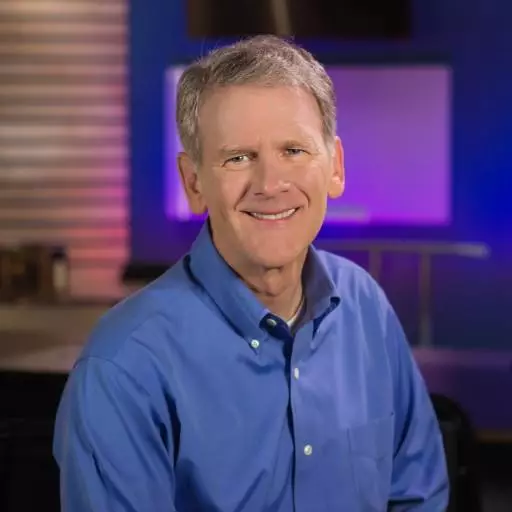
Bryan Chapell, Ph.D. is the Stated Clerk Pro Tempore of the Presbyterian Church in America (PCA), based in Lawrenceville, GA.
Dr. Chapell is an internationally renowned preacher, teacher, and speaker, and the author of many books, including Each for the Other, Holiness by Grace, Praying Backwards, The Gospel According to Daniel, The Hardest Sermons You’ll Ever Have to Preach, and Christ-Centered Preaching, a preaching textbook now in multiple editions and many languages that has established him as one of this generation’s foremost teachers of homiletics.
Dr. Chapell is passionate about sharing the truth of God's grace with others, because it provides the freedom and fuel for transformed lives of joy and peace.
He and his wife, Kathy, have four adult children, a growing number of grandchildren, and lives rich with friends, fishing and faith.
Contact Unlimited Grace with Bryan Chapell
info@unlimitedgrace.com