

I Am Sending - Part 2


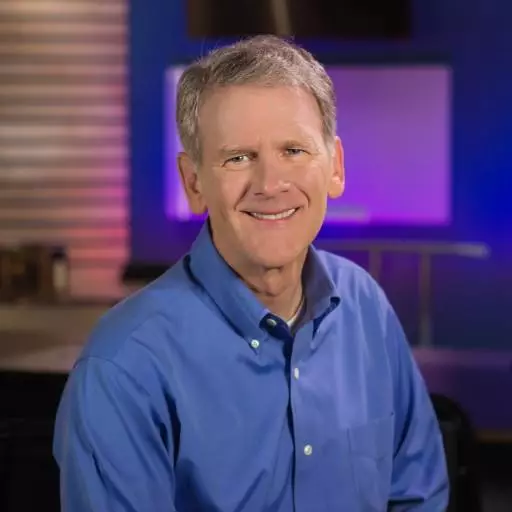
Pastor Bryan shares the second half of a lesson from John 20. In this passage, we see how God chooses to use messy and doubtful people to fulfill His purposes.
Bryan Chapell: I can't answer all your questions, solve all your doubts in this one message, but I will surely say what you can see. Doubt does not drive Jesus away. We can come to him with our questions and still know a grace that is greater not just than our sin. It is a grace greater than our doubts.
Guest (Male): So glad you joined us for today's Unlimited Grace, the audio broadcast ministry of pastor and author Brian Chapel. In today's episode, pastor Brian shares the second half of a lesson from John 20. In this passage, we see how God chooses to use messy and doubtful people to fulfill his purposes. You can find this lesson and many others when you visit unlimitedgrace.com. And while you're there, look for pastor Brian's book, The Multi-Generational Church Crisis. This compelling book asks the question of the church, what could be accomplished in the name of Christ if we could better understand each other?
Let's hear now from Dr. Brian Chapel as he shares the second half of the lesson I am sending.
Bryan Chapell: If you look at the passage of scripture that we are studying this day, John chapter 20 verses 19 and following, you're going to see some messy people and recognize how God intends to use people even in the mess to share the gospel. John chapter 20 verses 19 and following. In your Grace Bible, that's pages 906 and 7. And I'll ask as you stand as we read the Lord's word together. John chapter 20 verses 19 to the end of the chapter. On the evening of that day, first day of the week, the doors being locked where the disciples were for fear of the Jews, Jesus came and stood among them and said to them, peace be with you.
When he had said this, he showed them his hands and his side. Then the disciples were glad when they saw the Lord. Jesus said to them again, peace be with you. As the father has sent me, even so I am sending you. And when he had said this, he breathed on them and said to them, receive the Holy Spirit. If you forgive the sins of any, they are forgiven them. If you withhold forgiveness from any, it is withheld. Now Thomas, one of the 12 called the twin, was not with them when Jesus came. So the other disciples told him, we have seen the Lord.
But he said to them, unless I see in his hands the mark of the nails and place my finger into the mark of the nails and place my hand into his side, I will never believe. 8 days later, his disciples were inside again, and Thomas was with them. Although the doors were locked, Jesus came and stood among them and said, peace be with you. Then he said to Thomas, put your finger here and see my hands and put out your hand and place it in my side. Do not disbelieve, but believe. Thomas answered him, my Lord and my God.
Jesus said to him, have you believed because you have seen me? Blessed are those who have not seen and yet have believed. Now Jesus did many other signs in the presence of the disciples which are not written in this book, but these are written so that you may believe that Jesus is the Christ, the son of God, and that by believing you may have life in his name. Let's pray together. Heavenly father, on this day, we praise you for the son who came that we, by believing, might have life in his name. But he spoke to those who were full of fears and doubts.
Not only did he speak to them, he came to them. And we would be so bold as to ask that you would come to us by your spirit and by your word even now. Though we be full of fear and doubts, minister to us. We pray in Jesus' name. Amen. Please be seated. Sometimes we doubt, don't we? Not not just the truth of the word, but but the power. Is it Is it there really? And perhaps that's the reason that after this great commissioning of the disciples with the authority and power of the Holy Spirit, we somehow get the account of doubting Thomas.
I mean, we need it there to deal with our own humanity. After all, what Jesus is saying here is not just that he's going to use people as those sent who are such a mess because of their fear. He he apparently is willing even to come into use people who are a mess because of their doubts. I mean, the doubt is obvious in verse 25, right? The other disciples told Thomas, we have seen the Lord, but he said to them, unless I see in his hands the mark of the nails and place my finger to the mark of the nails and place my hand to his side, I will never believe.
You you have to recognize this this is not something new and different for Thomas. This is par for the course. This is his habit. You may remember back in John 11 where Jesus began to tell the apostles he was going to have to go to Jerusalem and they say, don't go there. They'll they'll arrest you. They'll they'll kill you. Don't don't go there. Jesus says, I must go. And Thomas at, well, let's just go with him and die. There's faith, you know. You know, you know, he's just a fatalist, you know. I mean, he doesn't believe anything special is going to happen.
He's even doubting way back then and and and now, of course, Jesus has risen and the testimony has come from the women and the other disciples. They've seen him. But lest we blame Thomas too much. Remember where Thomas is when Jesus comes. He's with the other disciples. It's 8 days after Jesus has already appeared to them. And where are they again? They're still locked away in the room. They're still hiding. Which means Thomas isn't the only doubter. They're all questioning. Thomas is just the master doubter among the various doubters who are there. And that's why he's so special and why it's so important that Jesus will say to him in verse 26 the same words that he said to you.
You see that right at the end of verse 26? Jesus came and stood among them and said, peace be with you. Now now what's so amazing is what what immediately follows verse 27. He said to Thomas, put your finger here and see my hands and put your put out your hand and place on my side. Now he's taking up Thomas's challenge. But remember, Jesus wasn't there when Thomas issued the challenge, which means Jesus is not just present. He is showing omniscience. I know what you said and did even when I wasn't here. I know all about your doubt.
I know all about your challenge. And yet, what are the first words from Jesus' mouth? Peace be with you. This is an amazing thing. Not scared of your doubt. I'm I I I'm not running away from those who doubt. But Jesus deals with one whose doubt he knows, when whose doubt has been stated. And Jesus enters right in, comes to face it, comes to deal with it as though as though our doubts don't turn Jesus away. He comes right in. We need that truth too because there can be moments when the you know, when the music is playing and the hymns are great and the people are gathered and it's a wonderful Easter and we you know, we could hardly not believe.
And then comes the diagnosis or the marriage struggle or the job gone. And then it is hard to believe. And we doubt. And you need to hear me say that doubt does not drive Jesus away. Some of the the greatest proclaimers of the gospel that we know are those who are simply honest about their doubt. Francis Schaeffer, the philosopher who is known for the last generation as having set up the the center over in Switzerland in which young people who were questioning their churches and their parents and the gospel could go his mantra with honest answers to honest questions.
Ask the hard question. Go ahead, do it. I can take it. And the reason Schaeffer was willing to do that was because he himself had faced his doubts. Francis Schaeffer was actually the pastor years before I was ever there, but the pastor of the church that Kathleen and I attended in St. Louis for many years. But he was a pastor at that church during the time of what was called the battle for the Bible. As denominations across this country were coming apart over whether the Bible was true or not, and Schaeffer stood with those who said the Bible was true.
But he was also standing with those who got so animated, so agitated, so angry, not just with others, but with who were outside the church or of a liberal perspective, but began to debate one another about whether they had the proper interpretation of any point or whether their view of truth they began to fight with such vigor and such lovelessness that Schaeffer began to doubt the Bible was true, not not because of its words, but because of how God's people treated each other. He actually left the pastorate and left the church because he was saying if God is love, how could his people be so unloving?
And his his journey to Switzerland was was to kind of dig a hole for for intellectual investigation just to say, is it true or not? But it was only in facing his doubts that he became credible dealing with young people to say, you tell me your doubt. I'm not telling you I can fix your problem, but I will at least tell you what I struggle with too. One of the greatest proclaimers was once one of the greatest doubters. Billy Graham. Remember the story? I mean, Billy Graham had pastored a church, then become one of the youngest presidents of a Christian college in US history, had begun the crusades when a friend of his named Templeton had gone to a liberal seminary that did not believe the truth of the Bible and came to Billy Graham and said, Bill, you can't believe what the Bible says.
And was so persuasive that even Billy Graham began to doubt. He he'd already seen amazing things happen through his ministry, but began to doubt. And some of you have read the account of how he went to a a garden park on the outskirts of Los Angeles, went up into the hills and began just to pray into the night. God, I am not sure anymore. Help me. And God began to minister to him not only by the word, but by the Holy Spirit to have his heart say, if this is not true, I have no hope.
It must be true. And Billy Graham becoming such a great proclaimer because of the spirit working through him in his doubt to confirm what had to be true. Listen, I'm I'm not going to have an answer for every doubt. Your life circumstance may be too hard or too difficult for me to be able to answer, but what I want you to hear me say is God doesn't run away because we doubt. Jesus comes right in, knowing what Thomas has said. He It's not a mystery to him. He did He knew before he's in the room.
And Jesus comes right in. And then the work of the Holy Spirit is truly profound. When Jesus demonstrates himself, Thomas says, my Lord and my God.
Guest (Female): You're listening to Unlimited Grace, the audio broadcast ministry of pastor and author Brian Chapel. It may seem hard for younger Christians to believe, but people over 50 were raised during an era when 90% of Americans identified as Christian. These older believers were once part of a majority group that understood the mission of the church was to take control of our culture, to halt its evils. At the same time, Christians under 50 have lived their entire lives perceiving themselves as a minority that needs to make credible their faith to a secular pluralistic culture. These distinct experiences and perceptions have a profound impact on the priorities different generations have for church ministry.
It's no wonder that younger and older believers don't always see eye to eye. In his new book, The Multi-Generational Church Crisis, Dr. Brian Chapel asks the question, what could be accomplished in the name of Christ if we could better understand each other? This practical and hopeful book is backed by thorough research revealing how to open the lines of communication, appreciate the experiences that shaped each generation in your church and unite in one mission to impact your community and the world. You can request your copy of The Multi-Generational Church Crisis when you donate online at unlimitedgrace.com or by calling 844-41 Grace.
That's 844-414-7223. And now more from Brian Chapel on today's Unlimited Grace.
Bryan Chapell: The master doubter utters the statement claiming the divinity of Christ that has been used by Christians as the most clear and definitive statement of the nature of Jesus for all the ages. Whether you're dealing with with Muslims or Jehovah's Witnesses or those who just kind of want to say, well, Jesus was just a good man, almost all of us know John 10:28. If not the reference, we know the words. Thomas declared who Jesus really was, my Lord and my God. Not not just a good man, not just a ghost. He He is He is the Lord present and he comes in in the midst of the greatest doubt in order to create the greatest proclaimer.
If if you think of where this portion of John ends, it's it's so interesting. Verse 30. Now Jesus did many other signs in the presence of the disciples which are not written in the book, but these are written so that you may believe that Jesus is the Christ, the son of God, and that by believing you may have life in his name. Now apparently what John is saying is, you know, I I kind of have this reservoir of miracles I could have chosen, but instead I've chosen these to make my point. But what is the last miracle he chooses to make his point?
It's the absolute miracle of grace. It's it's not moving a mountain, right? It's not it's not feeding 20,000. It's taking Thomas in the midst of his doubt and blessing him and then making him a proclaimer who will be heard through all the ages, the most powerful statement by the least deserving person. It's just grace on display that you and I need when when we do doubt and we wonder are are my questions driving God away? If I dare even to think this, will he come to me, love me, care for me anymore? And the blessing of this post-resurrection account is that Jesus is saying, listen, if you're struggling with the reality so much that you'd still hide in a room or you're struggling so much with the difficulties and the realities of your life that you doubt if what I'm saying is true, that doesn't drive me away from you.
I I can't I can't answer all your questions, solve all your doubts in this one message, but I will surely say what you can see. Doubt does not drive Jesus away. We can come to him with our questions and still know a grace that is greater not just than our sin. It is a grace greater than our doubts. One of the the people in our culture right now who works the hardest at helping people deal with their questions and their doubts is Ravi Zacharias. Some of you know that name. And Ravi Zacharias talks at one point about a man who struggled with great doubt and then experienced what it would mean to have the Holy Spirit come in power to work in his heart.
The man was actually one of the translators for Ravi Zacharias in Belgium at one point. And as Ravi got to meet the man, he told him his life story. He said, you know, I was converted out of atheism at a at a conference in Switzerland. It was a beautiful setting, you know, idyllic Swiss Swiss setting. And and it was a conference where they were talking about the beauty of Christ and the music was great and the people were wonderful. And I committed my life to Christ. But he said, in the very service that I committed myself to Christ in an idyllic setting, I was surprised to to get a message that said I had to make an urgent phone call home.
So he got up out of the service in which he just committed his life and called home to hear his wife in tears, said that they had just lost their 9-month-old son. Left the conference, got on a train to go back to his home to bury his son. And on the train, he was in a compartment where there was an older man reading a Bible and two university students kind of sitting across the way who began to taunt the man. Can you believe that? You you you you think that's true? If God is so loving, then why does your God allow war?
Why does he allow the innocent to suffer? Why does your God allow children to die? And the man who was going home to bury his son said he internally raged. Yes, you tell them. You tell them why my God allowed my son to die. But as his questions and his doubt fueled the rage, something else began to happen. And so the man said, not the older man, the one who was raging inside spoke to the university students and said, I will tell you how you know that God is a God of love. He gave his son to die on a cross for our sins.
Now the university students turned their ire on him. How dare you speak such platitudes, such idealism having not really experienced the pain of life? He said, no, you do not understand. I am on this train going home to bury my son of 9 months who I just learned hours ago died. And for the first time, I understand the pain of God the father when he gave his son for my sin. I will not tell you it takes away all the doubt. I will not tell you it takes away all the question. But what God has done when he says to people who are fearful and doubtful, I'm still here for you and your questions and your doubts are not driving me away.
Is he is saying the God who gave his son for us loves us. And it's not based on getting everything fixed. Not everything worked out. You know that. The reason we love listening to Charlie L when the reason that we love listening to to the Fraries last week is they talked about the pain of their hearts that is still not gone, but a God that they trust in the midst of it is because they know a God who gave his son for their eternity and the eternity of their son. That's the reality of the gospel.
We have hurt, but it does not drive him away. We know him, the God who sent his son. And he says, believe in me. You may be a mess. Believe in me. I'm not waiting for you to get dressed up. I'm not waiting for you to fix the image. Believe in me. I love you enough to accept your questions and your doubts and be gracious to you still.
Guest (Male): That's pastor Brian Chapel, and you've been listening to Unlimited Grace. If you've missed anything you'd like to hear once again, anytime just visit unlimitedgrace.com. And when you do so, you'll find all of Brian messages there as well as a growing collection of videos, podcasts and more. You can also sign up for Brian's daily devotional sent right to your inbox. Once again, go to unlimitedgrace.com or you can give by calling 844-41 Grace. That's 844-414-7223. Please be sure to join us next time as once again we endeavor to put Christ at the center of our efforts so that lives might be transformed by his Unlimited Grace.
This ministry is brought to you by Unlimited Grace Media and continues to be made possible with your generous financial support.
Featured Offer

In Bryan Chapell's book, you will learn how God's unlimited grace leads us to heartfelt obedience and transforming joy. Explaining why grace is important and giving us tools to discover it in all of Scripture, Unlimited Grace helps us to see how gospel joy transforms our hearts and makes us passionate for Christ's purposes.
Past Episodes

Featured Offer
In Bryan Chapell's book, you will learn how God's unlimited grace leads us to heartfelt obedience and transforming joy. Explaining why grace is important and giving us tools to discover it in all of Scripture, Unlimited Grace helps us to see how gospel joy transforms our hearts and makes us passionate for Christ's purposes.
About Unlimited Grace
About Bryan Chapell
Bryan Chapell, Ph.D. is the Stated Clerk Pro Tempore of the Presbyterian Church in America (PCA), based in Lawrenceville, GA.
Dr. Chapell is an internationally renowned preacher, teacher, and speaker, and the author of many books, including Each for the Other, Holiness by Grace, Praying Backwards, The Gospel According to Daniel, The Hardest Sermons You’ll Ever Have to Preach, and Christ-Centered Preaching, a preaching textbook now in multiple editions and many languages that has established him as one of this generation’s foremost teachers of homiletics.
Dr. Chapell is passionate about sharing the truth of God's grace with others, because it provides the freedom and fuel for transformed lives of joy and peace.
He and his wife, Kathy, have four adult children, a growing number of grandchildren, and lives rich with friends, fishing and faith.
Contact Unlimited Grace with Bryan Chapell
info@unlimitedgrace.com