

Humility


Pastor Bryan shares a lesson from Matthew 21. As we seek to be on mission for the Lord while at work, we look to Christ as the example for how one leads with humility. Not only is humility key to effective leadership, but it is also required of God’s people as we seek to serve the Lord and others.
Bryan Chapell: He accepts their praise. It's the early indication of the gospel as Jesus is saying, "My provision is not for those who are trying to make it happen, making me their slave. My provision is for those who know they are totally undeserving and simply praise me for what I provide."
Guest (Male): So glad you joined us for today's Unlimited Grace, the audio broadcast ministry of pastor and author Bryan Chapell. In today's episode, Pastor Bryan shares a lesson from Matthew 21.
As we seek to be on mission for the Lord while at work, we look to Christ as the example for how one leads with humility. Not only is humility key to effective leadership, but it is also required of God's people as we seek to serve the Lord and others.
You can find this lesson and many others when you visit UnlimitedGrace.com. And while you're there, look for this wonderful resource from Dr. Chapell, *Holiness by Grace*. In this book, Pastor Bryan will guide you through reassuring scripture passages to discover how works and obedience are not a means of establishing or maintaining salvation, but a grateful response to God's mercy. Let's hear now from Dr. Bryan Chapell as he shares the lesson "Humility."
Bryan Chapell: In that classic business book, *Good to Great*, Jim Collins researches and discovers that only 11 out of 1,435 companies achieved what he identified as greatness, which was defined as superior stock returns over 15 years after a major transition at a company.
What defined those 11 companies out of more than 1,400 researched was what he called a Level 5 leader, what he would ultimately define as a paradoxical blend of personal humility and a fierce determination to promote the good of a company over personal interests.
In an age when leadership is often presented as the almost superhuman visionary leader who ascends to the mountaintop of vision and supposedly then begins to play business and people like chess pieces on a business board and in some sort of amazing wonder brings out success and profit, instead, Jim Collins describes a Level 5 leader of transformational leadership over time as someone who is characterized this way: never boasts, shuns public adulation, does not rely on personal charisma, subverts personal ambition to organizational goals, and is willing to take blame when appropriate.
For those of us who are students of the Bible, we want to cheer and say, "See, I told you the Bible was right!" After all, against the understanding that what makes a true leader in the business world, the places that we work, is that leader who with bravado and personal confidence and charisma moves everybody and everything under his will.
And here is the proof even in secular literature that says it's really not true that nice guys finish last or that ruthlessness is the path to success. There is some proof that the values of scripture actually succeed even in the business world. Sounds so great. Just a couple of problems.
While Jim Collins does describe the destiny of true humility, he never describes how you get it. What is the formula for humility? He never says. Nor does he ever establish how you guarantee the results. After all, even if you are a transformational leader, you may not be able to transcend an economy that goes bust or a product that goes antique or persons who are truly evil. All of those may overcome even humility in the world that we face.
So you say, "Well then, what good is humility?" After all, if the reason that you are pursuing humility is so that you will be guaranteed success, then it's probably not humility that you're pursuing. Humility's not a business plan. Humility is a quality of character that is built in the heart, and that's why we need Jesus to teach it to us.
After all, what is true humility as you're beginning to see it being described here in the path of Jesus? First, we understand that humility is not something thrust upon us. Humility is not something that becomes forced by either people or circumstances.
I can remember an old TV Western I used to watch in which a patriarch grandpa of the family used to say in pride, "It ain't bragging if it's fact." Remember that? "It ain't bragging if it's fact." Well, humility's not bragging, but it's also not humility if you have no alternative.
Humility's a matter of choice. You could claim other things, but humility says for the sake of a greater purpose, for the sake of a greater mission, I subvert personal interest out of choice for what I view as a greater cause. We understand Christ doing that just by seeing the claims of Christ that are being made in this chapter that are so familiar to so many of you.
After all, what are we learning about Christ, the claims that he has? We understand first that he is a prophet. He's a prophet because he is both making prophecies and fulfilling prophecies at exactly the same time. In verse 2, you may remember, Jesus says to his disciples, "Go into the village in front of you, and immediately you will find a donkey tied, a colt with her. If anyone asks you, 'Why are you taking the colt?' say, 'My Lord has need of him.'"
In other gospels, we'll recognize that's exactly the conversation that occurred. Jesus not only sees ahead that there is this donkey tied with a colt, but even what the conversation will be and the willingness of the one who has the donkey to let it go with his disciples. He's able to prophesy, to see into the future.
Beyond that, he recognizes his own ministry is the fulfillment of prophecy. Verse 4: "This took place, the possession of the donkey, to fulfill what was spoken by the prophet, saying, 'Say to the daughter of Zion, behold your king is coming to you, humble and mounted on a donkey, on a colt the foal of a beast of burden.'"
This is a prophecy that actually occurred 500 years before this moment as Zechariah, during the time of King Darius—remember, that's the one that threw Daniel into the lions' den—that same Darius is ruling over the people of God who are in slavery. And Zechariah the prophet says to them, to assure them of God's ultimate goodness, "A king is coming to you, a shepherd king, lowly and riding on a donkey. But he brings salvation with him. He's not like Darius who throws people into lions' dens. He's actually going to save you from that devil lion, Satan himself."
That is the king that is coming. This is the prophecy that is being fulfilled by Jesus as he rides into Jerusalem on the donkey. So much so that in verse 11, even the crowds seeing Jesus coming on the donkey answer the question, "Who is this?" by saying, "This is the prophet Jesus from Nazareth of Galilee." Not only is he a prophet, he is a priest. When he gets into Jerusalem, where does he go? He goes to the temple.
And not only does he go to the temple, he begins to purify it. He begins to identify those who are in the temple in that place of worship for themselves, either for profit or some sort of superstitious accomplishment that is supposed to make them right before God. And this same Jesus overthrows the money changers' tables. He overthrows the chairs of those who are selling sacrifices to purify the place that God intended for worship, to be a place of truly worshipping God and not our accomplishment or our gain.
So much so that he says, "This was to be a place of prayer, but you have made it a den of robbers." He is declaring judgment upon those who are seeking to self-justify and at the very same moment is receiving the praise of children. Those who are trying to deserve salvation, he condemns. Those undeserving but looking to him in praise, he accepts their praise.
It's the early indication of the gospel as Jesus is saying, "My provision is not for those who are trying to make it happen, making me their slave. My provision is for those who know they are totally undeserving and simply praise me for what I provide." He's a prophet. He is a priest. Those claims are here. But of course, the major one that is being made in this passage is that Jesus is the King.
You recognize what they are saying in verse 9 when the crowds that went before and followed after him were shouting, "Hosanna to the Son of David! Blessed is he who comes in the name of the Lord! Hosanna in the highest!" Each phrase, carefully identified by Matthew, who this really is.
Hosanna. It's a contraction of ancient Hebrew that we don't hear anymore, *Hoshiana*. Save us. If the word *Hoshia* sounds familiar at all, it's because it's the same root behind Jesus' own name, Yeshua. *Hoshia*, *Yeshua*. As though the people are even in the phrase that they are saying, not fully understanding, are saying, "Save us, Jesus! Save us, Jesus! Hosanna!"
And they are not simply proclaiming the Hosanna to this Jesus in his own name. They are saying it in the terms of that praise which was given to the Son of David, the long-prophesied Messiah, that from the line of David who would have both an eternal and universal kingdom. They're already declaring it. "Hosanna to the Son of David!"
And as if to declare that this is the king that is coming, some put their robes on the ground. This they would have done centuries before for the boy king Jehu when he was rescuing them from Ahab and Jezebel. And the people in proclaiming the praise of Jehu the new king put their robes on the ground as he was welcomed into the palace.
And then those who don't have robes to put down, they put down the cut branches, which is not just about cute kids. It is actually reminding the people of God of the time in which the Maccabees revolted against Antiochus Epiphanes, that long-prophesied cruel leader who would decimate the people of Israel, who would kill anyone who was circumcised, who would put a pig upon the altar, who would put Zeus in the temple, who would cause all kinds of destruction so that the Apostle John in the Book of Revelation actually uses him as the archetype of the Antichrist to come.
And when the Maccabees overthrew Antiochus Epiphanes because such deprivation had happened in Israel, they had no red carpet to unroll. And so they simply cut branches from the trees, put them down as to say, "We have been saved. This is the only carpet we can offer, but we offer it to those rulers who have saved us."
And not only do they put the branches down, but they ultimately proclaim now—the children and the people as Jesus is coming into Jerusalem—"Hosanna in the highest!" only proclaimed by the Jews one time of year previously at the Feast of Tabernacles. After the people were rejoicing for a week at God's provision to come and tabernacle among them in the wilderness, when they were hurt, when they were fearful, when they had no food, they would praise God saying, "Hosanna!" for seven days.
But on the eighth day, they would circle the altar of provision seven times and then declare, "Hosanna in the highest!" as if to say, "Now we welcome heavenly host as well as the earthly host together. Heaven and earth come together to praise the king who's coming." And now the people say it: "Hosanna in the highest!" The prophet is here. The priest is here. But more than anything, the king is here. Hosanna! Hosanna in the highest! The king is here. The king has come. He is among us. And when the people recognize that, surely something recognizes in the very same moment, this is remarkable humility.
Guest (Male): You're listening to Unlimited Grace, the audio broadcast ministry of pastor and author Bryan Chapell. God instructs us in his word to be holy as he is holy. How can God expect us to be as holy as he is? Such a standard seems either to ignore our frailty or to impose certain failure. That is, until we understand how God views us.
In this challenging yet heartwarming book, *Holiness by Grace*, Dr. Bryan Chapell illustrates the principles of grace, the practices of faith, and the motives of love in living a life of holiness. Pastor Bryan will guide you through reassuring scripture passages to discover how works and obedience are not a means of establishing or maintaining salvation, but a grateful response to God's mercy.
*Holiness by Grace* draws straight from the heart of God as Pastor Bryan's encouraging words will help you understand that your holiness is not so much a matter of what you achieve as it is the grace that God provides, a grace so rich as to make the pursuit of his holiness your soul's deepest delight.
You can request your copy of *Holiness by Grace* when you go online to UnlimitedGrace.com or by calling 844-4-GRACE. That's 844-414-7223. And now more from Bryan Chapell on today's Unlimited Grace.
Bryan Chapell: This is remarkable humility, for heaven and earth should combine to coronate him, and there he is on a donkey, coming on people's clothes and palm branches because no one is providing anything more. This is a choice the king of the universe has made for the good of his people.
When you recognize that kind of humility is a choice, you begin to say, "What would it look like in the business world, whether it's the world of a company or the world of a house where our business is to take care of a family as well?" If it's truly giving of oneself, one's glory that you deserve for the sake of others, what would it look like to put aside the perks that could be ours for the sake of the morale of the people who work for us?
To put aside the bonus that we deserve and could claim so that someone else could actually keep a job. To be willing to give up a promotion so that our family could be held together. To be willing to submit to a decision without sulking, to prove to everyone around you that your trust is in God, not in your opinion or others' opinions.
That we have a trust in one beyond ourselves because we believe he is working beyond us, and we submit ourselves to the good of others, our own glory, our own promotion, our own perks for the sake of those in need. It's actually what Christ is doing. It's what the humility is for, and we recognize even as it is being expressed, it's not only great humility, it is great courage.
Christ comes into Jerusalem knowing he is going to have to risk every aspect of the glory that's even being given him in this moment for what he is about to do. He heads to the temple, and when he heads to the temple, he begins to overthrow the tables of the money changers and the chairs of those who are selling the sacrifice. And we read the whole city was stirred up.
We have no idea how stirred up the city would have been. Listen, in this era in which Jesus is coming into Jerusalem, we actually have Roman documents explaining to us a lot that was happening even in a Jewish city at the time of Passover as Jesus is coming. Even the Roman documents tell us that there were as many as 250,000 lambs that were being sold at this time for the sacrifice in Jerusalem.
Because of the pressure that the slaughter of 250,000 lambs would put on sanitation and facilities, the priest had a rule: every lamb must cover at least ten people. I mean, if you don't have ten people in your family, join with another family because every lamb has to cover at least ten people. If there are 250,000 lambs, there are at least 2.5 million people coming into Jerusalem.
They are going up the steps of the southern wall, at least hundreds of thousands at a time to offer their sacrifice. They are purchasing the lambs. They are purchasing the pigeons if they can't afford the lambs. They are offering money that comes from other currencies because they come from different nations, and therefore there's a little profit to be made in the money exchange.
And as a consequence, you have to think what is going to happen if Jesus is going to upset this. I mean, there are stakeholders that are at risk here. You recognize the businesspeople have before them kind of this rolled up all together Christmas, Easter, and the 4th of July sales all happening right at once. The whole business is going to be made in this one week.
And now Jesus is upsetting it. And he's not just upsetting the business. There are people who come from all over the world, and they think, "If I just offer this sacrifice, if I just do it well enough and good enough, I'll be okay with God." Now Jesus is saying, "Not only am I disrupting business, I'm disrupting your superstition."
I mean, faith and profit are both being challenged here. And if there are 2.5 million people who are depending on this, other writers have said even a Roman legion would not have attempted what Jesus did. There is huge courage involved. He knows the risk that he is taking to challenge, as it were, these times with the integrity of the gospel, even if it cost him so much for the sake of others.
And by the way, it's not just risk that he is taking. He's actually giving his glory for the sake of the people he is seeking to save. How do I know that? Because he is a prophet, and he knows what's going to happen to him after he overthrows the money changers and the sellers of the sacrifice. I began reading to you in chapter 21 of Matthew, but if you just back up a little bit into chapter 20, you would read this in verse 17.
"And as Jesus was going up to Jerusalem," Matthew 20:17, "he took the 12 disciples aside, and on the way he said to them, 'See, we are going up to Jerusalem, and the Son of Man will be delivered over to the chief priest and the scribes, and they will condemn him to death and deliver him over to the Gentiles to be mocked and flogged and crucified, and he will be raised on the third day.'"
He knew what was coming, and he still kept coming. It was courage to be willing to put aside the claims of his greatness, he who was by very nature God did not consider equality with God something to be grasped, but made himself nothing and took on himself the form of a servant and became obedient to death, even death on a cross because he was willing to put aside those heavenly claims for the people he came to save.
And that in itself required great courage because he had counted the cost, and he knew what would happen. What does that look like in our places of work? To actually stand for what we know what is right when we know it will cost us, or as another writer has said, to be willing to show up for the suffering.
Guest (Male): Friends, I'm so glad you decided to tune in today and listen, and I would consider it a privilege to pray for you right now. Let's go together before the throne of heaven and pray for the Lord's blessing.
Father, thank you for being merciful to us. Help our hearts to grasp the greatness of that mercy that you provide so that we can offer our lives to Jesus as a sacrifice of praise that you have made holy and acceptable despite our many weaknesses and flaws. We thank you for this great grace and pray in Jesus' name. Amen.
That's Pastor Bryan Chapell, and you've been listening to Unlimited Grace. If you've been blessed by this message and would like to hear more from Dr. Chapell, I would encourage you to visit UnlimitedGrace.com. In addition to messages from Pastor Bryan, you can explore the many sermons, podcasts, seminars, and more available to you.
Once again, go to UnlimitedGrace.com or you can give by calling 844-4-GRACE. That's 844-414-7223. Please be sure to join us next time as once again we endeavor to put Christ at the center of our efforts so that lives might be transformed by his unlimited grace. This ministry is brought to you by Unlimited Grace Media and continues to be made possible with your generous financial support.
Featured Offer

In Bryan Chapell's book, you will learn how God's unlimited grace leads us to heartfelt obedience and transforming joy. Explaining why grace is important and giving us tools to discover it in all of Scripture, Unlimited Grace helps us to see how gospel joy transforms our hearts and makes us passionate for Christ's purposes.
Past Episodes

Featured Offer
In Bryan Chapell's book, you will learn how God's unlimited grace leads us to heartfelt obedience and transforming joy. Explaining why grace is important and giving us tools to discover it in all of Scripture, Unlimited Grace helps us to see how gospel joy transforms our hearts and makes us passionate for Christ's purposes.
About Unlimited Grace
About Bryan Chapell
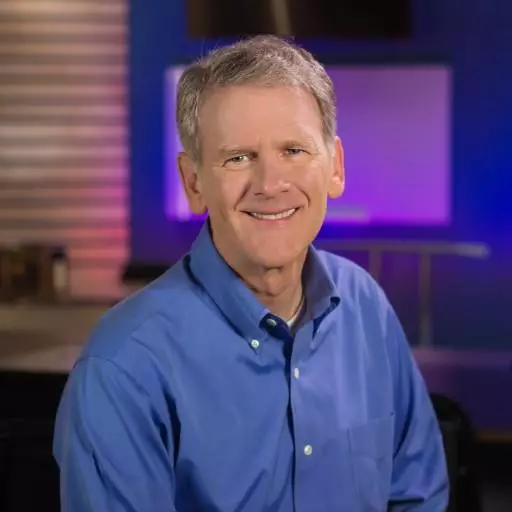
Bryan Chapell, Ph.D. is the Stated Clerk Pro Tempore of the Presbyterian Church in America (PCA), based in Lawrenceville, GA.
Dr. Chapell is an internationally renowned preacher, teacher, and speaker, and the author of many books, including Each for the Other, Holiness by Grace, Praying Backwards, The Gospel According to Daniel, The Hardest Sermons You’ll Ever Have to Preach, and Christ-Centered Preaching, a preaching textbook now in multiple editions and many languages that has established him as one of this generation’s foremost teachers of homiletics.
Dr. Chapell is passionate about sharing the truth of God's grace with others, because it provides the freedom and fuel for transformed lives of joy and peace.
He and his wife, Kathy, have four adult children, a growing number of grandchildren, and lives rich with friends, fishing and faith.
Contact Unlimited Grace with Bryan Chapell
info@unlimitedgrace.com