

Hope Through The Night - Part 2


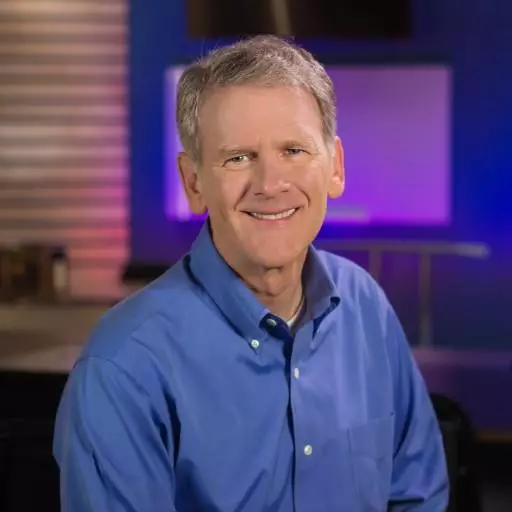
Pastor Bryan shares the second half of a lesson from Psalm 88. Dr. Chapell shares how our loving God understands the trials of this world and affords us the freedom to pray through the pain and doubt of this life.
Bryan Chapell: Lord, I don't understand. Lord, I don't understand. I can't make sense of this. This doesn't work. How can it possibly be? And it's just the message we learned in our youth. When it's hardest to pray, pray hardest.
Guest (Male): So glad you joined us for today's Unlimited Grace, the audio broadcast ministry of pastor and author Bryan Chapell. In today's episode, Pastor Bryan shares the second half of a lesson from Psalm 88. Dr. Chapell shares how our loving God understands the trials of this world and affords us the freedom to pray through the pain and doubt of this life.
You can find this lesson and many others when you visit unlimitedgrace.com. And while you're there, look for Pastor Bryan's book, *The Multi-Generational Church Crisis*. This compelling book asks the question of the church: What could be accomplished in the name of Christ if we could better understand each other? Let's hear now from Dr. Bryan Chapell as he shares the second half of the lesson, "Hope Through the Night."
Bryan Chapell: Let me ask that you look in your Bibles this morning. It's Psalm 88. Psalm 88. I'm now going to pray for our study of the Scriptures. I mentioned to you earlier in the service that we're going to talk about some very serious things today and we're going to pray about some very serious things. If you're able and willing and you feel it's appropriate for you to be on your knees about what we are going to now pray about, I invite you to join me as we ask God's blessing upon the study of His word.
Heavenly Father, I thank You for making this church a beacon of gospel hope for those of many nations. Thank You for the men, the women, and the children who are giving of their lives and their incomes and their prayers to see that the gospel will give hope to many more by mission efforts that free us from guilt and enslavement to sin by faith in Your Son. We consider it a privilege to serve the cause of the One who took the penalty of justice for our sin on Himself so that we could be eternally free of its guilt and power.
Thank You that an aspect of Your gracious provision of power over sin is Your word's clarity about what honors You and blesses Your people. So, Lord, we would pray that You would remind us by Your word even this day that not mere opinion or politics or pragmatics are sufficient to allay our concerns or to turn our nation to You. Your gospel must inform our witness, our ways, and our words.
We believe that our God reigns. Neither panic nor malice are appropriate for the servants of a sovereign and saving Lord. We pray that we would continue to be animated not only by the certainty that our God will judge sin according to His wisdom and His time, but we will also be led by the good news that the same God offers reconciliation to all who turn to Him through the life, death, and resurrection of His Son, Jesus.
Thus, for the faithful witness to which You call us, we pray that You would enable us to respect and pray for our governing authorities as Your word commands. We pray that You would enable us to exhibit by word and deed the biblical truth that all persons are created in the image of God and deserve dignity and respect. We pray that You would enable us to love our neighbors for Christ's sake.
Help us to proclaim and live these truths with courage and kindness, even if expressing our convictions with that dual responsibility requires the highest of cost outside or inside the church. Remind us that our stand for biblical morality has nothing to do with our willingness to welcome others or to justify ourselves. Jesus welcomed us as sinners, and we are glad for that.
But along with our trusting Jesus Christ for His forgiveness of our sin comes the need for repentance from our sin. So remind us that we are called to welcome all to Jesus, but clearly turning to Him always means turning away from whatever idols we worship. That includes same-sex relations, but it also includes a divorce culture, an obsession with personal peace and affluence, and an indifference to suffering, all of which are unquestionably the sins of those of us in the church.
We're not called to be Pharisees to look down on those not as holy as we be. In no way are we worthy of the grace that we have received by faith alone. If we now must call others to repentance, then Lord help us not to delay our own repentance. Please, for the sake of revival in our own hearts and church, make our calls to repentance in any way that suggests their sin is greater than ours. It is not.
Make those of us saved from our sin only by the shed blood of Jesus Christ, make us willing and able to speak the gospel more clearly, more lovingly, more courageously, more humbly, and more consistently than ever before. Awaken us to the needs of our nation and the needs of our souls. For Christ's sake, we pray. In Jesus' name, Amen.
Consider with me these words of Psalm 88. As I've mentioned to you, one of the most difficult Psalms in the Bible because the darkness is so complete in the Psalm. The psalmist begins in verse one of Psalm 88, "O Lord, God of my salvation, I cry out day and night before You. Let my prayer come before You, incline Your ear to my cry. For my soul is full of troubles and my life draws near to Sheol," which is the place of the dead.
"I am counted among those who go down to the pit. I'm a man who has no strength. Like one set loose among the dead, like the slain that lie in the grave, like those whom You remember no more for they are cut off from Your hand. You have put me in the depths of the pit, in the regions dark and deep." The darkness continues throughout the Psalm. Verse 16 is its conclusion.
"Your wrath has swept over me. Your dreadful assaults destroy me. They surround me like a flood all day long. They close in on me together. You have caused my beloved and my friend to shun me. My companions have become darkness." Or as some of your translations say, "And now darkness is my closest friend." I confess to you I have never preached from this Psalm before. But I can remember the time I read it when it had the greatest impact upon my life.
Close friend of mine, a man I went to seminary with, was born in Greece and he pretended like that was no advantage to him when we took New Testament Greek together until he smoked the rest of us on the exam and we said, "That's not fair." He was in my wedding. Beautiful pastor. Cared for people in part because of his own emotional struggles that he went through over and over again, sometimes not even able to stay in the pulpit because of the emotional struggles he had.
But that darkness that he sometimes went into made him so void of judgmentalism. Made him so able to be heart-to-heart with people who were struggling. His people loved him until the pit became too deep one time and the darkness too intense and he took his life. A day after that, I called his wife. And as we talked, she said to me that she had done her devotions in Psalm 88, this Psalm, that day.
And I, with a start, told her I had done the same. Why? Why was Psalm 88 so important to us that day? Because we needed to go to a place where God was not saying it'll be okay, there's a silver lining, you'll get over it, time to move on. For that moment, we needed to know that God understood there is a pain, there is a place in life, there is an occasion, there is a darkness that is so deep you just want to know: Does God get it?
Does He understand? And Psalm 88 is the message of the Father to say: I understand how deep the darkness can go that it seems like you're at the bottom of the well and there is no way out. You can't even see the light anymore. And our God is so tender and courageous at the same moment as to allow that to be said in His holy word. That there is a darkness with no exit, and I can name my pain because of such a God.
And right at the same moment as I'm able to name my pain, I learn from this Psalm I'm able to pray in the midst of it. I mean, the psalmist doesn't have answers, but he at least does this. Verse one, "O Lord, God of my salvation, I cry out day and night before You. Let my prayer come before You, incline Your ear to my cry." He prays, he prays again at the middle of verse nine, "Every day I call to You, O Lord. I spread my hands to You."
Verse 13, "But I, O Lord, cry to You. In the morning, my prayer comes before You." It's not an answer, it's just a direction. When the darkness is so deep, we're still able to call out to God. Even when we have named the pain, we can pray when we name the pain. Lord, I don't understand. Lord, I don't understand. I can't make sense of this. This doesn't work. How can it possibly be?
And it's just the message we learned in our youth. When it's hardest to pray, pray hardest. And it may not seem to solve it, it may not seem to make it all go away, but I at least know that there is somebody who understands my pain who has given me a way to express it in His own word. And He's not saying just get over it. He is saying deeply and profoundly: I understand the darkness.
Guest (Male): You're listening to Unlimited Grace, the audio broadcast ministry of pastor and author Bryan Chapell. It may seem hard for younger Christians to believe, but people over 50 were raised during an era where 90 percent of Americans identified as Christian. These older believers were once part of a majority group that understood the mission of the church was to take control of our culture, to halt its evils. At the same time, Christians under 50 have lived their entire lives perceiving themselves as a minority that needs to make credible their faith to a secular pluralistic culture.
These distinct experiences and perceptions have a profound impact on the priorities different generations have for church ministry. It's no wonder that younger and older believers don't always see eye to eye. In his new book, *The Multi-Generational Church Crisis*, Dr. Bryan Chapell asks the question: What could be accomplished in the name of Christ if we could better understand each other?
This practical and hopeful book is backed by thorough research revealing how to open the lines of communication, appreciate the experiences that shaped each generation in your church, and unite in one mission to impact your community and the world. You can request your copy of *The Multi-Generational Church Crisis* when you donate online at unlimitedgrace.com or by calling 844-41-GRACE. That's 844-414-7223. And now, more from Bryan Chapell on today's Unlimited Grace.
Bryan Chapell: If God is so honest, if we recognize truth so plainly in the pain, then what He says about relief and rescue and redemption is also going to be true. You would not trust Him if He did not understand every dimension of your hurt. You would not believe it's true if it was happy, happy, happy, happy, happy all the time. And because God is so honest, you begin to trust when He says the steadfast love of the Lord never ceases.
From everlasting to everlasting, I am God. So that when the immediate and the temporal makes no sense, we see that He says that. He understands that and says the truth. So I will trust the truth when He says there is something more eternal to come. If God is so honest about the darkness, then we can trust Him about the light. Honesty about darkness is sometimes pretty tough.
When Cathy and I were in St. Louis, having been there for quite a while, a young pastor was brought to town to pastor a very large and dare I say it, a very contentious church. And as he began to pastor that large and difficult church, difficulties of life just began to wave over him. Children born with multiple, multiple special needs of both body and mind. Special needs that would be burdens on that family for the rest of their lives.
And as the pressures of the church and the pressures of family began to push upon him, one winter's day, he took a walk along a train track to meditate, to think, maybe more. He was struck by the train, almost killed. The impact did tear his foot off. And as the medications to help with the pain not only helped with the pain but created dependency and despondency, he fell into deep depression.
The church pressures never went away. The family pressures never went away. And so finally, he took his life away. He had been a lighthouse of hope in that church. They'd had dark a long time, and he'd been such a beacon of newness, of a new start and a new beginning, that when he was gone, his assistant pastor also attempted his life. Same church. And then weeks later, the other assistant pastor attempted his life. Same church.
The wife of the senior pastor, just to get away from the darkness and the madness, began to attend our church. Our pastor at that time was preaching through the Psalms. And on the Sunday that he preached Psalm 88, that other senior pastor's wife came to talk to him and said, "I was so anxious about how you would preach Psalm 88. I so wanted you to be honest because it is the Psalm that I read to my children when my husband took his life."
Why? Because God says here in this Psalm: It's okay for you to think that life stinks, but you are still My child. And if God will let me say the truth that my life stinks, then I will believe Him when He says you are still My child. If He's true about the darkness, then He must be honest about the light too. And the fact that this is not the only Psalm is what gives us hope when we are facing that darkness.
Said that young woman, "I will trust His words about the hope He offers and eternity ahead because He's been so honest about my struggle." Why do we love this Psalm, not when you're young, when you've had a little bit of life? Why do you love this Psalm? Because it's not the last Psalm. There's one other critical place that I've read this Psalm. Those of you who have been to Israel with us, you know it.
There is an awful place that we visit when we're in Israel. It's known as the house of Caiaphas, the High Priest. The one who tried and tortured Jesus before sending Him on to the Romans. If you go to that house, they've excavated underneath, and you find that there were stables that were kind of cut into the hillside where it falls away. And in the rock, there are hitching posts that have been carved into the rock and they're low down where you can tie horses' reins.
But some of the hitching posts are carved high up into the rock where men would be tied and tortured in the house of the High Priest. What darkness. And it's not the worst of the darkness. Lower down, same house, is a grain pit turned into a holding cell where men were thrown down, held either by broken legs or a pit so dark and deep it would break their wills, where our Lord would have gone.
Now there are stairs that lead to the bottom of the pit for tourists. And if you walk down the stairs to the bottom of the pit, there is a large book with only one Psalm in dozens of languages. The one Psalm is Psalm 88, to be read where our Lord was held. "O Lord, God of my salvation, I cry out day and night before You. Let my prayer come before You, incline Your ear to my cry. For my soul is full of troubles and my life draws near to death.
You have put me in the depths of the pit, in regions dark and deep. Your wrath lies heavy upon me, and You overwhelm me with all Your waves. O Lord, why do You cast my soul away? Why do You turn Your face from me? You have caused my beloved and my friends to shun me. And darkness is my closest friend." It means so much when you begin to recognize that this Psalm, though it reflects our life, reflects our Lord's suffering.
This is not just what we experience, it's what He entered for your sake and for mine. And the reason I ultimately trust Him is not just that He knows the darkness, but He would enter it to suffer and die for my sin and yours, so that we could say to our own souls and to the world: When the darkness is so intense that I cannot even see the dawn, I will trust Him yet because He entered in. He didn't just see it from afar, He entered in.
So He'll listen to me now, even in my complaint, in my confusion, He will listen. Turn to Him, He will listen. He knows what you're going through. He knows the darkness and He entered in so that your everlasting dawn would be without this darkness because you trusted Him. Father, turn our hearts to You again. If the darkness is intense right now, I pray for my friends and for my family and for this church body.
There are those here right now today for whom the darkness is very deep, that I cannot even talk on these subjects without actually bringing the darkness waving over certain people again. And how I grieve for that, but help them to know You grieve too. So much so that You would send Your Son for everlasting purposes. You're so honest about the dark, but You sent the Man of Sorrows.
What a name for the Son of God who came, ruined sinners to reclaim. Hallelujah, hallelujah, hallelujah for the grace You give. We praise You in Jesus' name, Amen.
Guest (Male): That's Pastor Bryan Chapell, and you've been listening to Unlimited Grace. If you've been blessed by this message and would like to hear more from Dr. Chapell, I would encourage you to visit unlimitedgrace.com. Please be sure to join us next time as once again we endeavor to put Christ at the center of our efforts so that lives might be transformed by His unlimited grace. This ministry is brought to you by Unlimited Grace Media and continues to be made possible with your generous financial support.
Featured Offer

In Bryan Chapell's book, you will learn how God's unlimited grace leads us to heartfelt obedience and transforming joy. Explaining why grace is important and giving us tools to discover it in all of Scripture, Unlimited Grace helps us to see how gospel joy transforms our hearts and makes us passionate for Christ's purposes.
Past Episodes

Featured Offer
In Bryan Chapell's book, you will learn how God's unlimited grace leads us to heartfelt obedience and transforming joy. Explaining why grace is important and giving us tools to discover it in all of Scripture, Unlimited Grace helps us to see how gospel joy transforms our hearts and makes us passionate for Christ's purposes.
About Unlimited Grace
About Bryan Chapell
Bryan Chapell, Ph.D. is the Stated Clerk Pro Tempore of the Presbyterian Church in America (PCA), based in Lawrenceville, GA.
Dr. Chapell is an internationally renowned preacher, teacher, and speaker, and the author of many books, including Each for the Other, Holiness by Grace, Praying Backwards, The Gospel According to Daniel, The Hardest Sermons You’ll Ever Have to Preach, and Christ-Centered Preaching, a preaching textbook now in multiple editions and many languages that has established him as one of this generation’s foremost teachers of homiletics.
Dr. Chapell is passionate about sharing the truth of God's grace with others, because it provides the freedom and fuel for transformed lives of joy and peace.
He and his wife, Kathy, have four adult children, a growing number of grandchildren, and lives rich with friends, fishing and faith.
Contact Unlimited Grace with Bryan Chapell
info@unlimitedgrace.com