

Hope Through The Night - Part 1


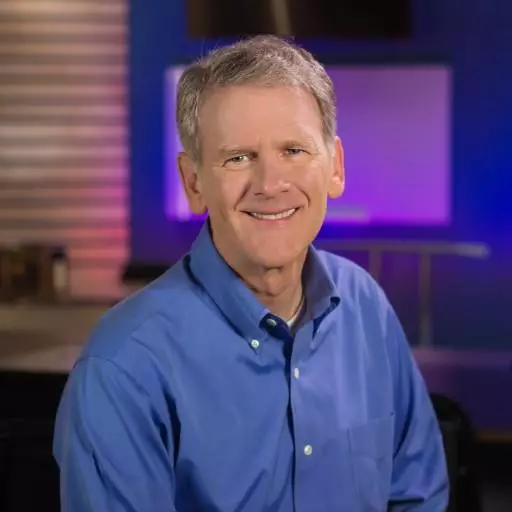
Pastor Bryan shares a lesson from Psalm 88. Dr. Chapell stresses that when our hope is eclipsed by the darkness of this fallen world, The Lord sits with us, because He knows how deep the darkness can go. He hears our prayers despite the depths of our despair.
Bryan Chapell: If God is so honest, if we recognize truth so plainly in the pain, then what he says about relief and rescue and redemption is also going to be true. You would not trust him if he did not understand every dimension of your hurt. You would not believe it's true.
Guest (Male): So glad you joined us for today's Unlimited Grace. The audio broadcast ministry of Pastor and author Bryan Chapell. In today's episode, Pastor Brian shares a lesson from Psalm 88. Dr. Chapell stresses that when our hope is eclipsed by the darkness of this fallen world, the Lord sits with us because he knows how deep the darkness can go. He hears our prayers despite the depths of our despair.
You can find this lesson and many others when you visit unlimitedgrace.com. And while you're there, look for Pastor Bryan's book, The Multigenerational Church Crisis. This compelling book asks the question of the church, what could be accomplished in the name of Christ if we could better understand each other? Let's hear now from Dr. Bryan Chapell, as he shares the lesson, Hope Through The Night.
Bryan Chapell: June 21st, 2015, at Mother Emanuel Church in Charleston, South Carolina. Pastor Norvel Goff preached the first sermon after the midweek Bible study in which nine parishioners of that church had been murdered by racist evil.
When Pastor Goff spoke, he said this: "We ask questions, Lord. We ask why. We cannot help it; it's our human nature. But through it all, those of us who know Jesus, as we find ourselves engulfed in sadness and darkness, and as we find ourselves walking through the shadow of the valley of death, for those of us who know Jesus, we can look through the windows of our faith, and we see hope. And we see light, and we can hear your voice saying, 'I am with you.'"
Beautiful words. Faithful words. Noble words. But what if you cannot say them? What if you cannot look through the windows of faith and see hope, or see light, or hear God's voice saying, "I am with you"? What if the darkness is too dark, and the doubt is too loud?
What if death is all around? Like the young pastors that I ministered to this last week, who have watched thousands driven from their homes, who have lost their churches, where death is actually all around, of loved ones and neighbor and friend and parishioner. What if there is deceit in my marriage? What if there is betrayal by my friends? What if I face the loss of loved ones and the loss of respect, the loss of health, the loss of my faculties? The loss of my freedom, the loss of my future, the loss of the moral compass of my country?
What if I'm just getting old and getting tired, and staying lonely? What then, Lord? These after all, are our reality. We can't escape them. We are not able to dodge them in a fallen world. These are our realities. And everyone that I mentioned is actually on the page of the scriptures, and most of them in this very Psalm.
What if the darkness is that deep? Then maybe you will have such a Psalm. The only one in the Bible that there is no relief, no redemption, no silver lining, no dawn, no exit. It is just darkness throughout. You end up reading this Psalm and you say, "Did somebody make a mistake?"
Well, you know that's not true. It is God's holy word. So what grace is actually here if there is no silver lining? At least part of the grace has to be the reality that this is not a forbidden Psalm. That all the words, as harsh and difficult as they actually are, are permitted in God's word. The Father allows his child to complain.
Verse 3: "My soul is full of troubles." Verse 4: "I'm accounted among those who go down to the pit." Our language today: "Lord, this is the pits." And the vacation Bible school song, "I'm happy, happy, happy, happy, happy all the time," doesn't fit. Yes, for children. Yes, yes from those who who are at a stage of life that they don't yet know that the darkness sometimes can actually be complete. In the horror and the pain and the sorrows that we sometimes will face.
The Father allows his child to complain. There's a grace in that. The Father also allows his child, believe it or not, to blame. Verse 5: "Lord, I'm like those you remember no more." The tone is about to change. Verse 6: "You have put me in the depths of the pit." "Yes, I'm in the pits." "And God, you did it." If you're sovereign, if you're in control, if you rule, then you made this pit, and you put me in it. Verse 7: "Your wrath lies heavy upon me." Verse 8: "You caused my companions to shun me, and you made me a horror to them."
Not only does the Father allow his child to complain and blame, but actually to begin to chide with sarcasm, a God of covenantal promise. Verse 9: "Every day I call upon you, O Lord, I spread out my hands to you." But Verse 10: "Do you work wonders for the dead? What good is it to do miracles if I'm dead?"
Verse 11: "Is your steadfast love declared in the grave? What good to show love to a corpse?" Verse 12: "Are your wonders known in darkness, or your righteousness in the land of forgetfulness? What good miracles if no one can see or no one can remember? What good is it then?"
And finally the Father allows this child who complains and blames and chides, actually to cry. Verse 13: "But I, O Lord, cry to you. In the morning my prayer comes to you." Verse 14: "Why do you cast my soul away?" Worse: "Why do you hide your face from me?" Verse 15: "I'm afflicted and close to death. From my youth up I suffer your terrors. I am helpless."
We go to a secular play like Les Mis in our area right now, or you've seen the movie, and we weep at the words and scarcely can believe that they would be words like the words of the Bible. There was a time when the world was a song. And then there was a time when it all went wrong.
I dreamed a dream in time gone by when hope was high and life worth living. I dreamed that love would never die. I dreamed that God was forgiving. But the tigers come at night with their voices soft as thunder, as they tear your hopes apart and they turn your dreams to shame. I had a dream my life would be so different from this hell I'm living. So different now from what it seemed. Now life has killed the dream I dreamed.
I know the song. I know why it's in the play. Why is it in the Bible? Surely one reason that this Psalm is not forbidden is so that I can name my pain. And you can too. That if God allows an inspired writer to say these words to him, then I too can name my pain.
Lord, this makes no sense. Lord, this hurts too much to be good, or even to work out for good. Lord, where did you go? I must tell you that there are some Psalms that I believe, without exaggeration, I have read hundreds of times. There are some Psalms that I have preached dozens of times. I confess to you, I have never preached from this Psalm before. But I can remember the time I read it when it had the greatest impact upon my life.
Guest (Male): You're listening to Unlimited Grace, the audio broadcast ministry of Pastor and author Bryan Chapell.
It may seem hard for younger Christians to believe, but people over 50 were raised during an era when 90% of Americans identified as Christian. These older believers were once part of a majority group that understood the mission of the church was to take control of our culture to halt its evils. At the same time, Christians under 50 have lived their entire lives perceiving themselves as a minority that needs to make credible their faith to a secular, pluralistic culture.
These distinct experiences and perceptions have a profound impact on the priorities different generations have for church ministry. It's no wonder that younger and older believers don't always see eye to eye. In his new book, The Multigenerational Church Crisis, Dr. Bryan Chapell asks the question: What could be accomplished in the name of Christ if we could better understand each other?
This practical and hopeful book is backed by thorough research, revealing how to open the lines of communication, appreciate the experiences that shaped each generation in your church, and unite in one mission to impact your community and the world. You can request your copy of The Multigenerational Church Crisis when you donate online at unlimitedgrace.com, or by calling 844-41-GRACE. That's 844-414-7223.
And now, more from Bryan Chapell on today's Unlimited Grace.
Bryan Chapell: Close friend of mine, man I went to seminary with. He was born in Greece, and he pretended like that was no advantage to him when we took New Testament Greek together until he smoked the rest of us on the exam, and we said, "That's not fair."
He was in my wedding. Beautiful pastor. Cared for people in part because of his own emotional struggles that he went through over and over again. Sometimes not even able to stay in the pulpit because of the emotional struggles he had. But that that darkness that he sometimes went into made made him so void of judgmentalism. Made him so able to to be heart-to-heart with people who were struggling. His people loved him.
Until the pit became too deep one time, and the darkness too intense, and he took his life. A day after that I called his wife. And as we talked, she said to me that she had done her devotions in Psalm 88, this Psalm, that day. And I with a start told her I had done the same.
Why? Why was Psalm 88 so important to us that day? Because we needed to go to a place where God was not saying, "It'll be okay. There's a silver lining. You'll get over it. Time to move on." For that moment, we needed to know that God understood, there is a pain. There is a place in life. There is an occasion. There is a darkness that is so deep. You just want to know, "Does God get it? Does he understand?" And Psalm 88 is the message of the Father to say, "I understand how deep the darkness can go."
That it seems like you're at the bottom of the well, and there is no way out. You can't even see the light anymore. And our God is so tender and courageous at the same moment as to allow that to be said in his holy word. That there is a darkness with no exit, and I can name my pain because of such a God. And yet at the same moment, as I'm able to name my pain, I learn from this Psalm, I'm able to pray in the midst of it.
I mean, the Psalmist doesn't have answers. But he at least does this. Verse 1: "Oh, Lord God of my salvation, I cry out day and night before you. Let my prayer come before you. Incline your ear to my cry." He prays. He prays again at the middle of Verse 9: "Every day I call to you, O Lord. I spread my hands to you." Verse 13: "But I, O Lord, cry to you. In the morning my prayer comes before you."
It's not an answer, it's just a direction. When the darkness is so deep, we're still able to call out to God. Even when we have named the pain, we can pray when we name the pain. "Lord, I don't understand." "Lord, I don't understand." "I can't make sense of this. This this doesn't work. How can it possibly be?" And it's just the message we learned in our youth: When it's hardest to pray, pray hardest.
It may not seem to solve it. It may not seem to make it all go away. But but I at least know that there is somebody who understands my pain, who has given me a way to express it in his own word. And he's not saying just get over it. He is saying deeply and profoundly, "I understand the darkness."
That's at least part of the grace. What other grace is here? Not only that this is not a forbidden Psalm, but it is not the only Psalm. Sometimes we forget in our culture, we kind of cherry-pick our way through the Psalms, what we love and don't love, that there are actually five books within the one book of the Psalm. The first book of the Psalms that that goes to Psalm 41 is that collected from the lifespan of David, where promises were made of a kingdom that would be his and then would be eternal. That there were blessings to come. And the the rejoicing and the dancing of that continues into the second book of the Psalms. As through the life and ministry of Solomon, we begin to understand, "The kingdom is expanding, things are going wonderfully."
And then the dancing stops abruptly in Book 3, Psalm 73, where there is disaster upon the nation. The kingdom divides, the enemy is at the gate, the people are taken into slavery. "By the rivers of Babylon we sat down and wept when we remembered Zion." Slavery and darkness and exile and death.
And it's in that book, Book 3, that Psalm 88 appears right at the end. Almost almost as the climax of the pain. As God is saying, "I understand." It's it's real, but it's not the only Psalm. You've still got Books 4 and 5 to go, where Book 4 is saying, "Out of the pain, there is still hope that God will provide a Messiah." And finally Book 5, according to his promises now, "How should you live and even and even praise when it's all not making sense?" From blessing, to dancing, to crisis, to hope, and ultimately to praise. Every every dimension of human feeling and suffering and joy is covered in the Psalms. It's why we love the Psalms so much that that we find our different expressions and emotions at different phases of life. But I will tell you, for most of us, we don't dive into the middle book of the Psalms until we are quite mature.
I mean, early when you're a child in life, maybe maybe in years where you're just looking for the happy stories, you don't go to the middle of the Psalms. But when it's all gone wrong, your heart is drawn like a magnet to those places where God says, "I understand." And Psalm 88 is the apex of the "I understand."
But the reason he says that in the middle is because he's affirming what he will say later. If God is so honest, if we recognize truth so plainly in the pain, then what he says about relief and rescue and redemption is also going to be true. You would not trust him if he did not understand every dimension of your hurt. You would not believe it's true. If it was happy, happy, happy, happy, happy all the time.
And because God is so honest, you begin to trust when he says the steadfast love of the Lord never ceases. From everlasting to everlasting, I am God. So that when the immediate and the temporal makes no sense, we see that he says that, he understands that, and says the truth. So I will trust the truth when he says there is something more eternal to come.
If God is so honest about the darkness, then we can trust him about the light. Honesty about difficulties is sometimes pretty tough. When Kathy and I were in St. Louis, having been there for quite a while, a young pastor was brought to town to pastor a very large and, dare I say it, a very contentious church. And as he began to pastor that large and difficult church, difficulties of life just began to wave over him.
Children born with multiple multiple special needs of both body and mind. Special needs that would be burdens on that family for the rest of their lives. And as the pressures of the church and the pressures of family began to push upon him, one winter's day, he took a walk along a train track to meditate, to think, maybe more. He was struck by the train, almost killed. The impact did tear his foot off. And as the medications to help with the pain, not only helped with the pain but created dependency and despondency, he fell into deep depression. The church pressures never went away. The family pressures never went away. And so finally, he took his life away.
He had been a lighthouse of hope in that church. They'd had dark a long time, and he'd been such a a beacon of newness, of a new start and a new beginning. That when he was gone, his assistant pastor also attempted his life. Same church. And then weeks later, the other assistant pastor attempted his life. Same church.
The wife of the senior pastor, just to get away from the darkness and the madness, began to attend our church. Our pastor at that time was preaching through the Psalms. And on the Sunday that he preached Psalm 88, that other senior pastor's wife came to talk to him and said, "I was so anxious about how you would preach Psalm 88. I so wanted you to be honest. Because it is the Psalm that I read to my children when my husband took his life. Why? Because God says here in this Psalm, 'It's okay for you to think that life stinks, but you are still my child.'"
"And if God will let me say the truth that my life stinks, then I will believe him when he says, 'You are still my child.'"
Guest (Male): That's Pastor Bryan Chapell, and you've been listening to Unlimited Grace. If you've been blessed by this message and would like to hear more from Dr. Chapell, I would encourage you to visit unlimitedgrace.com. Please be sure to join us next time as once again, we endeavor to put Christ at the center of our efforts so that lives might be transformed by his unlimited grace. This ministry is brought to you by Unlimited Grace Media, and continues to be made possible with your generous financial support.
Featured Offer

In Bryan Chapell's book, you will learn how God's unlimited grace leads us to heartfelt obedience and transforming joy. Explaining why grace is important and giving us tools to discover it in all of Scripture, Unlimited Grace helps us to see how gospel joy transforms our hearts and makes us passionate for Christ's purposes.
Past Episodes

Featured Offer
In Bryan Chapell's book, you will learn how God's unlimited grace leads us to heartfelt obedience and transforming joy. Explaining why grace is important and giving us tools to discover it in all of Scripture, Unlimited Grace helps us to see how gospel joy transforms our hearts and makes us passionate for Christ's purposes.
About Unlimited Grace
About Bryan Chapell
Bryan Chapell, Ph.D. is the Stated Clerk Pro Tempore of the Presbyterian Church in America (PCA), based in Lawrenceville, GA.
Dr. Chapell is an internationally renowned preacher, teacher, and speaker, and the author of many books, including Each for the Other, Holiness by Grace, Praying Backwards, The Gospel According to Daniel, The Hardest Sermons You’ll Ever Have to Preach, and Christ-Centered Preaching, a preaching textbook now in multiple editions and many languages that has established him as one of this generation’s foremost teachers of homiletics.
Dr. Chapell is passionate about sharing the truth of God's grace with others, because it provides the freedom and fuel for transformed lives of joy and peace.
He and his wife, Kathy, have four adult children, a growing number of grandchildren, and lives rich with friends, fishing and faith.
Contact Unlimited Grace with Bryan Chapell
info@unlimitedgrace.com