

Hope in a Small Package - Part 2


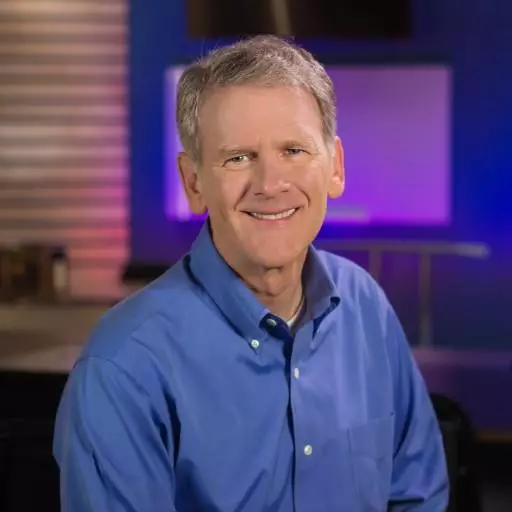
Pastor Bryan shares the second half of a lesson in Exodus 2. Dr. Chapell highlights how God uses even a few faithful people to cary out His grand and loving plan.
Guest (Male): The people of God must have said, "How is this in the plan of God? How is this faithfulness to our fathers, Abraham, Isaac, and Jacob?"
Bryan Chapell: But God was working His plan, and He was working His plan by the courage of just a few people.
Guest (Male): So glad you joined us for today's Unlimited Grace, the audio broadcast ministry of pastor and author Bryan Chapell. In today's episode, Pastor Bryan shares the second half of a lesson from Exodus chapter 2.
Dr. Chapell highlights how God uses even a few faithful people to carry out His grand and loving plan. You can find this lesson and many others when you visit unlimitedgrace.com.
And while you're there, look for this wonderful resource from Dr. Chapell, "Holiness by Grace." In this book, Pastor Bryan will guide you through reassuring scripture passages to discover how works and obedience are not a means of establishing or maintaining salvation, but a grateful response to God's mercy. Let's hear now from Dr. Bryan Chapell as he shares the second half of the lesson "Hope in Small Packages."
Bryan Chapell: Let me ask that you would look in your Bibles at Exodus. We'll look at chapters 1 and 2 this day, but focus on that message of commemoration and commencement. After all, the book of Exodus is commemorating what God did as He released His children from bondage from which they themselves could not escape. He was providing for people who could not provide for themselves.
And at the same time, He was calling them to a promised land to establish a nation from which our Savior would come. Commemoration and commencement, they are both before us. But as I mention us, you might begin to think that either this celebration or that of the scriptures is about what God's people have done.
Just so that we make clear who gets the credit, let's look at the final verses of chapter 2. Exodus 2, verse 23. Who gets the credit for the legacy and the mission? Verse 23: "During those many days, the king of Egypt died, and the people of Israel groaned because of their slavery and cried out for help. Their cry for rescue from slavery came up to God."
"And God heard their groaning, and God remembered His covenant with Abraham, Isaac, and Jacob. God saw the people of Israel, and God knew." God can use courage in obscurity for eternity. We see it in this account that we know so well.
There was first this awful law that Pharaoh himself gave. Do you remember it? Verse 14: "Even after their lives were made bitter with hard service in mortar and brick and all kinds of work in the field, in all their work, the Egyptians ruthlessly made Israel work as slaves. But then the king of Egypt said to the Hebrew midwives, one of whom was named Shiphrah and the other Puah, 'When you serve as midwife to the Hebrew women and see them on the birthstool, if it is a son, you kill him. But if it is a daughter, she shall live.'"
We have it kind of doused in the sweetness of Sunday school literature that we grew up with, maybe, and don't hear what was just said. It is ancient story, it is modern ethnic cleansing, no different than ISIS and Boko Haram. We see it even yet happening in our world, and we recognize the people of God must have said, "How is this in the plan of God? How is this faithfulness to our fathers, Abraham, Isaac, and Jacob?"
But God was working His plan, and He was working His plan by the courage of just a few people. Shiphrah and Puah do not do what Pharaoh says. It would be wrong to kill children like this.
So we read in verse 21, "Because the midwives feared God, He gave them families." That's kind of nice to know this is a version of you reap what you sow. They save families so they got families. But more than that is being said.
The courageous actually get names. Verse 15 that I read by quickly, we need to settle on a little bit. "Then the king of Egypt said to the Hebrew midwives, one of whom was named Shiphrah and the other Puah." Who is named in the verse, and who is not named in the verse?
The midwives are named. Who's not named? The king of Egypt. Now, I know that if you watch the Charlton Heston version of Ten Commandments, he's got a name, right? That's Ramses. It's not in the Bible.
Whoever is the king of Egypt, the Pharaoh is never named. Who gets named? Who gets remembered for generation after generation after generation? Who gets remembered?
Those who fear God more than man. Those who are courageous to do what God requires. Shiphrah and Puah, which as you think about it, are wonderful names for midwives if you're practicing the ancient form of Lamaze. Ship, ship, ra. Ship, ship, ra. Ship, ship, ra. Puah!
Now, in the history of preaching, that's known as comic relief. Their names are remembered. We sometimes feel if I do things for God, it will not matter, no one will remember.
But God is saying for those who will stand for Him, I remember your name. But more than that, you are participating in a mission grander and more important than you could possibly imagine. Verse 20 of chapter 1: "So God dealt well with the midwives, and the people multiplied and grew strong."
Through those in isolation doing what is right, God is multiplying His purposes. For this congregation, I've mentioned before when an academic entourage went to China in the mid-1990s to speak to the then-Chinese Premier Jiang Zemin to ask for some relief for the Christians who were under great oppression at that time in the nation of China.
And as that entourage was given permission to speak to Jiang Zemin, you do the classic thing in Asian culture, you exchange gifts. And the gift that was given to Jiang Zemin was a Gospel of John, with the suggestion, "Perhaps, Mr. President, you could read this."
And he responded, "Perhaps I shall read this in honor of the nanny who raised me, who was a Christian." And the story unfolds of a single Canadian nurse who wanted to be in missions but could not identify with a mission organization.
So she goes to China, and to make her own way, she becomes a nanny to a wealthy family and raises the future president of China. And by showing him kindness and Christian love with courage in obscurity, what does God do through her life?
Decades later, an American entourage says, "Mr. President, could you perhaps read this and ease up some of the pressure on the Christians?" Now, I can't tell you anything happened as a consequence of that meeting. I can't prove anything.
I can tell you that through the rest of the 90s and the early 2000s, pressure came off of the Christians, and you know the results: quite literally millions of Chinese becoming Christians. I cannot prove that it's because of the dedication of that one Christian nurse, but it would not surprise me.
It's the way God works. And it's not just something far away and long ago. I think of those two brothers and the cousin that came from the little town of Blaustein where there was no more farmland to distribute.
And they came here to the United States and they came to Illinois and Iowa. And we were just in Blaustein, and I would tell you if it had not said in German the name of the town, you would have thought you were in Peoria. Same terrain, same environment, same climate, same look, everything, because they came from that part of Germany and they settle in this part of the country where it reminded them of home, where they knew how to farm, where they knew how to make things go here.
And what they did as soon as they got the crops planted and their own homes built, the next thing they did, they built churches and they built schools for children. And they established a seminary in Dubuque, Iowa, for the best and the brightest of their young people to be trained to be ministers for the next generation.
And I recognize that Kathy's family and my meeting her and my being here and before you now in the ministry that I might have in a little bit in this church is a consequence of God's long vision. Through a people who thought they had been abandoned, wasn't much to do, they said, "No, we're here to build churches and we're here to establish schools for the young people of our community, and we're here to see that the ministry goes beyond us. The next generation shall praise the Lord and we will take care of that."
And I think of what happens in this church as we continue to believe that God is doing that through us. That if we will have courage, if we will continue to train young people in a town where there is adversity now, I mean, think what Mayor Ardis said even this morning. He was so candid and honest about the challenges facing this community.
But I look around as I face you now and I think of Youth for Christ in this town and Child Evangelism Fellowship regional centers that are right here. The fact that we have 23 nations now who are here with our English as a second language training, and so many of the people who come are moms.
The dads are at work, the moms come so they can help their children, and we have opportunity for those moms and their young children, campus outreach, InterVarsity Christian Fellowship, the headquartered things here that are multiplying faith for generations. Pioneer Girls, Brigade Boys, the Vacation Bible School that will be just around the corner for us.
That's our legacy and it's our mission to believe that God is saying to us, I can do amazing things through a people who are committed to me if they will have courage in the time of adversity, if they even think they are too obscure to matter, I will use my people if you will but trust me and move forward in my care. Why would we believe that? Because we see God using the smallest little things to accomplish great purposes of His own.
Guest (Male): You're listening to Unlimited Grace, the audio broadcast ministry of pastor and author Bryan Chapell. God instructs us in His word to be holy as He is holy. How can God expect us to be as holy as He is?
Such a standard seems either to ignore our frailty or to impose certain failure. That is, until we understand how God views us. In this challenging yet heartwarming book, "Holiness by Grace," Dr. Bryan Chapell illustrates the principles of grace, the practices of faith, and the motives of love in living a life of holiness.
Pastor Bryan will guide you through reassuring scripture passages to discover how works and obedience are not a means of establishing or maintaining salvation, but a grateful response to God's mercy. "Holiness by Grace" draws straight from the heart of God, as Pastor Bryan's encouraging words will help you understand that your holiness is not so much a matter of what you achieve as it is the grace that God provides, a grace so rich as to make the pursuit of His holiness your soul's deepest delight.
You can request your copy of "Holiness by Grace" when you go online to unlimitedgrace.com or by calling 844-41-GRACE. That's 844-414-7223. And now, more from Bryan Chapell on today's Unlimited Grace.
Bryan Chapell: I will use my people if you will but trust me and move forward in my care. Why would we believe that? Because we see God using the smallest little things to accomplish great purposes of His own. In chapter 2, He uses a baby boat for a blessed hope.
You know the story. There's just this little basket of reeds and bitumen that's put together with pitch to be a boat for a boy so he won't be killed. And just by chance, his mother puts him in the Nile River in a little inlet of reeds where Egyptian women bathe.
And just by chance, the woman who bathes that morning is the daughter of Pharaoh. And just by chance, she is more merciful than her father. And just by chance, Moses' sister is still watching from the reeds and she comes out and says to Pharaoh's daughter, "You know, if you want a nanny, I think I can find one for you."
And just by chance, it's Moses' actual mother. And just by chance, he therefore is able to learn the ways and the faith of the children of Israel. And just by chance, when he gets to be an adult, verse 10 of chapter 2 says this: "When the child grew older, she (that is, Moses' mother) brought him to Pharaoh's daughter and he became her son. She named him Moses because she said, 'I drew him out of the water.'"
And inside, we are thinking, God drew him out of the water. None of these things were by chance. God was working a plan. It was so minuscule, it was so insignificant, but God was taking faithfulness and using it.
It was not the first time that God had used an ark to save a people through water. You remember the account of Noah. Noah built the ark, who shut the door? God shut the door. "This is my hand," says God, saving my people.
And there would come a time later when these same Hebrew people having left Egypt would cross the Jordan River to go into the promised land. And ahead of them, they would carry that ark of the covenant. Don't think Indiana Jones, think scripture.
What's in the ark of the covenant that leads the people across the Jordan River on dry land? There are the tablets of the law that establish the holiness of God. There is the budded staff of Aaron that reminds people God can bring life out of dead sticks. He can bring many nations out of Abraham and the new Israel.
And finally, over the ark are the cherubim who show the power of a holy God, but their wings are spread over the mercy seat where people begin to realize we cannot meet the standards of a holy God, we have the hope of the nations because God provides in blood His mercy.
It's the gospel in a small package. It's this statement that God is saying to His people, "Though I am holy, you have hope and it is by my mercy." And it's that gospel that leads them into the promised land, and it's that gospel that is still ours to share if we will but do it.
To say that for the children of this community as we are being called into the local schools through a faith and school initiative to take the gospel to people who don't hear it or know it or have any sense of its reality, that we, the people of God, by a mentoring program in the public schools, could say to people: God is holy, but you can have hope because His mercy is real.
And if that becomes the message that we take by our compassion, God can use it in marvelous ways. After all, He does it right here. He does it for Moses. The accounts just throw us because God is ultimately taking Moses out into the desert.
It seems so wrong. Yes, he's now in Pharaoh's household, but as he gets a little older to about age 40, he sees an Egyptian beating up a Hebrew. And as a consequence, the Bible tells us Moses looked both ways and then killed the Egyptian and buried him in the sand.
Nonetheless, by verse 15 of chapter 2, Pharaoh finds out and he's out to get Moses. And Moses flees to the land of Midian at age 40, and he's in the desert for 40 years. What kind of a plan is that? "Oh, I'll call Moses back," says God, at age 80 to free my people.
So when he comes back, what does he know? He knows the ways of the Egyptians and the personality of Pharaoh and how to negotiate and leverage him so God will let the people go. And then where do they live for the next 40 years?
In the desert. Who has just learned how to live in the desert for 40 years? Moses. He has in the household of Pharaoh received the literature and learning of 3,000 years of Egyptian history, preparing to write scriptures that we now have.
But he's not just learning the inspired scripture that he can write by the mechanisms that have been poured into him—free tuition, it came from Pharaoh—he's also learned how to survive in the desert. God was working His plan. God was doing something greater than he could possibly have done for himself.
Why? Because God heard the groaning of the people, God remembered His covenant, God saw the people, and God knew what He was going to do about it. It's that message that we want to remember always, that God is the one to be trusted because He is the one who has shown Himself faithful.
And so we who know we do not measure up to His holiness still have hope because we remember His mercy and turn to Him afresh to tell the world what they must do. Oh, I know sometimes the train seems like it is too slow, off schedule, run off the tracks.
But the prophets long ago declared that that train of grace was on a sure destination and it would do what God intended to take away the sins of the world. What did those people early say to the kids who gathered in Peoria? I don't know what they said, but it was something like this train is bound for glory.
So get on board, little children, there's room for many a more. Oh, but Lord, sometimes the train doesn't seem to be going where it should. If you had been at the cross, you would have thought that.
The hiss of the brakes is the gasp of the son as they put thorns on his brow. The rattle of the rocks and the rail bed, the roll of the dice as they gambled for his garments. The roar of the engine, the clamor of the crowd: crucify him, crucify him, crucify him.
The pummel of the tracks, the rhythm of the lash as they strike his back. The driving of the pistons, the pounding of the hammers that drive the nails into hands and feet. And the wail of the whistle, the cry of the lamb: "Eloi, Eloi, lama sabachthani? My God, my God, why have you forsaken me?"
So that you and I would not be forgotten. That we who had our sins placed on him, the one who got on the train when he knew where it was going, would ourselves be free of sin and possess his righteousness by the great plan of God.
This is still our mission. God will be faithful to a people who are faithful to His mission. What is our mission? To say to everyone out there, this is just God's little boat, this is just His ark, this is just His train. And this train is bound for glory. So get on board, little children, there's room for many a more. Get on board, this train is bound for glory. This train, by the grace of God. Amen.
Guest (Male): That's Pastor Bryan Chapell, and you've been listening to Unlimited Grace. If you've missed anything that you'd like to hear once again, just visit unlimitedgrace.com. And when you do so, you can sign up for Pastor Bryan's daily devotional sent right to your inbox.
Also be sure to request a copy of Dr. Chapell's book, "Holiness by Grace." We'll send you this book right away as our way of saying thank you for your most generous financial support. Once again, go to unlimitedgrace.com or you can give by calling 844-41-GRACE. That's 844-414-7223.
Please be sure to join us next time as once again we endeavor to put Christ at the center of our efforts so that lives might be transformed by His unlimited grace. This ministry is brought to you by Unlimited Grace Media and continues to be made possible with your generous financial support.
Featured Offer
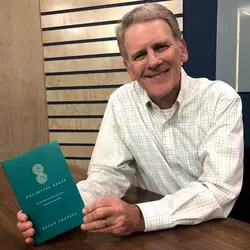
In Bryan Chapell's book, you will learn how God's unlimited grace leads us to heartfelt obedience and transforming joy. Explaining why grace is important and giving us tools to discover it in all of Scripture, Unlimited Grace helps us to see how gospel joy transforms our hearts and makes us passionate for Christ's purposes.
Past Episodes

Featured Offer
In Bryan Chapell's book, you will learn how God's unlimited grace leads us to heartfelt obedience and transforming joy. Explaining why grace is important and giving us tools to discover it in all of Scripture, Unlimited Grace helps us to see how gospel joy transforms our hearts and makes us passionate for Christ's purposes.
About Unlimited Grace
About Bryan Chapell
Bryan Chapell, Ph.D. is the Stated Clerk Pro Tempore of the Presbyterian Church in America (PCA), based in Lawrenceville, GA.
Dr. Chapell is an internationally renowned preacher, teacher, and speaker, and the author of many books, including Each for the Other, Holiness by Grace, Praying Backwards, The Gospel According to Daniel, The Hardest Sermons You’ll Ever Have to Preach, and Christ-Centered Preaching, a preaching textbook now in multiple editions and many languages that has established him as one of this generation’s foremost teachers of homiletics.
Dr. Chapell is passionate about sharing the truth of God's grace with others, because it provides the freedom and fuel for transformed lives of joy and peace.
He and his wife, Kathy, have four adult children, a growing number of grandchildren, and lives rich with friends, fishing and faith.
Contact Unlimited Grace with Bryan Chapell
info@unlimitedgrace.com