

Here Comes The Family - Part 2


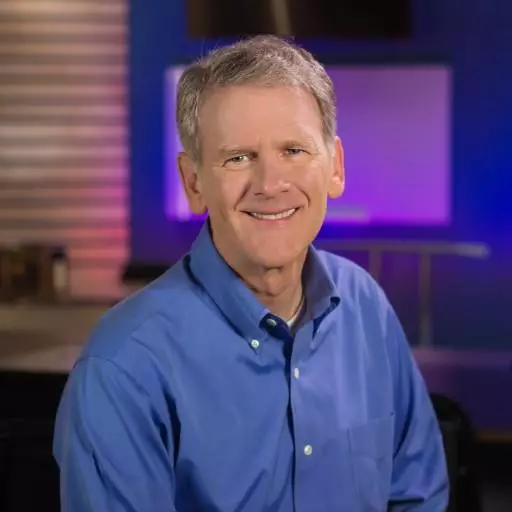
Pastor Bryan shares the second half of a lesson from 1 John 4. Dr. Chapell highlights the ways in which we are to love, with the love of Christ as our example.
Bryan Chapell: But if what they are hearing is, we will love beyond the differences, we will try to say all that we can to reflect Christ's love, we are simply doing verse 11. Beloved, if God so loved us, we also ought to love one another, which is simply saying we are called to reflect the love that came to us.
Chris Sobak: So glad you joined us for today's Unlimited Grace, the audio broadcast ministry of pastor and author Bryan Chapell. In today's episode, Pastor Bryan shares the second half of a lesson from 1 John chapter 4. Dr. Chapell highlights the ways in which we are to love, with the love of Christ as our example.
You can find this lesson and many others when you visit UnlimitedGrace.com. And while you're there, check out the new daily devotional from Pastor Bryan. Throughout this year, Dr. Chapell will take you through the entire Bible with a new devotional each day as we discover the ways that God's redeeming grace unfolds throughout all of Scripture. Let's hear now from Dr. Bryan Chapell as he shares the second half of the lesson, Here Comes the Family.
Bryan Chapell: Look in your Bibles at 1 John chapter 4, verses 7 through 12. Last week, as we began this series of why church, I reminded us all that for those who are united to Christ in faith, the Scriptures and Jesus Himself identify us as the bride of Christ. Because we are the bride of Christ, we think of our obligations not separate from one another, but being united to one another and Him.
That means as much out of vogue as it may be, we understand that to be the bride of Christ is to be united to one another in membership in a body of Christ that is fulfilling Christ's priorities. So what does that look like? What do you expect a bride to do? You expect a bride to love, and that's what's explained in this passage from 1 John.
Let me ask that you stand as we honor God's word. 1 John chapter 4, starting at verse 7, as we answer the question, what is a bride to do? "Beloved, let us love one another, for love is from God, and whoever loves has been born of God and knows God. Anyone who does not love does not know God, because God is love.
In this, the love of God was made manifest among us, that God sent His only Son into the world so that we might live through Him. In this is love, not that we have loved God, but that He loved us and sent His Son to be the propitiation for our sins. Beloved, if God so loved us, we also ought to love one another. No one has ever seen God. If we love one another, God abides in us and His love is perfected in us."
I think of a family in our church that has adopted and as sometimes happens in our particular city and state, when you adopt a child or two, the social services agencies recognize you have a big heart and so they say, how about another? How about another? And so there was a family council of this family being asked to adopt some more children.
Should we take more in? Fewer groceries, more crowded bedrooms, fewer Christmas presents. Should we take more in? And it was one of the adopted children in the family who said, "Dad, do these new kids that we're considering, do they know Jesus?" And the dad said, "I don't know." And so the adopted child said, "Well then of course we'll adopt them so they get to know Jesus. That's what we do. That's what we do."
The church of Jesus Christ is selfless in the expression of its love for others. We are not waiting to see, do I get mine? If I give enough of this, will I get what I choose, what I want? We are saying, how do we help others? I feel the great privilege of being the pastor of a church where we can't keep up with you as the pastoral staff.
Pastor Greg and I were just a couple of weeks ago trying to catalog what about just those mission agencies in the urban part of Peoria that you all minister to? And we lose track. We have trouble knowing who all is doing what, so many things. And that's just locally. And if we start counting the camps, and the Bible agencies, and the mercy ministries, and we start saying not only in Peoria but nationally, it's hard to keep up with you.
Sometimes you get mad at us. You say, "Hey, you're not doing my thing, so you're not doing anything." We say, "Yes, we are. We just can't keep up with you." And that's a wonderful problem to have. I think of the writing of Edmund Clowney when he talked about the nature of the church.
He said, if the church is doing its job, then the people of the church will, in their workplace, and in their social circles, and in their clubs, they will be looking for ways to express the love of Jesus Christ because it is just naturally supernatural work in them. It identifies them. It's the change in them. They are looking for ways to serve and help.
When we recognize that, we celebrate it. We celebrate it when we look at the children on the stage here at Christmastime and we say different needs, different ethnicities, different nations. God is doing a great work and this is going to be the expression of the gospel, not just in the moment, but for generations to come. And we celebrate that by willing to be selfless for it. But that is not all that this biblical love is, is simply being selfless.
Something else is required, and that is what verse 10 talks about. "In this is love, not that we have loved God, but that He loved us and sent His Son to be the propitiation for our sins." If you look up that word propitiation in the dictionary, if it's a secular dictionary, you're going to find something about making some sacrifice to appease an angry God.
The image usually is of some sort of maiden being cast into a volcano to save the island, which is not at all what the Bible is talking about. It does talk about an angry God. It does talk about a God of wrath, but it explains the reason for His wrath. Why does God have a reason to be upset with people like you and like me?
If you just let your eye keep looking in the passage and go to 1 John 5, verses 2 and 3, you'll recognize that love, biblically, is not just excusing anything, not just saying whatever goes. It's actually got a direction to it, this biblical love. Verse 2 of chapter 5: "By this we know that we love the children of God when we love God and obey His commandments.
For this is the love of God, that we keep His commandments and His commandments are not burdensome." We love the children of God by obeying Him, by saying God in His wisdom and compassion has given a good and safe path for His people. As He identifies that good and safe path for His people, He urges us to walk in it, not just because He's the ogre in the sky waiting to see if we'll get out of line.
But because He's saying, "This is love for my people, for families, for children, for people who need to hear the gospel. When my people walk in these ways, it's not merely glorious to God, it's good for them and those who their lives touch." So God has a right to be angry when our disobedience hurts His own family.
But He does not satisfy His wrath by sacrificing one of us. That's where propitiation is different. In order to satisfy divine justice, what God would do is He would send His own Son to pay the penalty for your transgression and mine. Ultimately what would make us right is not straightening up or sacrificing something of us to make things right with God.
Ultimately it was God sacrificing of Himself for our sake. For whom? For the ones who had disobeyed, for the ones who had transgressed. While we were yet His enemies, Christ died for us, which is sacrificial love, not just selfless love. We will go to the theaters and we'll see Hacksaw Ridge and Hotel Rwanda and we will celebrate those who give themselves selflessly for those who are either helpless or deserving.
But what we do not want to see, nor practice, is those who will give themselves for those who have hurt them or their families, who did everything to damage a career, to hurt my family, to betray, to lie, to damage for some personal gain, to say, "That's the person I'm called to love." That is the true supernatural Christ at work in you. When there is something in me that says, "I will love beyond the bitterness."
It's not asking us to say that we will never hope people experience consequences. No, we still send the murderers to prison, of course we do. But we want justice without bitterness. If I could express to you the families that Kathy and I have known where there has been the awfulness of kidnapping or murder and to have those very families pray for the spiritual good of the perpetrators, to still desire justice, but to say, "My justice is not vengeance. My justice is desiring what is best for my community and my home, but also for that individual, that I still desire their spiritual good."
Chris Sobak: You're listening to Unlimited Grace, the audio broadcast ministry of pastor and author Bryan Chapell. This is Chris Sobak, executive director of Unlimited Grace Media. I hope you have been enjoying this encouraging message from Pastor Bryan. If this program has been a blessing to you, I want to share with you a new way in which you can receive daily encouragement from Dr. Chapell.
We've recently launched a daily devotional podcast entitled Daily Grace. If you've already signed up to receive daily devotions by email, this podcast is a great companion piece. You can watch and listen to Pastor Bryan share these devotions daily when you visit UnlimitedGrace.com. You can also find this podcast on all major podcast platforms or watch it on YouTube.
This is just another way that we want to serve you with Christ-centered content and help focus your attention on the grace of God that pervades all of Scripture. Let us know what you think of this new podcast. We're always encouraged to hear from you. And now, more from Bryan Chapell on today's Unlimited Grace.
Bryan Chapell: I think of my telling you some weeks ago of the great race between Roger Bannister, the first man to break the four-minute mile, and John Landy. You may remember in that great head-to-head race, which was in Vancouver, that it looked like Landy was winning, and then just right at the last moment, he looked back. In the looking back to find out where Bannister was, Landy lost the race.
Wasn't the end of the story. That was just the lead-up to the Olympic Games. And even though the great race was between Landy and Bannister, there was another young man who was kind of making his way up through the ranks in preparation for the Melbourne games. His name, Jim Bailey, only in high school.
But at least in practice, he was running faster than Bannister or Landy. As the Melbourne games approached, he began to brag that he hadn't run his best race yet, that he would beat Landy, and began to mock him. The great race happened in Melbourne, and for the second time, Landy looked back.
But the reason he looked back was because Jim Bailey had fallen. Landy stopped and extended a hand and helped up the man who had mocked him, knowing that by helping that man, he himself had sacrificed a world record in the Olympics. It immortalized Landy. That he was willing, in the secular press, to be a sportsman.
But what we would recognize is to reflect our Savior in such a way that the world was going to change. That people would say, "Listen, he went ahead to win the race," which by the way, he did. But he sacrificed immortality on the track to help a young man who had been his enemy. What is God calling us to think about?
Yes, it is one thing to be selfless to help the helpless. It is quite another thing to sacrifice for those that when you reach a hand to them, they slap it away, or slap your family, or slam your God, and then just to say, "But for the sake of Jesus Christ, I will still help." I don't know what that looks like in your life.
Kathy and I were talking between the services and we know who it looks like in our life. What it means to think, even where it's hard to tune our hearts to love in such a way that we will say, "Listen, we can just be best friends again." That may not happen in this life. But love says, "I will still pray for that person. I still desire their spiritual eternity to be with Christ.
I still pray and as much as lies within me, work for the reality of the gospel in their lives because this is what Jesus did for me. I am called to extend such love to others." What does it look like in our church? I think of what people expect of us, that if people don't agree with us or don't act like us, that we will reject them.
The world just does not understand to say, "Listen, if you are living against the law of God and against the gospel, no, it's not right to say that you are a bride of Christ, you shouldn't unite with us. But by all means, come and worship with us. Are you gay? Are you a gossip? Are you an adulterer? Are you a sinner? Are you like one of us before Christ entered our life?
Then come here. Worship with us. Let us love you. Let us love on you so that you can love the love of Christ even before you have learned who He is." Folks, that's what we do. It's what God is calling us to do. We're not waiting for everybody to straighten up before they can come here. We are saying, "Let's identify what it means, even as we are identifying those who might think we would hate them or look down upon them or be our enemies."
Of course, if that's just human, if that's all we were depending on, that's what we'd do. But that's not all we're depending on. We are depending upon a supernatural work of God. If I believe that, then I believe that God is not just calling me to love the lovely, but to love the unlovable, and those who cause me pain, and those who take me into risk for the sake of caring for them because biblical love is selfless and it is sacrificial.
It is something else. It is the power of the gospel in our midst. It is what will take people far beyond from some sort of logical argument that the Bible is true and we're nice people and you should join us. No, if all they hear from us is, "You straighten up, you fly right, you believe what we believe," they will not hear us, nor the gospel.
But if what they are hearing is, "We will love beyond the differences, we will try to say all that we can to reflect Christ's love," we are simply doing verse 11. Beloved, if God so loved us, we also ought to love one another, which is simply saying we are called to reflect the love that came to us.
Something else is being said and that is verse 12, not merely to reflect Christ's love. John writes in verse 12, "No one has ever seen God. If we love one another, God abides in us and His love is perfected in us." His love is perfected in us? Something in us wants to again kind of push back and say, "Well, nobody's perfect, that's not going to work."
The word perfected means completed. The notion is that as Christ Himself brought the mission of God into the world through the work of the cross, that what God is doing is He's completing that work in the world through the church, through the bride of Christ. Even as He loved the unlovely, even as He gave Himself for His enemies long before they loved Him, so we are being called to complete His work in the world, to carry it forward, and to believe that it will work beyond us.
It becomes the magnet of the gospel when our culture, our own children, begin to say, "Something's different in those people. Who would love like them? Who would forgive like them? Something different is there and it changes everything when the love is selfless and sacrificial for those that are so undeserving in order to reflect Christ and complete His mission in this world."
When John Landy extended the hand to Jim Bailey, it didn't just break Landy's ability to break a record. It broke the heart of Jim Bailey. "I mocked you and you helped me at the sacrifice of yourself." Jim Bailey would later say it was the changing moment of his life when somebody extended to him a hand when he knew he deserved none of it.
It didn't just immortalize Landy, the one who extended the hand. It began a legacy because Jim Bailey began to understand the value, the wonder of giving himself for others. Some of you who know the track and the sports world will recognize names like Salazar and Prefontaine and Bill Dellinger, who ultimately not only ran but coached five NCAA championship teams.
All of them were coached by Jim Bailey, who recognized as he had been given, so he wanted to give, and it became the legacy of love that lived far beyond him to far more. I rejoice to be a part of this church where I recognize that there are those of you among us, who just the fact that we are in this building is the evidence of your sacrifice and selflessness.
But I want to say to all of you, as we are celebrating children that God brings into our midst, as we are building another generation, as we are saying God is calling absolutely every one of us to say, "I need to be part of God's mission in this bride to love past my own selfishness, to actually care for those that don't deserve it."
That God is building a legacy of love that will go far beyond us because it is the distinguishing mark of the gospel to which He calls us. If I were to say to you, let us love one another, you would say, "Well, of course he says that. He's a preacher and we're in church."
But if I were to say to you, there is no more powerful witness of the gospel that you can express than to put away bitterness and un-forgiveness and love the unlovable, then I will challenge you not only to your greatest heartache, I will challenge you to Christ's greatest triumph in you. He will show Himself because He abides in those that love Him and love those that He loves and He manifests Himself in the church that loves for Christ's sake.
Friends, I'm so glad you decided to tune in today and listen and I would consider it a privilege to pray for you right now. Let's go together before the throne of heaven and pray for the Lord's blessing. Father, thank you for being merciful to us.
Help our hearts to grasp the greatness of that mercy that you provide so that we can offer our lives to Jesus as a sacrifice of praise that you have made holy and acceptable despite our many weaknesses and flaws. We thank you for this great grace and pray in Jesus' name, Amen.
Chris Sobak: That's Pastor Bryan Chapell and you've been listening to Unlimited Grace. If this message has been an encouragement to you, you can find a collection of more valuable resources at UnlimitedGrace.com. Please be sure to join us next time as once again we endeavor to put Christ at the center of our efforts so that lives might be transformed by His unlimited grace.
This ministry is brought to you by Unlimited Grace Media and continues to be made possible with your generous financial support.
Featured Offer
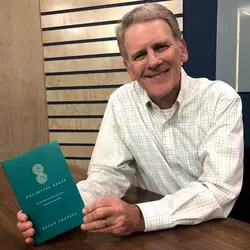
In Bryan Chapell's book, you will learn how God's unlimited grace leads us to heartfelt obedience and transforming joy. Explaining why grace is important and giving us tools to discover it in all of Scripture, Unlimited Grace helps us to see how gospel joy transforms our hearts and makes us passionate for Christ's purposes.
Past Episodes

Featured Offer
In Bryan Chapell's book, you will learn how God's unlimited grace leads us to heartfelt obedience and transforming joy. Explaining why grace is important and giving us tools to discover it in all of Scripture, Unlimited Grace helps us to see how gospel joy transforms our hearts and makes us passionate for Christ's purposes.
About Unlimited Grace
About Bryan Chapell
Bryan Chapell, Ph.D. is the Stated Clerk Pro Tempore of the Presbyterian Church in America (PCA), based in Lawrenceville, GA.
Dr. Chapell is an internationally renowned preacher, teacher, and speaker, and the author of many books, including Each for the Other, Holiness by Grace, Praying Backwards, The Gospel According to Daniel, The Hardest Sermons You’ll Ever Have to Preach, and Christ-Centered Preaching, a preaching textbook now in multiple editions and many languages that has established him as one of this generation’s foremost teachers of homiletics.
Dr. Chapell is passionate about sharing the truth of God's grace with others, because it provides the freedom and fuel for transformed lives of joy and peace.
He and his wife, Kathy, have four adult children, a growing number of grandchildren, and lives rich with friends, fishing and faith.
Contact Unlimited Grace with Bryan Chapell
info@unlimitedgrace.com