

Here Comes The Family - Part 1


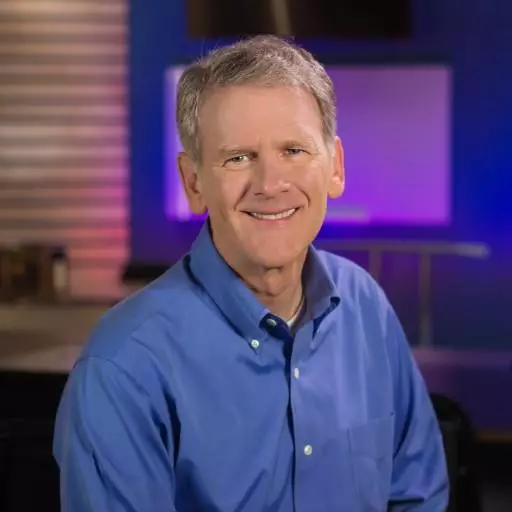
Pastor Bryan shares a lesson from 1 John 4. Dr. Chapell investigates the family of God, that as members of this family, we are called to love others and reflect the character of our father.
Bryan Chapell: This is not natural. This is not normal. There is something of God in me. It's not just they know we are Christians by our love. We know we are Christians by this love that is so beyond us. When we express the capacity for love as this scripture is telling us, we're actually evidencing our identity to ourselves.
Guest (Male): So glad you joined us for today's Unlimited Grace, the audio broadcast ministry of pastor and author Bryan Chapell. In today's episode, Pastor Bryan shares a lesson from 1 John Chapter 4. Dr. Chapell investigates the family of God, that as members of this family, we are called to love others and reflect the character of our Father.
You can find this lesson and many others when you visit unlimitedgrace.com. And while you're there, check out the new daily devotional from Pastor Bryan. Throughout this year, Dr. Chapell will take you through the entire Bible with a new devotional each day as we discover the ways that God's redeeming grace unfolds throughout all of scripture. Let's hear now from Dr. Bryan Chapell as he shares the lesson, "Here Comes the Family."
Bryan Chapell: "Who loves you, baby?" is a phrase made famous by a bald-headed detective on a now-extinct television series that some of you still recognize. "Who loves you, baby?" is a phrase that, despite the extinction of the TV series, still is a phrase common in our cultural vocabulary and expressed at times in a way very true to the church of Jesus Christ by a man in our church who still uses the phrase in a very special way.
He does regular business in a place that's near this church. When he goes into that business, he sees a young lady who is a child of this church, attended Sunday school and vacation Bible school for many years, but she no longer attends this church or any church. When he enters the business, she looks down, looks guilty, looks embarrassed, and expects the guilt trip, the pressure, but our church member refuses to cooperate.
Instead of trying to make her feel guilty, he asks her a question. "Who loves you, Naomi?" She says, "You do, Charlie." He says, "Who loves you more?" She says, "Jesus." Now that I've blown his cover and you can figure out who it is, I need to tell you that's not the end of the story. Because that same man will make the trips down to an urban mission for Bible studies during the course of the week.
He will speak to men who are addicted and homeless and jobless. Our church member will tell them his own story of having been addicted and of gospel rescue and of the rescue that can be theirs now. Before they leave the meeting to go either off to the mealtime or to their bedtime, Charlie will ask them the question, "Men, who loves you?" "You do, Charlie." "Who loves you more?" "Jesus."
The sweetness of the story is, of course, that if the Father who loves us also loves them, then that means we're in the same family. The challenge of the story is, if we are in the same family, we're supposed to act that way. If you figure out what that means, it's more than just sitting here. It's more than me on occasion trying to stir you, as I did last week, for the distinctives of this church.
We believe that God has called us into mission to be true to the scriptures, to have a personal faith, and to take that faith to other people. That may stir our hearts. But the reality is, if there is not love evident among us and through us, we are, as the scriptures describe, nothing but a noisy nuisance in this culture.
If you begin to think what it means beyond the stereotype of the Hallmark card version of Christianity that says just love one another, if we begin to sense what this scripture says about the challenge and the difficulty and the power of love, then we will begin to understand that what John is challenging us to here is something that is far beyond us in our own strength or own resolve.
It is a true work of God among us, and we actually need that work of God because biblical love is the A1 tank of the gospel, pushing past all resistance and all enemies to make Jesus Christ heard in a culture that does not want to know him. If that love is not evident among us, then we will have no more spiritual power than the latest Hallmark card, but it is not what God wants of us.
What does God want of us? What is this biblical love? The clear distinction that is being established right at the beginning of this passage is that this biblical love is a gift of God, which means we can neither produce it nor exist without it. Verse 7: "Beloved, let us love one another, for love is from God." You may almost want to debate the apostle at this point.
Wait a second, love isn't only from God. There are people who love each other genuinely and well, and they're not necessarily believers. They're not all in the church. How can we say that this love is from God? We recognize as believers that if anyone loves in any way, it's God who's given them the breath and the circumstance and the relationship. There is a common grace that people may not even perceive that allows them to love as a gift of God.
But there is more that is being said here. Not only is love a gift of God for those who may not even know that they are receiving it because they are not Christian, we should begin to recognize that the gift of God is for us when we do not even want it. After all, what has to make it a gift? It has to be given to us when there is nothing in us that wants it or could claim it.
If you have been betrayed or brutalized or heartbroken, your heart is already emptied of love, and there is nothing in us that wants to express it, particularly toward the people who did that to you or to your family or to your church or to your faith. For you to have love when your heart has been drained of it by the abuse or the hurt or the disdain of others, the fact that you could still love is nothing but a gift of God.
Something beyond human resolution, resolve, or sentiment. This is something deep down that heaven itself is planting in us, and it is nourished only by the reality of the gospel in our hearts, which means that ultimately the apostle is saying it becomes the distinguishing mark of what it means to be a believer. Verse 8 says it simply: "Anyone who does not love does not know God, because God is love."
To be a believer, to say I'm united to Christ, and to not love is to deny the very thing that distinguishes us. God is love. If we're united to him, that's part of us. That's essential to us. It's like trying to describe an ocean without the mention of water or a mountain without noting its elevation. These are essential features of the thing itself.
For us to be Christian and without love, as difficult as it may be to muster, as obvious as it may be beyond human urging out of us, it is the essential mark of what it means to be a Christian. Without it, we have no distinguishing mark, first to those outside the church. We recognize you do not know God if you don't have love is something that's to distinguish us in our culture.
When I was in high school, a lot of you who are of my generation, we used to sing in youth group, "They will know we are Christians by our love, by our love." We loved singing it. We loved the idea that we could be witness to others and witness in the world by having goodheartedness and warmth toward those on the outside. It sounds so sweet, and indeed we want to express it.
But I must tell you, that's not really the challenge. The mark that distinguishes us is when we love those who are totally unlovely, who hate us, who have hurt us, who have hurt our family, and still to love? That is exceptional. The scriptures are even saying it is supernatural. So much so that when we begin to recognize it in us or in our congregation, then we say this love that is biblical is not just the mark to those outside of us that we are in Christ.
It's actually the evidence to us that I'm experiencing something that I recognize would be impossible apart from the work of Christ in my heart and life. With what that person did to my family, with how that person treated me before they left, with how this particular group has damaged our group or our party or our school, to still love them?
I even myself begin to recognize this is not natural. This is not normal. There is something of God in me. It's not just they know we are Christians by our love. We know we are Christians by this love that is so beyond us. When we express the capacity for love as this scripture is telling us, we're actually evidencing our identity to ourselves.
Guest (Male): You're listening to Unlimited Grace, the audio broadcast ministry of pastor and author Bryan Chapell.
Chris Sobak: This is Chris Sobak, executive director of Unlimited Grace Media. I hope you have been enjoying this encouraging message from Pastor Bryan. If this program has been a blessing to you, I want to share with you a new way in which you can receive daily encouragement from Dr. Chapell. We've recently launched a daily devotional podcast entitled Daily Grace.
If you've already signed up to receive daily devotions by email, this podcast is a great companion piece. You can watch and listen to Pastor Bryan share these devotions daily when you visit unlimitedgrace.com. You can also find this podcast on all major podcast platforms or watch it on YouTube. This is just another way that we want to serve you with Christ-centered content and help focus your attention on the grace of God that pervades all of scripture. Let us know what you think of this new podcast. We're always encouraged to hear from you. And now, more from Bryan Chapell on today's Unlimited Grace.
Bryan Chapell: This is not natural. This is not normal. There is something of God in me. It's not just they know we are Christians by our love. We know we are Christians by this love that is so beyond us. When we express the capacity for love as this scripture is telling us, we're actually evidencing our identity to ourselves.
I've mentioned to you on other occasions my oldest son, who struggled so with asthma when he was growing up. We didn't even know it so much, but how he perceived in his early school years he was sickly and ostracized and bullied. When, to help him with his asthma, he began to jog with me, he began to find out he could breathe more.
He could not only breathe more, but he could race, and then he could win races. It began to change his own perception of himself when he got air and the capacity to breathe and the capacity to race. We've teased how he would, at the end of any race in the last 50 yards or so, he would just roar! We would kind of think it was cute and funny, not recognizing, as we do now, it was the declaration of his identity.
I'm not weakly. I'm not sick. I'm not struggling anymore. By racing, by having breath, I know who I am now. That's not anymore who I was, the sick one, the little one, the abused one. No, I'm able now. There's change in me. When we express love that we know is beyond our capacity, that capacity to love is actually expressing the identity of Christ to us.
It's also saying why if that love is not there, our very identity goes away. We talk in cliché about being blinded by rage or anger or bitterness. But the reality is, if the rage or the anger or the unforgiveness is in us, we are blinded ourselves to the very God who has shown us the gospel that should be changing us.
If the change is not there, then we say something is not being seen that's the actual magnet and thrust of the church into the culture. If she is the bride of Christ, she loves supernaturally. And if she does not, the power of the gospel fades right away. I think of that from where I was this past half week. This last half week, I was ministering to and training pastors in Ireland.
I'll just pause for a moment to thank you again. One of the things that brought Kathy and me here was a church committed to mission, to thinking about people beyond yourselves, and you share me with other people. That is a blessing and a privilege that we do not take lightly. And I do not take it lightly when I go to a nation like Ireland and I am told in this conference that I am in that there are now over half of the evangelical Bible-believing pastors in Ireland that you have sent me to help train.
It sounds like a grand and glorious thing. Do you know how many are the number of over half the evangelical pastors of Ireland? That was about 120 people. 120 pastors, over half of the evangelical Bible-believing pastors of Ireland? How could that be? You are talking about a nation that just a few decades ago was identifying itself as over 90 percent Christian.
And now, if you were to go to Ireland, you must recognize that it is identified as one of the most atheistic nations in Europe. Fewer Christians, less than 2 percent Christian, now self-identifying. As Albania or Russia or France, the nations we typically think of as Europe as the most atheistic and secular? Now Ireland exceeds them. How did that happen?
Most of the exodus of the Christian churches of Ireland has happened just since the 1990s. If you can think just back historically to what that meant, you would recognize that from the 70s and 80s, there was huge sectarian violence across Ireland, Northern Ireland mostly, but the hatred going down into the Republic as well. As a consequence, people worshiped in churches where they saw leaders come and worship God in the morning and hunt each other at night.
They recognized that those who were supposedly leading in the worship of God were increasingly calling for vengeance and anger and payback. When pastors were at some point perceived as politicians, and then some of you will know the history, and later as sexual predators, the exodus of love from the church led to the exodus of the people of God from the church.
You're saying, where is the gospel power? You say it vanished when the evidence of biblical love itself vanished. Now, we can just kind of objectify that and we can say, you know, those people ought to do better. Or we can sentimentalize all of this and say, you know, we should all be a bit gentler and nicer, try a little kindness. If that's where we end up, we have not discerned the challenge and the power of the Apostle John, who is calling us to a love beyond ourselves.
If we actually think what it means in our own lives, that I am being called to love those who have hurt me, betrayed me, hurt my family, hurt my career, then we begin to say, "God, do you really mean this? Do you understand how badly this hurt?" And then to recognize something supernatural actually has to happen for us to still express this kind of love, that when our own hearts are crying out saying, "God, what do you want from me?"
But he is going to answer plainly in ways that even the church sometimes doesn't want to hear. What does this gift of love look like? It has certain marks. Verse 9 begins to express the marks that are selfless. "In this the love of God was made manifest among us, that God sent his only Son into the world so that we might live through him." I know it's just a simple rehearsal of the gospel.
We're just being told again that he came in earthly humility, though he had heavenly royalty. He came in poverty, though he owned the cattle on a thousand hills. He made himself nothing to give us everything. Ultimately, he gave up his life to give us life. You know all of that. But it is the essence of what we are being called upon to reflect and to understand.
I can't reflect it. I won't be able to express it if I have not grasped what it means to give up one's life for the life of another. Here we are on Sanctity of Life Sunday, and I recognize and you recognize that this could just be politicized again. Or we could say that what the church is being called to do is to say we identify the helpless and the hurting and the least of these and say it is our job. It is our identity. It's what we do to give our lives for the lives of others.
That that is the mark of the church that distinguishes it from every other institution in the culture. And so we celebrate Heartbeat Ministry, which is looking at families who will adopt or help kids who are at risk in this culture or other nations and say this is the heartbeat of the gospel. Because not to have love for the helpless, not to be selfless in the way that we are expressing ourselves, is to actually miss the gospel.
And so we celebrate the families that offer their homes to children in foster care or adoption. But we begin to recognize that is not just those families' job. If we are the church of Jesus Christ and we see these families spending themselves in selflessness to adopt children, then we rejoice in the Christmas program when we see people from different nations and ethnicities and special needs who are among us.
We praise God for the families, but we say that's not their job alone. We're the family. And so we need the Sunday school teachers, and we need the nursery workers, and we need those who will watch the special needs kids when their parents are able to come to worship. And that's all of our job. And even the least of these get it when God is performing a supernatural work.
Hi friend, this is Pastor Bryan again. Today we've considered how the Bible encourages us to trust our Savior. If you find yourself in a situation today where you need to trust Jesus more with what's going on in your life, then I want to pray for you. Will you join me in prayer? Heavenly Father, as we begin to grasp the power and the love of Jesus's passion for us, we reach toward him, and we know that's what you want.
You want us to turn to our Savior with the confidence that he can and will hold us through all of life's trials and for eternity. So when we see how Jesus gave his life in order to save sinners like us, we love him, we turn to him, we trust him. Help us to do that right now, even if our circumstances are tough and our sins are great.
Help us to believe that no matter how great is the difficulty or how heavy is our baggage, how deep may be our shame, there really is hope for each of us when we trust in Jesus. Your Son has your heart and your power. So we ask that your Son, Heavenly Father, this Jesus Christ that we're turning to, would pardon our sin, help us to live for you, and hold us for eternity.
That's a big prayer, but his grace is big enough. And so we ask that you would apply it to our lives as you know is best, for then we will be truly blessed. And so we pray in Jesus' name. Amen.
Guest (Male): That's Pastor Bryan Chapell, and you've been listening to Unlimited Grace. If this message has been an encouragement to you, you can find a collection of more valuable resources at unlimitedgrace.com. Please be sure to join us next time as once again we endeavor to put Christ at the center of our efforts so that lives might be transformed by his unlimited grace. This ministry is brought to you by Unlimited Grace Media and continues to be made possible with your generous financial support.
Featured Offer
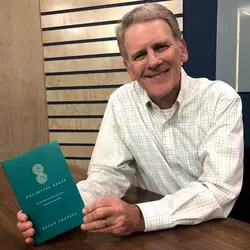
In Bryan Chapell's book, you will learn how God's unlimited grace leads us to heartfelt obedience and transforming joy. Explaining why grace is important and giving us tools to discover it in all of Scripture, Unlimited Grace helps us to see how gospel joy transforms our hearts and makes us passionate for Christ's purposes.
Past Episodes

Featured Offer
In Bryan Chapell's book, you will learn how God's unlimited grace leads us to heartfelt obedience and transforming joy. Explaining why grace is important and giving us tools to discover it in all of Scripture, Unlimited Grace helps us to see how gospel joy transforms our hearts and makes us passionate for Christ's purposes.
About Unlimited Grace
About Bryan Chapell
Bryan Chapell, Ph.D. is the Stated Clerk Pro Tempore of the Presbyterian Church in America (PCA), based in Lawrenceville, GA.
Dr. Chapell is an internationally renowned preacher, teacher, and speaker, and the author of many books, including Each for the Other, Holiness by Grace, Praying Backwards, The Gospel According to Daniel, The Hardest Sermons You’ll Ever Have to Preach, and Christ-Centered Preaching, a preaching textbook now in multiple editions and many languages that has established him as one of this generation’s foremost teachers of homiletics.
Dr. Chapell is passionate about sharing the truth of God's grace with others, because it provides the freedom and fuel for transformed lives of joy and peace.
He and his wife, Kathy, have four adult children, a growing number of grandchildren, and lives rich with friends, fishing and faith.
Contact Unlimited Grace with Bryan Chapell
info@unlimitedgrace.com