

Here Comes The Bride - Part 1


Pastor Bryan shares a lesson from Revelation 19. Is we investigate this passage, Dr. Chapell shares history of the church, and the ongoing need for Bible believers to unite.
Bryan Chapell: This Church of Jesus Christ is designed to honor him, to nurture his children, to support his purposes in the world. When we commit ourselves to a faithful church, we are uniting our lives to the bride of Christ whose calling is to support people and purposes of the Savior.
Chris Sobak: So glad you joined us for today's Unlimited Grace, the audio broadcast ministry of pastor and author Bryan Chapell. In today's episode, Pastor Bryan shares a lesson from Revelation 19. As we investigate this passage, Dr. Chapell highlights the history of the church and the ongoing need for Bible believers to unite.
You can find this lesson and many others when you visit unlimitedgrace.com. And while you're there, check out the new daily devotional podcast called Daily Grace. Pastor Bryan will guide you through a devotion each day to help focus your attention on God's grace as you study his word. Watch and listen to each episode when you visit unlimitedgrace.com today. Let's hear now from Dr. Bryan Chapell as he shares the lesson, "Here Comes The Bride."
Bryan Chapell: "My conscience is captive to the word of God. Here I stand. I can do no other. God help me. Amen." The stirring words of Martin Luther as he was called to recant that ninety-five theses that he tacked to the Wittenberg door five hundred years ago this year. Much of Protestantism will celebrate in this 2017 the Great Protestant Reformation in which the ancient truths of the church were refined according to the nature of scripture.
And yet, if you were to go to that very spot where Martin Luther said those famous words, you would go and find a small, nondescript plaque. In any year but this year where the nation celebrates, you would find a weed-filled courtyard marking the building that burned long, long ago where Martin Luther said those words. The weed-filled park is more than a statement of neglect. It is a reflection of the embarrassment much of the nation of Luther feels about the faith that he fought so hard to defend.
An evangelical pastor in the region where Luther spent so much of his energies recently recorded what a day is like for an evangelical pastor in that part of Luther's land. He wrote this, "By the time the Soviet tanks moved out in 1990, we opened church doors to people who had not touched a Bible for a generation. And they had been taught since childhood that believers were unscientific fools. If you identified as a Christian, not only were you ridiculed in school, your parents were not allowed the vouchers that allowed them to go to a pharmacy and get you medicine.
If upon high school graduation you did not renounce your own church membership and go through a confirmation ceremony in atheistic statements of the nation, you were not only denied the ability to go to university, you could not go to trade school nor receive a trade license. You could not get housing. You could not get a voucher to get a refrigerator or a stove for your apartment. It made no earthly sense anymore to be a member of a church."
So now, says the pastor, we preach and teach in the common language of atheists. For example, it makes no sense to say in this nation, "Jesus died for your sins." No one would care. They don't understand what sin is. At a wedding or a funeral, we talk about love and compassion from God, and with that basic message, we reach a few people. Who will listen? Often it's only the chemically dependent looking for some lifesaver from their dependence, or the sick, or the dying, or the elderly remnant.
To such, the pastor says he makes his daily rounds. But at the end of one day, a young couple knocked on his door. It made his day because what they asked was that he discuss with them their newfound faith. He described how for two hours with a Bible open between them, they discussed their newfound faith and its impact on their lives. But when he asked, "Would you be willing to be baptized, to declare your faith in Christ and unite in membership with a body of believers for Christ's sake?" they politely declined. Explains the pastor, "In our culture, people are used to hiding the spiritual dimension of their lives."
Not just in his culture. Last month, Gallup reported again in its church survey done annually how many of us as Americans identify as Christians. It was in December of this last year, 74%. But only about half of those who say they are Christian are member of any local church. And only about a third of those attend any local church regularly. It is plain even here that to believe the scriptures, to stand with a body of believers, to participate regularly in the support of the work of Jesus Christ in his local church is not a common or desirable thing for the majority of our culture.
So, why church? And just to be personal and particular, why this church? Why bother? Is uniting for a church even here and now just for the foolish, or the dependent, or the sentimental, or the aged? There is no question in an era of church hopping and shopping that if you are looking for a perfect church that will always inspire, that will never hurt you, that will never have hypocrites in it, that will supply all the hope that you need, that will supply all the services that your family want, that will teach precisely what you think is right, you ain't going to go to church.
Because you will not find that church. Particularly, you will not find a church that will not ask you for time or money in an era in which churches are wanting to establish themselves in a culture that has so little desire for them. Why church? Perhaps a biblical image that may help us is in the passage that our praise team sung about and that I read to you. It is that passage in which the bride of Christ, that is the church, is described as a multitude of faithful from all ages and nations who have separated themselves from the corruptions of the world to glorify the Savior.
This bride, this Church of Jesus Christ, is designed to honor him, to nurture his children, to support his purposes in the world. When we commit ourselves to a faithful church, we are uniting our lives to the bride of Christ whose calling is to support people and purposes of the Savior. Now, having said all of that, that we have some reason in the scriptures to be united to the bride of Christ, it doesn't answer all of our questions. After all, if you were going to be united to any bride, you have some very basic questions to ask. Like, what's the background of this bride? What's going on in the past? What established her? What's part of this bride's background before I want to be united to her?
When I got to know Kathy, one of the things that most attracted me to her was her family. They loved each other. They spent time together. They had fun together. Their fights did not destroy them. They demonstrated mercy and compassion. Kathy's father, virtually all of his adult life, supported Kathy's mother's mother, who was an invalid. It was a remarkable demonstration of compassion and sacrifice. I recognized this was a family where the parents loved each other and the children honored their parents. They all loved the Lord. If I were thinking in just general terms, I would say what I recognized from my wife was that she was from good stock. Good German stock. That was her background and that was attractive, that was appealing.
And if we think about what it means to be a part of a church like this, a question that we have to ask is just what stock are we? I mean, what's our background? And I want to use three words to identify some of our background that may strike you as unusual, but they are a statement both of our history and of our humility. Those three words that identify us are Apostolic, and Catholic, and Presbyterian.
Chris Sobak: This is Chris Sobak, executive director of Unlimited Grace Media. I hope you have been enjoying this encouraging message from Pastor Bryan. If this program has been a blessing to you, I want to share with you a new way in which you can receive daily encouragement from Dr. Chapell. We've recently launched a daily devotional podcast entitled Daily Grace. If you've already signed up to receive daily devotions by email, this podcast is a great companion piece.
You can watch and listen to Pastor Bryan share these devotions daily when you visit unlimitedgrace.com. You can also find this podcast on all major podcast platforms or watch it on YouTube. This is just another way that we want to serve you with Christ-centered content and help focus your attention on the grace of God that pervades all of scripture. Let us know what you think of this new podcast. We're always encouraged to hear from you. And now, more from Bryan Chapell on today's Unlimited Grace.
Bryan Chapell: Just what stock are we? I mean, what's our background? And I want to use three words to identify some of our background that may strike you as unusual, but they are a statement both of our history and of our humility. Those three words that identify us are Apostolic, and Catholic, and Presbyterian. The first two are probably a surprise to you. That we would say we believe that we are an Apostolic church, and yet every communion Sunday, we recite the Apostles' Creed. The statement about the church that I just read to you from the book of Revelation was written by the Apostle John.
When we say that we are an apostolic church, what we are doing is we are saying the church was not our idea. We did not create it. We bow to something more ancient and broad than we. It was Jesus who said, "I will build my church, and the gates of hell shall not prevail against it." The very images of hell as a very fortress and the church of Jesus Christ as an army ramming over the forces of hell itself because of the way Christ through his apostles designed the church. And much of the New Testament is Christ by his apostles saying what we should be and how we should organize ourselves and what we should do.
When we say that we are apostolic, and when we recite the Apostles' Creed, we are saying that this is not our idea. We are not doing something novel of our own design, but we are continuing in the stream of something ancient that God himself designed through his apostles. Not only do we say that we are apostolic, we believe that we should be catholic. And to the consternation of some of you, when we repeat the Apostles' Creed on Sunday, you say, "I believe in the holy catholic church." And you're thinking, "Wait a second, I didn't think you were a Roman Catholic Church." Well, that's not what we said.
We said we believe in the holy catholic church. And usually, there's an asterisk on whatever document you're reading that says that, which says the word catholic is a more ancient word that means universal. If you were to look at this passage, you would recognize that there is a great multitude that sings, "Hallelujah, amen, salvation and glory and power belong to our God." And that great multitude, we already recognize from the book of Revelation, is made up of faithful people from every tribe and language, people, and culture.
And when we say that, we say these brothers and sisters who were here from Guadalajara are our brothers and sisters because we are part of the church universal. We are a branch of that church, but we are not the only church. We bow in humility before the Lord and say we are just a branch of the true things that God is doing in the world. We're not the only true church. We're not the only blessed church. We're not the only church in which God is working. We rejoice that the church is broader than us, that it is doing things beyond us, that we are a part of something grander, more glorious that God is doing.
And that's being part of a church catholic. Not Roman Catholic, that's a particular designation on one branch of Christianity, which we are not, but at the same time, it is recognizing that this role of being a member of a church that's much broader than this particular denomination or building is actually what we believe is important. That we don't in pride say, "It all depends upon us." No, it doesn't. We are just part of a church much broader. And it's not just across the nations. If you would look at this passage, you would recognize that at the end of verse 8, it tells us that the fine linen of the church are the deeds of the saints.
And we learn even from this book of Revelation that those saints are often those who are already dead. That they have washed their robes in the blood of the lamb to be made right before the Lord and already stand before God in glory in heaven. That the church is made up of the saints across nations and also across the ages. So that when we gather here, we say we are not doing new things, novel things. We are not the first ones to be faithful. We are part of what God is doing and has been doing for generations, centuries, and ages until he claims his bride.
Now, saying that we are apostolic and catholic is identifying the roots of this tree. But if you begin to say that we are also Presbyterian to identify our character, you would say, "Well, that's just a branch on the tree." And it's a branch that appeared at a particular time in that tree's history. And the time at which it appeared, many Protestant churches are celebrating in this particular five-hundredth anniversary of Martin Luther's ninety-five theses. And it's recognizing that through the Reformation, there was a flowering of churches that were again saying, "We want to be committed not just to tradition, but to what the scriptures say." And one of those churches were churches that identified as Presbyterian.
Now, I'm not going to try to from this passage identify for you everything it means to be Presbyterian, but there are certain things that are being said here that are familiar to you because you are Presbyterian. One of those things identifies how we organize, another what we teach. If you were reading through this passage, you may remember that one of the things that is identified is that the twenty-four elders and the four living creatures fall down and worship God. That's verse 4. Elders fall down and worship. Anybody know what the Greek word for elder is? Presbuteros.
When we say we are Presbyterian, we say that the spiritual oversight of a church, of our worship, of what we do, is conducted by elders, by presbyters. That's what it means. And we look to the New Testament where the Apostle Paul said that elders were to be elected out of local congregations for the spiritual oversight of the church. How do they conduct that spiritual oversight? The elders worship with the four living creatures. Now, you need to know the four living creatures are not Pastor Bryan, Pastor Carrie, Pastor Greg, and Pastor John.
In the tradition of the church, the four living creatures are usually thought to be identified with the gospels: Matthew, Mark, Luke, and John, that identify the ministry of Christ at the beginning of the New Testament. It's probably even better to think that what's being established is, here are the ministries of the apostles and the prophets through the scriptures themselves. Because what we believe is that the elders in order to lead in proper oversight need to be guided by the word of God.
Because, as the end of verse 9 simply said, "These are the true words of God." We don't ask elders when they are giving oversight to our church, "Listen, every time you do something, go out and take a poll and see what the people want." We say, "Search the scriptures. What does the Bible say?" Because we want the oversight to be that which is done according to the scriptures, not our opinion, not some poll out there, but rather to elect those who are faithful in discerning from the word of God what it says. That's part of being Presbyterian. That's the practice.
In terms of what we teach, that is in the hallelujah. Just to remind you again, at the end of verse 1, "Hallelujah, salvation and glory and power belong to our God." If you go to verse 4, "Amen, Hallelujah." Verse 5, "Praise our God, all you servants, you who fear him, great and small." And then most particularly the middle of verse 6, "Hallelujah for the Lord our God, the Almighty reigns." Here is an understanding that we recognize God to be King. And the way Presbyterians usually talk about that is that he is sovereign over all. To him is salvation and glory and honor. He is the Almighty one.
And that has various dimensions of what we think. That salvation belongs to our God. I'm not saved by what I do, but by faith in what God has been done. Salvation and the power and the glory of my salvation goes to him. I'm not going to stand before God someday and say, "God, look how good I am. Look what I have done. Salvation belongs to me." No, I will say salvation belongs to your son. My faith is in what he has done. He is my sovereign Lord. He has power and glory in my salvation.
But he is almighty. All strength and honor are his. And that means I don't just think about myself. I think about the world itself, that there is no place where my God does not rule. Even the corrupt world that I am in is by the hand of Almighty God being steered in such a way that the great glory of the lamb will ultimately be honored. That all things are being worked together for good for them that love God and are called according to his purpose.
God, in ways that are mysterious and beyond my understanding, is sovereign over all. It doesn't mean that everything that happens seems good or feels good. But there is a purpose to which God is directing all things that ultimately means all should honor him, every person in every place. If he is almighty, if all power and glory are to be his, then we say he's not just sovereign in my salvation. He is sovereign over all things. There is no place that I don't owe him honor. All ground is holy ground. Every occupation is a holy calling. Every conversation an opportunity to demonstrate the reality of the testimony of the glory of God. For that reason, I don't just say, "Here's a holy place we do holy stuff here, and out there we do something else." No, he is sovereign over all.
Chris Sobak: That's Pastor Bryan Chapell, and you've been listening to Unlimited Grace. If this message has been an encouragement to you, you can find a collection of more valuable resources at unlimitedgrace.com. When you visit, you will find today's message and many others from Pastor Bryan.
Once again, go to unlimitedgrace.com or you can give by calling 844-41-GRACE. Please be sure to join us next time as once again we endeavor to put Christ at the center of our efforts so that lives might be transformed by his unlimited grace. This ministry is brought to you by Unlimited Grace Media and continues to be made possible with your generous financial support.
Featured Offer

In Bryan Chapell's book, you will learn how God's unlimited grace leads us to heartfelt obedience and transforming joy. Explaining why grace is important and giving us tools to discover it in all of Scripture, Unlimited Grace helps us to see how gospel joy transforms our hearts and makes us passionate for Christ's purposes.
Past Episodes

Featured Offer
In Bryan Chapell's book, you will learn how God's unlimited grace leads us to heartfelt obedience and transforming joy. Explaining why grace is important and giving us tools to discover it in all of Scripture, Unlimited Grace helps us to see how gospel joy transforms our hearts and makes us passionate for Christ's purposes.
About Unlimited Grace
About Bryan Chapell
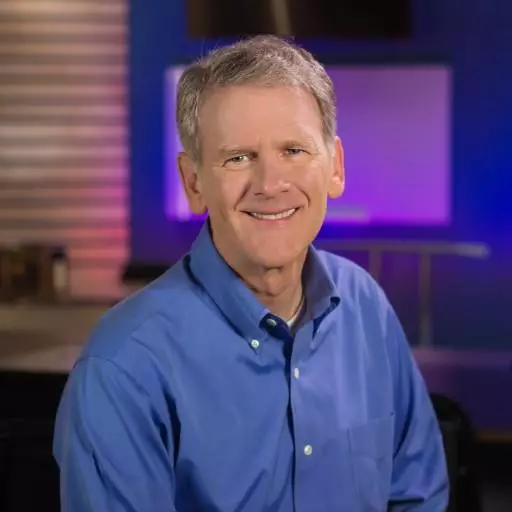
Bryan Chapell, Ph.D. is the Stated Clerk Pro Tempore of the Presbyterian Church in America (PCA), based in Lawrenceville, GA.
Dr. Chapell is an internationally renowned preacher, teacher, and speaker, and the author of many books, including Each for the Other, Holiness by Grace, Praying Backwards, The Gospel According to Daniel, The Hardest Sermons You’ll Ever Have to Preach, and Christ-Centered Preaching, a preaching textbook now in multiple editions and many languages that has established him as one of this generation’s foremost teachers of homiletics.
Dr. Chapell is passionate about sharing the truth of God's grace with others, because it provides the freedom and fuel for transformed lives of joy and peace.
He and his wife, Kathy, have four adult children, a growing number of grandchildren, and lives rich with friends, fishing and faith.
Contact Unlimited Grace with Bryan Chapell
info@unlimitedgrace.com